


Oil Extends Losses as Trump Calls Off Planned Strikes on Iran

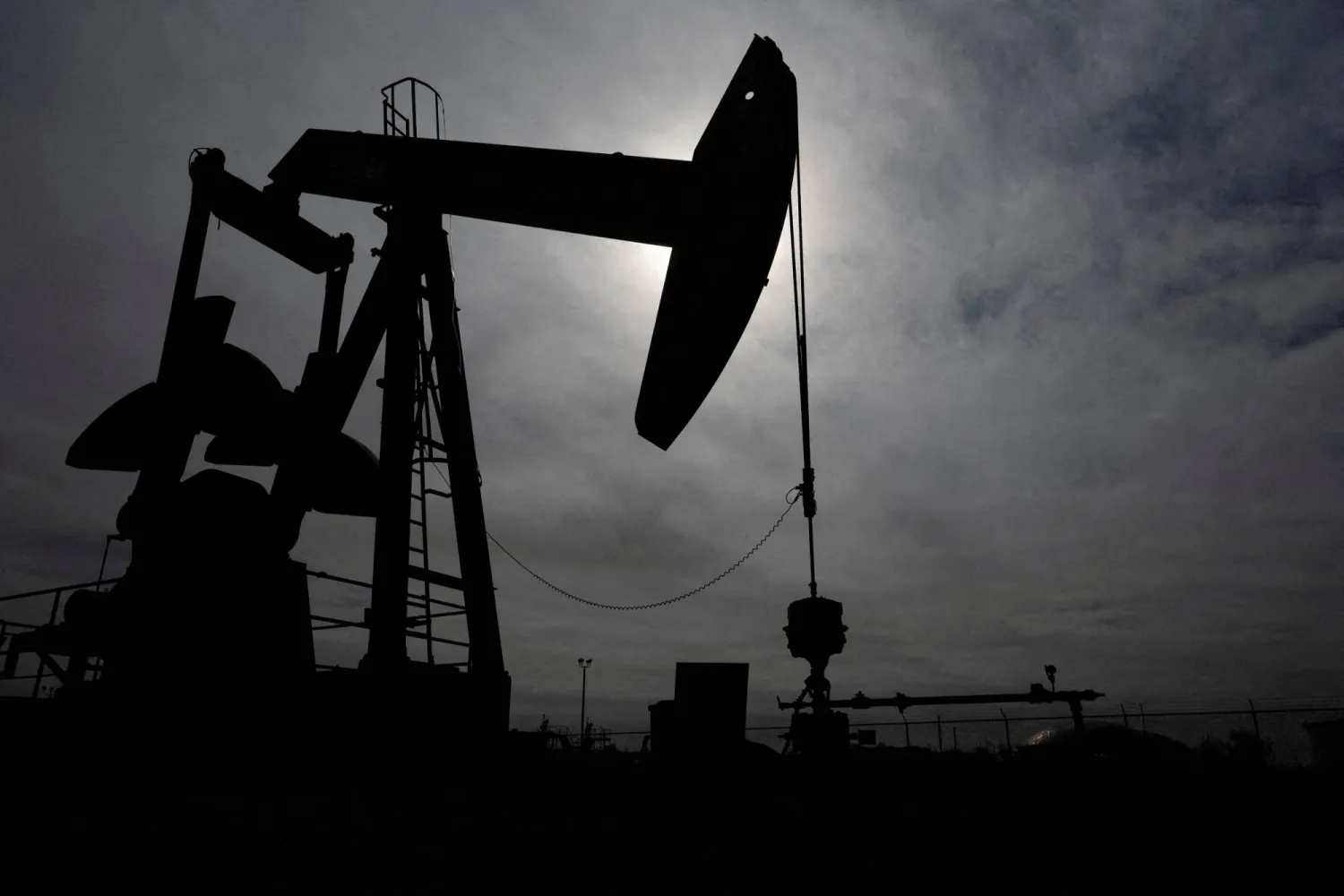
FILE PHOTO: A pump jack operates near a crude oil reserve in the Permian Basin oil field near Midland, Texas, US February 18, 2025.  REUTERS/Eli Hartman/File Photo
FILE PHOTO: A pump jack operates near a crude oil reserve in the Permian Basin oil field near Midland, Texas, US February 18, 2025. REUTERS/Eli Hartman/File Photo
TT

Oil Extends Losses as Trump Calls Off Planned Strikes on Iran

FILE PHOTO: A pump jack operates near a crude oil reserve in the Permian Basin oil field near Midland, Texas, US February 18, 2025.  REUTERS/Eli Hartman/File Photo
FILE PHOTO: A pump jack operates near a crude oil reserve in the Permian Basin oil field near Midland, Texas, US February 18, 2025. REUTERS/Eli Hartman/File Photo

Oil prices fell over $1 on Friday, extending losses from the previous session after US President Donald Trump cancelled plans to strike Iran, reducing fears of an escalation of hostilities following tit-for-tat attacks earlier in the week.

Brent futures fell $1.83 or 2% to $88.55 a barrel at 0410 GMT, while US West Texas Intermediate (WTI) crude dropped $1.60, or 1.8%, to $86.11.

Trump, who had threatened to hit Iran "very hard", called off planned strikes on Thursday, saying discussions with ‌Iran had progressed and ‌a peace deal that would reopen the Strait ‌of Hormuz ⁠to shipping could ⁠be signed as soon as this weekend. Iran's semi-official Fars news agency reported that Tehran had not approved the text of any agreement.

"While this could, of course, be yet another false dawn, the market's reaction has been both swift and decisive," said IG market analyst Tony Sycamore.

He added that even as oil prices correct downwards, "as long as the price can hold above support in the low $80s, the ⁠risks remain firmly skewed to the upside."

On Thursday, Iran announced "the ‌closure" of the Strait of Hormuz, through which ‌vessel traffic was already severely limited, saying it would fire on any ship trying ‌to pass through the waterway. The strait normally carries a fifth of global ‌oil and liquefied natural gas shipments and Tehran's months-long blockade has kept energy prices elevated.

State media reported on Friday that Iranian forces prevented a tanker from transiting the Strait of Hormuz without coordination.

The US military said on social media that commercial ships continued to transit ‌the waterway.

"We would be cautious about assuming that the extension of the ceasefire is a done deal. Even ⁠if it is, ⁠it could be fragile. And clearly, if nuclear talks do not progress, it could very easily fall apart," said ING analysts in a Friday note.

"We believe the market reaches an inflection point in late July if we do not see oil flows resuming before then. This is when inventory levels and seasonally stronger demand push prices significantly higher towards $120-130 per barrel."

The Organization of the Petroleum Exporting Countries (OPEC) on Thursday lowered its forecast for 2026 world oil demand growth to 970,000 barrels per day (bpd) from a previous 1.17 million bpd, marking its second straight downward revision.

The producer group also said consumption would rebound later, raising its demand growth forecast for 2027. It expects 2027 oil demand to rise by 1.73 million bpd, up 190,000 bpd from its previous forecast.



Iran’s Oil Production Slumped Due to US Blockade, Closure of Hormuz

The logo of the Organization of the Petroleum Exporting Countries (OPEC) outside their headquarters in Vienna, Austria, November 30, 2023. (Reuters)
TT

Iran’s Oil Production Slumped Due to US Blockade, Closure of Hormuz

The logo of the Organization of the Petroleum Exporting Countries (OPEC) outside their headquarters in Vienna, Austria, November 30, 2023. (Reuters)

Iran's oil supplies have registered a sharp decline since the tightening of the US naval blockade and the near-total closure of the Strait of Hormuz, which has also paralyzed the movement of oil and slashed exports by Gulf producers, the monthly report of the Organization of the Petroleum Exporting Countries (OPEC) revealed on Thursday.

Iran’s crude oil production slumped by 19% last month, according to data from OPEC, while the US blockaded the country’s ports during their ongoing conflict.

Iran was the primary contributor to last month’s sharp decline. The cartel reported that Iranian output fell by 19%, or 546,000 barrels, to 2.33 million.

The blockade of the Strait of Hormuz has also affected collective regional figures. Crude oil production by OPEC declined by 177,000 barrels per day (bpd) in May compared with April, driven mainly by a sharp drop in Iranian output, while the group maintained expectations for stronger global oil demand growth in 2026.

Total OPEC crude production averaged 33.13 million barrels per day in May, down by 185,000 daily barrels from the previous month.

The 11-member group trimmed its forecast for global oil demand growth this year to 970,000 barrels per day, citing geopolitical conflict in the Middle East. OPEC had predicted 1.17 million barrels in the previous report.

Meanwhile, OPEC maintained an optimistic outlook for the near future, betting that post-shock energy demand will rapidly rebound.

It raised its 2027 global oil demand growth forecast to 1.73 million bpd, up from the previous projection of 1.54 million bpd.

OPEC's June 2026 monthly report described the global economy's first-half performance as resilient despite the geopolitical environment, leaving its macroeconomic growth forecasts unchanged alongside the demand revision.


Saudi Industry Minister Says Kazakhstan Is a Trusted Partner in Critical Minerals

Saudi Minister of Industry and Mineral Resources Bandar Alkhorayef said Kazakhstan is a trusted partner in the critical minerals sector. (SPA)
TT

Saudi Industry Minister Says Kazakhstan Is a Trusted Partner in Critical Minerals

Saudi Minister of Industry and Mineral Resources Bandar Alkhorayef said Kazakhstan is a trusted partner in the critical minerals sector. (SPA)

Saudi Minister of Industry and Mineral Resources Bandar Alkhorayef said Kazakhstan is a trusted partner in the critical minerals sector, which is essential for energy transition, electricity, and advanced manufacturing industries.

He noted that mining partnerships between the two countries contribute to accelerating investment, strengthening supply chains, and creating sustainable industrial value, the Saudi Press Agency reported on Friday.

The remarks were made during a high-level panel discussion on global partnerships and the future of the mining and minerals sector, held as part of the Astana Mining and Metallurgy Congress in Kazakhstan. Government officials and industry leaders from around the world participated in the meeting.

The minister added that Saudi Arabia and Kazakhstan share similar economic and industrial ambitions, as well as a common vision of the importance of developing the mining sector and its role in supporting economic diversification, enhancing industrial resilience, and achieving sustainable growth.


IMF Cuts 2026 Euro Zone Growth Forecast with Higher Inflation

FILE PHOTO: Dark clouds are seen over the building of the European Central Bank (ECB) in Frankfurt, Germany, June 6, 2024. REUTERS/Wolfgang Rattay/File Photo
TT

IMF Cuts 2026 Euro Zone Growth Forecast with Higher Inflation

FILE PHOTO: Dark clouds are seen over the building of the European Central Bank (ECB) in Frankfurt, Germany, June 6, 2024. REUTERS/Wolfgang Rattay/File Photo

The International Monetary Fund cut its growth forecast for the euro zone on Thursday and raised its expectation for inflation because of the US-Israeli war on Iran, adding that the economic situation could worsen if high energy prices persisted.

In its regular report on the economy of the 21 countries that share the euro currency, the IMF said economic growth this year would be 0.9%, down from ⁠1.1% forecast in ⁠April while inflation would be 2.8%, up from 2.6% forecast in April.

The IMF's had already revised down its euro zone growth forecast in April from its January prediction.

"Following a period of growth at potential and inflation on target, the euro area outlook has weakened," the IMF said in a report presented to ⁠euro zone finance ministers, referring to the war in the Middle East as a "large but temporary adverse supply shock."

"An even more persistent energy shock could raise inflation and inflation expectations further, even as a drop in confidence or financial stress could weaken demand. A resurgence of the conflict in the Middle East or delays in repairing energy infrastructure, intensified hostilities in Ukraine, and further trade policy adjustments pose additional downside risks," Reuters quoted it as saying.

The IMF said the European Central Bank, which earlier on Thursday raised interest rates for ⁠the first ⁠time in nearly three years, was likely to raise rates again for a cumulative 50 basis points increase in 2026, with a third rate rise also possible.

The IMF warned euro zone finance ministers against rushing to cushion their economies against the impact of high energy costs. "Broad-based fiscal support is not warranted," it said.

Many euro zone members had already introduced measures, averaging around 0.1 percent of GDP across the EU on a GDP-weighted basis as of May 2026.

It said, despite their limited scale so far, the measures likely blunted incentives for energy conservation and that future measures should targeted more to protect vulnerable households.