


Iraq to Export Crude, Naphtha through Syria after Hormuz Shock

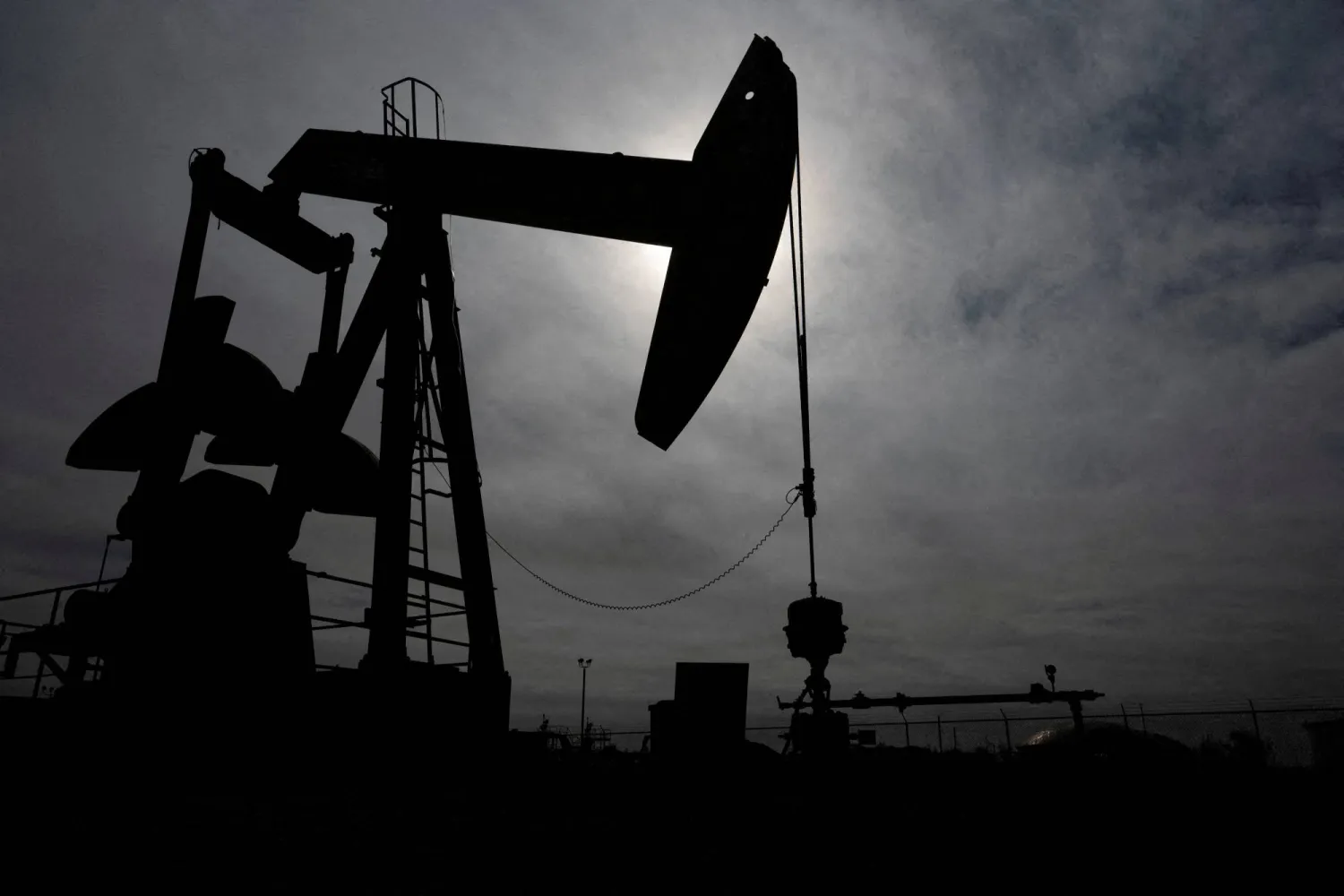
A pump jack operates near a crude oil reserve in the Permian Basin oil field near Midland, Texas, US February 18, 2025. REUTERS/Eli Hartman/File Photo
TT

Iraq to Export Crude, Naphtha through Syria after Hormuz Shock

A pump jack operates near a crude oil reserve in the Permian Basin oil field near Midland, Texas, US February 18, 2025. REUTERS/Eli Hartman/File Photo

Iraq is preparing to export crude oil and naphtha through ports in Syria, Syrian and Iraqi energy officials and refinery sources said after the Iran war cut off its main Gulf shipping routes.

The move would broaden an arrangement that has seen Iraq export fuel oil through the Mediterranean port of Baniyas after the effective closure of the Strait of Hormuz, which sharply curtailed Gulf export routes for OPEC's second-largest producer.

Two Iraqi oil officials said plans to diversify crude and fuel export routes, including through Syria, would continue even after the Iran war ends and shipping through the Strait of Hormuz returns to normal, as part of a government-approved strategy to reduce Iraq's reliance on a single export corridor.

"The Iraqi government and the oil ministry attach the highest importance to diversifying crude export routes, particularly through Syrian territory," Iraqi oil ministry spokesperson Saleem al-Rikabi told Reuters.

Rikabi said the oil ministry, through state oil marketer SOMO, was continuing "discussions and cooperation" with Syria to expand exports through its western neighbor.

Iraq ‌normally exports a ‌total of around 3.6 million barrels of oil per day and before the Iran war around ‌3.4 ⁠million bpd flowed through ⁠its southern Basra terminals.

Mohammed Al-Ahdab, head of the media office at Syrian Petroleum Company (SPC), said the operation and offloading were continuing, despite the anticipated opening of the strait.

Before the disruption caused by the Iran war, Iraq mainly exported its fuel oil from the Gulf port of Khor al-Zubair, but the conflict has forced it to seek alternative routes after the strait was closed and storage facilities began filling up.

The initial work-around, which began operating in April, saw millions of barrels of Iraqi fuel oil trucked across Syria to Baniyas and re-exported from there.

Syria plans to open two extra unloading areas and other facilities in Baniyas within a week to handle Iraqi crude oil and naphtha, a Syrian energy ministry official said. ⁠Ahdab said Baniyas can now unload an average of 900 tanker-trucks per day.

Crude could begin crossing ‌from Iraq to Syria at around 50,000 barrels per day once the loading installations ‌are ready, the two Iraqi oil ministry officials said. There were no immediate details on planned levels of naphtha exports.

Tanker-truck exports are expected to begin ‌in early July, Syrian and Iraqi officials said, while SOMO is set to open offices in Baniyas.

FEE INCOME FOR SYRIA

In April, SOMO ‌awarded contracts to supply about 650,000 metric tons of fuel oil per month from April to June to be trucked overland via Syria. Iraq exported a record 18 million tons of fuel oil in 2024, equivalent to roughly 1.5 million tons per month, with the best available data for 2025 showing they were near the levels reached in late 2024.

SPC Deputy CEO Ahmad Kobbaji told Reuters in May that Syria had limited infrastructure but was increasing its ‌unloading and re-export capacity for Iraqi fuel products.

Under President Ahmed al-Sharaa, Syria is seeking to reintegrate into the regional and global economy after decades of Assad family rule and nearly 14 years ⁠of war devastated its economy and ⁠left it politically and financially isolated.

Syria is earning transit fees from the fuel oil shipments, paid through buyers and intermediaries rather than directly by SOMO, the Iraqi oil ministry officials said. Reuters was unable to determine what Syria was earning or how fees were collected.

Iraqi fuel oil shipped via Syria had reached destinations across Africa and Europe, with the latest tanker arriving in Alexandria, Egypt, on June 9, LSEG shipping data showed.

IRAQ KEEN TO EXPORT, DESPITE RISKS

The route to Baniyas is fraught with challenges, with highways damaged by years of war, and Reuters reporters saw lines of Iraqi tankers stretching for more than 30 km (19 miles) along the road to the port.

In June, two Iraqi fuel tankers collided near Homs, spilling thousands of liters of fuel, while protesters in northeast Syria blocked Iraqi tankers to protest against rising fuel prices and deteriorating living conditions.

A source at the Baniyas facility with direct knowledge of the transfers said the Iraqi fuel oil is not processed at the refinery. Instead, tanker trucks unload at a marine platform connected to storage tanks north of the refinery, from where the fuel is pumped directly to waiting export tankers.

Meanwhile, Syria is working on reviving war-damaged pipelines to replace the tanker route, SPC's Kobbaji said in May. The Iraq-Syria oil pipeline can pump up to 300,000 barrels per day, the Syrian energy ministry official said.

Saudi Inflation Holds Firm Despite Energy Shock

Riyadh’s commercial Tahlia Street. (AFP)
TT

Saudi Inflation Holds Firm Despite Energy Shock

Riyadh’s commercial Tahlia Street. (AFP)

Saudi Arabia’s inflation rate held steady at 1.8% in June, underscoring the economy’s price stability as renewed conflict in the Middle East raises fears of higher energy costs and a fresh wave of global inflation.

The reading, released by the General Authority for Statistics on Wednesday, kept the Kingdom among the G20 economies with the lowest inflation rates and broadly aligned with Saudi government and International Monetary Fund forecasts.

The data showed that the Saudi economy entered the latest period of global volatility from a relatively strong position, with inflation remaining subdued despite uncertainty across energy and financial markets.

The June figures preceded renewed turbulence in global oil markets after the war in the Middle East resumed, pushing crude prices higher and raising concerns that energy costs could feed into consumer prices elsewhere.

For Saudi Arabia, stable inflation provides a buffer against any price pressures that may emerge in the coming months.

Housing remained the main driver of inflation. Prices for housing, water, electricity, gas and other fuels rose 3.5% from a year earlier, led by a 4.4% increase in actual housing rents. The rise reflected stronger demand in major cities and rapid urban expansion linked to the Kingdom’s large development projects.

Transport prices increased 1.7%, while food and beverage prices rose 1.4%. Declines in several other categories helped contain the overall rate.

Prices for personal care, social protection and miscellaneous goods and services rose 3.8%, driven by a 14.7% jump in jewelry and watch prices amid record increases in global gold and precious-metal prices.

Recreation, sports and culture prices climbed 2.5%, reflecting a 4.2% increase in the cost of holiday packages and tourist trips.

By contrast, prices for furnishings, household equipment and routine household maintenance fell 0.6%, while clothing and footwear prices declined 0.4% year on year. The falls helped offset inflation in housing and other services and reflected continued competition across consumer markets.

Monthly rise remains modest

On a monthly basis, consumer prices rose 0.2% in June from May 2026.

Food and beverage prices increased 0.7%, driven by a rise of the same rate in food prices.

Housing, electricity and gas prices edged up 0.1%, while transport costs rose 0.4%.

Prices for personal care and social protection fell 1.0% from the previous month. Restaurant and accommodation services declined 0.1%, while communication prices also slipped 0.1%.

Among the G20’s lowest

Saudi Arabia's inflation remained below the levels recorded in several major economies.

Inflation stood at 3.5% in the United States in June, around 3% in Britain and close to 2% in the eurozone. Some emerging economies continued to post much higher rates.

That left Saudi Arabia among the least inflationary economies in the G20, even as it pressed ahead with large-scale investment and development programs.

The Kingdom’s inflation rate also remained below the average for advanced economies and well below that of emerging and developing markets, where food, energy and currency pressures have been more pronounced.

The figures point to Saudi Arabia’s ability to maintain price stability while expanding investment and implementing major development projects.

That contrasts with economies where stronger spending or higher energy costs have translated into faster inflation.

Official forecasts

The June reading was consistent with Saudi Finance Ministry forecasts for average inflation of about 2% in 2026.

It also aligned with IMF estimates issued in May and June, which projected that average inflation in Saudi Arabia would fall below 2% this year.

The IMF attributed the outlook to the strength of the Kingdom’s economic fundamentals and the effectiveness of domestic policies in containing inflationary pressures.

The fund expects global inflation to average 4.7% in 2026, up from 4.1% in 2025, before easing to 3.9% in 2027.

Those projections reflect continued pressure from tensions in the Middle East and higher energy prices. Saudi inflation, by comparison, is expected to remain below half the projected global average.

Why inflation has stayed low

Economists attribute the Kingdom’s low inflation to resilient economic fundamentals, effective monetary and fiscal policies, improved supply-chain efficiency and government measures aimed at maintaining adequate supplies of goods and services.

Rapid growth in non-oil activities and increased investment under Vision 2030 have also strengthened the economy’s ability to absorb external shocks without a significant pass-through to consumer prices.

Stable inflation helps preserve household purchasing power, but its effects extend further. It supports investor confidence, gives businesses greater visibility over future costs and reduces uncertainty around investment and consumption decisions.

Analysts said moderate inflation also gives policymakers more room to support economic growth as global markets brace for the impact of higher energy prices.

They expect the effect of those pressures on Saudi consumer prices to be more limited than in many other economies.

More certainty for businesses

Hisham Abu Jamea, chief adviser at Naif Al Rajhi Company, said stable inflation was a positive sign for prices and purchasing power and reinforced Saudi Arabia’s position among the G20 economies with the lowest inflation rates.

“Stable inflation provides a more predictable environment for individuals and the business sector and gives decision-makers greater room to focus on supporting economic growth,” he told Asharq Al-Awsat.

Abu Jamea said Saudi Arabia had managed to keep inflation below 2% despite global disruptions and economic challenges.

Housing remained the main source of pressure because of its large weighting in the consumer price index, he added.

However, recent government initiatives in the real estate sector were expected to ease price pressures and help bring inflation down, he stressed.

Growth without sharp price increases

Salem Baajajah, a professor of economics at King Abdulaziz University, said the 1.8% reading showed that economic growth in Saudi Arabia was no longer necessarily accompanied by sharp price increases.

He described that as an important shift from the experience of many global economies in recent years.

Maintaining inflation at its current level gives policymakers more room to proceed with major projects and economic diversification programs without allowing higher prices to undermine consumption or investment, he told Asharq Al-Awsat.

“The most important indicator is not merely that inflation remains low, but the quality of that stability,” Baajajah said.

“If it is supported by increased domestic production, broader competition and improved supply-chain efficiency, it becomes sustainable rather than temporary,” he remarked.

“The challenge in the next stage will not be to push inflation even lower, but to keep it within a moderate range that is consistent with an economy growing rapidly and attracting substantial investment,” he added.


Gold Retreats as Oil Rises and Inflation Fears Grow

Gold bangles on display at a jewelry shop in Varanasi, India (AFP)
TT

Gold Retreats as Oil Rises and Inflation Fears Grow

Gold bangles on display at a jewelry shop in Varanasi, India (AFP)

Gold prices slipped on Wednesday as escalating tensions in the Middle East continued to stoke inflation concerns, reinforcing expectations of higher US interest rates.

Spot gold fell 0.7% to $4,027.49 per ounce by 0843 GMT. Prices rose over 2% to a session high of $4,100.19 per ounce on Tuesday after soft US inflation data, Reuters reported.
US gold futures for August delivery slid 0.9% to $4,034.00.

Iran's Revolutionary Guard Corps threatened ⁠to close all possible ⁠export corridors benefiting Washington, after Tehran shut the Strait of Hormuz and the US reimposed a naval blockade of Iranian ports. Oil edged higher after closing at a one-month high on Tuesday.

"Higher US crude, gasoline and diesel prices will result in high inflation numbers in ⁠the next print in August, that could keep the tone of some Fed officials on the hawkish side, which is not helping gold," said UBS analyst Giovanni Staunovo.

"In the near-term oil and US gasoline prices will continue to influence gold, as it remains a key driver of US inflation," Staunovo added.

Higher interest rates tend to weigh on gold, as they increase the opportunity cost of holding the non-yielding asset.

Fed Chair Kevin Warsh told ⁠lawmakers ⁠on Tuesday the central bank had "no tolerance for persistently elevated inflation," hinting that the CPI data was not all swell.

Traders are pricing in about a 59% chance of a rate hike in September, according to the CME FedWatch Tool.

Investors now await the US Producer Price Index data due at 1230 GMT today for insights into inflation levels and the monetary policy outlook.

Among other metals, spot silver dipped 0.5% to $58.314 per ounce and platinum gained 0.2% to $1,634.36.

Palladium rose 0.8% to $1,315.05, after gaining 5% in the previous session.


Crude Shipments from Saudi Arabia's Yanbu Port Near Maximum Levels

King Fahd Industrial Port in Yanbu, Saudi Arabia (SPA)
TT

Crude Shipments from Saudi Arabia's Yanbu Port Near Maximum Levels

King Fahd Industrial Port in Yanbu, Saudi Arabia (SPA)

Daily crude loadings at Saudi Arabia's Red Sea port of Yanbu are close to maximum levels this week, according to data and industry sources.

Shipments from Yanbu reached 4.7 million barrels per day around July 13, up from 3.36 million bpd around July 10 and broadly in line with 4.6 million bpd around July 2, ⁠according to Signal Ocean data.

Loadings have averaged above four million bpd since June, compared with 973,000 bpd around the same period 2025, the data showed.

Kpler data also show daily loadings averaging around four million barrels in recent weeks.

Saudi Arabia has relied increasingly on Yanbu to export crude amid disruptions to shipping through the Strait of Hormuz during the US-Iran conflict.
