




Saudi Arabia’s push to build a broader industrial base and attract global investment is turning the Kingdom into a strategic market for international manufacturers seeking stability and long-term growth.
The growing presence of global companies in Saudi Arabia shows how the industrial transformation driven by Vision 2030 is reshaping the investment landscape, supported by advanced infrastructure, a strategic location and policies that strengthen the competitiveness of local production.
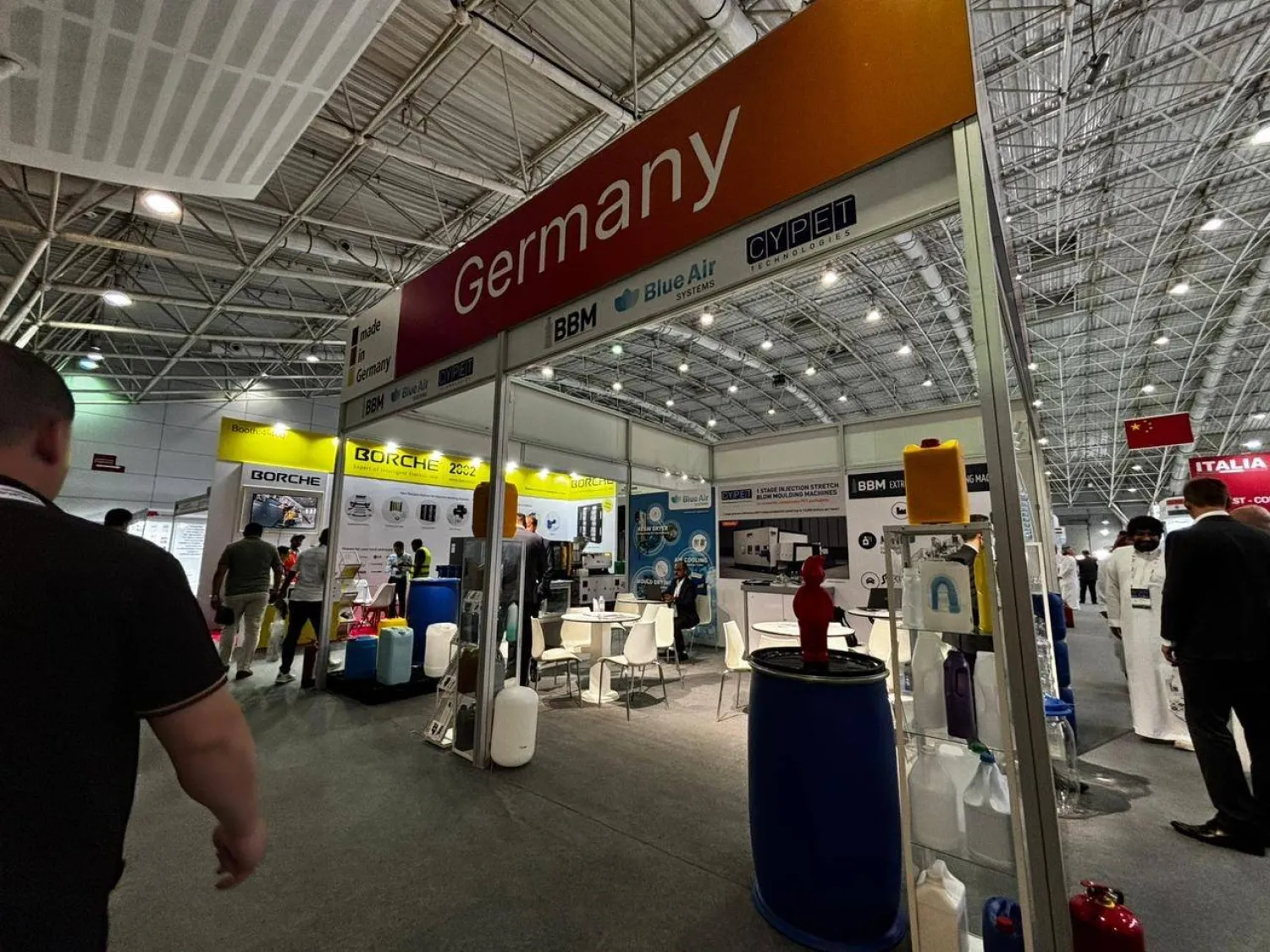
That momentum is clear at Riyadh International Industry Week 2026, now underway in the Saudi capital, with more than 400 manufacturing companies from over 20 countries taking part.
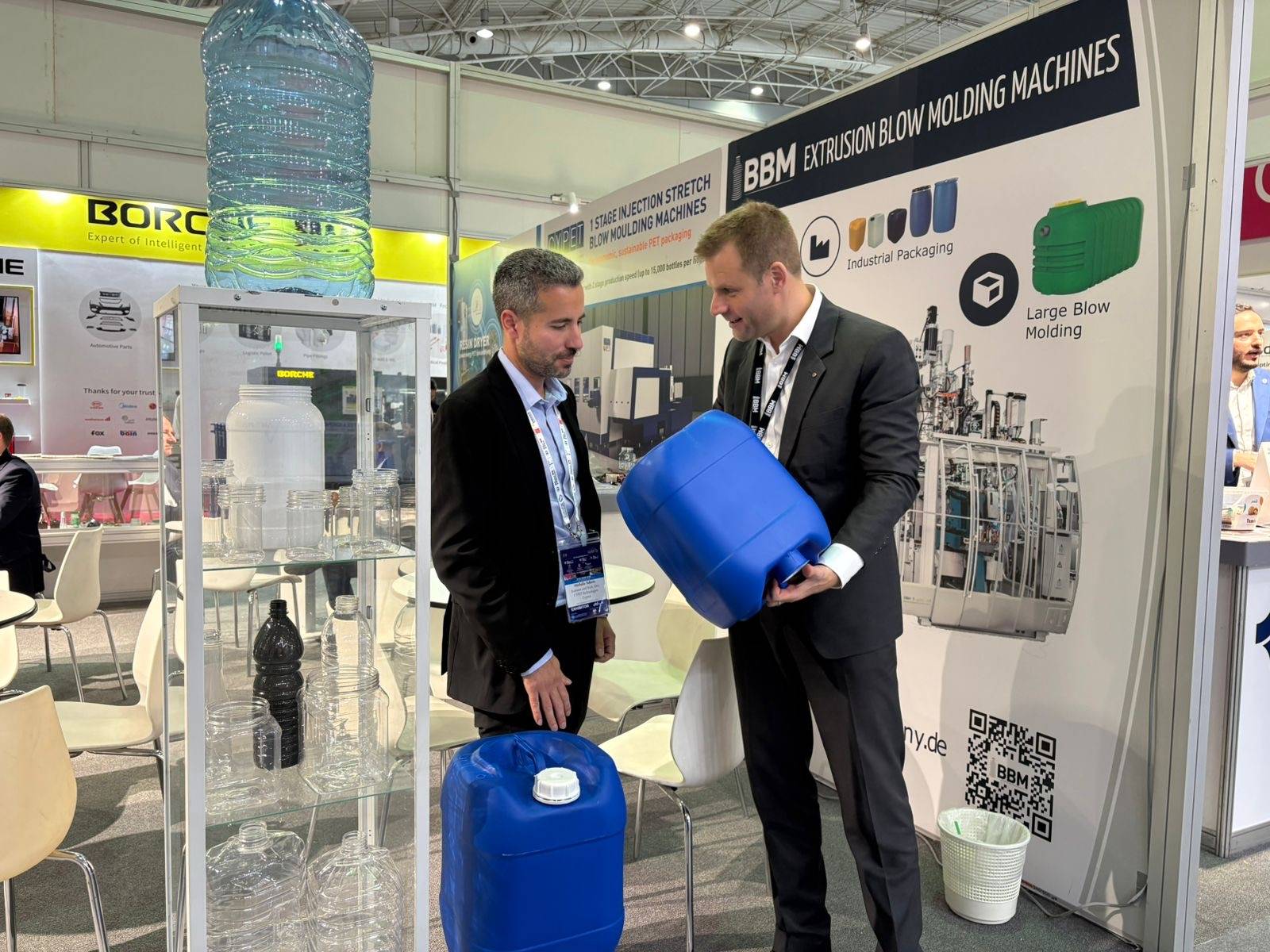
Sebastian Walter, business development director for the Middle East and West Africa and France at Germany’s BBM, an engineering and machinery manufacturing company, and one of its co-owners, told Asharq Al-Awsat that Saudi Arabia has been one of the company’s largest export markets worldwide for about 15 years.
He said the rapid growth of local manufacturing and industrial investment is driving demand for packaging solutions and industrial components, including in sectors linked to the automotive industry.
Packaging
Speaking during Riyadh International Industry Week 2026 at the Riyadh International Convention and Exhibition Center, Walter said Saudi Arabia is among the global markets with the highest number of BBM machines installed.
He said the shift toward local manufacturing, instead of importing value-added products, has strengthened demand for packaging solutions.
The growth, he added, is not limited to packaging. It is also extending to other industries, including the automotive sector, where demand for locally manufactured components is rising.
Walter, whose company is a leading manufacturer of plastic-forming machinery, said Saudi Arabia’s investment environment has become far more open than it was two decades ago.
He cited the possibility of full foreign ownership, easier access to qualified Saudi talent, competitive energy prices and the kingdom’s geographic position, which gives manufacturers access to African and Asian markets.
He said BBM views Saudi Arabia as a stable and strategic market within its operations in the Middle East and Africa. The Kingdom is the company’s most important market in the Arab region and one of its most important worldwide, he said.
Over more than 20 years in the Saudi market, BBM has built long-term partnerships with several major local companies, Walter added.
Local production
Walter said the automotive sector is one of the most promising areas for cooperation in the coming years.
Higher levels of local production by companies such as Lucid and Ceer, he said, will bring an integrated industrial value chain to Saudi Arabia and create fresh opportunities for manufacturers, suppliers and industrial solutions providers.
He said many investors still focus heavily on initial capital spending when making purchasing or manufacturing decisions. But the more important factor, he added, is the long-term cost per unit produced and operational efficiency.
Companies that adopt advanced technologies and plan for expansion tend to focus more on productivity and operational efficiency, he said.
Walter said BBM chose Dubai as its regional headquarters for the Middle East and Africa because of its connectivity and ease of travel to regional markets, especially Africa, where the company’s business has expanded significantly in recent years.
At the same time, he said travel and visa procedures for Saudi Arabia have become easier than before.
Raw materials
Walter said BBM is following developments in the availability of raw materials used by some of its customers.
That area has faced some challenges in the past, he said, but Saudi Arabia still offers promising opportunities for expansion in petrochemicals, food industries, pharmaceuticals and automotive manufacturing.
He said he expects industrial activity in Saudi Arabia to keep growing in the coming years, supported by investment and new projects.
Walter urged investors to look at industrial opportunities from two angles.
The first, he said, is to develop products already available in the market and make them more competitive. The second is to identify specialized products found in other markets but not yet produced locally.
Investors, he added, should analyze the real cost of manufacturing rather than focusing only on the size of the initial capital investment.
Week’s events
Riyadh International Industry Week 2026 opened on Sunday under the patronage of the Ministry of Industry and Mineral Resources at the Riyadh International Convention and Exhibition Center, with more than 400 exhibitors from 20 countries taking part.
The event brings together three specialized exhibitions: the 21st Saudi Plastics & Petrochem exhibition, Saudi Print & Pack, and the fourth Saudi Smart Logistics exhibition.
The week runs until June 24 and is jointly organized by Riyadh Exhibitions Company Ltd. and Germany’s Messe Düsseldorf.
It includes panel discussions and specialized workshops with local and international officials and experts. Sessions cover industrial transformation, innovation, localization, industrial enablers and advanced packaging solutions, along with the latest practices in plastics, packaging, printing and plastic recycling.
The event comes as Saudi Arabia’s industrial sector undergoes a period of growth and development, driven by Vision 2030, which aims to strengthen the Kingdom’s position as a leading industrial power regionally and globally.


