


US Goods Trade Deficit Hits 14-month High in May as Imports Surge

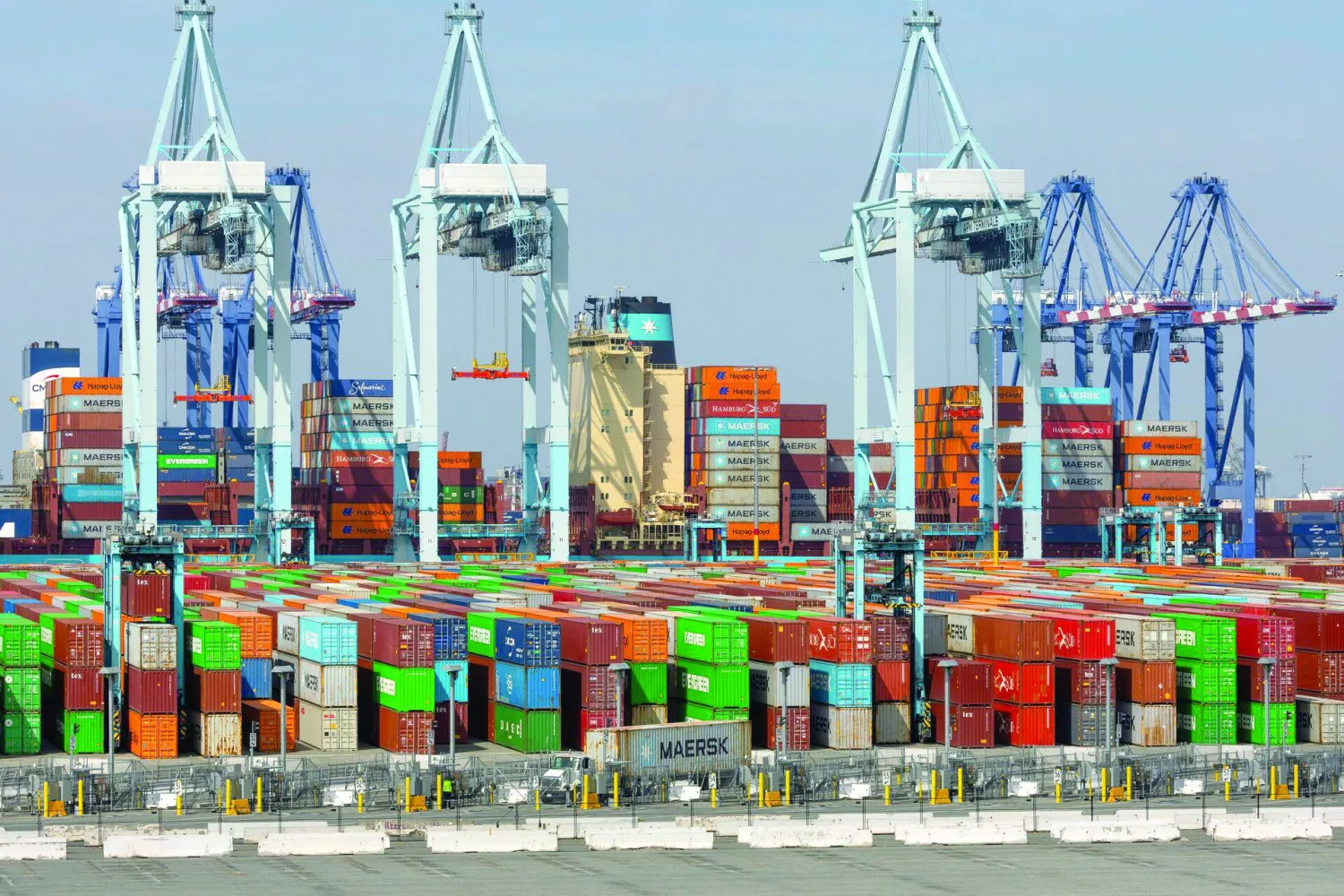
APM Terminals' facility at the Port of Los Angeles in California. (Reuters)
TT

US Goods Trade Deficit Hits 14-month High in May as Imports Surge

APM Terminals' facility at the Port of Los Angeles in California. (Reuters)

The US trade deficit in goods swelled to a 14-month high in May as businesses boosted imports, likely to avoid shortages and higher prices related to the Middle East conflict, suggesting trade remained a drag on economic growth in the second quarter.

The sharp deterioration in the goods trade deficit reported by the Commerce Department on Friday also reflected a decline in exports.

Recent business surveys have shown front-loading of orders by firms. Sponsors of the surveys attributed the behavior to the US-led war against Iran, which raised commodity prices, including for oil and fertilizers, and disrupted shipping in the Strait of Hormuz.

But after the United States and Iran last week signed a preliminary peace deal, shipments through the strait have picked up, driving oil prices sharply lower. Even if supply chains returned to normal, economists warned that the trade deficit would likely remain elevated because of an artificial intelligence investment boom that is largely reliant on imports.

"The widening trade deficit is bad news for national income growth, and it suggests that net exports might drag down real GDP growth too," said Carl Weinberg, chief economist at High Frequency Economics. "The AI boom had better generate a corresponding increase in services exports to offset the influx of equipment. If it doesn't, then this AI bubble is a losing proposition for the economy."

The goods trade gap increased 27.4% to $105.8 billion last month, the highest level since March 2025, the Commerce Department's Census Bureau said. Economists polled by Reuters had forecast the deficit at $85.0 billion.

Imports of goods increased $10.9 billion, or 3.6% to $313.4 billion, also a 14-month high. They were driven by a 6.3% surge in imports of automotive vehicles. Imports of consumer goods soared 5.7%. Despite high inflation, mostly stemming from the Iran war, consumer spending has remained strong, thanks to large tax refunds this year and a stock market rally.

BROAD INCREASE IN IMPORTS

Imports of industrial supplies, which include petroleum, increased 4.8%. Capital goods imports rose 0.4%. They surged 41.9% on a year-on-year basis, reflecting the AI spending spree.

Imports of foods, feeds and beverages increased 4.3%, while those of other goods advanced 11.5%. Overall imports have remained high despite tariffs imposed by the Trump administration.

Goods exports dropped $11.8 billion, or 5.4%, to $207.7 billion in May. They were weighed down by a 9.2% plunge in exports of consumer goods. Industrial supplies exports tumbled 7.0%, while those of capital goods dropped 5.0%. Exports of other goods decreased 6.8%. But food, feed and beverage exports increased 3.9%. Automotive vehicle exports rose 0.5%.

"Imports are moving sharply higher and this will subtract from GDP growth this quarter," said Christopher Rupkey, chief economist at FWDBONDS. "The import drag on domestic economic growth is back because factories here cannot make it here no matter how Washington economic officials try to spin it."

Trade had been a drag on gross domestic product for two straight quarters. Growth estimates for the second quarter were converging around a 2.5% annualized rate before the trade data.

The economy grew at a 2.1% annualized rate last quarter after expanding at a 0.5% pace in the October-December quarter.



Iraq Raises September Basrah Medium Crude OSP to Asia

Workers walk across pipelines at the Rumaila oil field in Basra, Iraq (Reuters)
TT

Iraq Raises September Basrah Medium Crude OSP to Asia

Workers walk across pipelines at the Rumaila oil field in Basra, Iraq (Reuters)

Iraq has raised the September official selling price (OSP) for Basra Medium crude oil to Asia to minus $4 a barrel against the average of Oman/Dubai quotes from the August OSP of minus $6.50 a barrel, state-owned Iraqi oil marketer SOMO said on Monday, Reuters reported.

Basrah Heavy to Asia was priced at minus $7.30 a barrel to Oman/Dubai quotes, from minus $8.80 a barrel set for August.

Type of North and South European Far East Crude American Market Market Market ($/bbl) Oil ($/bbl) ($/bbl) Basrah ASCI +5.10 Brent Average (Oman Medium (dated)-4.35 & Dubai)-4.00 Basrah ASCI +1.40 Brent Average


Turkish Central Bank Bought $5 billion in Foreign Exchange Last Week, Bankers Say

Central Bank of Türkiye - File Photo/Reuters
TT

Turkish Central Bank Bought $5 billion in Foreign Exchange Last Week, Bankers Say

Central Bank of Türkiye - File Photo/Reuters

The Turkish central bank bought $5 billion in foreign exchange last week, with its net reserves increasing $9 billion to $63 billion, bankers said on Monday, Reuters reported.

According to the calculations of four bankers, the central bank's total reserves increased $14 billion last week to $178 billion, while net reserves excluding swaps increased $9.5 billion to $50 billion. The central bank did not comment on the figures.


July US Container Imports Hit Fourth-highest on Record, Descartes Says

FILE PHOTO: Workers move shipping containers at the Port Authority of New York and New Jersey in, Newark, New Jersey, US, September 30, 2024. REUTERS/Caitlin Ochs/File Photo
TT

July US Container Imports Hit Fourth-highest on Record, Descartes Says

FILE PHOTO: Workers move shipping containers at the Port Authority of New York and New Jersey in, Newark, New Jersey, US, September 30, 2024. REUTERS/Caitlin Ochs/File Photo

US imports of containerized goods in July hit the fourth-highest level for the month, as shippers rushed in goods ahead of unknown US tariff changes, supply chain technology provider Descartes Systems Group said on Monday.

US seaports handled 2.5 million 20-foot equivalent units (TEUs) in July, down 4.3% from the near-record result in July 2025. Through the first seven months of 2026, imports were down 0.9% year over year while remaining ⁠well above pre-COVID pandemic ⁠levels, Descartes said.

In late July, 10% global Section 122 tariffs expired and were replaced by new tariffs of up to 12.5% on imports from 60 countries tied to allegations of forced labor.

Chinese-origin imports rose to 873,129 TEUs ⁠in July, the highest monthly volume in a year.

China sends more goods via container to the US than any other country, even after President Donald Trump has targeted such products with tariffs.

Retailers like Walmart, Amazon.com and Home Depot account for roughly half of all US container imports, Reuters reported.

The traditional peak shipping season tied to their imports of goods for autumn and winter holiday promotions ⁠has ⁠been arriving earlier and over a longer period of time as shippers have responded to a string of supply-chain upheavals ranging from the COVID-19 pandemic and the ongoing US and Israeli war on Iran to rapidly changing US tariff policies.

"The broader trade environment remains unsettled. Elevated Strait of Hormuz risk, changing US tariff measures, tighter Panama Canal draft restrictions, and continued Red Sea disruption are influencing freight costs, routing decisions, and sourcing strategies," Descartes said.