


China Imposes New Export Controls, Deepening Japan Row

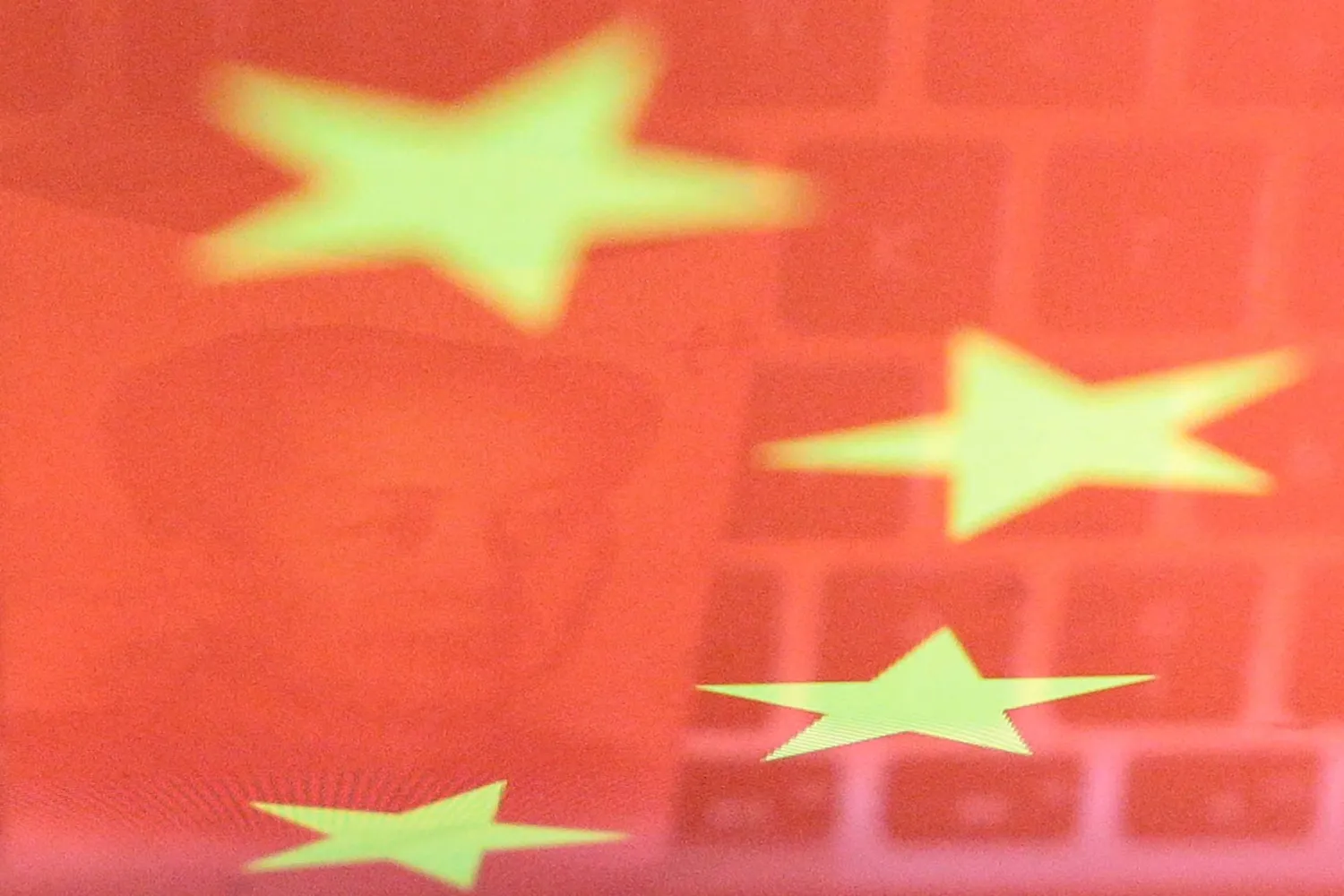
FILE PHOTO: A China yuan banknote featuring late Chinese chairman Mao Zedong and a computer keyboard are seen reflected on an image of Chinese flag in this illustration picture taken November 1, 2019.  REUTERS/Florence Lo/Illustration/File Photo
FILE PHOTO: A China yuan banknote featuring late Chinese chairman Mao Zedong and a computer keyboard are seen reflected on an image of Chinese flag in this illustration picture taken November 1, 2019. REUTERS/Florence Lo/Illustration/File Photo
TT

China Imposes New Export Controls, Deepening Japan Row

FILE PHOTO: A China yuan banknote featuring late Chinese chairman Mao Zedong and a computer keyboard are seen reflected on an image of Chinese flag in this illustration picture taken November 1, 2019.  REUTERS/Florence Lo/Illustration/File Photo
FILE PHOTO: A China yuan banknote featuring late Chinese chairman Mao Zedong and a computer keyboard are seen reflected on an image of Chinese flag in this illustration picture taken November 1, 2019. REUTERS/Florence Lo/Illustration/File Photo

China put 20 more Japanese organizations on a blacklist Monday over the export of items with both military and civilian possible uses, adding fuel to a months-long row with Tokyo.

The new additions, including major companies, "have participated in enhancing Japan's military capabilities", the Chinese commerce ministry said in a statement.

Japan's government spokesman Minoru Kihara called the measures "unacceptable and deeply regrettable" and said Tokyo had "lodged a strong protest and demanded that the measures be withdrawn."

The countries' have been at row since Japanese Prime Minister Sanae Takaichi suggested in November that Tokyo may react militarily to an attack on Taiwan, the self-ruled island Beijing has vowed to seize control by force if necessary.

China responded furiously, including by advising its citizens -- previously the biggest cohort of foreign tourists -- to avoid Japan.

Chinese authorities ramped up pressure in February by imposing export restrictions on dozens of Japanese firms it said were involved in building up Tokyo's military.

The 20 additions to the export blacklist named Monday include specialized subsidiaries and technology firms involved in supplying components and engineering support for Japan's defense sector.

Among them are the National Institute for Defense Studies and Mitsubishi Electric Defense and Space Technologies Corporation, the statement said.

China's commerce ministry said the controls require exporters to submit risk assessments and guarantees that dual-use items will not enhance Japanese military strength prior to making shipments.

Those named on the watchlist can apply to be removed by cooperating with "verification" procedures according to Chinese law, the ministry said.

China is the world's largest producer and refiner of rare earths, which are crucial for various high-tech products including electric vehicles, smartphones, missile guidance systems and lasers.

Japan has "strayed further down the wrong path, intensifying its push for a 'new form of militarism'", an unnamed commerce ministry spokesperson said in a statement on the latest measures.

- China-Russia patrols -

Since Takaichi took office in October, Japan has quickened its pivot towards a more proactive defense policy, further shaking off -- with US encouragement -- a pacifist outlook, which has been in place since the end of World War II.

Tokyo has loosened rules on exports of lethal weaponry and deepened military cooperation with other countries in the region at odds with China including the Philippines.

Japan and the United States, as well as many other countries, are seeking to curb dependence on China in rare earths, as Beijing increasingly uses its dominance for geopolitical leverage.

Japan on Monday also joined South Korea in criticizing joint flights by Chinese and Russian bombers and fighters over the weekend in the region.

Fellow US allies South Korea and Japan both scrambled fighter jets in response to the patrols by the convoy of around 15 aircraft on Saturday.

"This marks the 10th instance of such long-range activities by Chinese and Russian bombers in the vicinity of Japan since December last year," Japanese government spokesman Kihara said Monday.

Beijing's defense ministry said that the Chinese and Russian air forces conducted a "strategic air patrol" over the Sea of Japan, the East China Sea and the western Pacific Ocean, "demonstrating their determination and capability to jointly uphold regional peace and stability".

Tokyo last week also rejected Beijing's accusations that the Japanese military "harassed" a Chinese aircraft carrier strike group during 40 days of exercises in the Pacific.


Diesel Prices Overtake Jet Fuel in Europe as Global Shortage Widens

Petrol prices are displayed at a filling station, as the price of oil and gas has surged amid the conflict in the Middle East, in London, Britain, March 5, 2026 REUTERS/Jack Taylor
TT

Diesel Prices Overtake Jet Fuel in Europe as Global Shortage Widens

Petrol prices are displayed at a filling station, as the price of oil and gas has surged amid the conflict in the Middle East, in London, Britain, March 5, 2026 REUTERS/Jack Taylor

Diesel cargoes are costing more than jet fuel in Europe for the first time in more than a year, LSEG data showed, as the continent replaces lower Middle East air fuel shipments with other sources of supply, but struggles to secure more diesel for industry and agriculture.

Europe has been able to pull in jet cargoes from the US and other countries like Nigeria as prices surged after the start of the Iran war, which disrupted crude and fuel supply. Global diesel supply tightened even further when Russia banned exports amid Ukrainian attacks on its refineries.

"We see a higher risk of persistent scarcity pricing in diesel than in crude heading into winter," analysts at Goldman Sachs said in a note.

Europe boosted imports of jet fuel to 750,000 barrels per day in June — the highest since October 2025 — and a similar rate in July from 612,000 bpd in January, according to Kpler.

By contrast, European diesel imports have dropped to 1.56 million bpd in July from 1.97 million bpd in January. Against that backdrop, the price of diesel overtook that of jet fuel this week, LSEG data showed.

Diesel prices have resumed their rally in recent weeks amid an impasse in Iran peace talks and Russian export disruptions, and are now only 14% below their April peaks. Jet fuel prices, which have also risen in recent weeks, are meanwhile 25% below their March records.

"A brief period of cautious optimism for refined product markets has been quickly overtaken by renewed hostilities in the Strait of Hormuz, the collapse of Russian product supply and a diesel exports ban," said Karim Fawaz of S&P Global Energy.

WEAKENING JET DEMAND LIKELY WEIGHS ON PRICES, ANALYST SAYS

In a further sign of jet's relative weakness, it has dropped against the price of gasoil futures - the benchmark against which it is priced in Europe.

The price assessment of a jet cargo coming into Europe stood at a discount of $24 a metric ton to gasoil futures on August 10, according to LSEG.

This is the widest discount since July 2025, according to LSEG and Argus Media. At the height of the Iran war in March, LSEG and Argus assessed jet's premium at more than $500 a barrel. Weakening jet demand after the summer travel seasonal high and the expectation of higher European imports are likely weighing on prices, said Jay Maroo, analyst at Sparta Commodities.


Türkiye Central Bank Raises End-2026 Inflation Forecast to 28%, Leaves Target Unchanged

 Stray cats wait next to a fisherman at Karakoy sea promenade in Istanbul, Türkiye, Wednesday, June 24, 2026. (AP)
Stray cats wait next to a fisherman at Karakoy sea promenade in Istanbul, Türkiye, Wednesday, June 24, 2026. (AP)
TT

Türkiye Central Bank Raises End-2026 Inflation Forecast to 28%, Leaves Target Unchanged

 Stray cats wait next to a fisherman at Karakoy sea promenade in Istanbul, Türkiye, Wednesday, June 24, 2026. (AP)
Stray cats wait next to a fisherman at Karakoy sea promenade in Istanbul, Türkiye, Wednesday, June 24, 2026. (AP)

Türkiye's central bank raised its inflation forecast for the end of 2026 to 28% from 26% but left its interim inflation target for the same period at 24%, Governor Fatih Karahan said on Thursday.

Presenting the central bank's quarterly inflation report ‌in Istanbul, Karahan said ‌the bank kept ‌its ⁠interim inflation target for ⁠end-2027 steady at 15% and the interim target for end-2028 stayed at 9%.

"The CBRT will ensure the tightness required by the projected disinflation path in line with ⁠the interim targets," Karahan said.

He said ‌the upward ‌revision of the end-2026 forecast was "driven ‌by the increase in the ‌assumption for Turkish lira-denominated import prices in view of the developments in prices of diesel oil, natural gas, and some ‌other commodities".

Last month, the central bank left its key interest ⁠rate ⁠at 37%, as expected, keeping borrowing costs unchanged for a fourth consecutive meeting as it monitors the inflationary impact of the Iran war.

Turkish consumer price inflation rose to 1.78% month-on-month in July while annual inflation dipped slightly from a month earlier to 31.75%.


UK Economy Slows Amid Political Unrest, Middle East War

A person cycles through parched parkland in Birmingham, Britain, 13 August 2026. (EPA)
TT

UK Economy Slows Amid Political Unrest, Middle East War

A person cycles through parched parkland in Birmingham, Britain, 13 August 2026. (EPA)

Britain's economy slowed in the second quarter, the national statistics office reported Thursday, saying that output remained "robust" despite domestic political unrest and fallout from the US-Iran war.

Gross domestic product increased 0.4 percent in the April-June period after GDP expansion of 0.6 percent in the first quarter, the Office for National Statistics (ONS) said in a statement.

Keir Starmer resigned as British prime minister in late June and was replaced around one month later by Andy Burnham, as the Labour government was overtaken in opinion polls by the hard-right party Reform UK.

Following Thursday's data, the country's new finance minister, John Healey, said that under Burnham, Labour was a "hands-on government, putting British interests first -- giving breathing space to those feeling the strain, making our country more resilient and bringing hope back".

Struggling already with elevated inflation, millions of Britons have seen their situation worsen after the US-Iran war sent energy costs soaring.

"I know people are worried about the impact of the conflict in the Middle East on their cost of living, which has been too high for too long and it has added pressure on British businesses," Healey added in a statement.

- World Cup boost -

The latest GDP data showed that output from the services sector grew 0.5 percent in the second quarter, and construction also expanded while production flattened.

"Growth (overall) slowed in the second quarter of the year, following a strong start to 2026, but remained relatively robust," said ONS director of economic statistics, Liz McKeown.

"Services were once again the main driver of growth," she added.

The second quarter had a strong finish, growing 0.3 percent in June after zero expansion in May and a slight dip in April, the ONS said.

It cited the recent football World Cup "as a reason for an increase in turnover in June... by businesses in industries such as wholesale, food and beverage serving activities, publishing activities, television production and advertising".

But Stuart Morrison, research manager at the British Chambers of Commerce, said in a statement that "the headline figures shouldn't disguise the cocktail of cost pressures choking long-term business growth".

He said Healey's first budget, due October 28, "must be a game changer for stronger, sustainable growth", adding that Britain needed "measures that boost trade, investment and productivity".

Burnham has so far concentrated on easing the cost of living for households, with tax on their electricity bills set to be removed this winter.

The Bank of England recently warned that British inflation was set to rise as the Middle East war keeps energy prices high.
