IMF Reaches Staff-level Deal with Egypt that Could Unlock $1.6 Billion

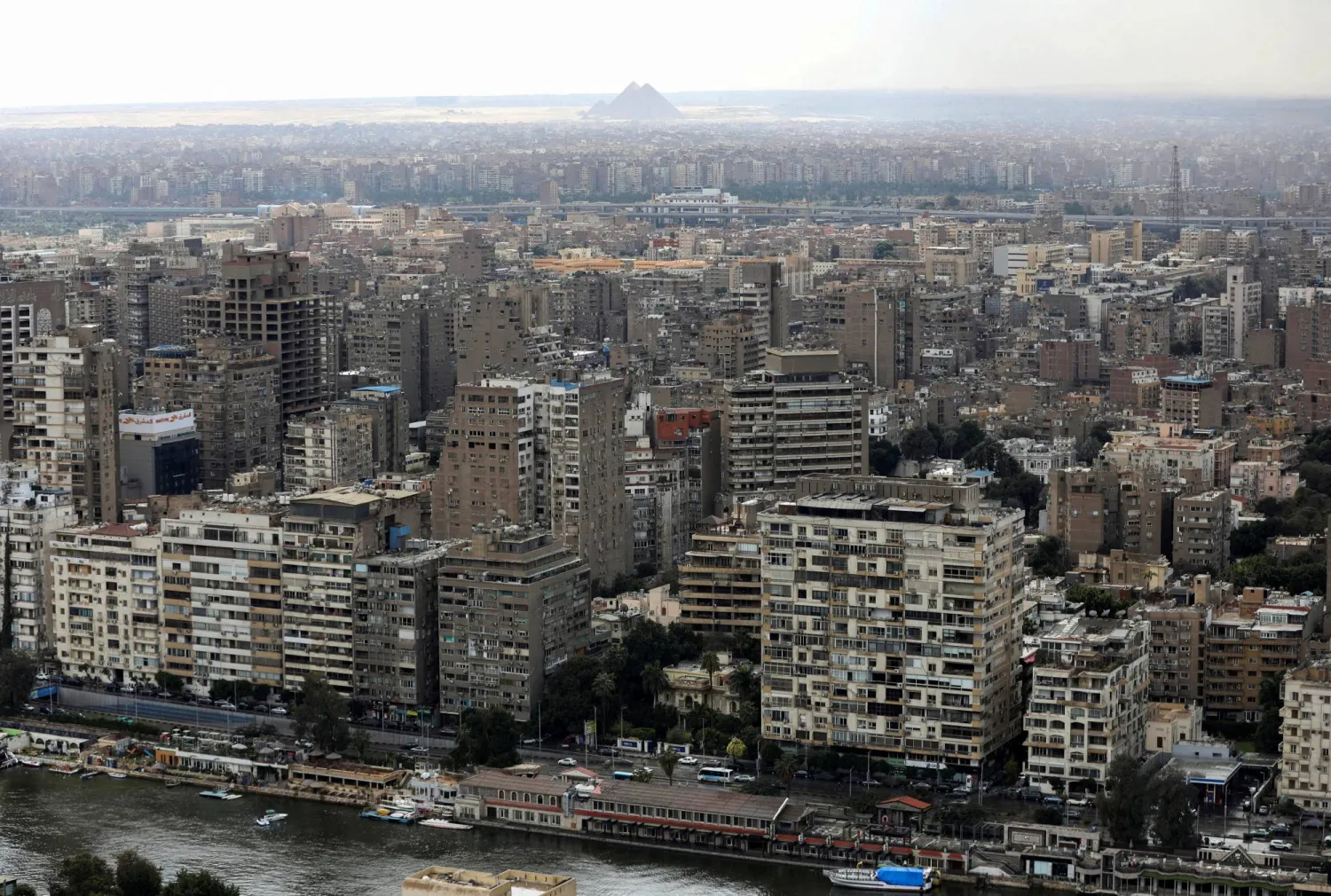
FILE PHOTO: A general view of buildings and the Great Pyramids in Cairo, Egypt, March 25, 2026. REUTERS/Mohamed Abd El Ghany/File Photo
TT

IMF Reaches Staff-level Deal with Egypt that Could Unlock $1.6 Billion

FILE PHOTO: A general view of buildings and the Great Pyramids in Cairo, Egypt, March 25, 2026. REUTERS/Mohamed Abd El Ghany/File Photo

The International Monetary Fund said on Monday it had reached a staff-level agreement with Egypt on reviews of two financing arrangements, potentially unlocking about $1.6 billion pending approval by the fund's executive board.

The agreement would make available about $1.5 billion under Egypt's Extended Fund Facility and about $136 million under the Resilience and Sustainability Facility, bringing total disbursements under the arrangements to about $7.2 billion, Reuters quoted the IMF as saying.

The IMF said the impact of the war in the Middle East on Egypt's economy had remained "relatively contained,” helped by "timely and decisive" policy measures including fuel and electricity price adjustments, curbs on government energy consumption and spending reprioritization.

The IMF said real GDP growth reached 5% in the third quarter, bringing growth for the first three ⁠quarters of the fiscal year to 5.2%, while headline urban inflation remained elevated at 14.6% in May and was projected to rise to 15.8% by the end of the fiscal year.

It said Egypt should maintain tight monetary policy to contain renewed inflationary pressures and keep exchange rate flexibility as the "first line of defense" against external shocks, including spillovers from heightened geopolitical tensions.

The fund said Egypt's fiscal performance was strong, with primary balance and tax revenue targets exceeded by end-March, and projected the primary surplus to rise to 5% of GDP ⁠in the 2026/27 ⁠fiscal year from 4.8% in 2025/26.

The IMF said swift implementation of Egypt's State Ownership Policy, including faster divestment of state assets, would be critical to supporting private sector-led growth. Earlier in June, Egypt's cabinet said it had granted four state-owned companies preliminary listings as part of its privatization program.

Egypt agreed to a $3 billion loan with the IMF in December 2022. The program was expanded to $8 billion in March 2024, when the country was grappling with high inflation and foreign currency shortages.

Egypt's foreign reserves rose to $53.134 billion in May from $48.526 billion in May 2025, according to central bank data.


Oil Drops from Near Six-Month Highs on Hopes Iran War Hostilities to Ease

Pumpjacks operating in Kern County, which has a long history of oil production, in California's 22nd Congressional District on October 16, 2026 near Bakersfield, California. (Getty Images/AFP)
TT

Oil Drops from Near Six-Month Highs on Hopes Iran War Hostilities to Ease

Pumpjacks operating in Kern County, which has a long history of oil production, in California's 22nd Congressional District on October 16, 2026 near Bakersfield, California. (Getty Images/AFP)

Oil prices fell on Monday after surging last week to near six-month highs, amid hopes of easing hostilities between the United States and Iran.

US West Texas Intermediate crude futures were down $1.76, or 1.7%, at $101.51 per barrel by 0744 GMT. Brent crude futures were down $1.49, or 1.28%, at $115.23.

On Friday, prices settled nearly $3 higher after Houthi attacks in Saudi Arabia stoked energy supply concerns. Brent finished ‌the week up ‌6% and WTI ended 2.3% higher.

On Sunday, Qatari mediators ‌traveled ⁠to Tehran as ⁠part of an effort to de-escalate regional tensions in coordination with the United States, an official briefed on the situation said.

Also, top officials from Makkah Defense Agreement countries Saudi Arabia, Türkiye and Pakistan are set to meet Iran's leaders in Tehran on Monday in their first high-level contact since attacks by the Iran-backed Houthis joined the regional conflict by launching attacks on Saudi Arabia.

"Concerns over renewed military hostilities in the Middle East, which drove much of last ⁠week’s crude rally, have eased this morning, but the reprieve may ‌prove temporary," said Vandana Hari, founder of oil market ‌analysis provider Vanda Insights.

Hari said US President Donald Trump has not dispelled market expectations that strikes ‌on Iran could still follow after the November 3 midterm elections.

"We therefore expect volatility ‌to remain elevated, with risks still skewed to the upside," she added.

The effects of the US-Israeli war on Iran that began on February 28 continue to reverberate as companies adjust to the disruptions ⁠of commercial shipping ⁠through the key Strait of Hormuz and Bab el-Mandeb Strait caused by the conflict.

On Monday, the energy ministers from Saudi Arabia and Singapore said state-owned oil company Saudi Aramco will start storing crude oil in Singapore from the second half of 2027.

"While supply risks surrounding the Strait of Hormuz remain firmly entrenched, the current pullback appears more reflective of position adjustments and risk management rather than any meaningful improvement in the underlying supply situation," said Priyanka Sachdeva, head of market insight at Phillip Nova.

The head of the International Energy Agency, Fatih Birol, reinforced the concerns about the supply situation, saying on Monday at an industry event in Singapore that he does not expect energy markets in 2027 to return to where they were before the Iran war.


First International Flight Takes Off From New Sydney Airport

A new airport in western Sydney handled its first international flight on October 26, 2026. SAEED KHAN / AFP
TT

First International Flight Takes Off From New Sydney Airport

A new airport in western Sydney handled its first international flight on October 26, 2026. SAEED KHAN / AFP

The first international flight took off Monday from a new, multi-billion-dollar airport in the fast-growing western suburbs of Sydney.

After more than four decades of planning, Western Sydney International Airport offers the first alternative to the city's main airport, which has been operating for more than a century, said AFP.

An Air New Zealand plane from Auckland landed and soon afterwards flew out of the airport in the morning, launching a three-flights-a-week service to Sydney's largely working-class western suburbs.

"It's not every day you get to be part of opening a brand-new international airport," said Air New Zealand chief operations officer Kate Boyer.

"Western Sydney is home to more than 2.5 million people and it's a further gateway for Australian visitors to discover everything our country has to offer."

The new single-runway airport, Australia's first new major aviation hub in more than five decades, began domestic flights on Sunday, and freight operations in July.

Sydney's main airport, Kingsford Smith, is Australia's busiest, its three runways handling more than 42 million passengers last year.

Lying in Botany Bay just nine kilometers (six miles) from the city center, planes using the airport roar over many city homes, and a curfew bars passenger aircraft from operating during the night.

The new airport in western Sydney has no such restrictions.

"Through our 24-hour operations, Western Sydney International Airport gives airlines greater flexibility to connect into global hubs and travelers more choice in how they reach the world," said airport chief executive Simon Hickey.

Qantas' budget carrier Jetstar is now the main domestic carrier, flying to the Gold Coast, Melbourne and Brisbane.

The airport says other international carriers are coming, including Qatar Airways from December 2027, Fiji Airways from March 2027, and Vietjet Air from January 2027.

Built at a cost of Aus$5.3 billion (US$3.7 billion), excluding surrounding transport works, the airport is reachable by road but is not expected to have a direct rail link until at least December 2027.

Prime Minister Anthony Albanese said the new airport marked a "wonderful new chapter" for Australia.

It would also drive economic and jobs into western Sydney, an area often overshadowed by the city's famed harbor and central business district (CBD), he said at the weekend.

"For too long, Sydney has looked towards the harbor and the CBD. What this does is turn it around to where people live, to where jobs occur, to where investment occurs in western Sydney."


Stock Markets Mixed ahead of Tech Earnings, Central Bank Decisions

Traders are looking ahead to the release of key earnings reports and central bank meetings. Daniel ROLAND / AFP
TT

Stock Markets Mixed ahead of Tech Earnings, Central Bank Decisions

Traders are looking ahead to the release of key earnings reports and central bank meetings. Daniel ROLAND / AFP

Equity markets were mixed on Monday as investors geared up for a crucial run of central bank decisions and tech earnings, while oil prices retreated from a six-month high.

AI-linked firms continued to struggle amid worries about the sustainability of the colossal investment boom that pushed stock markets to multiple record highs in the first half of the year.

Traders are growing increasingly worried about when the vast sums pumped into the sector will see returns, if any, while rising interest rates and bond yields are now calling companies' finances into question, reported AFP.

This week sees the release of earnings from US titans and Magnificent Seven members Amazon, Microsoft and Alphabet, as well as South Korean chipmakers SK hynix and Samsung.

Results from Tesla and Meta last week further stoked spending worries and helped drag stocks lower.

"The AI complex remains under a microscope ahead of what may be the most important stretch of earnings season so far," said SPI Asset Management's Stephen Innes.

"Microsoft, Alphabet and Amazon are about to walk on stage, and this is not one of those quarters where a company can simply beat the number, raise the guidance by a whisker and expect applause. Investors want proof now.

"They want to know whether the billions going into the compute buildout are building a durable earnings machine or just a shinier version of the same old capex furnace."

All three main indexes ended in the red on Wall Street on Friday, and Asia followed suit at the open on Monday, although some staged a recovery.

Seoul, seen by many as a barometer of the AI trade, sank more than one percent, while there were also losses in Tokyo, Singapore, Manila and Jakarta.

Tech firms were among the biggest losers, with SK hynix and Samsung down, along with Kioxia, Advantest and SoftBank in Japan.

However, Hong Kong, Shanghai, Sydney, Mumbai and Bangkok edged up, while London opened on the front foot along with Paris and Frankfurt.

- Deal or no deal? -

Oil prices dropped more than one percent following Friday's surge of more than three percent fueled by supply concerns amid the Middle East and Ukraine crises, with the northern hemisphere heading into winter.

Speculation has been brewing that Donald Trump will ramp up his war on Iran after next Tuesday's midterm elections, with some officials warning that the months leading up to the new Congress could be particularly dangerous.

The US president did little to allay those fears, telling Fox News on Sunday: "I have a decision to make: Do I finish it off, which would be very easy to do, or do I make a deal? That's all."

Additional forces, including a third aircraft carrier group, have been sent to the region, while US staffing levels have also been reduced.

Also in view this week are policy decisions by the Federal Reserve, European Central Bank and Bank of Japan.

While the Fed is expected to hold borrowing costs, traders will be keen to get an insight into its thinking following last month's hike and as inflation remains well above its two percent target.

"With market-based measures of inflation expectations well anchored and financial conditions tightening, Fed Chair (Kevin) Warsh can afford to remain patient," wrote Karsten Junius, chief economist at Bank J. Safra Sarasin.

"Still, demand remains too strong for inflation to return to two percent without further tightening. As a result, we continue to expect a gradual hiking cycle, with a 25-basis-point increase in December, followed by three quarterly hikes next year."