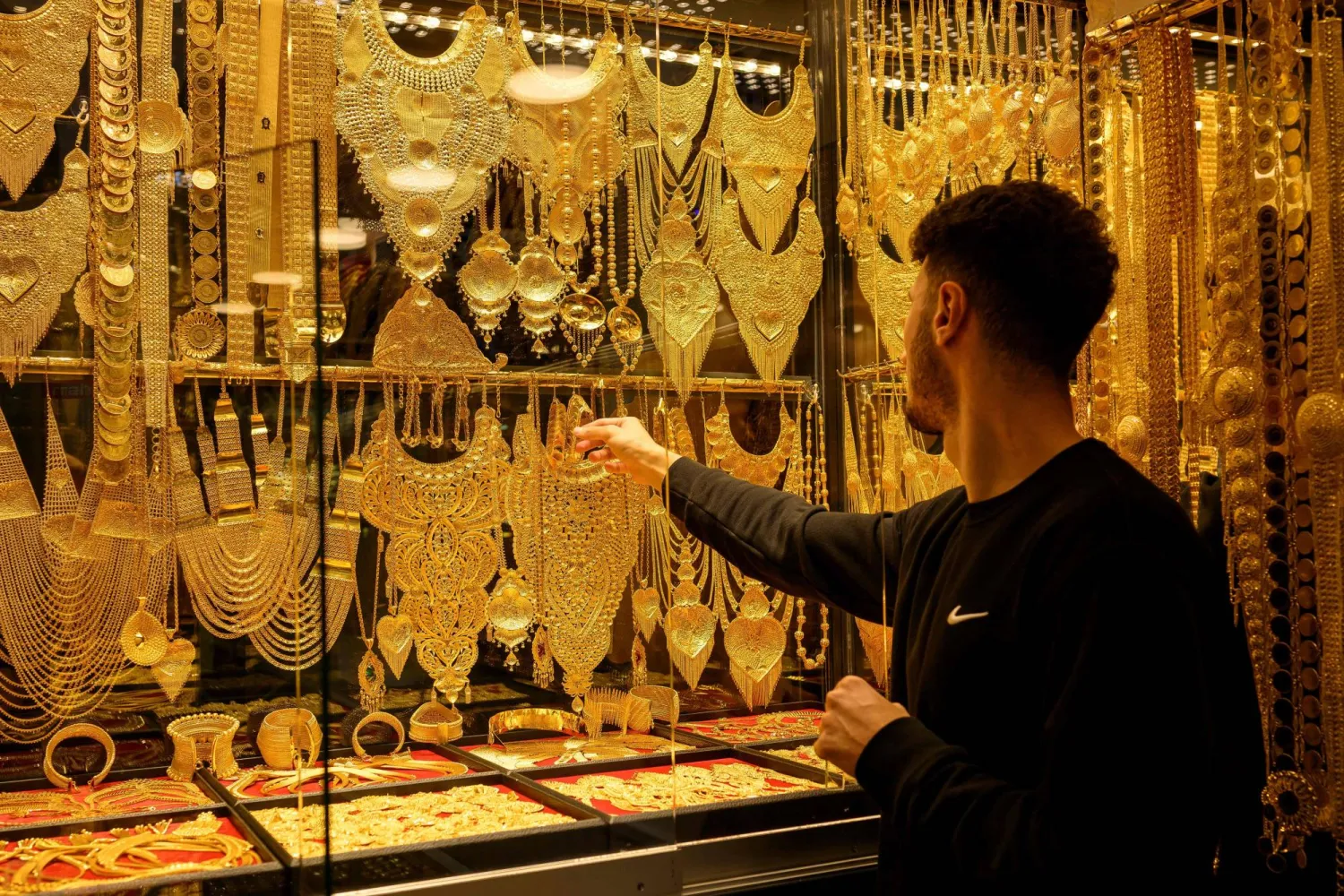
Gold bracelets and necklaces displayed for sale in a gold shop at Istanbul's Grand Bazaar (AFP)
Gold fell for a third consecutive session on Wednesday, as rising US Treasury yields and growing bets that the Federal Reserve will raise interest rates pressured the non-yielding metal.
Spot gold was down 0.8% at $3,974.75 per ounce as of 0849 GMT, after touching its lowest level since last November at $3,942.99 in the previous session. US gold futures for August delivery lost 1.3% to $3,987.70/oz.
The yellow metal on Tuesday recorded its first quarterly loss since January 2024, Reuters reported.
A selloff in US Treasuries on Tuesday pushed the benchmark 10-year yield up as much as 9 basis points before it backed off the highs. By Wednesday, yields were rising again, up 4 bps at 4.465%, outpacing increases in euro zone bond yields.
A stronger US dollar makes bullion less affordable for overseas buyers.
"The weakness is a bit driven by comments from Fed's Hammack, suggesting a rate hike might be needed and market participants pricing in a bit more rate hikes for this year," said UBS analyst Giovanni Staunovo. Federal Reserve Bank of Cleveland President Beth Hammack said on Tuesday she may advocate for higher rates if inflation pressures don’t moderate. According to CME FedWatch tool, traders see a nearly 67% chance of a rate hike by September.
Expectations for more hikes are not helping investment demand, and ETF holdings have seen renewed outflows in recent days, said Staunovo, noting that price volatility is expected around economic data releases this week.
June ADP employment data, due at 1215 GMT, and Thursday's nonfarm payrolls report could give further clues on the Fed's policy path.
Markets will also closely watch the European Central Bank's annual Sintra conference on Wednesday, where Fed Chair Kevin Warsh and ECB President Christine Lagarde are due to speak. On the geopolitical front, concerns persisted over the prospects for US-Iran diplomacy after Tehran said it would not meet senior US envoys who travelled to the region following the recent outbreak of hostilities.
Spot silver fell 1.4% to $57.75 per ounce.
Platinum slipped 0.6% to $1,542.70, after hitting its lowest point since November. Palladium slid 1.4% to $1,187.01.
Iraq's Central Bank: Exchange Rate Gap Narrows to 9%, No New Currency Being Printedhttps://english.aawsat.com/business/5335221-iraqs-central-bank-exchange-rate-gap-narrows-9-no-new-currency-being-printed
Iraq's Central Bank: Exchange Rate Gap Narrows to 9%, No New Currency Being Printed
Iraq's Central Bank Governor chairs a meeting on Thursday (Iraqi News Agency)
Iraq's Central Bank Governor Nizar Nasser Hussein announced Thursday that the gap between the dinar's official exchange rate and its parallel-market rate had narrowed to 9%, down from approximately 24%, while denying reports that new banknotes were being printed.
Hussein made the remarks during a visit by the Iraqi Parliament's Investment and Development Committee to the central bank to discuss the repercussions of changes to the dollar exchange rate, their impact on economic and investment activity, and the challenges facing investors and local companies, according to a parliamentary statement carried by the Iraqi News Agency (INA).
The governor confirmed that no currency printing was underway, describing reports to the contrary as inaccurate. He also noted that the gap between the official and parallel-market exchange rates had fallen to 9%, as Iraq faces mounting financial and economic pressures stemming from the war involving Iran and disruptions to oil exports.
In early October, the Central Bank of Iraq raised the dollar's selling rate to the public to 1,520 dinars, from approximately 1,320 dinars previously, a move that devalued the dinar by around 15% against the dollar amid pressure on oil revenues and foreign currency inflows.
Iraq's public finances depend heavily on oil revenues, making export disruptions and declining foreign currency inflows major sources of pressure on the state budget and foreign exchange market.
During the meeting, the central bank outlined measures taken to support the economy, including assistance to state-owned and private banks in providing citizens with concessional loans ranging from 5 million to 15 million Iraqi dinars.
For its part, the Investment and Development Committee stressed the need to limit the impact of exchange rate changes on investment project costs, raw material prices and contractual obligations, as well as their repercussions for market stability and citizens' purchasing power.
The committee called for stronger coordination between the central bank, government agencies and the banking sector, streamlined bank financing procedures, and the removal of obstacles facing investors to ensure projects can continue without imposing additional burdens on businesses and citizens.
The developments come as Iraqi authorities seek to contain the economic fallout from the war amid mounting pressure on oil exports and public finances.
Iraq had requested financial support from the International Monetary Fund, which projected that the country's economy would contract by 16% this year, according to estimates cited in the report.
Riyadh Metro Opens New Horizons for Commercial Real Estate Investmenthttps://english.aawsat.com/business/5335121-riyadh-metro-opens-new-horizons-commercial-real-estate-investment
Riyadh Metro Opens New Horizons for Commercial Real Estate Investment
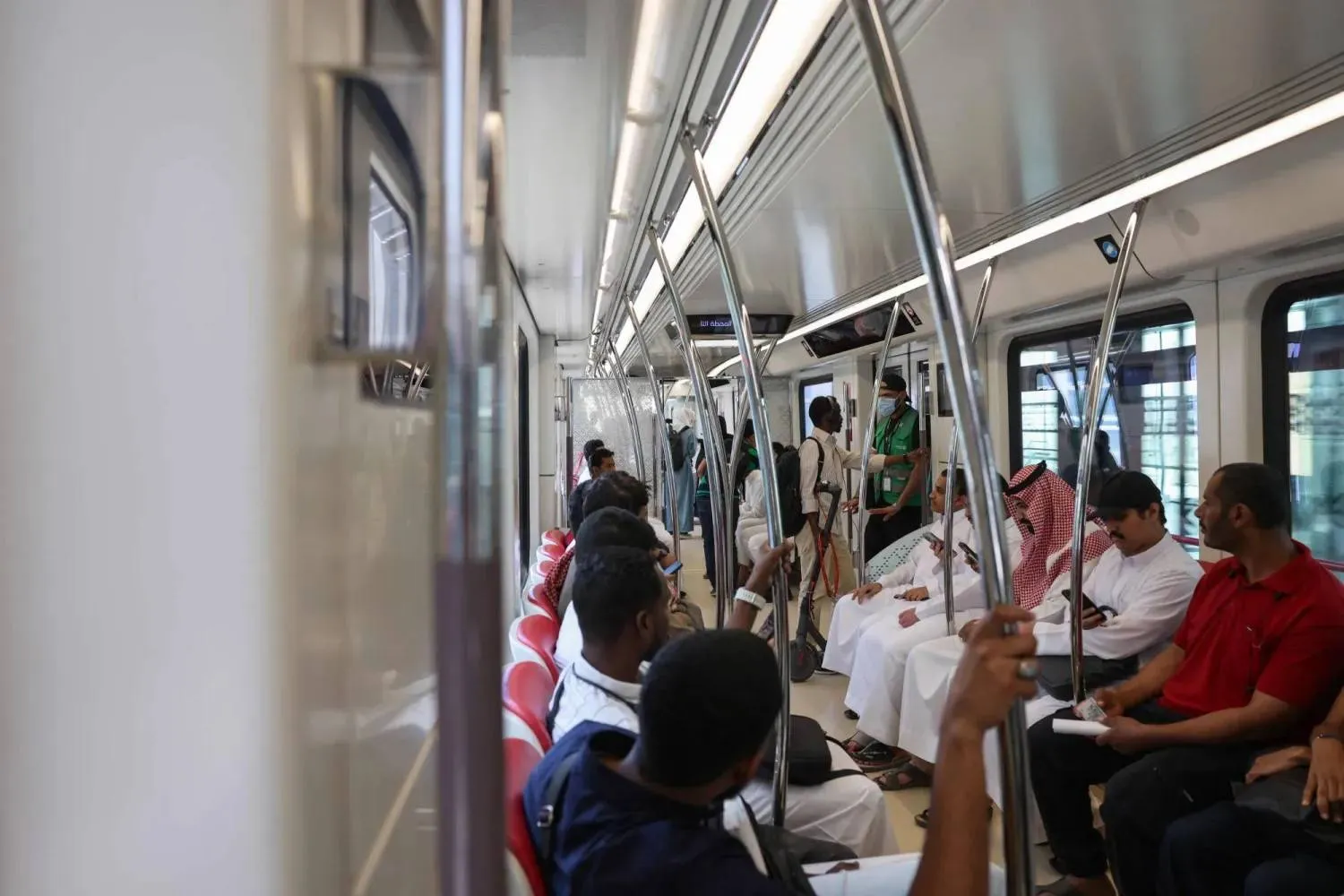
Men ride the Riyadh Metro heading to King Saud University Station in Riyadh (AFP)
Riyadh's public transport network is increasingly becoming a factor in real estate investors' calculations, with Saudi Arabia's rail services recording more than 40.9 million passengers during the third quarter of 2026. Of these, the Riyadh Metro accounted for 30.4 million riders.
This draws renewed attention to the attractiveness of commercial properties located near metro stations and the opportunities for cafés, restaurants, and retail outlets to benefit from passenger traffic. However, industry specialists note that assessing the metro's actual impact on rents and occupancy rates requires comparing property performance before and after operations began, while taking other market factors into account.
In this context, Khaled Al-Mobid, CEO of Menassat Realty Co., told Asharq Al-Awsat that the Riyadh Metro has begun to reshape the concept of a prime commercial location.
A desirable site is no longer limited to properties situated on major roads; ease of access through public transportation has become an additional factor enhancing investment appeal.
Al-Mobid added that average rents in Riyadh's major shopping centers reached approximately SAR 2,650 per square meter annually, reflecting growth of 1.2 percent, while occupancy rates remained stable at 91 percent during the first half of 2026. He stressed, however, that these indicators cannot be attributed solely to the metro.
He pointed to practical signs of the growing importance of transport-linked commercial activity, including the offering of 733 commercial units within the public transport network, in addition to opportunities available for cafés and financial services.
Metro Enhances the Appeal of Commercial Locations
Al-Mobid expects businesses that depend on daily customer traffic, particularly cafés, restaurants, and quick-service providers, to benefit from locations near the busiest stations. He believes proximity to metro stations will become a more important consideration for investors and developers when selecting sites and planning mixed-use projects.
He emphasized that the value of a commercial location in the future will not be measured solely by the number of cars passing by, but also by the number of people who can easily reach it without needing a vehicle.
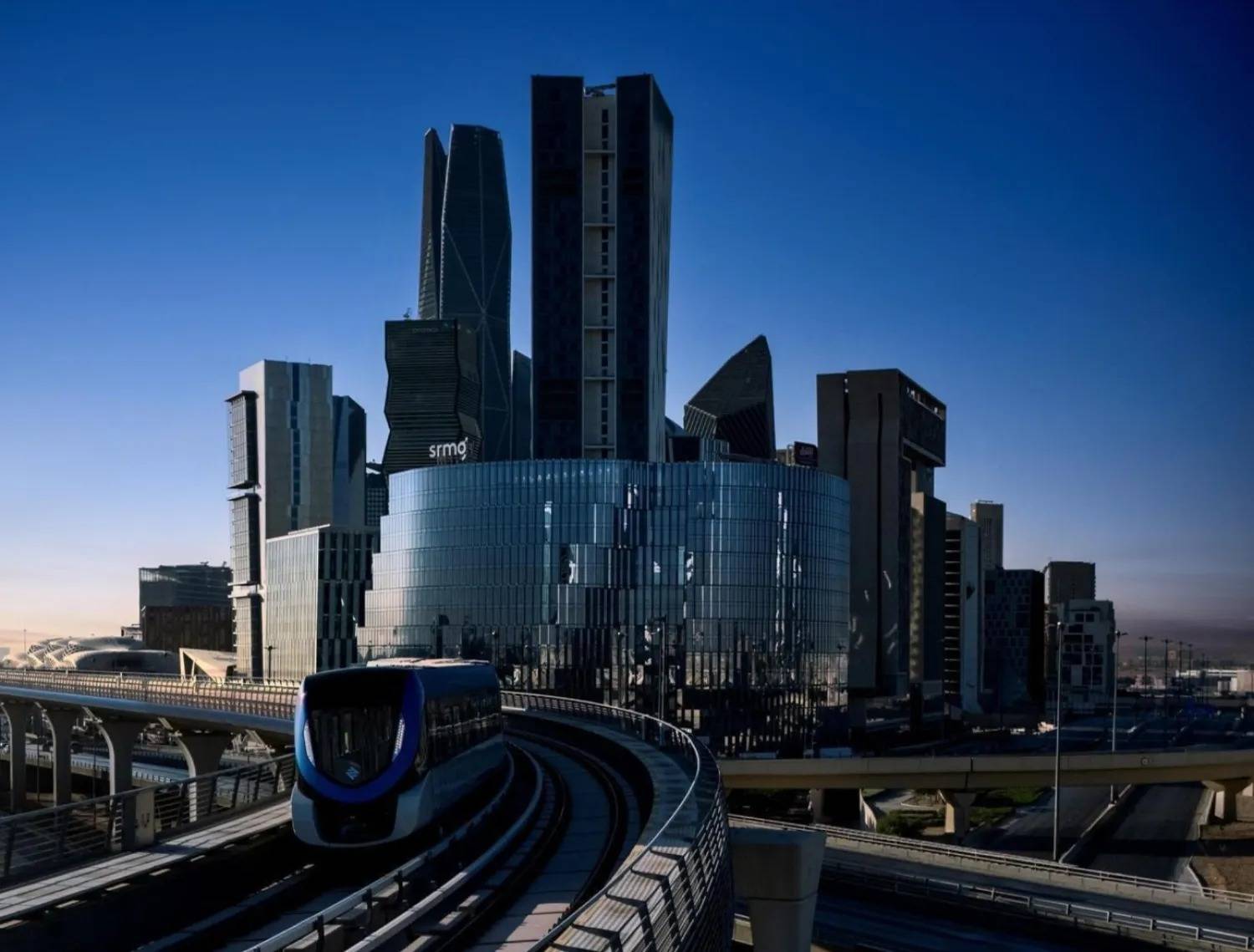
A view of the Riyadh Metro's Blue Line emerging from the Financial District Station (SPA)
Measuring the Real Estate Impact Requires Market Comparison
For his part, Khalid Aljasir, a real estate specialist and chairman of Amaken International Group, told Asharq Al-Awsat that the launch of the Riyadh Metro represents a significant development in the city's infrastructure and is expected to gradually influence the real estate demand landscape, particularly in commercial areas that benefit from improved accessibility and higher user traffic.
Aljasir explained that proximity to public transport stations can enhance a property's investment appeal, although the extent of the impact varies depending on the location, the nature of the commercial activity, and the level of demand in the area.
He stressed that increases in rents or occupancy rates cannot be attributed solely to metro operations without analyzing other market variables.
He noted that measuring the metro's actual impact requires comparing similar commercial properties located near stations with those farther away, both before and after operations began. Metrics such as average rents, occupancy rates, and demand levels can help determine how improved accessibility affects real estate performance.
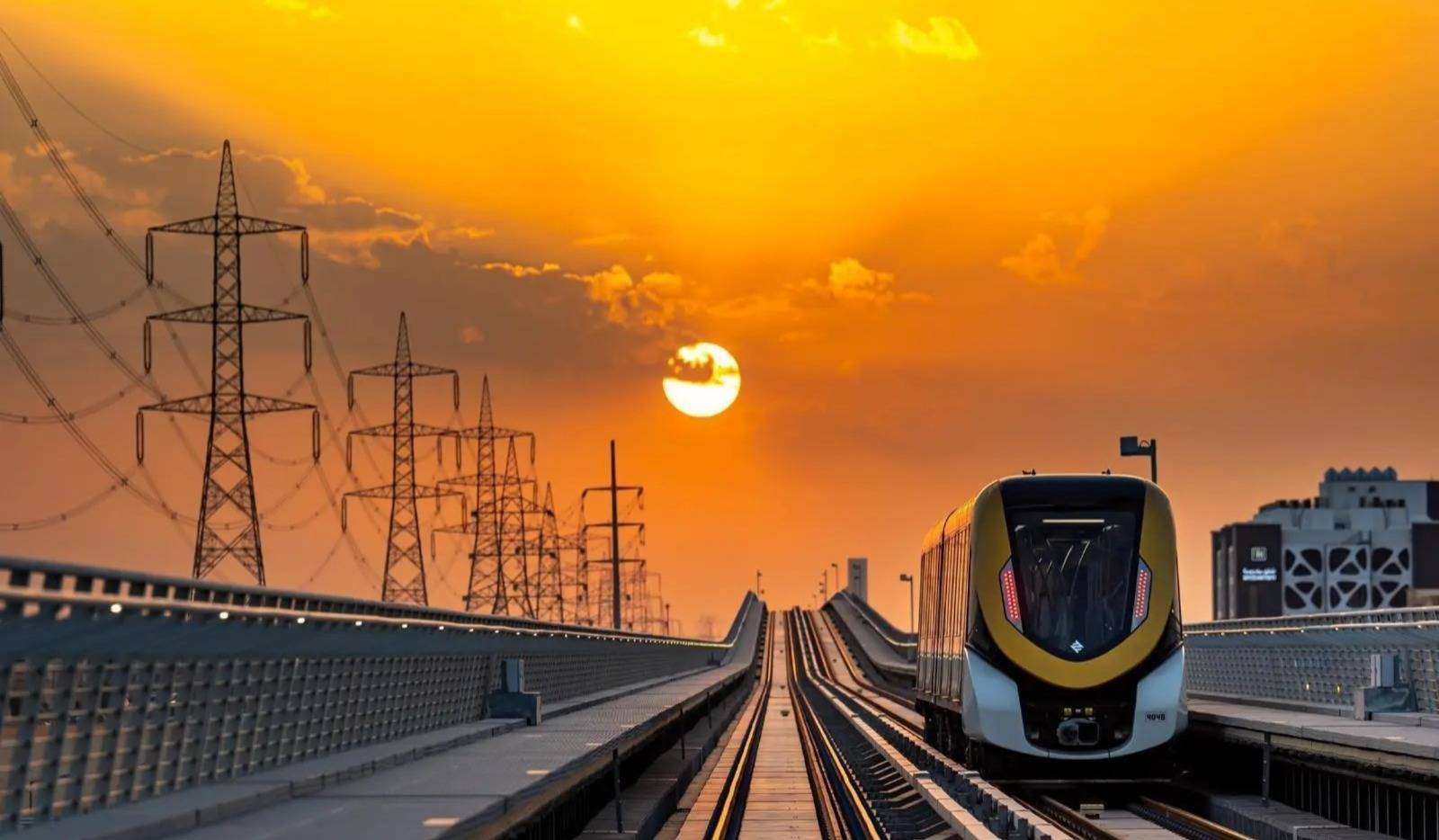
A view of the Riyadh Metro's Yello Line (SPA)
Accessibility Becomes a Key Consideration for Investors
Aljasir added that accessibility and integration with public transport networks are increasingly important factors when evaluating investment opportunities. Investors assess a property's ability to attract tenants and users, as well as how easily customers and employees can reach it, alongside traditional considerations such as location and size.
He noted that cafés, restaurants, retail stores, and daily-service businesses may benefit from sites experiencing steady pedestrian traffic near metro stations. Commercial offices may also gain from improved accessibility for employees and clients.
Furthermore, locations connected to public transport could become more attractive for mixed-use developments that combine commercial, office, and service functions.
Aljasir stressed that proximity to a station is not the sole determinant of investment success. Economic viability, rent levels, actual demand, the nature of the business, and overall site quality remain fundamental factors in decision-making.
He underscored the importance of studying the integration of public transportation and real estate development and evaluating its impact on expected cash flows and investment returns, rather than assuming that all properties near stations will experience the same increase in value or rental rates.
ECB President Lagarde Resigns after Months of Speculationhttps://english.aawsat.com/business/5335107-ecb-president-lagarde-resigns-after-months-speculation
ECB President Lagarde Resigns after Months of Speculation
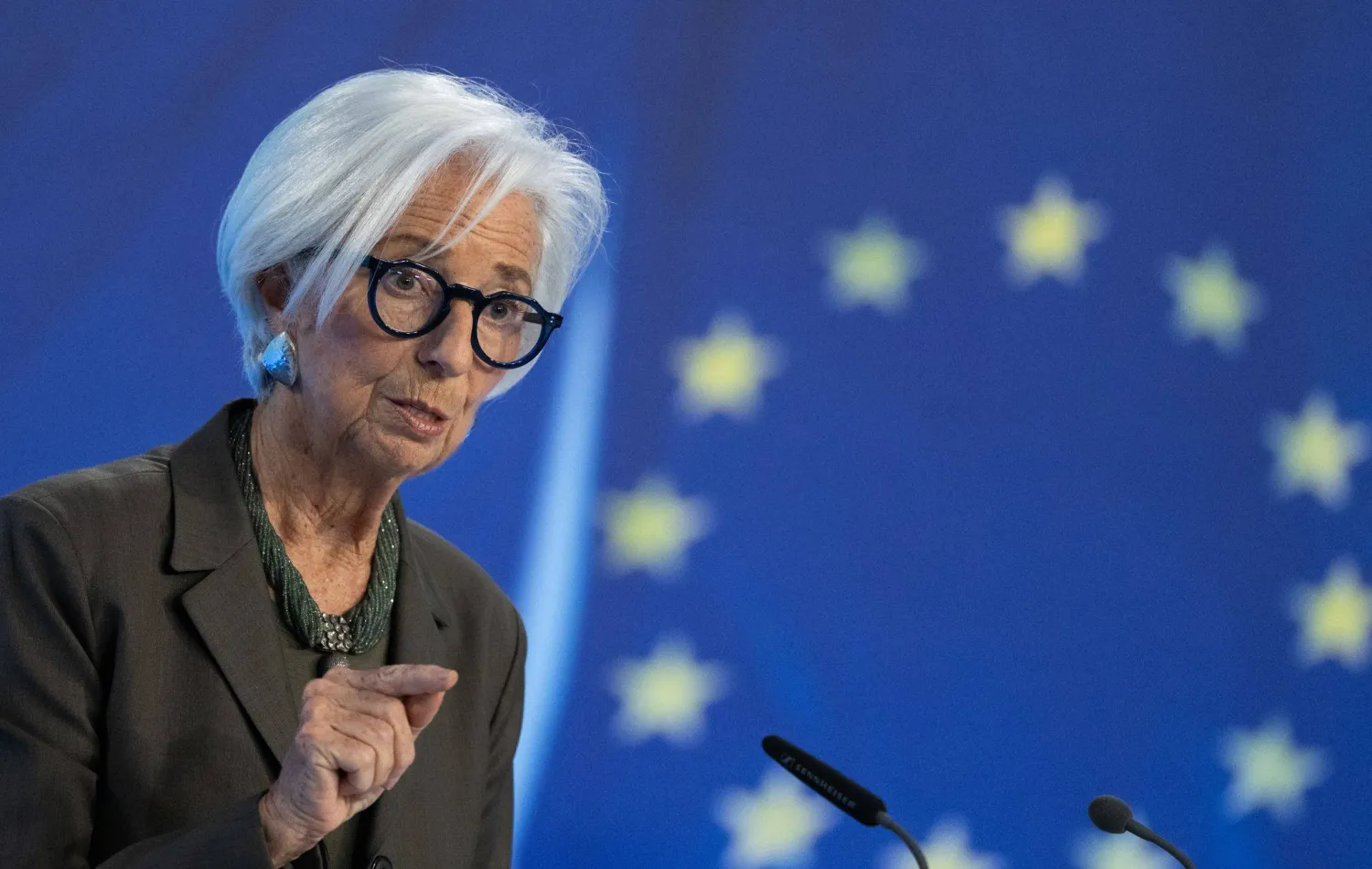
FILED - 05 February 2026, Hesse, Frankfurt/M.: FILE PHOTO - Christine Lagarde speaks at the ECB press conference. Photo: Florian Wiegand/dpa
European Central Bank President Christine Lagarde announced her resignation on Thursday, ending months of speculation about her future at a complex juncture for Europe and the ECB.
Lagarde will step down on February 7, giving current European Union leaders time to pick a successor well before a French presidential election that polls show far-right candidate Marine Le Pen is favorite to win.
"European Central Bank President Christine Lagarde today informed the Governing Council and the President of the European Council António Costa that she will step down from her position on 7 February 2027," Reuters quoted the ECB as saying in a press release.
The former central bank governors of the Netherlands and Spain, Klaas Knot and Pablo Hernandez de Cos, are seen as frontrunners to replace Lagarde.
Lagarde's term was scheduled to run until the end of October 2027 but speculation about an early departure had been mounting for months, with the World Economic Forum seen as a likely destination.
The move comes as the ECB is in the middle of a rate-hiking cycle, seeking to prevent an oil-price shock linked to the Iran war from feeding into other prices and wages.
But it must also contend with a surge in government bond yields — especially in debt-laden France — that has pushed up borrowing costs for households and businesses and which Lagarde has said will curb growth and inflation.
Caught between persistent inflation fueled by a renewed surge in energy costs and deteriorating financing conditions, the ECB is widely expected to keep its deposit rate at 2.5% on Thursday while signaling that another increase, potentially as soon as December, remains likely.
The ECB is due to announce its interest rate decision at 1315 GMT on Thursday, followed by Lagarde's regular press conference at 1345 GMT.
لم تشترك بعد
انشئ حساباً خاصاً بك لتحصل على أخبار مخصصة لك ولتتمتع بخاصية حفظ المقالات وتتلقى نشراتنا البريدية المتنوعة