


India Says Will Keep Expanding Oil Refining Capacity

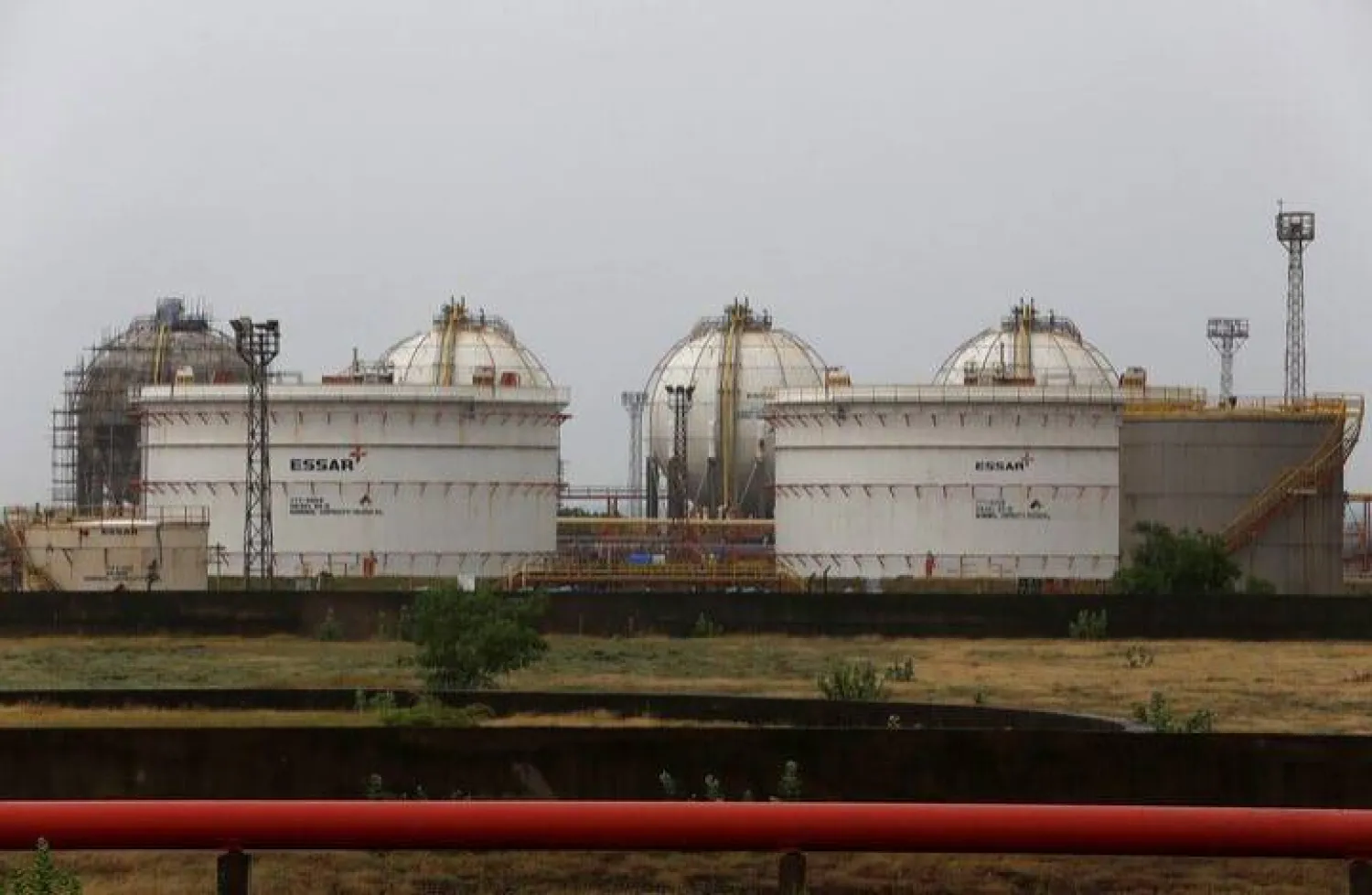
File photo: Storage tanks of an oil refinery of Essar Oil, which runs India's second biggest private sector refinery, are pictured in Vadinar in the western state of Gujarat, India, October 4, 2016. REUTERS/Amit Dave/File photo
TT

India Says Will Keep Expanding Oil Refining Capacity

File photo: Storage tanks of an oil refinery of Essar Oil, which runs India's second biggest private sector refinery, are pictured in Vadinar in the western state of Gujarat, India, October 4, 2016. REUTERS/Amit Dave/File photo

India will continue to build new crude oil refineries in order to ensure supply chain security even as Western nations shut processing units, Prime Minister Narendra Modi said.

“No new refinery has come up in the US in the last five decades and capacity in Europe has also been constantly declining,” Bloomberg quoted Modi as saying on Saturday, as he inaugurated the country’s first new refinery in a decade. He said India will continue to expand capacity.

The 180,000-barrels-a-day greenfield refinery in the heart of Rajasthan’s Thar desert, which has 2.4 million tons a year of petrochemical capacity and was built at a cost of $8.3 billion, is likely to be the only new refinery commissioned globally this year, according to BloombergNEF analysts.

The facility expands India’s refining capacity at a time when much of the West is shutting plants and investment elsewhere has slowed, highlighting New Delhi’s strategy of betting that robust domestic fuel demand, slower-than-expected electric-vehicle adoption and exports of refined products will continue to justify billions of dollars in new oil-processing infrastructure.

Meanwhile, traders have sold gasoline produced by Indian refiner Nayara Energy to Russia, which is grappling with fuel shortages triggered by Ukrainian attacks on its energy infrastructure, two sources with direct knowledge of the matter said on Thursday.

Reuters reported on Wednesday that Russia had begun seaborne imports of gasoline from India, without naming the supplier.

Reuters said that at least ⁠60,000 ⁠metric tons of gasoline had been dispatched from India to Russia, citing an industry source, with another source saying that two tankers, carrying 30,000 to 40,000 tons each, had been sent.




Gold Drops More than 2% on US Rate-hike Bets

FILE PHOTO: A raw gold bar is displayed at Nigeria’s booth at the 8th China International Import Expo (CIIE) venue in Shanghai, China, November 5, 2025. REUTERS/Maxim Shemetov/File Photo
TT

Gold Drops More than 2% on US Rate-hike Bets

FILE PHOTO: A raw gold bar is displayed at Nigeria’s booth at the 8th China International Import Expo (CIIE) venue in Shanghai, China, November 5, 2025. REUTERS/Maxim Shemetov/File Photo

Gold prices fell more than 2% on Monday as a rise in oil prices heightened inflation concerns and reinforced expectations of further Federal Reserve interest-rate hikes.

Spot gold was down 2.1% at $4,198.10 per ounce, as of 0357 GMT, on track for its biggest daily decline since September 1. US gold futures fell 2.1% to $4,231.00.

"The high bond yields and high oil price tandem continues to act ‌as a ‌thorn in gold’s side. Oil prices have ‌risen ⁠on mixed signals about ⁠oil flows, which is keeping inflation front and center for investors," said Tim Waterer, chief market analyst at KCM Trade.

Iran insisted that only diplomacy can solve its conflict with the United States and Israel, after US President Donald Trump said he rejected an Iranian proposal to reopen the Strait of Hormuz ⁠and end fighting. Oil prices drifted higher.

The ‌Fed raised rates earlier ‌this month, lifting its target rate range by a quarter percentage point ‌to between 3.75% and 4%. Traders are pricing in ‌a 68% chance of a US rate hike in October, according to CME's FedWatch Tool.

Higher energy prices can fuel inflation by raising costs across the economy. Gold is widely viewed as a hedge ‌against inflation, but a high interest rate environment increases the opportunity cost of holding the non-yielding ⁠metal.

Investors will ⁠watch a run of US labor market and inflation data this week, including job openings, the ADP employment report, the Personal Consumption Expenditures (PCE) price index and nonfarm payrolls.

"Stronger-than-expected inflation or employment numbers could keep upward pressure on bond yields and weigh further on gold," Waterer said.

Cleveland Fed President Beth Hammack said on Friday she is concerned that persistently high inflation risks conditioning the American public to accept elevated prices as the norm, adding the central bank cannot let that happen.

Among other metals, spot silver fell 3.4% to $62.08 per ounce, platinum was down 2.7% at $1,730.78 and palladium lost 2.8% to $1,231.46.


Syria Says Sending Imported Petrol to Iraq

A drone view shows facilities at the Banias oil refinery, in Banias, Syria, April 8, 2026. (Reuters)
TT

Syria Says Sending Imported Petrol to Iraq

A drone view shows facilities at the Banias oil refinery, in Banias, Syria, April 8, 2026. (Reuters)

Syria said on Sunday that it had begun delivering imported petrol to Iraq this week, months after Baghdad began exporting its oil via Syria when the Middle East war disrupted the Strait of Hormuz.

"The Syrian Petroleum Company has begun transporting petrol imported for Iraq through the Banias oil terminal" on Syria's Mediterranean coast, state news agency SANA reported.

The move is part of "a renewable three-month agreement to secure energy supplies amid disruptions to maritime traffic through the Strait of Hormuz", it added.

The report cited Syrian Petroleum Company official Ahmed Qubbaji as saying that operations began on Thursday with a first batch of 57 tankers, with work underway to increase the number of trucks crossing the Al-Tanf land border to Iraq to 200 per day.

The Qatari firm UCC was responsible for purchasing the petrol "from various global sources", with Syria then transporting it for a fee, Qubbaji said according to the report.

The operations support "Syria's role as a corridor for importing, exporting and transporting materials and energy between regional countries", he said.

The closure of Hormuz has hit Iraqi oil exports hard, and in April Baghdad said it had begun shipping crude through Syria by truck to circumvent the strait, though the amounts are far below what used to travel by sea.

Qubbaji said that up to 1,200 Iraqi oil tankers transited Syria daily.

Syria's new authorities, who ousted longtime ruler Bashar al-Assad in December 2024, have been seeking to reboot the country's economy and rebuild its infrastructure after more than a decade of war.

Syria and Iraq are also finalizing negotiations on a contract to restore a key oil pipeline between the countries, Syrian officials have said.


US Treasury Chief Claims Successes in Isolating Iran

FILE PHOTO: US Treasury Secretary Scott Bessent speaks to the media after two days of meetings with a Chinese delegation, in Paris, France March 16, 2026. REUTERS/Abdul Saboor/File Photo
TT

US Treasury Chief Claims Successes in Isolating Iran

FILE PHOTO: US Treasury Secretary Scott Bessent speaks to the media after two days of meetings with a Chinese delegation, in Paris, France March 16, 2026. REUTERS/Abdul Saboor/File Photo

US Treasury Secretary Scott Bessent said on Saturday that he had sent envoys around the world to pressure countries to economically isolate Iran, hailing new restrictions targeting the country's airlines and banks.

"At my direction, teams were dispatched across the globe to engage with countries and demand action against the Iranian regime," he said on X. "These efforts are delivering results."

Bessent noted that Türkiye and Oman have halted incoming flights from private carrier Mahan Air, while the United Arab Emirates has stopped all flights by Iranian airlines.

Dubai, the UAE's commercial hub, is a major destination for Iran's carriers, with multiple daily flights, a large Iranian community and close business links.

Iran's ISNA news agency, citing officials, reported that five countries had revoked the Iranian republic's flight permits: Azerbaijan, Georgia, Iraq, Oman and the UAE.

But it said flights were still operating to China -- which is refusing to yield to US pressure -- and Russia via the two main airlines, national carrier Iran Air and Mahan.

Mahan had announced that it would no longer serve Türkiye at the request of the Turkish authorities, but flights continue several times a day in both directions, via Iran Air or smaller Iranian carriers, according to the Tehran and Istanbul airport websites.

ISNA said Afghanistan, Armenia, Belarus, Malaysia, Pakistan and Tajikistan were still also being served.

Bessent had said on Monday that all Iranian airlines "will be shut down around the world".

He also highlighted new banking restrictions.

On Wednesday, the UAE central bank blocked transactions to and from Iran by branches of Iran's Bank Melli, accusing it of violating laws on money laundering, terrorism and arms proliferation.

Last week, Türkiye revoked the license of Iran's Bank Mellat, a semi-private financial entity that has been subject to Western sanctions for years.

A Wall Street Journal article shared by Bessent said Jonathan Burke, the Treasury's assistant secretary for terrorist financing, traveled across the Middle East and Europe over two weeks to push the plan to impose what Bessent called "economic D-Day" on Tehran.

The US Treasury has held discussions with more than 50 countries, the Journal reported.