


Renewed US-Iran Conflict Narrows Egypt’s Economic Growth Prospects

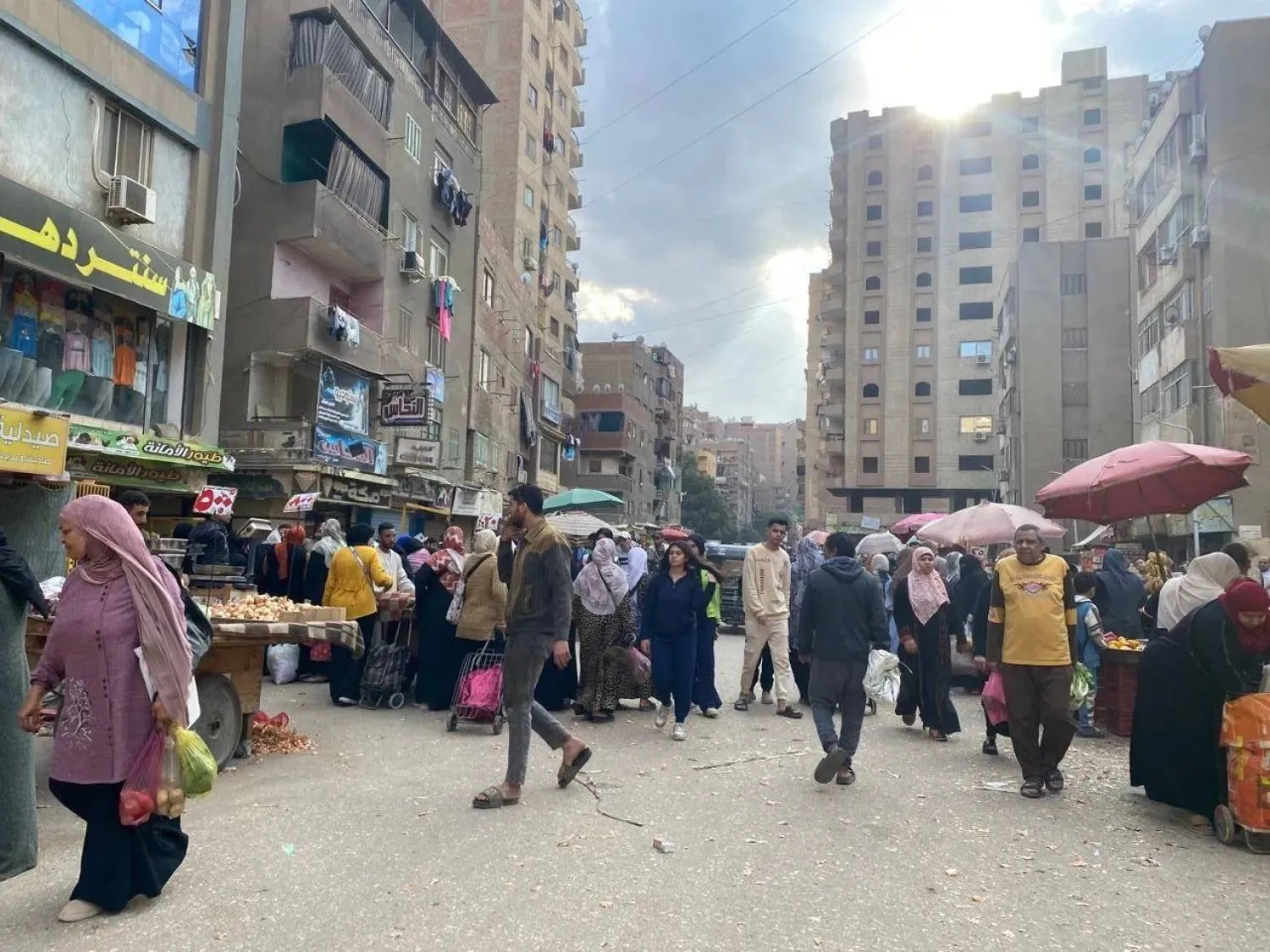
 A traditional market in Egypt’s Giza Governorate. (Asharq Al-Awsat) 
 A traditional market in Egypt’s Giza Governorate. (Asharq Al-Awsat) 
TT

Renewed US-Iran Conflict Narrows Egypt’s Economic Growth Prospects

 A traditional market in Egypt’s Giza Governorate. (Asharq Al-Awsat) 
 A traditional market in Egypt’s Giza Governorate. (Asharq Al-Awsat) 

The renewed US-Iran conflict in the Middle East is expected to further curb Egypt’s economic growth prospects as global oil prices are forecast to rise again, while several sectors of the economy continue to grapple with the effects of months of conflict, analysts say.

In its latest World Economic Outlook report released days ago, the International Monetary Fund (IMF) lowered its forecast for Egypt’s economic growth in fiscal year 2026-27 to 4.4 percent, down from the 4.8 percent projected in April. The IMF cited “the continuing impact of the Iran conflict — particularly the closure of the Strait of Hormuz — on the Middle East, weaker investment, higher financing costs, and persistent uncertainty.”

Economist Wael El-Nahas said the downgrade is “not limited to Egypt but reflects the global economy as a whole in light of the conflict’s repercussions,” describing the revision as both natural and expected.

Speaking to Asharq Al-Awsat, El-Nahas noted that the current period of skirmishes between the two sides could be viewed as a period of tacit understandings, allowing oil supplies to keep flowing while limiting sharp increases in food prices and other commodities. However, he warned that a renewed conflict would bring “a much worse period.”

Financial markets researcher Mohamed Mahdy Abdulnabi told Asharq Al-Awsat that geopolitical tensions are the main driver behind the weaker growth outlook.

He said Egypt faces several challenges under the current circumstances, including higher borrowing costs, greater reluctance among lenders to extend new financing, declining foreign investment, stagnation in the private sector, and continued losses at the Suez Canal.

President Abdel Fattah al-Sisi has previously estimated the canal’s losses at $10 billion, citing regional tensions and their impact on Red Sea shipping.

Abdulnabi warned that if the conflict persists, pressure on Egypt’s economy will intensify. “When global oil prices fell below $70 a barrel, the Egyptian government did not cut domestic fuel prices. But as soon as prices began rising again, discussion resumed over the automatic fuel pricing mechanism and the need to increase fuel prices,” he remarked.

The government raised fuel prices by between 14 and 30 percent last March, just 10 days after the US-Iran conflict erupted, amid rising energy import costs.

El-Nahas warned that global oil prices could climb above $100 a barrel, noting that Egypt’s current state budget is based on an assumed oil price of about $75 a barrel. Any increase, he said, would raise the country’s energy import bill and widen the budget deficit. He also cautioned that it could trigger another round of fuel price hikes, further worsening the cost-of-living crisis.

Egypt’s annual inflation rate stood at 14.3 percent in June, down slightly from 14.6 percent in May.

Despite the risks, El-Nahas stressed that some sectors, particularly tourism, still have strong growth prospects despite the renewed US-Iran conflict.


Focus Turns to Building Stronger Institutions in Africa to Speed Shift to Renewable Energy

A solar power plant in Burkina Faso (Reuters)
TT

Focus Turns to Building Stronger Institutions in Africa to Speed Shift to Renewable Energy

A solar power plant in Burkina Faso (Reuters)

Africa’s biggest clean energy challenge is shifting from building projects to building the institutions, markets and regulatory systems needed to deliver them at scale, experts say.

That challenge is emerging even as clean energy reaches a historic milestone globally.

Renewables generated 34% of the world’s electricity in 2025, overtaking coal’s 33% share. Together with nuclear power, renewables are expected to provide half of global electricity by 2030.

As industrialization, artificial intelligence and electrification push demand higher, experts say the bottleneck in transitioning to cleaner energy has shifted from technology to the systems supporting it, including funding.

Overcoming such obstacles is vital for securing access to power for the 600 million people in Africa who are yet to be connected.

“Clean energy is now cheaper than fossil fuels in virtually every part of the world,” former New York City Mayor Michael R. Bloomberg, the UN Secretary-General’s Special Envoy on Climate Ambition and Solutions, said in late June while announcing a new $285 million Bloomberg Philanthropies initiative to strengthen clean energy industries in emerging and developing economies.

“But fixable obstacles are still slowing down deployment, and with energy demand rising at an unprecedented speed, we can’t allow those obstacles to continue standing in the way,” The Associated Press quoted him as saying.

Rather than financing solar farms or wind projects directly, the initiative will invest in strengthening market design, regulatory capacity, technical expertise and industry institutions, areas increasingly viewed as essential for attracting private investment and accelerating use of renewable energy.

It reflects a growing consensus that Africa’s energy transition is constrained less by a lack of renewable resources or viable technologies than by the institutional capacity needed to turn those advantages into financially viable projects and electricity on the grid.

Many projects remain delayed by weak market design, limited grid planning, slow permitting processes and fragmented regulatory systems.

“What has been missing is not the potential, but the institutional infrastructure and capabilities to unlock it,” said Saliem Fakir, executive director of the African Climate Foundation.

“Philanthropy that targets those gaps directly is the kind of intervention that can shift the trajectory of a continent’s energy system.”

Across Africa, renewable energy costs have fallen sharply while investment appetite continues to grow. However, investors say policy uncertainty, slow permitting processes and limited regulatory capacity are hindering projects.

Wangari Muchiri, founder and chief executive of RE.Think Energy, said the commitment signals that “the next phase of the energy transition is not about proving clean energy works, it’s about removing the barriers preventing it from scaling fast enough.”

The Bloomberg initiative is looking beyond ambitious renewable energy targets to focus on helping projects attract long-term investments and connect to national grids.

“The next chapter of Africa's renewable energy story will not be only by the projects it builds, but the institutions that make these projects possible,” Muchiri said.


Volkswagen CEO Looks to Avoid Plant Closures as Automaker Moves to Cut Costs

FILE PHOTO: Oliver Blume, CEO of Volkswagen AG and Porsche AG, speaks during the annual Volkswagen Group press conference in Wolfsburg, Germany March 11, 2025. REUTERS/Liesa Johannssen/File Photo
TT

Volkswagen CEO Looks to Avoid Plant Closures as Automaker Moves to Cut Costs

FILE PHOTO: Oliver Blume, CEO of Volkswagen AG and Porsche AG, speaks during the annual Volkswagen Group press conference in Wolfsburg, Germany March 11, 2025. REUTERS/Liesa Johannssen/File Photo

Volkswagen's CEO indicated in comments published Sunday that he's trying to avoid closing plants as he seeks to turn around the automaker's performance.

The Wolfsburg, Germany-based company faces pressure to cut costs at home and increasingly intense competition in the lucrative Chinese market, in particular.

Last week, Volkswagen said its “fundamental realignment” over the past three years had reached its next phase, announcing plans to streamline the model lineup by up to half.

It didn't provide specifics, and questions remain over how else it will cut costs. There has been renewed speculation about the future of several plants in Germany.

“There are more intelligent solutions than closing plants,” CEO Oliver Blume told the Bild am Sonntag newspaper, according to The Associated Press.

He added that a cost-cutting program in Germany already is producing effects. “We were able to improve our factory costs in Germany by an average 20% last year alone,” he said, describing that as “strong progress.”

Blume argued that Volkswagen's products are very popular, but “we just earn too little money with them. So we must continue to reduce our costs. In all kinds of costs.”


While Global Oil Demand Drops, US Drivers Keep Buying More Gas

A man stands near his car at a gas station in Austin, Texas - July 10, 2026 (AFP)
TT

While Global Oil Demand Drops, US Drivers Keep Buying More Gas

A man stands near his car at a gas station in Austin, Texas - July 10, 2026 (AFP)

While global oil demand is set to decline this year due to the US-Iran conflict, gasoline consumption in the United States increased in the second quarter of 2026.

Gasoline prices surpassed $4.50 on average for a gallon of regular in the US in May, rising more than 50% since the start of the war, according to AAA data.

But that didn’t stop drivers from hitting the road; in fact, gasoline consumption rose in the US during the second quarter of the year, according to AP.

One reason may be because the percentage of household income spent on gasoline in the US has been declining for years, said Daniel Sternoff, senior fellow at the Center on Global Energy Policy at Columbia University. Plus, many people have been transitioning from remote work to in-office jobs, he added.

“Even though it’s a really political price that people pay a lot of attention to, if you are in the higher quintiles of income in the US, you might grumble about it, but you’re not really driving less just because of that increase in prices,” Sternoff said.

Jim Burkhard, vice president and head of crude oil research at S&P Global Energy, said, “The future of Hormuz is probably more uncertain today than it was at the beginning of the war.”

Burkhard said Iran is still trying to control the strait, while the US has not been able to fully restore normal operations, making a return to prewar conditions unlikely.

Global oil demand averaged just 97.9 million barrels per day in May, down 5.3 million barrels per day from a year earlier. Much of the decline was in Asia, which relies heavily on oil from the Middle East.

According to a report from the International Energy Agency Global, oil demand is set to decline this year for the first time since the height of the COVID-19 pandemic in 2020.

The drop, which the agency expects to amount to about 1 million barrels per day in 2026, is due to higher oil prices and disruptions to physical supply that weighed heavily, but unevenly, on various parts of the world, the report said.

The supply disruptions were caused by the war between the US and Iran, which left ships loaded with crude oil stranded in the Arabian Gulf for more than three months, unable to safely travel through the Strait of Hormuz, a major route for oil and gas shipments.

But the main exception to the global slump in oil usage was in the US, where gasoline use increased in the second quarter of 2026, despite the fact that pump prices were about 50% above their prewar levels in May, the report said.
