Fitch Affirms Saudi Arabia at 'A+', Outlook Stable
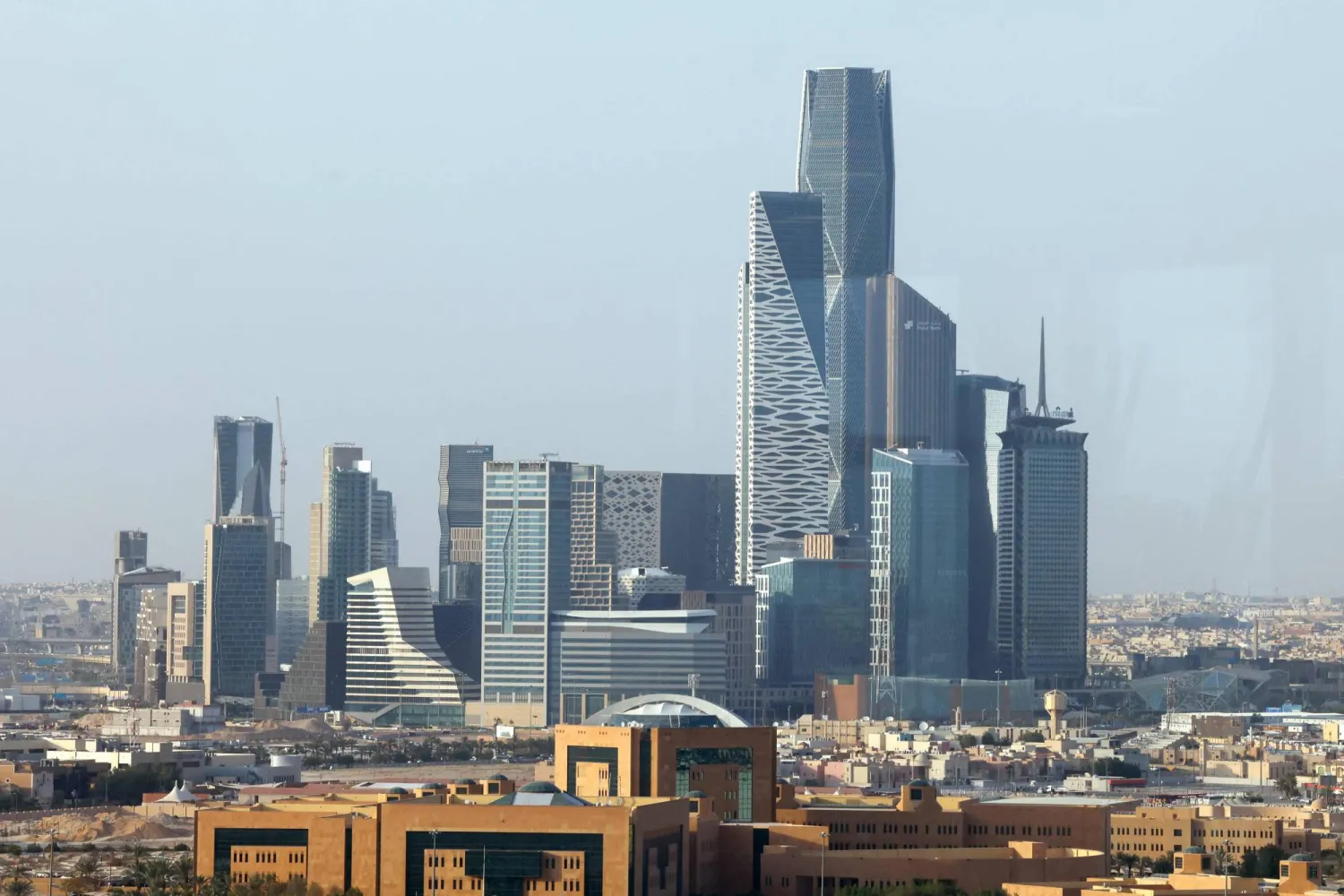
A view of the Saudi capital, Riyadh. (SPA)
TT
TT
Fitch Affirms Saudi Arabia at 'A+', Outlook Stable
A view of the Saudi capital, Riyadh. (SPA)
Fitch Ratings has affirmed Saudi Arabia's Long-Term Foreign-Currency Issuer Default Rating (IDR) at "A+" with a Stable Outlook, the agency said on Friday.
The rating reflects strong fiscal and external balance sheets, with government debt/GDP and sovereign net foreign assets (SNFA) considerably stronger than the "A" and "AA'" medians, and significant fiscal buffers in the form of deposits and other public sector assets, it added.
"Oil dependence and World Bank Governance Indicators (WBGI) have improved but remain weaknesses. Geopolitical risk is high, but the economy and public finances have been resilient to the US-Iran war," it stressed.
"Fitch forecasts real GDP growth will slow to 0.6% in 2026 due to disruption to trade caused by the closure of the Strait of Hormuz," it continued.
"Flows through the East-West pipeline supported oil production during the war and we expect output to be ramped up to meet external demand following the reopening of the Strait and to rebuild domestic stocks, but at an annual average of 9m b/d it will be below the 2025 level," it said.
"Non-oil growth will be hit by an inability to export petrochemicals during the closure of the Strait, but consumer spending held up and business confidence is recovering."
"Growth will rebound in 2027 as the normalization of flows through the Strait allows higher oil and petrochemicals production, before easing to 2.9% in 2028 The phased opening of gigaprojects (many of which have launched initial operations), the proximity of key events and guidance that the Public Investment Fund will keep domestic spending largely unchanged in its new five-year plan, will also support growth," Fitch noted.
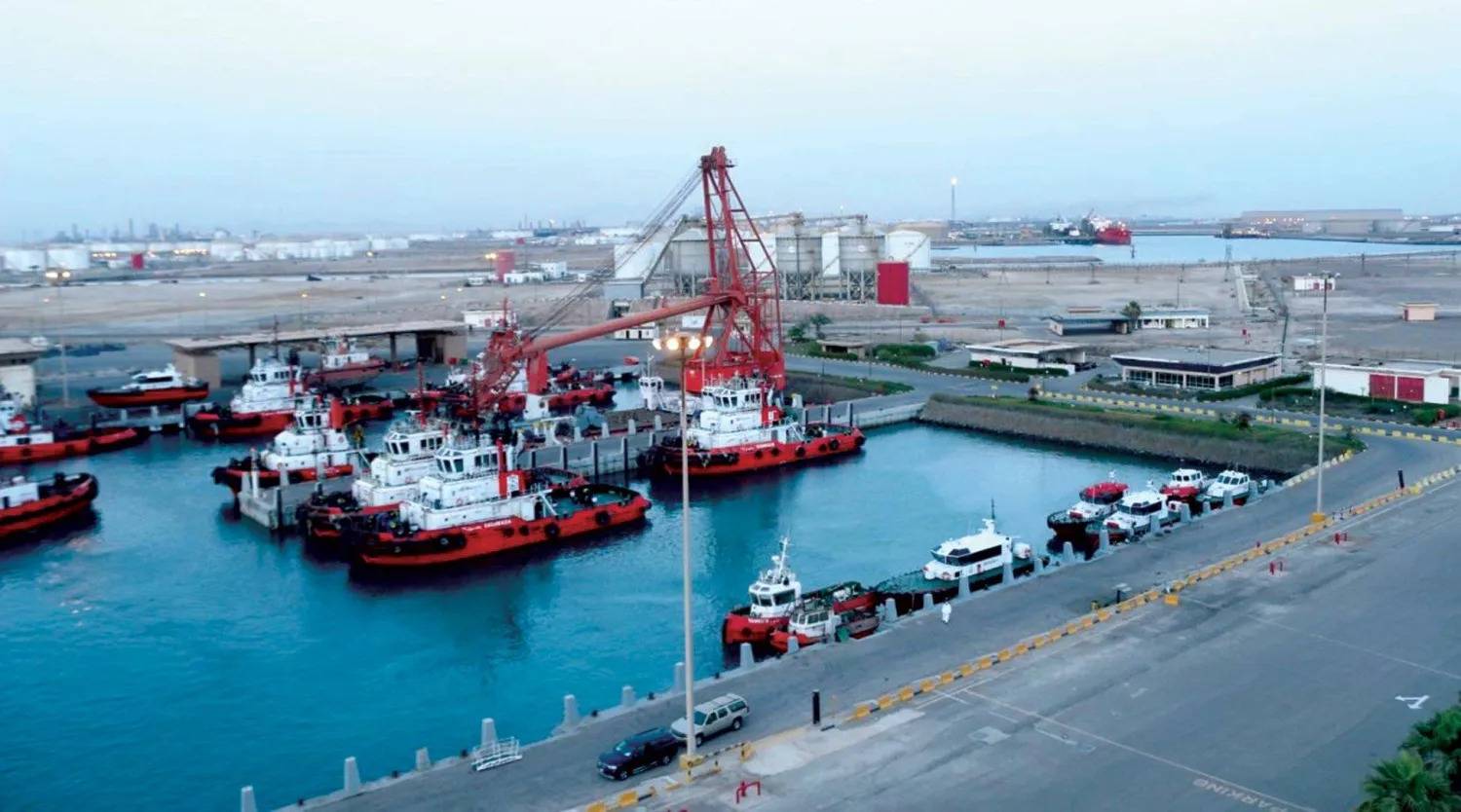
The King Fahd Industrial Port in Yanbu, Saudi Arabia (SPA)
"The fiscal deficit is projected to narrow in 2026 owing to higher oil revenues, as prices will offset lower volumes. Spending will also rise, reflecting the impact of the war, but much of the jump in 1Q was the precautionary frontloading of spending from later in the year," it said.
Fitch forecasts that lower oil revenues will widen the deficit to 4.7% in 2027, consistent with a fiscal breakeven oil price of USD94/b.
Spending is expected to decline in 2027, due to an easing of war-related pressures, lower capex and ongoing efforts to reduce rigidities in current spending. Expenditure adjustment will allow the deficit to narrow in 2028 despite a projected further fall in oil prices.
"Our fiscal projections are consistent with a further increase in debt/GDP, which we project at 41.3% at end-2028 (projected peer median of 58.1%), from 31.8% at end-2025. based on deposits remaining around 10% of GDP," said Fitch.
"Fitch forecasts a small current account surplus for 2026 due to higher oil export revenues. Lower oil prices and ongoing domestic demand growth that has a heavy component of imported goods, services and labor, will lead to a deficit of 5% of GDP by 2028. Current account deficits will be financed by external borrowing and the ongoing reorientation of public assets to domestic from foreign investments," it continued.
"Banks have been resilient to the war and did not require any support measures from the central bank," it stressed. "At end-1Q, non-performing loans were 1.1% and the Tier 1 capital ratio 19.2%, both improved from end-2024. Credit growth has slowed, particularly mortgages, in response to policy measures, and is being outpaced by deposit growth."
Fitch maintained its mid-year 2026 sector outlook for Saudi banks at "neutral".
Qatar Launches Wealth Fund Division for Domestic Investmentshttps://english.aawsat.com/business/5320520-qatar-launches-wealth-fund-division-domestic-investments
Qatar Launches Wealth Fund Division for Domestic Investments
Qatari flag flutters in Doha - AAWSAT/File
Qatar's prime minister announced on Sunday the creation of a new division of the Qatar Investment Authority dedicated to developing domestic investments.
"We aim to expand the role of the private sector in driving Qatar's economic growth," Sheikh Mohammed bin Abdulrahman Al Thani said as he announced the new division, Doha Investment, at a special edition of the Qatar Economic Forum in New York.
The annual gathering was cancelled in May, following weeks of Iranian missile and drone attacks on Gulf states, including Qatar, according to Reuters.
"It will support our strongest companies, help emerging businesses grow, deepen capital markets and attract international capital and expertise to contribute to this effort," he added.
The new division will operate as the dedicated manager of QIA's local portfolio, initially overseeing 45 state-owned enterprises that represent roughly one-third of the wealth fund's total assets, according to Sheikh Faisal bin Thani Al Thani, Qatar's minister of commerce and industry. He will serve as managing director and vice-chairman of Doha Investment.
Sheikh Faisal described the division not as a new creation but a consolidation, adding that the step has been under consideration for more than a decade.
PIF Launches Tawrid to Provide Supply-Chain Financing Products in Saudi Arabiahttps://english.aawsat.com/business/5320489-pif-launches-tawrid-provide-supply-chain-financing-products-saudi-arabia
PIF Launches Tawrid to Provide Supply-Chain Financing Products in Saudi Arabia
PIF Tower at the King Abdullah Financial District in Saudi Arabia’s capital, Riyadh (Asharq Al-Awsat)
The Public Investment Fund (PIF) on Sunday announced the launch of Tawrid Company for Financing Solutions, an innovative digital platform providing supply-chain financing products to companies in the Saudi Arabian market. Tawrid has obtained the Saudi Central Bank (SAMA) permit to operate under the regulatory Sandbox environment.
The financial services industry is a strategic enabler of the six ecosystems that PIF announced recently as part of its 2026-2030 strategy.
Supply-chain financing products help companies to fund their broader activities. Tawrid’s digital offering will further strengthen the Saudi private sector, particularly small and medium-sized enterprises, SPA reported.
Tawrid will play a significant role in connecting buyers, suppliers, and funders through its digital platform. It will offer products such as early settlement options against approved invoices, enabling businesses to expand their operations, enhance their working capital efficiency, and improve their liquidity management.
The launch of Tawrid is in line with PIF’s strategy to increase the Saudi private sector’s contribution to PIF’s projects and portfolio companies and to grow the private sector’s share of the local economy. Its platform will enable local banks registered on its network to engage with registered suppliers, strengthening supply chains and further supporting the diversification of financial services and the digitalization of trade in Saudi Arabia.
PIF’s investment in supply-chain financing is a natural evolution that builds on its efforts to advance the growth, resilience, and robustness of supply chains in the Saudi market. PIF has expanded opportunities for local suppliers and stimulated them to develop their capabilities in line with PIF’s strategic objectives to engage the private sector and enable it to contribute to a more diversified economy with deep, local, tech-enabled supply chains.
Head of Financial Institutions in MENA Investments at PIF Sultan Alsheikh said: “Tawrid will make Saudi supply chains stronger and more resilient by further enabling companies to access financing and improve their liquidity management. Its supply-chain financing products will enable businesses to operate with greater agility and efficiency, creating opportunities for the Saudi private sector in particular.”
Tawrid has started operations and has already signed binding agreements with local banks and companies, including Gulf International Bank (GIB), Saudi National Bank (SNB), Banque Saudi Fransi (BSF), ROSHN Group and Nesma & Partners.
PIF is one of the world’s most impactful investors, with a long-term investment strategy to further drive the economic transformation of Saudi Arabia and deliver sustainable financial returns.
IFAD President to Asharq Al-Awsat: Sanctions Are the Biggest Challenge for Remittance Channelshttps://english.aawsat.com/business/5320485-ifad-president-asharq-al-awsat-sanctions-are-biggest-challenge-remittance-channels
IFAD President to Asharq Al-Awsat: Sanctions Are the Biggest Challenge for Remittance Channels
Alvaro Lario, President of the International Fund for Agricultural Development (IFAD) (Asharq Al-Awsat)
Money sent by migrants to their families is no longer simply a means of covering living expenses. In many low- and middle-income countries, these flows have become a financial safety net for households during crises, a source of savings and investment, and a channel whose effects extend to rural economies and local markets.
Remittances to low- and middle-income countries reached $728.6 billion in 2025, an increase of 94 percent since 2016, making them larger than foreign direct investment in these countries and more than four times the amount of global official development assistance in the same year, according to the latest report by the International Fund for Agricultural Development (IFAD).
But the scale of these flows does not necessarily mean that households can access them more easily. As sanctions and financial compliance requirements have tightened in some markets, remittance channels face a dual challenge: maintaining the integrity of the financial system on the one hand, while ensuring that legitimate funds continue to reach households at the lowest possible cost on the other.
Alvaro Lario, President of the International Fund for Agricultural Development, told Asharq Al-Awsat that, from the perspective of remittances and financial inclusion, the main challenge posed by US economic sanctions is maintaining safe, low-cost and transparent channels for legitimate family remittances, while complying with sanctions and requirements to combat money laundering and terrorist financing.
He added that access to regulated financial channels becomes increasingly important in fragile and conflict-affected countries, where many families depend on money sent by relatives living abroad.
Sanctions and De-risking
Lario explained that the impact of sanctions on remittance flows varies depending on the country, the nature of the sanctions and the financial channels being used. The concern, he noted, is not limited to sanctions themselves, but also extends to how financial institutions respond to regulatory, compliance and reputational risks.
He said that even in cases where personal remittances are permitted, financial institutions may impose stricter measures when processing transactions connected to certain countries. Restrictions on correspondent banking relationships may also make it difficult for money transfer companies to maintain banking services.
This broader phenomenon is known as de-risking. It can reduce the number of formal channels available and increase remittance costs and waiting times, making it more difficult for households to access their money.
Lario warned of another possible consequence: making formal channels excessively difficult, costly or unavailable could push some transactions into informal channels, reducing rather than strengthening transparency and consumer protection.
Remittances have become a vital source of household resilience in many countries affected by conflict and economic crises (IFAD).
A Safety Net During Conflict
The importance of these channels is particularly evident in the Middle East, where some countries are experiencing protracted conflicts and economic crises.
Lario said that in many countries affected by conflict and economic crises, remittances have become a vital source of household resilience. Family members living abroad are often among the first to provide support when employment opportunities, public services, social protection networks and local economies are disrupted.
The importance of remittances lies not only in the regularity of their flow, but also in their ability to respond quickly to changing circumstances. Migrants may increase the frequency or adjust the amount of their transfers according to their families' needs, making this money, according to Lario, a first line of defense against shocks.
The funds are primarily used to cover basic needs such as food, housing, healthcare and education. But they can also give families an opportunity to build savings, obtain insurance and credit, and invest.
In Syria, a World Bank analysis found that receiving international remittances was associated with a 12-percentage-point reduction in the extreme poverty rate and an 8-percentage-point reduction in the overall poverty rate, according to Lario. In Lebanon, remittances have likewise become an increasingly important economic safety valve for households amid the prolonged crisis.
But the ability to send money is not enough. Families need financial infrastructure capable of receiving and using those funds. This becomes more complicated during conflicts, when financial infrastructure is damaged, liquidity and cash become scarce, displacement increases, people's ability to move around declines, payment systems are disrupted, or financial service providers withdraw.
1.1 Billion People Connected to Remittances
IFAD figures reveal the scale of the social economy behind these flows. The report estimates that 220 million migrants and members of the diaspora support around 1.1 billion relatives, meaning that roughly one in every six people worldwide is connected to remittances.
Since 2016, flows have increased by 94 percent, outpacing population growth and migration from low- and middle-income countries.
This money does not go only to cities. Roughly one out of every three dollars migrants send home, or about $233 billion, reaches rural areas, which often suffer from limited formal employment opportunities, financial services and infrastructure.
IFAD estimates that households receiving remittances invest around $22 billion each year in rural agrifood systems, supporting agricultural production, rural enterprises and employment opportunities.
Lario said that the impact of this money extends beyond recipient households to local businesses, jobs and food systems. For millions of rural households, he added, remittances can represent the starting point for building savings, obtaining insurance and accessing suitable credit.
Remittances Enter the Digital Age
The shape of the remittance market is changing alongside the growth in its value. IFAD estimates that more than half of remittances now originate through a digital channel, a shift that has helped reduce sending costs and made the process faster and easier.
But the digital transition is not yet complete. Only 35 percent of the services measured in 2025 were fully digital on both the sending and receiving sides, while cash remains widely used across many remittance corridors.
The report argues that the next step is not simply digitization, but also the ability of households to use the financial system more broadly. It therefore calls on governments, regulators, financial institutions and development partners to reduce remittance costs, increase transparency, improve services in rural areas, strengthen financial and digital capabilities, and expand access to savings, insurance, credit and investment.
Asia Leads as Africa Accelerates
Asia and the Pacific remain the global center of the remittance economy, receiving $384.9 billion, or 53 percent of the total flows covered by the report over the past decade.
Latin America and the Caribbean recorded the fastest growth over the decade, with remittances rising 132 percent to $168.6 billion, while flows to Africa increased 86 percent to $124.2 billion.
These figures reflect significant differences in how heavily economies depend on money from their diasporas. In 23 countries, remittances account for more than 10 percent of GDP, while in nine countries their value exceeds total exports of goods and services.
For IFAD, maximizing the impact of these flows does not mean turning them into a substitute for public investment, social protection or climate finance. Rather, it means building a financial environment that allows households to use the money they receive more safely and efficiently, and to transform part of it from a tool for meeting urgent needs into a means of saving, investing and building resilience.
لم تشترك بعد
انشئ حساباً خاصاً بك لتحصل على أخبار مخصصة لك ولتتمتع بخاصية حفظ المقالات وتتلقى نشراتنا البريدية المتنوعة