
Global Economy Faces Fresh Supply Shock as Hormuz Crisis Escalates

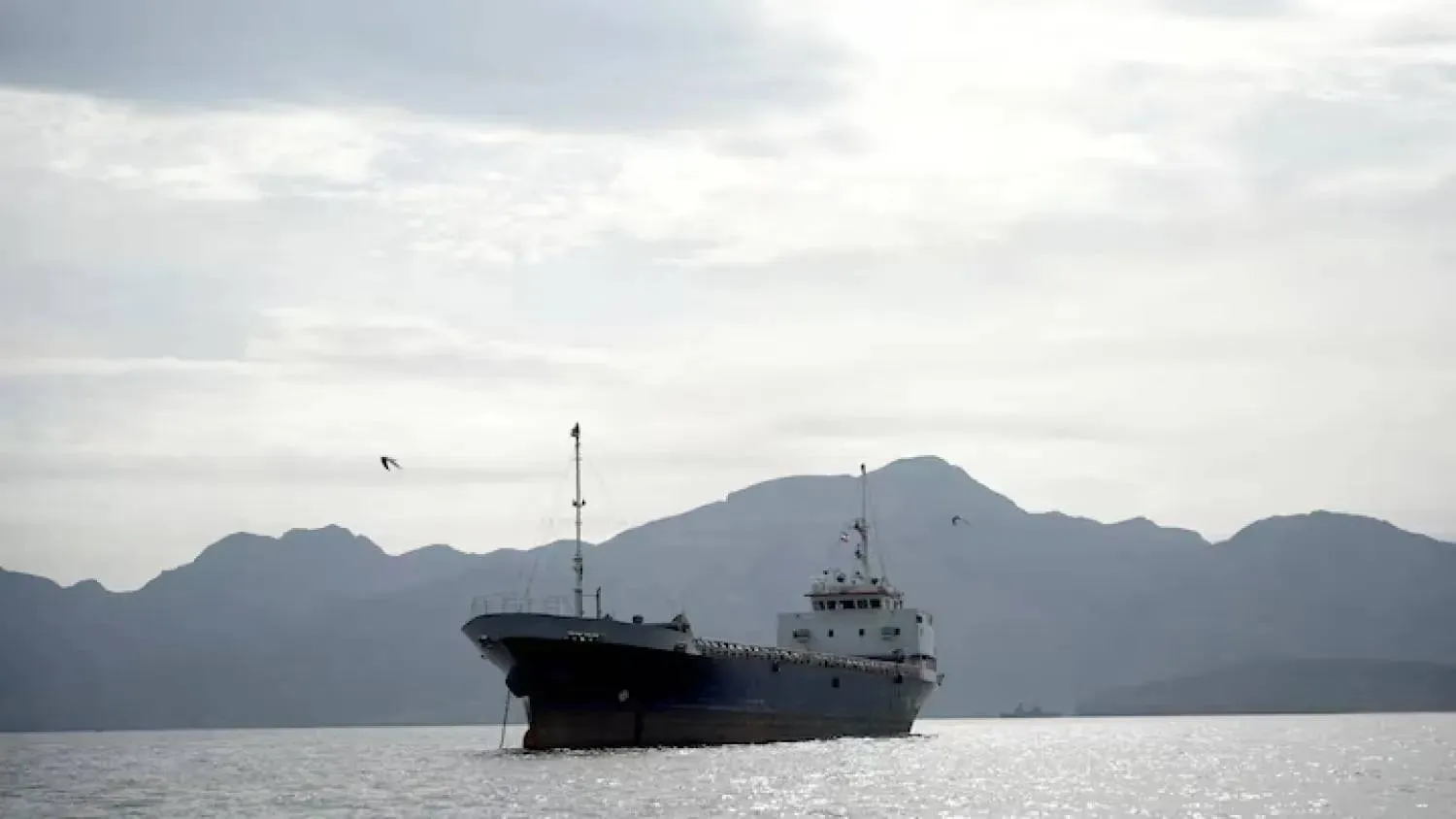
 A ship crosses the Strait of Hormuz off Oman’s Musandam governorate on April 12. REUTERS
A ship crosses the Strait of Hormuz off Oman’s Musandam governorate on April 12. REUTERS
TT

Global Economy Faces Fresh Supply Shock as Hormuz Crisis Escalates

 A ship crosses the Strait of Hormuz off Oman’s Musandam governorate on April 12. REUTERS
A ship crosses the Strait of Hormuz off Oman’s Musandam governorate on April 12. REUTERS

A fresh escalation in US-Iranian tensions has plunged global trade and financial markets back into deep uncertainty, threatening to slow economic growth and drive shipping and marine insurance costs to record highs.

With the conflict hanging over vital sea lanes, the global economy is also grappling with mounting structural strain.

Strategic oil reserves are lower, while investors are increasingly reluctant to commit to long-term plans, leaving markets exposed to the sharpest supply shock since the start of the year.

Fadl bin Saad al-Buainain, a member of Saudi Arabia’s Shura Council, said the renewed tensions were gathering force like a “snowball,” with the risks growing steadily.

He said rising uncertainty would weigh particularly heavily on regional economies, disrupting foreign investment flows and undermining government spending on development projects.

Al-Buainain said any direct confrontation would hit critical sectors immediately.

Energy supplies could be disrupted by the closure of the Strait of Hormuz or attacks on oil facilities, sending prices sharply higher.

Major shipping routes could be cut, paralyzing supply chains. Government budgets would also come under pressure, especially in countries without alternative routes for crude exports, threatening both revenues and imports.

He warned against allowing the political deadlock to drag on and urged the activation of serious diplomatic channels.

Without genuine diplomacy, he said, proposed negotiations and agreements risk becoming little more than a means of buying time and preparing for a wider military confrontation.

Al-Buainain also called on the international community, through the United Nations and the Security Council, to adopt a clear resolution guaranteeing freedom of navigation in the Strait of Hormuz.

He said an international force should be formed to protect oil tankers and cargo vessels from continued Iranian threats to civilian assets and economic facilities.

Economy caught in the ‘Hormuz vise’

Abdulrahman Baeshen, head of the Al-Shorouq Center for Economic Studies in Jazan, said recent US statements that memorandums of understanding with Tehran were no longer in effect, combined with renewed strikes on Iranian ports and cities, had piled further pressure on global markets already under strain for months.

The impact was immediate, with oil prices rising by more than $4 a barrel.

Baeshen warned that the continued militarization or closure of the Strait of Hormuz would deliver a series of severe shocks to the global economy.

Energy, food, agriculture, pesticides and fertilizers would be among the first sectors hit, he said.

He said a return to economic stability and market certainty depended on the parties resuming serious negotiations and halting reciprocal attacks, allowing the strategic waterway to reopen and shipping to resume safely.

Supply shocks return as recovery falters

Khaled Ramadan, head of the International Center for Strategic Studies in Cairo, said renewed military conflict around the Strait of Hormuz threatened to revive the supply shock that hit the world in early 2026.

He said the escalation could push crude prices close to $100 a barrel in the near term, disrupt petrochemical and food supplies and trigger a renewed surge in energy inflation.

The global economy had only begun to recover from the spring crisis, Ramadan said, but was now entering another period of instability.

The risks are greater because major economies have already drawn down part of their strategic petroleum reserves, he added.

Ramadan said the sectors most at risk were:

Shipping and maritime transport: Hit by record bunker fuel prices and soaring war-risk insurance costs.

Agriculture and fertilizers: Pressured by an expected rise in natural gas prices, raising the risk of a global food crisis that would hit developing countries hardest.

Heavy and energy-intensive industries: Including aluminum, steel, cement and chemicals.

Aviation and tourism: Exposed to higher jet fuel prices and rising airfares.

Options for confronting the crisis

Ramadan said the deep imbalances caused by tensions in the Strait of Hormuz required a two-track response to the cumulative strain.

The first track would focus on urgent action.

That would include immediately activating alternative pipelines, such as Saudi Arabia’s East-West pipeline and pipelines in the United Arab Emirates, increasing production from independent producers including the United States, Brazil and Canada, and redirecting trade through alternative logistics networks.

The second track would focus on longer-term structural measures.

These would include accelerating energy diversification, building larger strategic reserves capable of absorbing prolonged shocks and creating strong regional energy alliances linking Gulf producers with consumers in fast-growing Asian markets.



World Bank Projects Lebanon Economy to Contract by 6.4% Due to War

People inspect a damaged building after an Israeli airstrike on the village of Ansar, southern Lebanon, 15 August 2026. (EPA)
TT

World Bank Projects Lebanon Economy to Contract by 6.4% Due to War

People inspect a damaged building after an Israeli airstrike on the village of Ansar, southern Lebanon, 15 August 2026. (EPA)

The World Bank on Friday projected that Lebanon's economy would contract by 6.4 percent this year, as the latest Israel-Hezbollah war derailed the country's efforts at recovery.

Lebanon has been dealing with an unprecedented financial crisis since 2019 and was still reeling from the 2024 Israel-Hezbollah war when the Iran-backed group drew it into the Middle East conflict by attacking Israel in March.

Israel responded with a heavy air campaign and ground invasion that Lebanese authorities say have killed more than 4,300 people.

Due to the war, "real GDP is projected to contract by 6.4 percent in 2026, reflecting the collapse in tourism, weaker consumption, disrupted supply chains, heightened insecurity, and prolonged displacement," the World Bank said in a report.

Inflation is also expected to rise to 17.5 percent this year, according to the report.

The World Bank said Lebanon's economy had strengthened before the latest conflict, with an estimated real GDP growth of 4.2 percent in 2025, "the fastest since the onset of the 2019 financial crisis".

"Advancing reforms -- particularly on banking sector restructuring and fiscal management -- will be critical to restoring confidence, protecting stability, and mobilizing the financing needed for reconstruction and recovery," Dahlia Khalifa, the World Bank's Middle East director, said.

The international community has been demanding that Lebanese authorities enact financial reforms in order to secure much-needed economic aid.

Last week, parliament passed amendments to a bank resolution law aimed at restructuring troubled banks and addressing the country's banking crisis.

The International Monetary Fund welcomed the law, describing it as "a very good step that reflects Lebanon's commitment to aligning its legislation with the best international practices".

Lebanon has been in discussions with the IMF, which said it would resume its meetings in Beirut next month.


Tunisia Olive Oil Exports Surge 55%, Bringing in $1.6 billion

Tunisian olive oil producer, Mustapha Mtiraoui, displays olives to be pressed at his oil mill in Kairouan, Tunisia February 24, 2024. REUTERS/Jihed Abidellaoui
TT

Tunisia Olive Oil Exports Surge 55%, Bringing in $1.6 billion

Tunisian olive oil producer, Mustapha Mtiraoui, displays olives to be pressed at his oil mill in Kairouan, Tunisia February 24, 2024. REUTERS/Jihed Abidellaoui

Tunisia's olive oil exports surged 55.3% to a record 368,000 metric tons in the first nine months of the 2025/26 season, bringing in $1.6 billion in export revenue, up 44.4% from a year earlier, official data showed on Friday.

The surge in olive oil shipments, a vital source of foreign currency and Tunisia's top agricultural export, will provide a much-needed boost to the country's finances as the government grapples with persistent economic and fiscal pressure.

The jump in exports was driven by strong global demand during the first nine months of the season, which began in November.

Extra virgin olive oil accounted for 83.6% of total shipments, the National Observatory of Agriculture said, Reuters reported.

The European Union remained the biggest destination, taking 57.1% of Tunisian olive oil exports, while North America accounted for 24%. More than 70 countries imported Tunisian oil during the period.

Exports to other markets included Saudi Arabia, which took 4.6%, Jordan with 3.1% and African markets at 3.8%, with Egypt accounting for 3.3%.

Bottled olive oil exports rose 50.8% to 51,500 tons, but bulk oil still accounted for the vast majority of shipments, underscoring Tunisia's challenge in capturing more value from one of its most important export products.


South African Rand Hits Strongest Level since Start of Iran War

South African Rand coins are seen in this illustration picture taken October 28, 2020. REUTERS/Mike Hutchings/Illustration
TT

South African Rand Hits Strongest Level since Start of Iran War

South African Rand coins are seen in this illustration picture taken October 28, 2020. REUTERS/Mike Hutchings/Illustration

The South African rand strengthened on Friday to its strongest level since the United States and Israel launched attacks on Iran on February 28, as rising gold prices and a weaker dollar boosted the commodity-linked currency.

At 1229 GMT, the rand traded at 15.9925 against the dollar , about 0.8% stronger from its previous close.

Gold, one of South Africa's main exports, rose to a more than three-month high on Friday and was on track for a third straight weekly gain.

The precious metal was supported by a weaker dollar and the US Treasury's announcement that it would increase buybacks of longer-dated securities, Reuters reported.

US Treasury Secretary Scott Bessent said he may further increase the government's repurchases of Treasuries. That came after the Treasury said it would double the size of buybacks on longer-dated securities over the next quarter.

The US dollar was set to end a bumpy week lower, making greenback-priced bullion more affordable for buyers overseas.

Like other emerging market currencies, the rand has been at the mercy of global market sentiment, particularly since the start of the Iran war.

On the Johannesburg Stock Exchange, the Top-40 index was last up 2.2%.

South Africa's benchmark 2035 government bond was also firmer in early deals, as the yield fell 0.5 basis points to 8.56%.