


Al-Jasser to Asharq Al-Awsat: Saudi Arabia is a Vital Artery for Global Trade

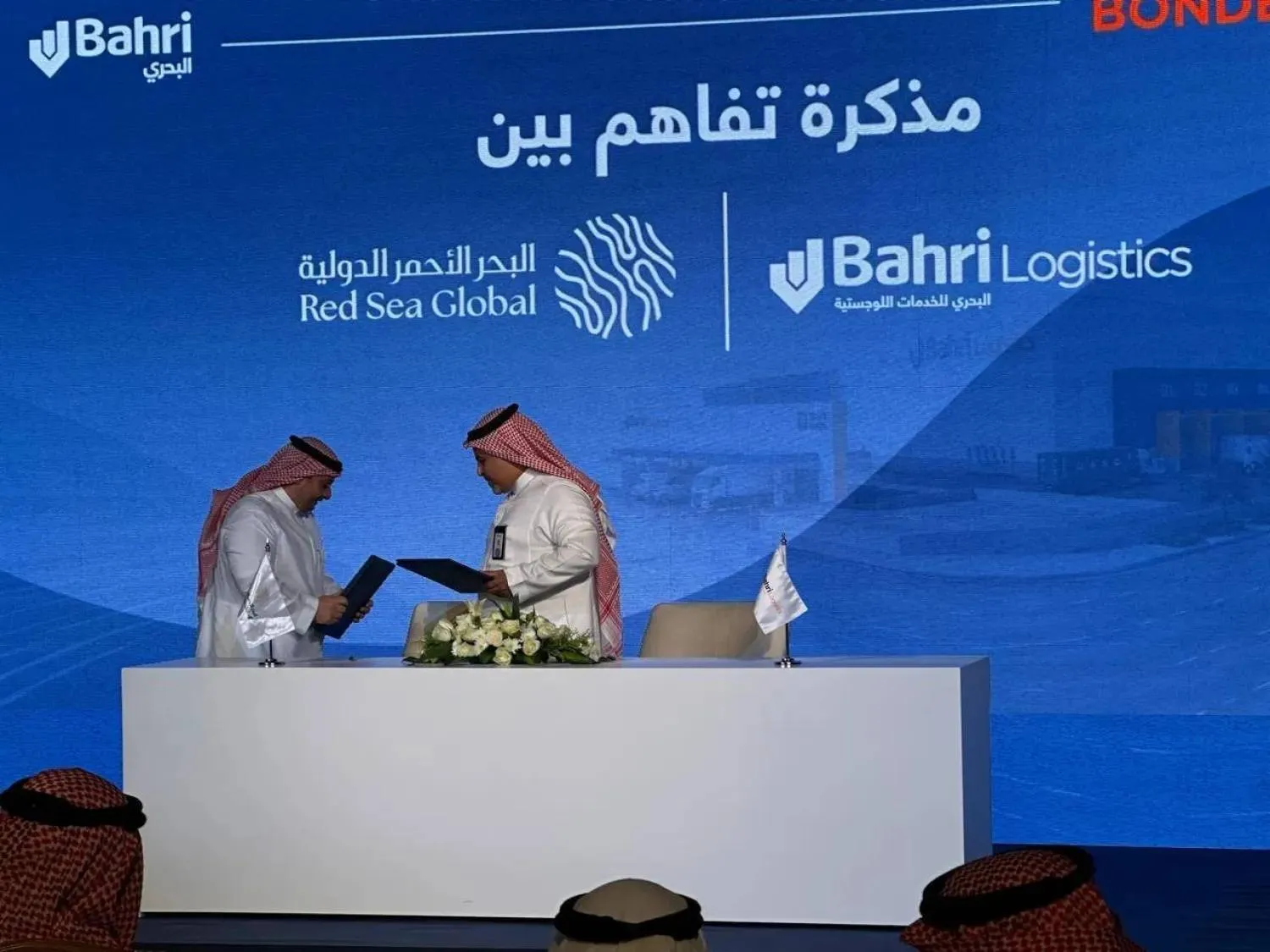
One of the agreements signed at Jeddah Islamic Port. Asharq Al-Awsat
TT

Al-Jasser to Asharq Al-Awsat: Saudi Arabia is a Vital Artery for Global Trade

One of the agreements signed at Jeddah Islamic Port. Asharq Al-Awsat

Saudi Minister of Transport and Logistics Services Saleh Al-Jasser told Asharq Al-Awsat that the recent crisis involving the Strait of Hormuz demonstrated the Kingdom's strong infrastructure and substantial investments, many of which have been implemented in partnership with the private sector.

He said the crisis also highlighted the flexibility of Saudi Arabia's logistics system and its ability to respond to changing circumstances by redirecting trade flows as needed, stressing that the Kingdom serves as a vital artery for global trade.

His remarks came during the signing of several agreements at Jeddah Islamic Port, including the launch of Bahri Logistics' bonded storage zone. The facility belongs to Bahri Logistics, a business unit of Saudi shipping firm Bahri, and was inaugurated in cooperation with the Zakat, Tax and Customs Authority and the Saudi Ports Authority (Mawani).

Al-Jasser said Saudi Arabia has been undergoing a rapid logistics transformation since Crown Prince and Prime Minister Mohammed bin Salman launched the National Transport and Logistics Strategy.

He noted that the current regional crisis provides a real opportunity to assess the progress made since the strategy's launch, adding that it has clearly demonstrated the sector's enhanced preparedness.

Al-Jasser explained that before 2023, most of Saudi Arabia's trade activity was concentrated on the Kingdom's western coast, with approximately two-thirds of trade passing through eastern ports.

However, disruptions in the Red Sea during 2023 prompted the transfer of a significant share of Saudi trade to the eastern coast. With the emergence of the latest regional crisis, trade has now been redirected back to the western coast.

He stressed that this logistical flexibility benefits not only Saudi Arabia's own trade but also that of neighboring countries, adding that reforms implemented across the sector are now beginning to produce tangible results.

Commenting on the newly established truck logistics zone, Al-Jasser said it reflects the speed of response and the integrated coordination between the transport sector, customs authorities, and the private sector.

He explained that the sharp increase in the number of ships and trucks created the need for the facility, which is designed to improve logistics efficiency, particularly as operational capacity has expanded significantly.

The new zone will streamline truck entry and exit procedures, provide a safer and more organized environment for truck drivers, improve traffic management, and reduce congestion caused by the tens of thousands of trucks entering Jeddah Islamic Port each day.

Al-Jasser also announced the signing of seven contracts for new logistics zones at the port.

Among them is the largest overseas investment by Chinese company JD Logistics, which will establish operations inside the port.

Another agreement covers a logistics project in the Al-Khumrah area south of Jeddah, while five leading Saudi companies have also signed agreements to develop additional logistics zones.

He noted that the number of logistics zones across Saudi ports has now reached 34, supported by approximately SAR15 billion in private-sector investments.

Saudi Ports Authority (Mawani) President Suliman Al-Mazroua told Asharq Al-Awsat that additional investments are expected in the Al-Khumrah area as part of a major economic zone designed to attract further investment, noting that several promising opportunities are currently under development.

Al-Mazroua said the real value of logistics hubs lies not simply in serving as cargo transit points, but in the integrated services they provide, transforming Saudi ports into value-added platforms that enhance the competitiveness of global supply chains.

He explained that shipping companies increasingly choose to call at Jeddah Islamic Port because of the value-added services offered by its logistics centers, which remain the port's primary competitive advantage.

Al-Mazroua added that Jeddah Islamic Port has evolved beyond being merely a point of arrival and departure for ships. It has become a preferred destination for international shipping companies thanks to its advanced logistics infrastructure.

Saudi Arabia now operates 34 logistics centers, including 17 located within Jeddah Islamic Port itself, underscoring the port's central role in the Kingdom's national transport and logistics network.

The newly inaugurated bonded logistics zone is Bahri's first fully integrated logistics facility of its kind. It offers a range of advanced logistics solutions that support Saudi Arabia's ambition to establish itself as a global logistics hub capable of attracting cargo, facilitating international trade, and strengthening global supply chains.



Saudi Airlines Compete Against Post-Summer Slump With Cost-Cutting Offers

Prince Mohammad bin Abdulaziz International Airport in Medina (SPA)
TT

Saudi Airlines Compete Against Post-Summer Slump With Cost-Cutting Offers

Prince Mohammad bin Abdulaziz International Airport in Medina (SPA)

As travel activity returns to normal levels following a busy summer season and the start of the academic year, Saudi airlines have opened the door to price competition, offering discounts of up to 50 percent. Through these offers, national carriers aim to maintain booking momentum and encourage families and travelers to seize lower-cost travel opportunities outside peak periods.

Riyadh Air, flynas, and Saudia are offering varying deals on a number of international flights and destinations, including ticket price reductions and incentives linked to loyalty programs, as airlines seek to attract travelers during periods following the holiday season.

Financial and economic adviser Dr. Hussein Al-Attas told Asharq Al-Awsat that airline price offers come at an important time, particularly as the summer holiday season ends and demand shifts from its peak to more normal levels. He said lower prices could encourage some consumers to travel during less crowded periods and help airlines maintain good load factors rather than suffer a sharp decline in demand after the season ends.

Al-Attas explained that lower airfares could affect travelers' overall spending, allowing families to redirect part of the money that would otherwise have gone toward airline tickets to hotels, restaurants, shopping, and tourism activities, thereby supporting the broader travel and tourism ecosystem.

He noted that lower ticket prices do not necessarily mean a decline in overall tourism spending, as lower travel costs could lead to more trips or longer stays, resulting in higher travel-related spending despite the lower cost of the ticket itself.

According to Al-Attas, price has become one of the most influential factors in travelers' decisions, particularly as families have become more sensitive to costs. He explained that competition among airlines affects not only the choice of carrier, but can also prompt travelers to change their travel dates or choose an alternative destination with a lower cost of reaching it.

He added that the coming period could see greater flexibility among travelers regarding the timing of their trips, allowing them to take advantage of offers outside peak periods, which would help distribute demand throughout the year and reduce the seasonality of travel.

He pointed out that lower ticket prices are a positive factor in families' ability to manage their travel budgets and may allow them to maintain travel plans while reducing overall costs or redirecting some of the savings to other expenses. He said price competition, when accompanied by improved service quality and a wider range of options, benefits consumers and supports the growth of Saudi Arabia's travel market.

For his part, tourism media specialist Mohammed Al Abdul Karim told Asharq Al-Awsat that the high volume of airfare offers currently seen in the Saudi market is a natural and expected development in the seasonal cycle of travel demand, coinciding with the end of the peak summer holiday period and the return of schools. This changes the pattern of demand for flights, particularly family and leisure travel, he said, confirming that local airlines are competing in this area.

Al Abdul Karim said July and August are typically among the periods of highest demand for international travel among Saudis, which raises flight load factors and reduces the need for promotional pricing. As the season ends and families return to their usual routines, airlines begin repricing part of their available seat capacity and introducing offers aimed at stimulating demand and maintaining good flight load factors.

According to Al Abdul Karim, "What we are seeing does not necessarily mean a general decline in ticket prices, as airlines use dynamic pricing that changes according to demand levels, booking rates, flight dates, available capacity, and the level of competition on each route."

Al Abdul Karim expected the offers to continue in the coming weeks, particularly on international tourist destinations that saw high demand during the summer, with significant opportunities to secure competitive fares on midweek flights and routes served by multiple flights and carriers.

He added that the biggest beneficiary during this period is the traveler with flexibility in travel dates, as more pricing options become available after the peak season subsides, particularly during the period between the end of the summer holiday and the start of the next travel seasons. He said competition among local airlines had contributed to stimulating seasonal offers, with discounts of up to 50 percent on some flights and destinations, as carriers seek to stimulate demand and raise seat load factors after a summer season that saw high demand.

The offers launched by Saudi carriers vary in terms of discount levels and booking and travel periods. Riyadh Air announced discounts of up to 35 percent on base fares for premium economy, 20 percent for economy, and 15 percent for business class on selected destinations. The offer can be booked from August 18 to 31, with travel from September 1, 2026, through February 28, 2027.

For its part, flynas introduced fares starting at 239 riyals ($63.70) one way on a selection of international flights, with bookings available until August 31 and travel through October 31.

Saudia also offered discounts of up to 50 percent on international destinations, along with an additional tier credit for AlFursan members. Bookings remain open until September 3, for travel between September 1 and December 10, 2026. The offer applies to both Guest and Business classes.

The current offers reflect the range of competitive tools being used by Saudi carriers to attract international travelers, as airlines seek to stimulate demand outside the peak summer travel season and encourage bookings for the coming periods.


Egyptian Central Bank Issues Regulations for Digital Financial Identity Services

The headquarters of the Central Bank of Egypt in downtown Cairo (Photography: Abdul Fattah Faraj)
TT

Egyptian Central Bank Issues Regulations for Digital Financial Identity Services

The headquarters of the Central Bank of Egypt in downtown Cairo (Photography: Abdul Fattah Faraj)

Egypt's central bank has approved regulations for a digital financial identity platform that will enable remote customer verification and identification, it said on Sunday, as it seeks to expand access to ⁠financial services.

According to Reuters, it said ⁠the move was part of efforts to support digital transformation, promote financial inclusion ⁠and modernize the banking sector's digital infrastructure.

Governor Hassan Abdalla said the platform will enable more citizens to open bank accounts and access banking products and services online without visiting branches.

The ⁠regulations set out a governance framework, defining the roles and responsibilities of relevant parties, along with technical, data protection, and cybersecurity requirements, the central bank said.


Sinopec's Half-year Profit Grew 19.3% on Year Despite Iran War

Oil storage tanks and facilities of a Sinopec plant in Shanghai, China, March 26, 2026. REUTERS/Go Nakamura
TT

Sinopec's Half-year Profit Grew 19.3% on Year Despite Iran War

Oil storage tanks and facilities of a Sinopec plant in Shanghai, China, March 26, 2026. REUTERS/Go Nakamura

China's Sinopec reported an unexpected 19.3% year-on-year increase in net profit for the first half of 2026, despite a litany of issues including the Middle East conflict and falling demand for fuel domestically, but said it had to write down its inventories by 16 billion yuan.

Net profit over the January-June period stood at 25.63 billion yuan ($3.81 billion) under Chinese accounting standards, versus the 21.48 billion yuan a year earlier, Sinopec said in a filing at the Shanghai stock exchange on Sunday.

In a separate filing, the company said it set aside provisions for asset impairment of 16 billion yuan as a result of the volatility in oil and fuel prices in the first six months of this year.

Sinopec, ⁠the world's biggest ⁠refiner, relies on the Middle East for half of its crude oil needs, making it vulnerable to the worst supply crisis in history as the Strait of Hormuz - through which it usually imports large quantities of oil - has remained largely closed since March.

It also processed 5.6% less crude oil between January and June versus the same year-ago period, at 113.31 million metric tons, or 4.57 million barrels per day (bpd), according to the filing.

The company said its refining margin was up 44.1% on ⁠the year in the first half of 2026 - up 139 yuan per metric ton to 453 yuan per metric ton - a surprising jump given domestic fuel price hikes lagged the surges in crude oil cost.

Its refining segment reported a 381.5% growth in operating profit by "broadening crude oil sourcing outside the Middle East, closely managing the timing of purchases in line with market conditions, and optimizing its product mix based on product profitability," the filing showed, according to Reuters.

China has drastically cut oil imports since the war began in March, freeing up barrels for others and keeping a lid on global prices. Sinopec's result is all the more surprising given how exposed it was to the Strait and the way in which Beijing has forced the refiner, and others like it, to ⁠absorb the oil price shock ⁠by limiting their ability to pass higher oil prices through to fuel consumers

Conflict in the Middle East caused "sharp volatility in international crude oil prices and a substantial increase in imported crude procurement costs", while the domestic refined product and chemicals markets remained weak, the management stated in the filing.

But the company said it "closely monitored changing conditions, dynamically adjusted production and operating arrangements, and effectively responded to unexpected shocks and challenges on multiple fronts."

The chemicals segment remained loss-making, recording an operating loss of over 200 million yuan, but losses narrowed sharply by around 4 billion yuan, it said.

Output of ethylene, a key building block for petrochemicals, sank 15.5% on the year to 6.4 million tons in the first half, as the company faced industry over-capacity and competition from the private sector.

Sinopec projects crude throughput for July–December at 113 million metric tons, roughly flat versus the amount processed in the first half.
