


Experts Tell Asharq Al-Awsat: Nuclear Agreement Strengthens Saudi Arabia's Reliability in Global Markets

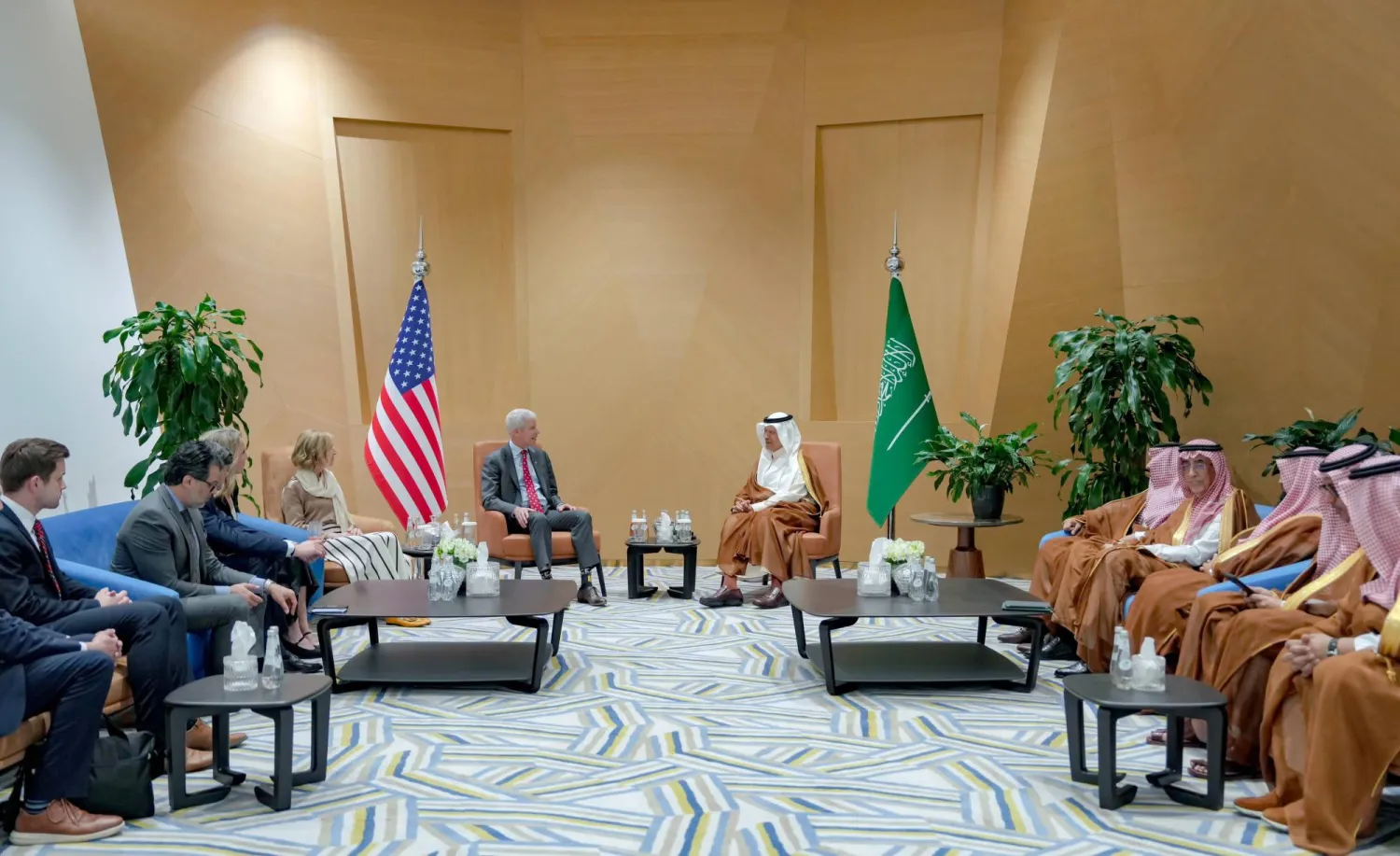
Prince Abdulaziz bin Salman meets with Energy Secretary Chris Wright during the latter's visit to the Kingdom last year (X).
TT

Experts Tell Asharq Al-Awsat: Nuclear Agreement Strengthens Saudi Arabia's Reliability in Global Markets

Prince Abdulaziz bin Salman meets with Energy Secretary Chris Wright during the latter's visit to the Kingdom last year (X).

Economic experts and specialists told Asharq Al-Awsat that the peaceful nuclear agreement between Saudi Arabia and the United States marks a new and unprecedented phase of strategic, high-value cooperation between the two countries. They said the agreement extends beyond its technical and developmental impact on the energy sector, strengthening the Kingdom's credibility in international markets as an attractive hub for cross-border investment.

It also provides the Saudi economy with greater resilience and stronger protection against unexpected global shocks, drives a qualitative leap in local manufacturing, and advances the objectives of Saudi Vision 2030.

Analyzing the agreement's benefits, Shura Council member Fadl bin Saad Al-Buainain told Asharq Al-Awsat that the deal carries major strategic and economic significance. From a strategic perspective, it deepens the longstanding partnership between Riyadh and Washington and provides a framework for long-term cooperation that supports key aspects of comprehensive national security.

Al-Buainain stressed that the agreement should be viewed through a broad strategic lens rather than being assessed solely on the basis of direct costs and returns. He said its benefits extend across the economy, including water security, energy security, and regional stability, with Saudi Arabia serving as the region's central pillar.

Benefits for the National Energy Sector

Discussing the agreement's direct impact on energy and natural resources, Al-Buainain said the introduction of peaceful nuclear energy would improve production efficiency in sectors vital to the economy, particularly electricity generation and water desalination, which remain strategic priorities for the Kingdom's water security.

He added that using nuclear power to generate electricity would free up substantial volumes of oil and natural gas currently consumed by domestic power plants. Those resources could then be redirected toward exports to increase government revenues while also helping meet growing domestic demand, particularly from the industrial, mining, and advanced technology sectors. He also noted the Kingdom's ambition to make optimal use of its uranium reserves and develop uranium enrichment capabilities to achieve self-sufficiency in nuclear fuel and strengthen the sovereignty of its energy sector.

Localizing Advanced Technologies

Addressing the agreement's long-term horizon, Al-Buainain said the approximately 30-year accord establishes a lasting partnership that will help ensure continued investment flows, technology transfer, and stronger ties with leading US companies.

He said the partnership is expected to serve as a gateway for advanced technologies and high-value industries linked to the nuclear sector while developing the skills of young Saudi professionals. This would support economic diversification and create a new growth sector underpinning a wide range of productive industries. He also pointed to the possibility of exporting electricity to neighboring countries through regional power interconnection networks.

Attracting Foreign Investment

For his part, Dr. Abdulrahman Baashen, head of the Al-Shorouq Center for Economic Studies in Jazan, told Asharq Al-Awsat that the agreement lays the most important strategic foundation for a first-of-its-kind bilateral partnership, raising the level of industrial and technological cooperation between the two countries.

He said the agreement would accelerate the Kingdom's efforts to improve energy efficiency, expand clean energy, protect the environment, and achieve its net-zero emissions targets under the commitments of Saudi Vision 2030.

Baashen added that the partnership opens broad opportunities to introduce and localize advanced industries that complement strategic sectors, including artificial intelligence, semiconductor manufacturing, and advanced chip production. He said this would enhance the competitiveness of Saudi products in global markets and strengthen the stability of the Kingdom's industrial base.

Baashen concluded that the agreement's most significant immediate impact lies in enhancing the Saudi economy's overall reliability in the eyes of global investors and international companies. He said this would stimulate foreign direct investment and pave the way for international and regional partnership projects that would provide the national economy with stronger protection against economic shocks and global volatility.


World Bank Projects Lebanon Economy to Contract by 6.4% Due to War

People inspect a damaged building after an Israeli airstrike on the village of Ansar, southern Lebanon, 15 August 2026. (EPA)
TT

World Bank Projects Lebanon Economy to Contract by 6.4% Due to War

People inspect a damaged building after an Israeli airstrike on the village of Ansar, southern Lebanon, 15 August 2026. (EPA)

The World Bank on Friday projected that Lebanon's economy would contract by 6.4 percent this year, as the latest Israel-Hezbollah war derailed the country's efforts at recovery.

Lebanon has been dealing with an unprecedented financial crisis since 2019 and was still reeling from the 2024 Israel-Hezbollah war when the Iran-backed group drew it into the Middle East conflict by attacking Israel in March.

Israel responded with a heavy air campaign and ground invasion that Lebanese authorities say have killed more than 4,300 people.

Due to the war, "real GDP is projected to contract by 6.4 percent in 2026, reflecting the collapse in tourism, weaker consumption, disrupted supply chains, heightened insecurity, and prolonged displacement," the World Bank said in a report.

Inflation is also expected to rise to 17.5 percent this year, according to the report.

The World Bank said Lebanon's economy had strengthened before the latest conflict, with an estimated real GDP growth of 4.2 percent in 2025, "the fastest since the onset of the 2019 financial crisis".

"Advancing reforms -- particularly on banking sector restructuring and fiscal management -- will be critical to restoring confidence, protecting stability, and mobilizing the financing needed for reconstruction and recovery," Dahlia Khalifa, the World Bank's Middle East director, said.

The international community has been demanding that Lebanese authorities enact financial reforms in order to secure much-needed economic aid.

Last week, parliament passed amendments to a bank resolution law aimed at restructuring troubled banks and addressing the country's banking crisis.

The International Monetary Fund welcomed the law, describing it as "a very good step that reflects Lebanon's commitment to aligning its legislation with the best international practices".

Lebanon has been in discussions with the IMF, which said it would resume its meetings in Beirut next month.


Tunisia Olive Oil Exports Surge 55%, Bringing in $1.6 billion

Tunisian olive oil producer, Mustapha Mtiraoui, displays olives to be pressed at his oil mill in Kairouan, Tunisia February 24, 2024. REUTERS/Jihed Abidellaoui
TT

Tunisia Olive Oil Exports Surge 55%, Bringing in $1.6 billion

Tunisian olive oil producer, Mustapha Mtiraoui, displays olives to be pressed at his oil mill in Kairouan, Tunisia February 24, 2024. REUTERS/Jihed Abidellaoui

Tunisia's olive oil exports surged 55.3% to a record 368,000 metric tons in the first nine months of the 2025/26 season, bringing in $1.6 billion in export revenue, up 44.4% from a year earlier, official data showed on Friday.

The surge in olive oil shipments, a vital source of foreign currency and Tunisia's top agricultural export, will provide a much-needed boost to the country's finances as the government grapples with persistent economic and fiscal pressure.

The jump in exports was driven by strong global demand during the first nine months of the season, which began in November.

Extra virgin olive oil accounted for 83.6% of total shipments, the National Observatory of Agriculture said, Reuters reported.

The European Union remained the biggest destination, taking 57.1% of Tunisian olive oil exports, while North America accounted for 24%. More than 70 countries imported Tunisian oil during the period.

Exports to other markets included Saudi Arabia, which took 4.6%, Jordan with 3.1% and African markets at 3.8%, with Egypt accounting for 3.3%.

Bottled olive oil exports rose 50.8% to 51,500 tons, but bulk oil still accounted for the vast majority of shipments, underscoring Tunisia's challenge in capturing more value from one of its most important export products.


South African Rand Hits Strongest Level since Start of Iran War

South African Rand coins are seen in this illustration picture taken October 28, 2020. REUTERS/Mike Hutchings/Illustration
TT

South African Rand Hits Strongest Level since Start of Iran War

South African Rand coins are seen in this illustration picture taken October 28, 2020. REUTERS/Mike Hutchings/Illustration

The South African rand strengthened on Friday to its strongest level since the United States and Israel launched attacks on Iran on February 28, as rising gold prices and a weaker dollar boosted the commodity-linked currency.

At 1229 GMT, the rand traded at 15.9925 against the dollar , about 0.8% stronger from its previous close.

Gold, one of South Africa's main exports, rose to a more than three-month high on Friday and was on track for a third straight weekly gain.

The precious metal was supported by a weaker dollar and the US Treasury's announcement that it would increase buybacks of longer-dated securities, Reuters reported.

US Treasury Secretary Scott Bessent said he may further increase the government's repurchases of Treasuries. That came after the Treasury said it would double the size of buybacks on longer-dated securities over the next quarter.

The US dollar was set to end a bumpy week lower, making greenback-priced bullion more affordable for buyers overseas.

Like other emerging market currencies, the rand has been at the mercy of global market sentiment, particularly since the start of the Iran war.

On the Johannesburg Stock Exchange, the Top-40 index was last up 2.2%.

South Africa's benchmark 2035 government bond was also firmer in early deals, as the yield fell 0.5 basis points to 8.56%.
