

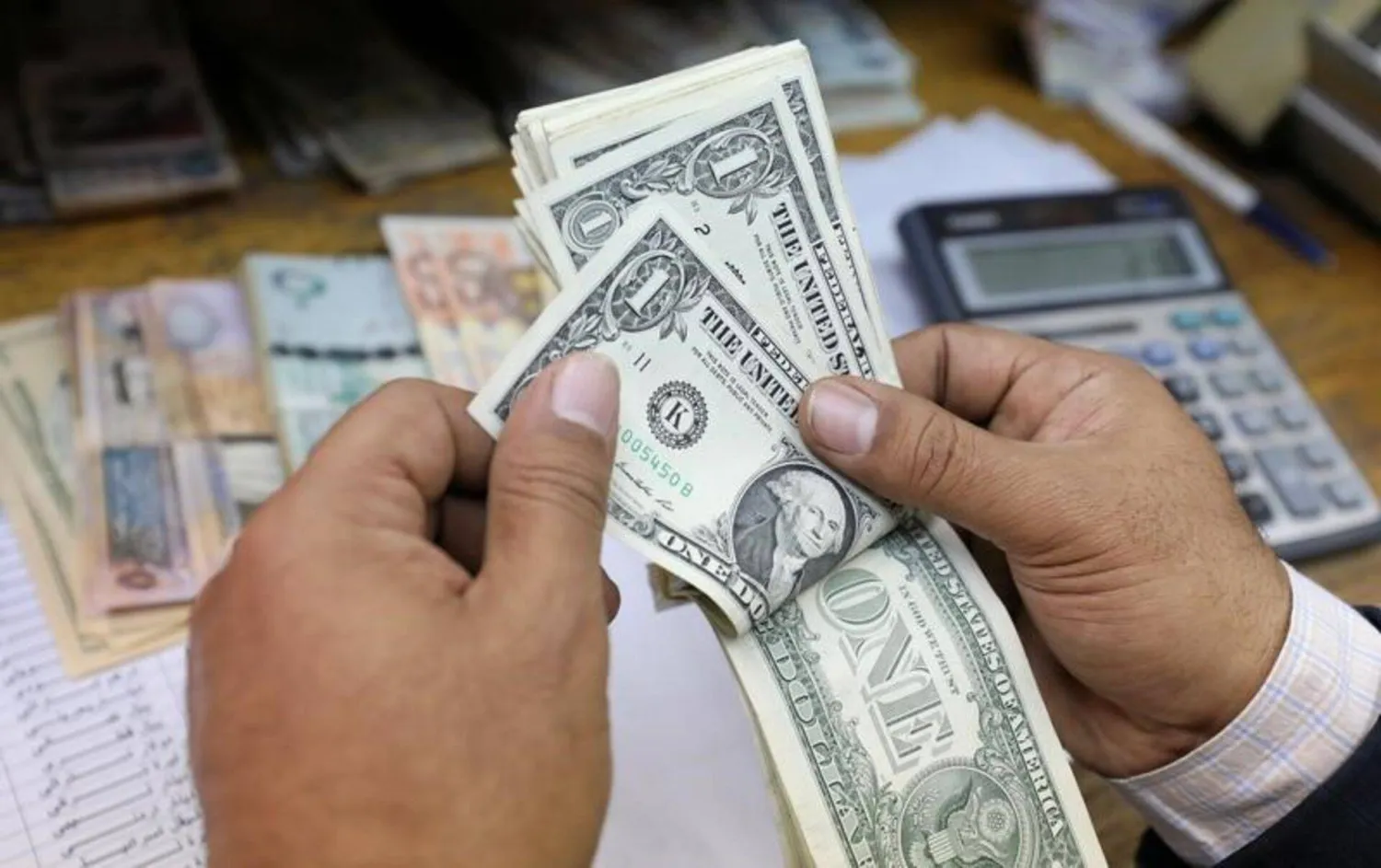

New IMF Funding Consolidates Egyptian Economy Against Growing Regional Turbulence

The government considers the Fund's report a testament to economic performance (Reuters)
TT

New IMF Funding Consolidates Egyptian Economy Against Growing Regional Turbulence

The government considers the Fund's report a testament to economic performance (Reuters)

Egypt is counting on the disbursement of new funding from the International Monetary Fund to help shield its economy from escalating regional instability, after the IMF Executive Board gave the country ​access to about $1.8 billion.

Egypt would receive about $1.5 billion under the IMF's 48-month loan program after completing the seventh review, along with roughly $272 million under the Resilience and Sustainability Facility, bringing total disbursements under Egypt's current arrangement with the fund to about $7.3 billion, the lender said in a statement.

Egypt agreed to a $3 billion ‌loan with ‌the IMF in December 2022. ​The ‌program ⁠was expanded ​to $8 ⁠billion in March 2024, when the country was grappling with high inflation and foreign currency shortages.

Prime Minister Mostafa Madbouly said in a statement on Friday that the real significance of the Executive Board's decision lies not only in completing the review and making the new funding available, but also in the IMF's objective assessment of the Egyptian economy.

The report acknowledged Egypt's efforts to address the repercussions of the war in the Middle East and its effective handling of regional developments through integrated policies, including exchange rate flexibility, energy price reforms, and tighter control of public spending.

Madbouly stressed the government views the report as confirmation that its economic reform path is sound, while also serving as an incentive to continue implementing structural reforms.
Egypt is counting on the disbursement of new funding from the International Monetary Fund to help shield its economy from escalating regional instability, after the IMF Executive Board gave the country access to about $1.8 billion.

Egypt would receive about $1.5 billion under the IMF's 48-month loan program after completing the seventh review, along with roughly $272 million under the Resilience and Sustainability Facility, bringing total disbursements under Egypt's current arrangement with the fund to about $7.3 billion, the lender said in a statement.

Egypt agreed to a $3 billion loan with the IMF in December 2022. The program ⁠was expanded to $8 ⁠billion in March 2024, when the country was grappling with high inflation and foreign currency shortages.

Prime Minister Mostafa Madbouly said in a statement on Friday that the real significance of the Executive Board's decision lies not only in completing the review and making the new funding available, but also in the IMF's objective assessment of the Egyptian economy.

The report acknowledged Egypt's efforts to address the repercussions of the war in the Middle East and its effective handling of regional developments through integrated policies, including exchange rate flexibility, energy price reforms, and tighter control of public spending.

Madbouly stressed the government views the report as confirmation that its economic reform path is sound, while also serving as an incentive to continue implementing structural reforms.

Fuel price increases are quickly reflected in commodity prices (Egyptian Ministry of Supply)

The reforms include strengthening the role of the private sector, carrying out the State Ownership Policy Document, accelerating the privatization program, and improving the business environment in order to attract more domestic and foreign investment, boost growth and employment, and enhance the competitiveness of the Egyptian economy.

In March, Egypt raised fuel and gas prices by rates ranging between 14 and 30 percent in response to the effects of the Iranian war, and increased electricity prices several weeks later by rates ranging between 16 and 28 percent.

Ayman Mehasseb, Deputy Chairman of the House of Representatives' Economic Affairs Committee, told Asharq Al-Awsat that the IMF decision sends a new message of confidence in the strength of the Egyptian economy and reinforces its ability to withstand regional and international disruptions amid ongoing challenges facing both the region and the global economy.

He added that the importance of the decision is not limited to the value of the funding itself, but also reflects the government's success in implementing its economic reform program and maintaining the stability of key macroeconomic indicators.

He noted that the Egyptian economy has become better able to absorb shocks thanks to exchange rate flexibility, improved foreign currency resources, and fiscal discipline.

Mehasseb argued that the next phase requires accelerating structural reforms, strengthening the private sector's role, and improving the investment climate to reduce reliance on external financing and increase the economy's capacity to meet its needs through its own resources.

He stressed that continuing reforms remains the key guarantee for enhancing Egypt's competitiveness and raising its ability to confront future crises.
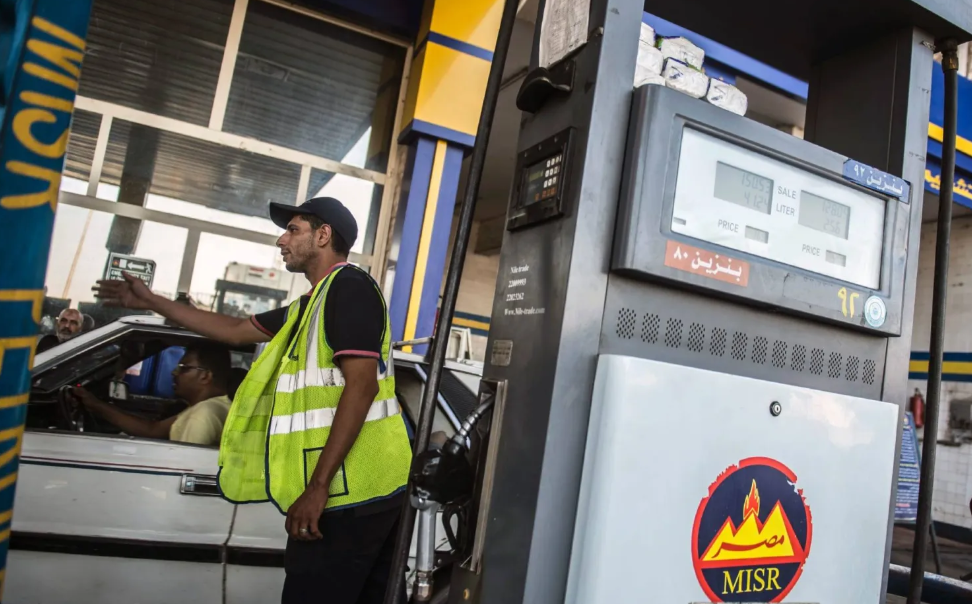
A fuel station in Egypt (AFP file photo)

Financial markets expert Wael El-Nahhas told Asharq Al-Awsat that the approval of the disbursement reflects the continued implementation of Egypt's economic reform program, despite the IMF's reservations regarding certain aspects of the process.

"A renewed ⁠escalation of regional tensions could weigh on growth, raise global inflationary pressures, tighten financial conditions, and put additional pressure on the fiscal and external positions," the IMF said in its statement.

Efforts to reduce the state’s role in the economy and create greater space for private sector investment, including through divestment of state assets, have progressed more slowly than anticipated and need to be accelerated, the lender added.


World Bank Projects Lebanon Economy to Contract by 6.4% Due to War

People inspect a damaged building after an Israeli airstrike on the village of Ansar, southern Lebanon, 15 August 2026. (EPA)
TT

World Bank Projects Lebanon Economy to Contract by 6.4% Due to War

People inspect a damaged building after an Israeli airstrike on the village of Ansar, southern Lebanon, 15 August 2026. (EPA)

The World Bank on Friday projected that Lebanon's economy would contract by 6.4 percent this year, as the latest Israel-Hezbollah war derailed the country's efforts at recovery.

Lebanon has been dealing with an unprecedented financial crisis since 2019 and was still reeling from the 2024 Israel-Hezbollah war when the Iran-backed group drew it into the Middle East conflict by attacking Israel in March.

Israel responded with a heavy air campaign and ground invasion that Lebanese authorities say have killed more than 4,300 people.

Due to the war, "real GDP is projected to contract by 6.4 percent in 2026, reflecting the collapse in tourism, weaker consumption, disrupted supply chains, heightened insecurity, and prolonged displacement," the World Bank said in a report.

Inflation is also expected to rise to 17.5 percent this year, according to the report.

The World Bank said Lebanon's economy had strengthened before the latest conflict, with an estimated real GDP growth of 4.2 percent in 2025, "the fastest since the onset of the 2019 financial crisis".

"Advancing reforms -- particularly on banking sector restructuring and fiscal management -- will be critical to restoring confidence, protecting stability, and mobilizing the financing needed for reconstruction and recovery," Dahlia Khalifa, the World Bank's Middle East director, said.

The international community has been demanding that Lebanese authorities enact financial reforms in order to secure much-needed economic aid.

Last week, parliament passed amendments to a bank resolution law aimed at restructuring troubled banks and addressing the country's banking crisis.

The International Monetary Fund welcomed the law, describing it as "a very good step that reflects Lebanon's commitment to aligning its legislation with the best international practices".

Lebanon has been in discussions with the IMF, which said it would resume its meetings in Beirut next month.


Tunisia Olive Oil Exports Surge 55%, Bringing in $1.6 billion

Tunisian olive oil producer, Mustapha Mtiraoui, displays olives to be pressed at his oil mill in Kairouan, Tunisia February 24, 2024. REUTERS/Jihed Abidellaoui
TT

Tunisia Olive Oil Exports Surge 55%, Bringing in $1.6 billion

Tunisian olive oil producer, Mustapha Mtiraoui, displays olives to be pressed at his oil mill in Kairouan, Tunisia February 24, 2024. REUTERS/Jihed Abidellaoui

Tunisia's olive oil exports surged 55.3% to a record 368,000 metric tons in the first nine months of the 2025/26 season, bringing in $1.6 billion in export revenue, up 44.4% from a year earlier, official data showed on Friday.

The surge in olive oil shipments, a vital source of foreign currency and Tunisia's top agricultural export, will provide a much-needed boost to the country's finances as the government grapples with persistent economic and fiscal pressure.

The jump in exports was driven by strong global demand during the first nine months of the season, which began in November.

Extra virgin olive oil accounted for 83.6% of total shipments, the National Observatory of Agriculture said, Reuters reported.

The European Union remained the biggest destination, taking 57.1% of Tunisian olive oil exports, while North America accounted for 24%. More than 70 countries imported Tunisian oil during the period.

Exports to other markets included Saudi Arabia, which took 4.6%, Jordan with 3.1% and African markets at 3.8%, with Egypt accounting for 3.3%.

Bottled olive oil exports rose 50.8% to 51,500 tons, but bulk oil still accounted for the vast majority of shipments, underscoring Tunisia's challenge in capturing more value from one of its most important export products.


South African Rand Hits Strongest Level since Start of Iran War

South African Rand coins are seen in this illustration picture taken October 28, 2020. REUTERS/Mike Hutchings/Illustration
TT

South African Rand Hits Strongest Level since Start of Iran War

South African Rand coins are seen in this illustration picture taken October 28, 2020. REUTERS/Mike Hutchings/Illustration

The South African rand strengthened on Friday to its strongest level since the United States and Israel launched attacks on Iran on February 28, as rising gold prices and a weaker dollar boosted the commodity-linked currency.

At 1229 GMT, the rand traded at 15.9925 against the dollar , about 0.8% stronger from its previous close.

Gold, one of South Africa's main exports, rose to a more than three-month high on Friday and was on track for a third straight weekly gain.

The precious metal was supported by a weaker dollar and the US Treasury's announcement that it would increase buybacks of longer-dated securities, Reuters reported.

US Treasury Secretary Scott Bessent said he may further increase the government's repurchases of Treasuries. That came after the Treasury said it would double the size of buybacks on longer-dated securities over the next quarter.

The US dollar was set to end a bumpy week lower, making greenback-priced bullion more affordable for buyers overseas.

Like other emerging market currencies, the rand has been at the mercy of global market sentiment, particularly since the start of the Iran war.

On the Johannesburg Stock Exchange, the Top-40 index was last up 2.2%.

South Africa's benchmark 2035 government bond was also firmer in early deals, as the yield fell 0.5 basis points to 8.56%.
