Kazakh Energy Ministry: Full Stoppage of CPC Not Under Consideration

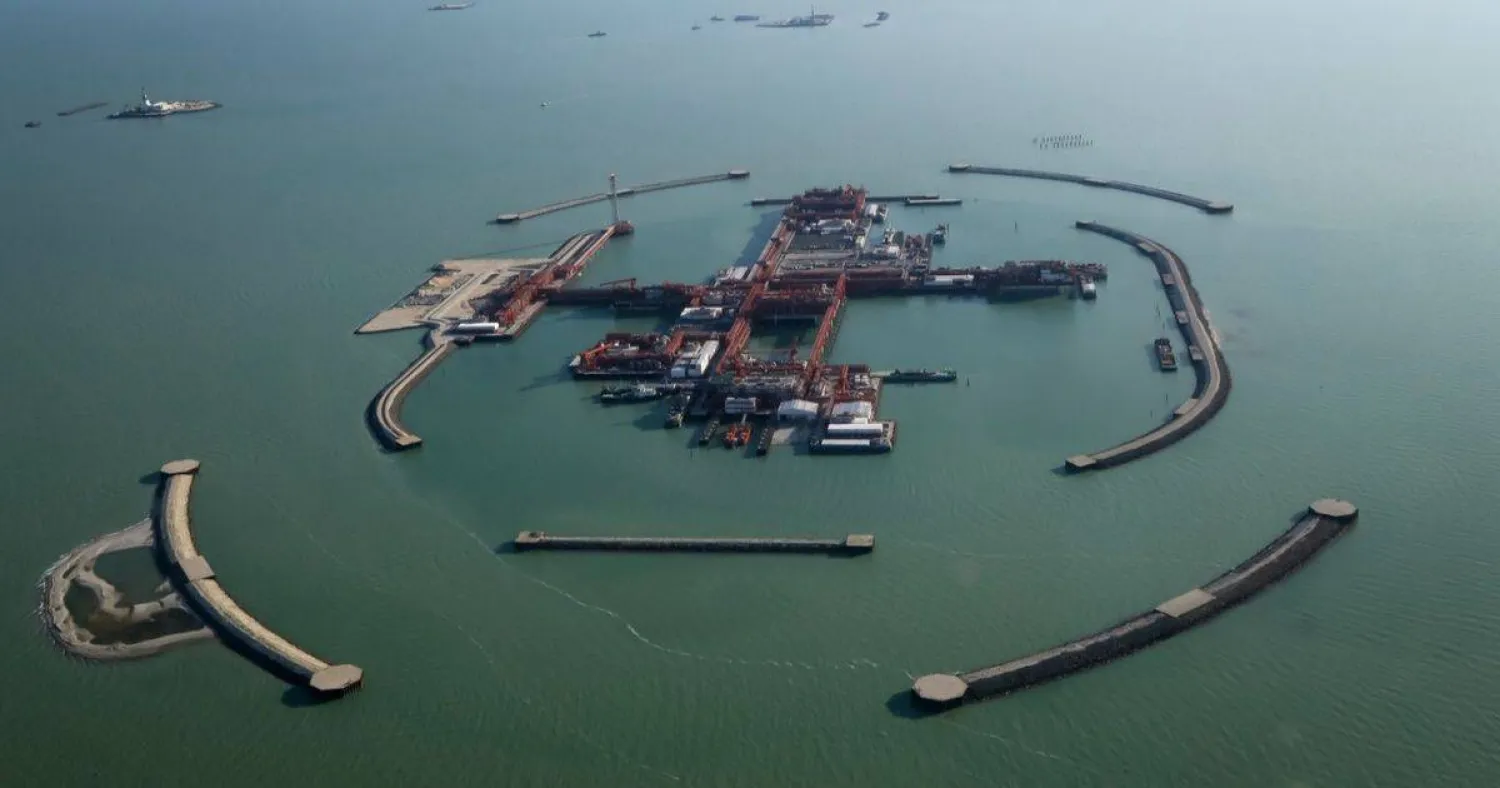
An aerial view shows the artificial islands at the Kashagan offshore oil field in the Caspian sea in western Kazakhstan October 16, 2013. (Reuters)
TT

Kazakh Energy Ministry: Full Stoppage of CPC Not Under Consideration

An aerial view shows the artificial islands at the Kashagan offshore oil field in the Caspian sea in western Kazakhstan October 16, 2013. (Reuters)

Kazakhstan's energy ministry said on Saturday that a complete stoppage of the Caspian Pipeline Consortium's operations was not being considered and that the current situation was under control.

The CEO of ⁠Chevron said on ⁠Friday that the pipeline is currently flowing and ships are loading this week, ⁠after CPC said it had suspended oil loadings on Thursday following a drone attack on a tanker.

Chevron owns 50% of Tengizchevroil - the operator of the giant Tengiz oilfield and the ⁠major ⁠exporter via the CPC pipeline, which carries almost 2% of global oil and is the main route for Kazakhstan's oil exports.


Riyadh Economic Forum to Assess Role of Legislation in Saudi Sustainable Development

Riyadh Economic Forum to Assess Role of Legislation in Saudi Sustainable Development
TT

Riyadh Economic Forum to Assess Role of Legislation in Saudi Sustainable Development

Riyadh Economic Forum to Assess Role of Legislation in Saudi Sustainable Development

The 12th session of the Riyadh Economic Forum, scheduled from October 12 to 14, 2026, will discuss a study on measuring the impact of legislation and public policies and their role in achieving sustainable development in Saudi Arabia, according to SPA.

The study aligns with Saudi Vision 2030 by examining how legislation guides economic, social, and environmental development, strengthens the Kingdom's capacity to achieve its sustainable development goals, and improves performance on relevant international indicators.

It aims to enable decision-makers to evaluate the real impact of legislation on economic growth, job creation, service quality, social fairness, and environmental protection, while fostering an institutional culture that assesses legislation effectiveness based on actual results rather than mere issuance.

The study also focuses on adopting advanced methodologies to measure the impact of public policies both before and after enactment, supporting evidence-based decision-making and addressing challenges facing impact assessment practices in the Kingdom.

The forum's discussions are expected to yield practical recommendations to enhance the efficiency of the public policy and legislative system in support of sustainable development and national economic competitiveness.


Dollar Inches Higher as 10-Year Treasury Yield Climbs to Highest Since 2007

The dollar's six-currency index rose 0.15% to 99.633, also gaining support from weakened risk appetite as shares markets tumbled. (Reuters)
TT

Dollar Inches Higher as 10-Year Treasury Yield Climbs to Highest Since 2007

The dollar's six-currency index rose 0.15% to 99.633, also gaining support from weakened risk appetite as shares markets tumbled. (Reuters)

The dollar strengthened towards a two-week high on Tuesday, as surging oil prices pushed Treasury yields to fresh peaks since 2007, and cemented expectations for a Federal Reserve rate hike this week.

The benchmark US 10-year Treasury yields reversed an earlier loss and climbed to a high of 5.0266% in Asian trading hours, the highest since 2007.

Oil prices held near a four-month peak, standing at $107 a barrel, after Yemen's Iran-aligned Houthis launched a new wave of attacks on Saudi Arabia and Gulf-Iran talks were postponed.

Markets ‌now see a ‌Fed hike on Wednesday as a near certainty, with ‌CME's ⁠FedWatch tool pricing ⁠in a roughly 93% chance of an interest-rate increase.

"The combination of higher oil, higher US yields and weaker risk appetite helped lift the US dollar broadly," Christopher Wong, an FX analyst at OCBC, said in a note.

Near-term support may persist, but with a hike now heavily priced in, further dollar upside will likely require the Fed to keep the door open to additional tightening, he added.

Pressured by broad greenback strength, ⁠the euro hovered near a one-month low at $1.535 and sterling ‌was 0.1% weaker at $1.3485.

The yen also pulled away from ‌a seven-month high, standing down roughly 0.4% at 154.91 ahead of an expected Bank of ‌Japan rate hike on Friday.

The New Zealand dollar dipped 0.3% to a ‌two-month low of $0.5757, while the Australian dollar was also 0.2% lower at $0.7120.

The dollar's six-currency index rose 0.15% to 99.633, also gaining support from weakened risk appetite as shares markets tumbled.

RATE HIKES AWAITED

The renewed energy-induced inflation pressures follow a jobs report that was much stronger than expected and a ‌pickup in consumer prices for August, strengthening market conviction that the Fed will raise rates on Wednesday.

Economists polled by Reuters ⁠also expect at ⁠least one more hike by the end of March, reversing a fragile no-change consensus prior to Friday's official data showing firm inflation.

The inflation outlook now hinges on oil prices, but the broader macro picture does not warrant more hikes than currently priced in the curve, analysts at BCA said in a note.

"Limited hawkishness from here argues for curve steepeners and limited USD upside."

Markets are also all but certain that the Bank of Japan will raise rates on Friday. Market sentiment on the yen is starting to shift, with speculators turning to a net long position on the Japanese currency for the first time since February.

Offshore yuan was flat at 6.708 per dollar, hovering near its strongest in more than three years, after data showing China's industrial sector regained strength in August, though consumption remained sluggish.


Tech Boom Powers China’s Factories but Economic Imbalances Deepen as Consumption Slows

 People visit a cutting-edge technology festival at the Zhongguancun, a landmark park of Hi-tech enterprises in Beijing on September 12, 2026. (AFP)
People visit a cutting-edge technology festival at the Zhongguancun, a landmark park of Hi-tech enterprises in Beijing on September 12, 2026. (AFP)
TT

Tech Boom Powers China’s Factories but Economic Imbalances Deepen as Consumption Slows

 People visit a cutting-edge technology festival at the Zhongguancun, a landmark park of Hi-tech enterprises in Beijing on September 12, 2026. (AFP)
People visit a cutting-edge technology festival at the Zhongguancun, a landmark park of Hi-tech enterprises in Beijing on September 12, 2026. (AFP)

China's industrial sector showed renewed strength in August as the AI-driven tech boom fueled factory output, though sluggish consumption and a worsening investment slump reinforced concerns over deepening economic imbalances.

Tuesday's data highlighted a familiar fault line in the world's second-largest economy, where resilient manufacturing and exports are sustaining growth even as weak household spending and a property market downturn weigh on domestic demand. The divergence is likely to intensify pressure on Beijing to roll out more support measures as policymakers seek a more balanced recovery.

Industrial output grew 5.2% from a year earlier in August, quickening from a 4.5% increase in July and beating expectations for a 4.8% rise, figures released by the National Bureau of Statistics showed. Strong expansion in equipment and high-tech manufacturing underpinned the production upturn.

Retail sales, a gauge of consumer activity, ‌rose 0.4%, slowing from ‌a 0.6% gain in July and below an expected 0.8% rise.

Weak consumption and the ‌real ⁠estate market crisis ⁠dragged second-quarter gross domestic product growth to 4.3%, the slowest pace in more than three years and below the lower end of China's 4.5%-5.0% annual target.

"Barring an unexpectedly strong September, GDP growth will likely remain sluggish in the third quarter," said Lynn Song, ING's Greater China chief economist.

Oxford Economics lowered its 2026 growth forecast by 0.1 percentage point to 4.7% and cut next year's to 4.3%, from 4.6%, "reflecting a more prolonged property downturn which is likely to keep growth subdued despite stronger public investment," senior economist Sheana Yue said.

The data barely moved China's markets, leaving the key stock benchmarks down roughly 0.3% while the yuan weakened slightly against the dollar.

PROPERTY SLUMP, TECH BOOM

The ⁠latest data underscored the scale of the challenge facing policymakers as businesses remain reluctant to ‌commit new capital and the property market continues to sap consumption and restrain growth.

Fixed-asset ‌investment, which includes infrastructure and property investment, declined 7.2% in the first eight months, marking the steepest drop since April 2020.

Property investment dived ‌19.9% in the first eight months from the same period last year, and new home prices extended declines from the ‌previous month, signaling a housing market still trapped in a prolonged downturn.

Against that backdrop, strong exports driven by AI infrastructure spending and demand for advanced technology products are providing a critical buffer for growth.

Investment in high-tech industries expanded 5.2% in the January-to-August period, in keeping with the global AI boom. Output of lithium-ion batteries and industrial robots, for example, soared 57.2% and 34.6% year-on-year, respectively.

Behind the divide is a government push ‌to guide resources to the advanced manufacturing sector to reduce the economy's reliance on property and bolster technological self-sufficiency, but the surge in high-tech investment has yet to translate into stronger ⁠household incomes or greater ⁠job security.

The nationwide urban surveyed unemployment rate came in at 5.3% for August, edging up from 5.2% the previous month.

GOVERNMENT PLEDGES FISCAL SUPPORT

Factory activity improved last month, but it remained in contraction and services activity stayed sluggish. Weak domestic demand also weighed on credit growth, as new bank loans returned to positive territory but fell well short of analysts' forecasts after a record contraction in July.

Extreme weather likely remained a drag on activity. Four typhoons made landfall in China during August, disrupting operations in the east-coast manufacturing and logistics belt.

Growth also faces mounting external headwinds, including the Middle East conflict, elevated oil prices and a global tightening cycle that is keeping borrowing costs high.

"The external environment is complex and challenging, while domestic structural adjustment pressures persist, meaning sustained efforts are still needed to put the economy on a firmer growth trajectory," Fu Linghui, a spokesperson at the statistics bureau, told a briefing.

Beijing has responded to the challenges with faster government bond issuance and expanded loan interest subsidies for small private firms and consumers, while the central bank has pledged additional policy support without signaling explicit cuts to policy rates or banks' reserve-requirement ratio.

"Policymakers' reluctance to deploy a more forceful consumption-focused stimulus is likely to prolong the adjustment process," analysts at Barclays said in a note to clients.