

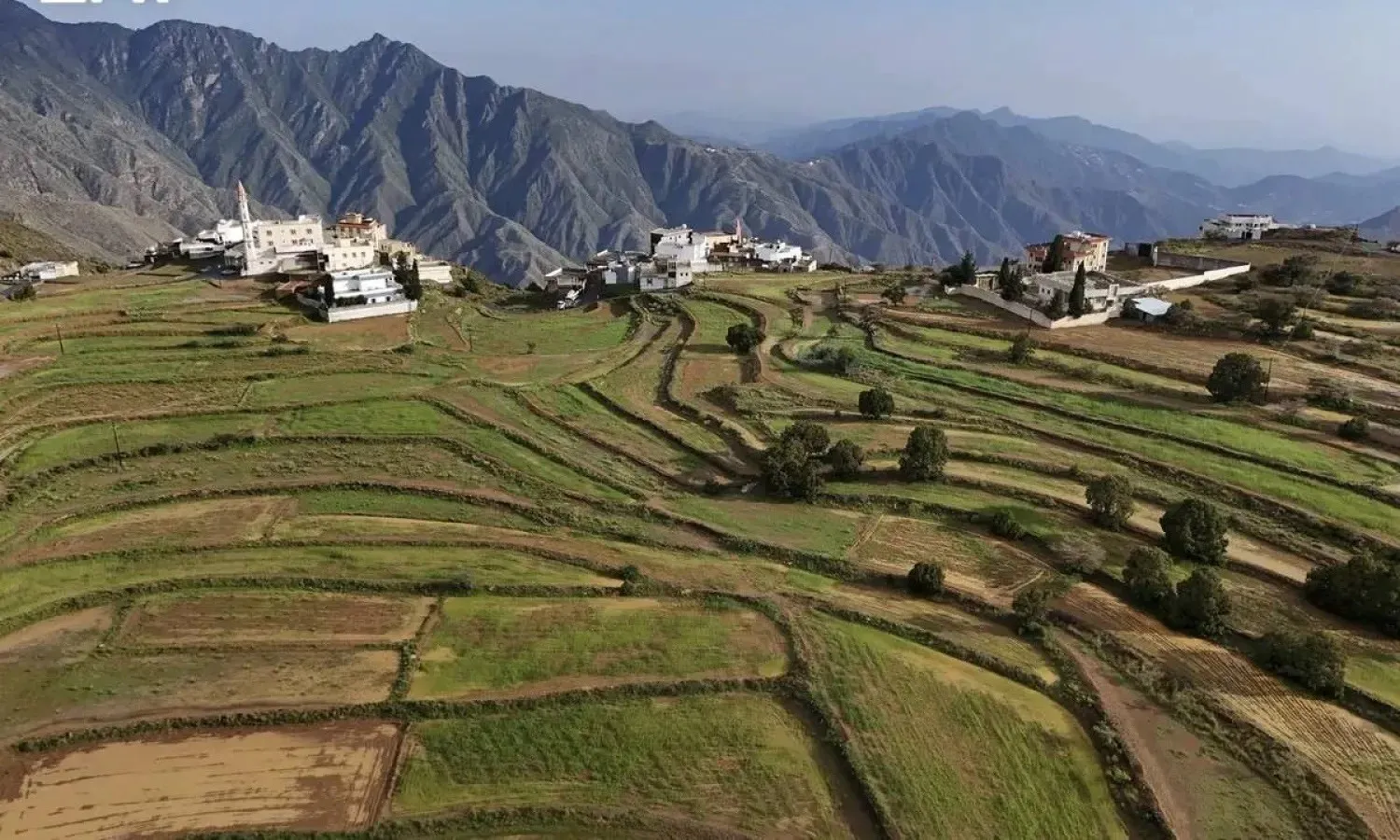

Saudi Arabia’s Aseer Expands Tourism Investment Through Infrastructure and Air Connectivity

Aseer’s unique natural landscape and growing influx of visitors are enhancing the region’s appeal to investors in the tourism sector. (SPA)
TT

Saudi Arabia’s Aseer Expands Tourism Investment Through Infrastructure and Air Connectivity

Aseer’s unique natural landscape and growing influx of visitors are enhancing the region’s appeal to investors in the tourism sector. (SPA)

Saudi Arabia’s Aseer region is no longer relying solely on its natural beauty. Instead, it is building an integrated tourism economy led by the Aseer Region Development Authority, which has transformed the region’s natural and cultural assets into investment opportunities, flagship projects, and year-round tourism experiences.

As the region’s development strategy gathers pace, Aseer is steadily positioning itself as a destination capable of competing with leading regional and international tourism hubs. Its strategy is underpinned by modern infrastructure, expanding air connectivity, growing investment, and an integrated ecosystem designed to serve both investors and visitors.

Located in southwestern Saudi Arabia, Aseer is administered from Abha and occupies a strategic location linking the highlands with the coastal plain. It borders the Jazan, Najran, Al-Baha, and Makkah provinces, as well as Yemen to the south and the Red Sea to the west, reinforcing its position as one of the Kingdom’s leading tourism and investment destinations.

Broadening investment opportunities

The Aseer Region Development Authority told Asharq Al-Awsat that tourism investment opportunities have become increasingly diverse, driven by rising demand and the region’s ability to support every segment of the tourism value chain.

Accommodation and hospitality remain the largest opportunities, including hotels, mountain resorts, serviced apartments, and eco-lodges, reflecting sustained growth in visitor numbers and multiple tourism seasons throughout the year.

Rural tourism and adventure tourism are also among the region’s most promising sectors, benefiting from Aseer’s distinctive mountain landscape, hiking trails, climbing experiences, and tourism products across its highlands and valleys, alongside growing interest in ecotourism.

In cultural and heritage tourism, investment opportunities include restoring heritage villages, historic palaces, and traditional markets through modern business models that generate economic returns while preserving the region’s cultural and architectural identity.

The food sector has also emerged as a new investment driver, particularly after Aseer was named the World Region of Gastronomy 2024, creating opportunities to attract local and international restaurants that showcase Aseeri cuisine through contemporary dining concepts.

Visitor growth

The authority said investment opportunities also extend to events, entertainment, and retail, helping lengthen visitor stays and increase spending.

Investors benefit from an integrated support system that streamlines the process from project conception through implementation, enhancing the region’s investment environment, it added.

Aseer welcomed about 6.1 million visitors last year and is targeting visitor growth of more than 10 percent in 2026, supported by a broader calendar of events, expanded tourism offerings, improved air connectivity, and continued upgrades to infrastructure and services.

Under its long-term strategy, the region aims to reach 9.1 million visits by 2030, strengthening its position as a year-round global tourism destination.

Domestic tourism continues to account for the largest share of visitors, while arrivals from Gulf countries and other regional and international markets linked by direct flights continue to grow. In 2025, the largest groups of international visitors came from Egypt, Yemen, the UAE, Oman, Qatar, and India.

Competing globally

The authority said Aseer is now closer than ever to competing with leading regional and international destinations, supported by a clear strategy to build a world-class tourism hub. Key projects include the new Abha International Airport, alongside the expansion of direct domestic, regional, and international air links.

It highlighted the region’s mild climate, mountain peaks, heritage villages, historic palaces, traditional markets, rich local cuisine, and scenic nature trails, as well as rapid growth in events, tourism experiences, and hospitality offerings.

These strengths have been reflected in a series of international recognitions, including being named the Fastest-Growing Tourism Destination in the Gulf for 2025, the inclusion of Abo Noghta Castles among the Best Tourism Villages of 2024, and its designation as the World Region of Gastronomy 2024.

The Aseer Region Development Authority is coordinating development efforts across government entities while overseeing the implementation of strategic infrastructure projects. Its objective is to transform the region into a world-class, year-round tourism destination that capitalizes on its natural diversity and cultural identity in support of Saudi Vision 2030’s goals of economic diversification and tourism development.



Al-Moammar Receives First Work Order Under HUMAIN Agreement, Worth More Than 148% of 2025 Revenue

A sign identifying Al-Moammar Information Systems Company in Riyadh (company website).
TT

Al-Moammar Receives First Work Order Under HUMAIN Agreement, Worth More Than 148% of 2025 Revenue

A sign identifying Al-Moammar Information Systems Company in Riyadh (company website).

Al-Moammar Information Systems Company (MIS) has received its first work order under its agreement with HUMAIN, with a total value exceeding 148 percent of the company's total revenue for 2025, including value-added tax.

In a statement on Saudi Exchange on Sunday, the company said Work Order No. 1, received on October 1, covers the scope of work related to a capacity of 50 megawatts. This was the scope previously announced as part of a project to design and build data centers dedicated to artificial intelligence technologies.

The company said the financial impact of the work order began in the second quarter of fiscal year 2026.

The work order was received under an agreement signed by Al-Moammar Information Systems with HUMAIN last September, with a value exceeding 689 percent of the company's total revenue for 2025, including value-added tax. The agreement includes an expansion of the project's scope from 50 megawatts to 250 megawatts.

When the agreement was announced, the company said the engineering, procurement, and construction works would be carried out through work orders issued by HUMAIN in accordance with the terms of the agreement. The company would announce each work order upon receipt, including its value, implementation period, and financial impact.

Al-Moammar Information Systems expects to receive additional work orders related to the further expansion of the project in the coming period and will announce any material developments in this regard when they occur.


OPEC+ Agrees to Keep November Oil Output Targets Steady

FILE PHOTO: A view shows the logo of the Organization of the Petroleum Exporting Countries (OPEC) outside its headquarters in Vienna, Austria, May 28 , 2024. REUTERS/Leonhard Foeger/File Photo
TT

OPEC+ Agrees to Keep November Oil Output Targets Steady

FILE PHOTO: A view shows the logo of the Organization of the Petroleum Exporting Countries (OPEC) outside its headquarters in Vienna, Austria, May 28 , 2024. REUTERS/Leonhard Foeger/File Photo

OPEC+ agreed to keep oil production targets steady for November at a meeting on Sunday, the producer group said, in line with expectations that further output policy adjustments are unlikely until next year.

Seven core members of the group comprising the Organization of the Petroleum Exporting Countries and allies including Russia made the decision for November in a brief online meeting on Sunday. The core members are Saudi Arabia, Russia, Iraq, Kuwait, Algeria, Kazakhstan and Oman.

Oil prices had dropped on Friday after European leaders agreed to US President Donald Trump's request to release diesel reserves. Even so, Brent crude remains above $100 a barrel, up from about $73 before the Iran war started in late February.

The Iran war has also delayed the group's output capacity review — crucial to determine members’ 2027 output quotas — because it has thrown estimates of future production potential into uncertainty, industry sources told Reuters last week.

OPEC+ has been raising output targets for much of 2026 after years of production cuts, but most of the increases stayed on paper because of the Middle East conflict.

The seven core OPEC+ members pumped 25 million barrels per day in August, up 630,000 bpd from July, yet still roughly 5 million bpd below prewar levels in February, OPEC data shows.

The seven hold their next meeting on November 1.

OPEC+ still has about 2 million bpd of output cuts in place covering most members. It needs the result of the capacity review to decide how to distribute increases and any changes to output are unlikely before 2027, sources have said.

A separate OPEC+ ministerial group called the Joint Ministerial Monitoring Committee (JMMC), which does not decide policy, also met on Sunday to review the market.


Saudi Arabia Announces Results of Natural Gas Distribution Licensing Competition in Al-Kharj

A worker at one of Saudi Aramco's gas facilities.
TT

Saudi Arabia Announces Results of Natural Gas Distribution Licensing Competition in Al-Kharj

A worker at one of Saudi Aramco's gas facilities.

The Ministry of Energy today announced the results of a competition for a license to establish, own, and operate a natural gas distribution network in the industrial city of Al-Kharj in central Saudi Arabia.

The ministry had previously invited interested investors to participate in the competition to obtain the license and completed the procedures for qualifying bidders, launching the competition, and evaluating the bids.

As part of the competition, Natural Gas Distribution Company was awarded a license to establish, own, and operate the distribution network in the industrial city of Al-Kharj.

The competition will contribute to the objectives of the Liquid Fuel Displacement Program and the replacement of liquid fuels with natural gas, with the aim of maximizing the economic, environmental, and social benefits that the Kingdom derives from its petroleum resources as part of Vision 2030.

The launch of the competition is part of the ministry's efforts to strengthen the natural gas sector's infrastructure and stimulate investment in the sector by creating an attractive competitive environment that enables beneficiaries to access natural gas and improves the quality of services provided.
