


Iraq Oil Exports Fall to 1.75 Million Barrels Per Day

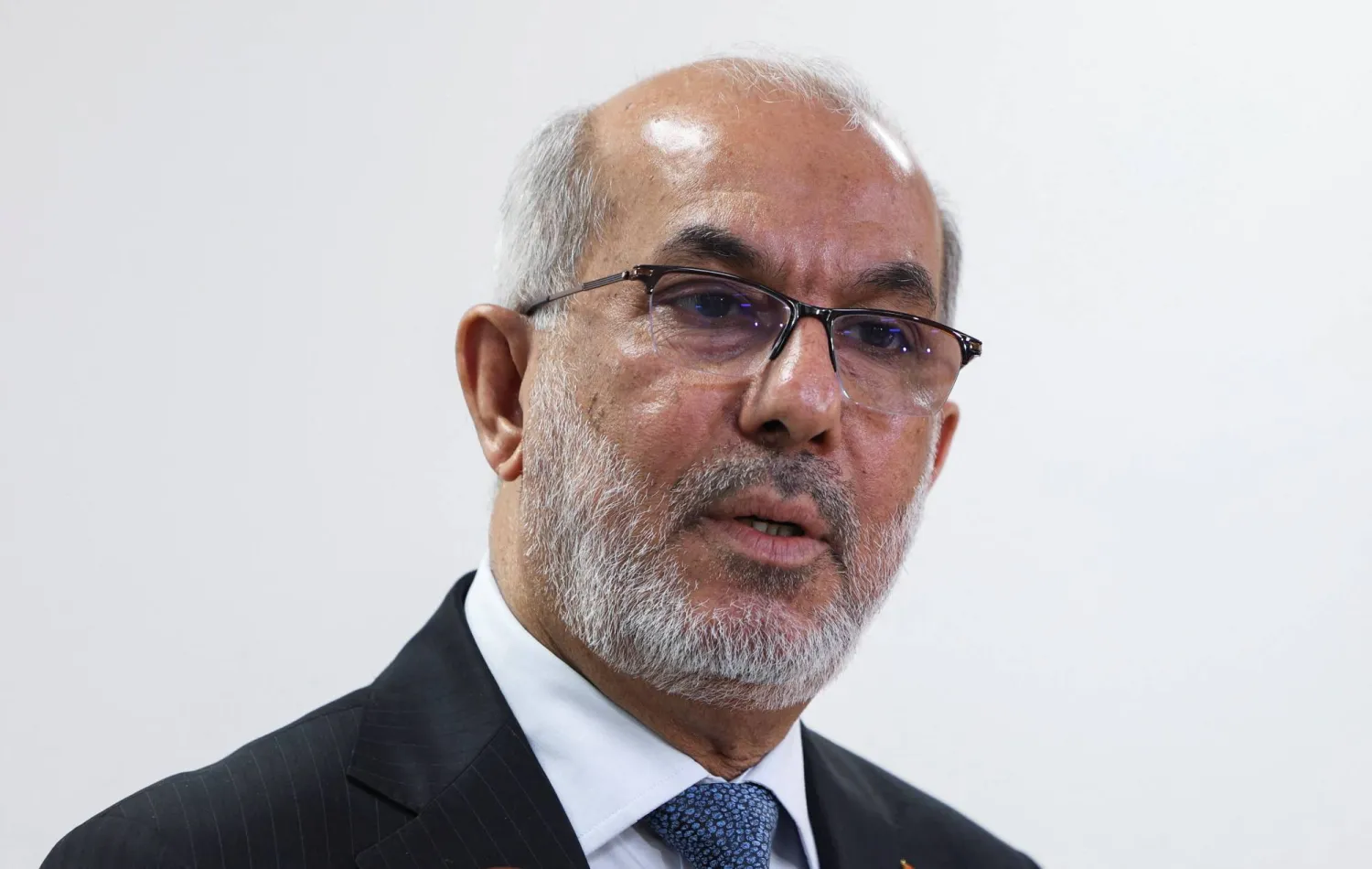
Iraq's Oil Minister, Basim Mohammed Khudair speaks during a press conference in Baghdad, Iraq, Augaust 8, 2026. REUTERS/Thaier Al-Sudani
TT

Iraq Oil Exports Fall to 1.75 Million Barrels Per Day

Iraq's Oil Minister, Basim Mohammed Khudair speaks during a press conference in Baghdad, Iraq, Augaust 8, 2026. REUTERS/Thaier Al-Sudani

Iraq’s crude oil production currently stands at 2.75 million barrels per day (bpd), while crude exports this month have fallen to 1.75 million bpd, Oil Minister Basim Mohammed Khudair Al-Abadi said on Saturday.

Khudair said at a press conference that Iraq had exported about 3.4 million bpd through the Strait of Hormuz before the war, but shipments through the waterway had declined since the conflict began.

He said Iraq needed to find long-term solutions to diversify its oil export routes.

That means Iraqi crude exports have fallen by about 1.65 million bpd this month from their pre-war level.

Iraq is now working to gradually increase crude exports through Türkiye’s Ceyhan port to 750,000 bpd from fields in Kirkuk and the Kurdistan region, Khudair said. Crude from fields in Basra is also being transported by tankers, in addition to volumes moved north from southern Iraq through the strategic pipeline.

Khudair said Iraq had agreed with a consortium led by US energy major Chevron to build a pipeline carrying crude from Basra to Iraq’s far north, with a capacity of 2 million bpd and an estimated cost of $15 billion.

He said the consortium, which includes Chevron and Qatar’s USS, would build the new pipeline alongside the existing strategic pipeline, linking Iraqi oil exports to Syria’s Baniyas and Jordan’s Aqaba.

The Basra-Fishkhabour pipeline would be developed under a build-operate-transfer (BOT) model, with a company building and operating the pipeline under an investment arrangement, he said.

Khudair said Iraq’s current oil export capacity could not handle the volumes shipped before the war, but exports could return to previous levels once the conflict ended.

“All oil fields are ready to restore exports to their previous levels,” he said, adding that the government was working to provide a secure environment for companies.

On Iraq’s oil agreement with Türkiye, Khudair said the deal had been renewed after previously containing certain conditions. Türkiye had proposed limiting the arrangement to oil transport and involving Iraq in certain projects, he said.

He added that the planned volume of 700,000 bpd could not be supplied through Kirkuk alone.

The Oil Ministry is seeking to develop Iraq’s export infrastructure, Khudair said, adding that a recent visit to the United States marked a new phase of cooperation with international companies.

He said the presence of US companies in Iraq reflected the attractiveness of the country’s investment environment.

International companies could train Iraqi personnel, help provide infrastructure and create large numbers of jobs, he said.

Khudair said the ministry had signed memorandums of understanding and contracts covering seven items, including two contracts related to development and investment in oil and associated gas.

An annex to an agreement covering Qurna-2, the Nasiriyah project and four blocks was also signed, he said.

Three memorandums of understanding were signed with US companies and could bring significant investment capacity, Khudair said, adding that another step concerned the oil export project through Aqaba.

Turning to oil and gas in the Kurdistan region, Khudair said there was a tripartite agreement between the federal government, the regional government, and oil companies that could be amended through negotiations.

He said the ministry did not distinguish between citizens in Kurdistan and those in any other Iraqi province.

The Kurdistan oil issue required considerable dialogue, he said, stressing the importance of continued negotiations to reach solutions serving the national interest.

Khudair also said one of the ministry’s objectives was to establish oil storage facilities in some countries, adding that talks and work on the plan were continuing.

He later put Iraq’s current oil production at 2.7 million bpd and exports at 1.5-1.7 million bpd.

The minister said the Oil Ministry was moving ahead with the government’s program to put Iraq at the forefront of energy production, while the government had a plan to end gas flaring.

Speaking at the press conference, according to the Iraqi News Agency, Khudair said the ministry had managed to secure petroleum products for citizens despite challenges and problems related to the strait.

He said the ministry was working around the clock in line with the prime minister’s directives.

Khudair said the ministry was seeking to develop the oil industry, increase production and exports, build infrastructure, expand investment, and attract international companies to develop Iraq’s oil and gas resources.

Iraq needed to build modern infrastructure after “50 lean years” marked by wars and terrorism, he said.



Maersk, Hapag-Lloyd Resume Further Services Through Suez Canal

FILE PHOTO: Shipping containers sit on a Maersk vessel docked at the port of Los Angeles in Long Beach, California, US, March 10, 2026. REUTERS/Caroline Brehman/File Photo
TT

Maersk, Hapag-Lloyd Resume Further Services Through Suez Canal

FILE PHOTO: Shipping containers sit on a Maersk vessel docked at the port of Los Angeles in Long Beach, California, US, March 10, 2026. REUTERS/Caroline Brehman/File Photo

Shipping group Maersk said on Monday it will resume four further of its container services with Germany's Hapag-Lloyd through the Suez Canal, as they gradually ⁠return to using the ⁠shortcut between Asia and Europe.

The Asia-Europe trade corridor through the Suez Canal was abandoned ⁠by most shippers earlier this decade after attacks in the Red Sea by Yemen's Houthis, forcing ships to take the much longer trip around Africa's Cape of Good Hope.

The two ⁠companies ⁠in early July and later again in August announced that they would resume some services connecting Asia, the Mediterranean and Europe through the Suez Canal.


Goldman Sachs, JP Morgan Expect September Fed Hike as Inflation Lingers

Federal Reserve building in Washington (Reuters)
TT

Goldman Sachs, JP Morgan Expect September Fed Hike as Inflation Lingers

Federal Reserve building in Washington (Reuters)

Goldman Sachs and J.P. Morgan now expect the US Federal Reserve to raise interest rates this week after a string of stronger-than-expected inflation readings challenged hopes that price pressures would continue to ease without additional policy tightening.

The Wall Street banks joined a growing number of forecasters turning more hawkish after data last week showed ‌US consumer ‌and producer prices rose more than expected in August, ‌while ⁠oil prices climbed ⁠above $100 a barrel due to renewed hostilities in the Middle East, reported Reuters.

In a note on Friday, Goldman Sachs abandoned its previous call for rates to remain unchanged and now expects a 25-basis-point increase at the US Fed's September 15-16 meeting. J.P. Morgan, meanwhile, forecasts quarter-point hikes in both September and December.

The latest data have revived concerns that progress toward the Fed's ⁠2% inflation target could stall after months of moderation.

"We ‌think that the FOMC will be ‌reluctant to surprise," Goldman Sachs economist David Mericle said.

J.P. Morgan struck a similarly ‌hawkish tone following the inflation reports.

"The week that saw rising ‌bond yields and energy prices and a firm enough set of inflation readings to make a rate hike at next week's FOMC meeting more likely than not," J.P. Morgan economists led by Michael Feroli said in a note.

The outlook ‌for further Fed tightening will be in focus this week as policymakers conclude their meeting on Wednesday, ⁠while investors ⁠also watch the Bank of Japan for policy signals.

J.P. Morgan said the latest inflation data cast doubt on a sustained disinflation trend, leading it to forecast another Fed rate hike this year and raise its estimate of the long-run policy rate to 3.25%.

Markets are pricing in an 87% chance of a quarter-point Fed rate hike this month, up from about 70% before the latest inflation data, with another increase expected in December, according to CME's FedWatch Tool.

In a separate note on Sunday, Goldman Sachs said it still expects two Fed rate cuts in 2027, though later than previously forecast, as it sees this week's expected hike as driven more by market pricing than inflation fundamentals.


Saudi Arabia’s Dammam Airports Signs Design Contract to Develop King Fahd Int'l Airport

Dammam Airports CEO Eng. Mohammed Al-Hassany and President of WSP for the Middle East and Asia Dean McGrail seen at the signing of the agreement on Sunday. (X)
TT

Saudi Arabia’s Dammam Airports Signs Design Contract to Develop King Fahd Int'l Airport

Dammam Airports CEO Eng. Mohammed Al-Hassany and President of WSP for the Middle East and Asia Dean McGrail seen at the signing of the agreement on Sunday. (X)

Dammam Airports CEO Eng. Mohammed Al-Hassany and President of WSP for the Middle East and Asia Dean McGrail signed on Sunday a design contract to develop the King Fahd International Airport in accordance with the airport's approved master plan.

Al-Hassany said signing the contract marks a significant milestone in the development of King Fahd International Airport.

Dammam Airports is committed to upgrading airport facilities, increasing capacity, and delivering a seamless, high-quality travel experience through modern design solutions and smart technologies that meet travelers' needs and accommodate future growth in passenger and air cargo traffic, he stressed.

This will reinforce the airport's status as an international gateway connecting Eastern Region to the world, he added..

The project scope includes designing the expansion of passenger terminals, upgrading facilities, and improving airport entrances and access roads. It also includes developing baggage handling systems, digital services, and terminal wayfinding systems to streamline travel procedures and enhance passenger comfort.

The master plan aims to serve more than 19.3 million passengers annually by 2030, with capacity to be increased in phases to 32 million passengers per year to meet future travel demand.

It targets increasing air cargo capacity to more than 600,000 tons annually and aircraft operational capacity to 77 movements per hour, supported by comprehensive expansions of infrastructure, runways, and general aviation facilities.

The contract is part of Dammam Airports' ongoing efforts to develop the airport ecosystem, boost operational efficiency, and contribute to achieving the objectives of the Aviation Program and Saudi Vision 2030.