


US Consumer Prices Likely Increased Moderately in July as Gasoline Prices Eased

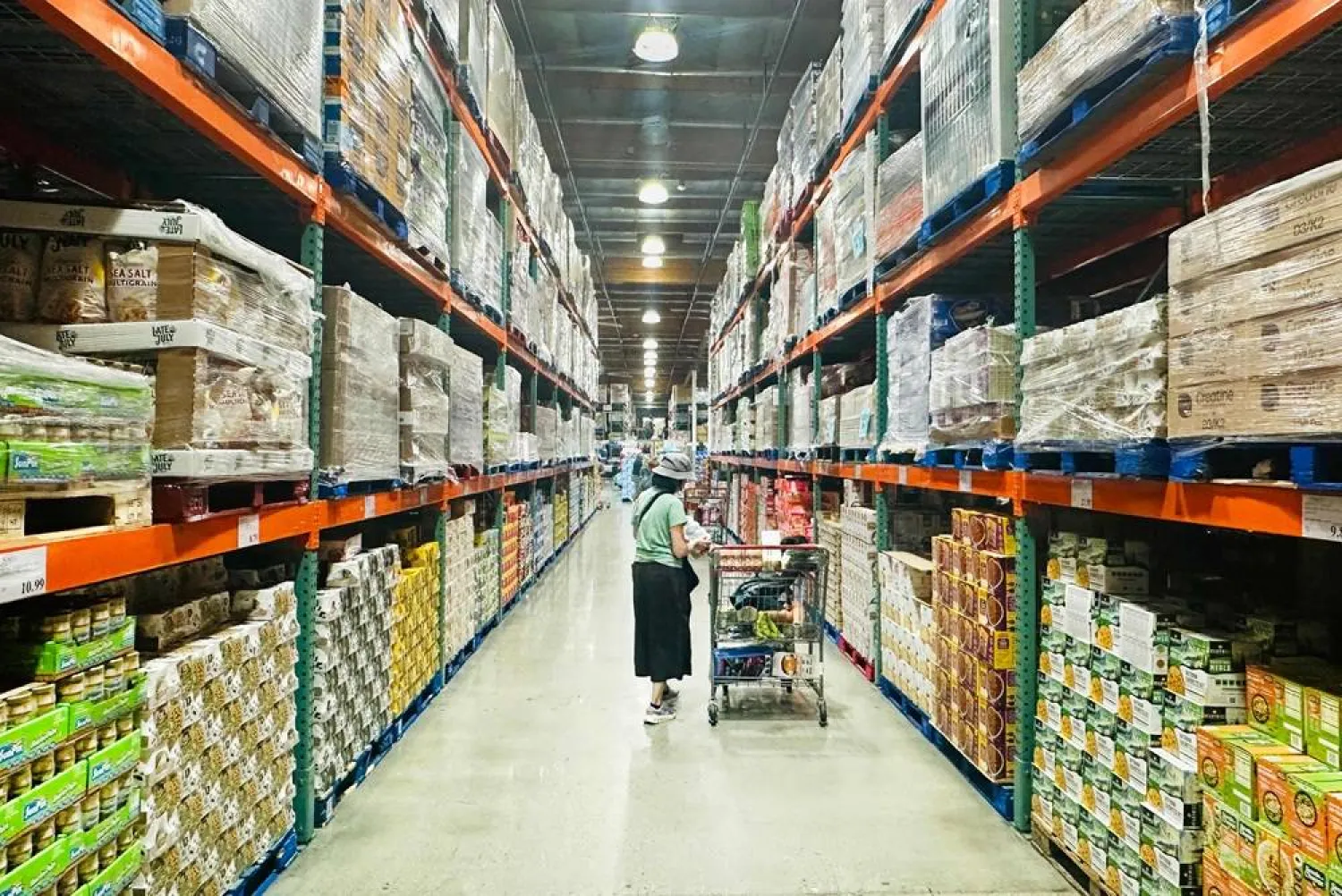
A woman shops for food items from a wholesale retailer in Alhambra, California on August 11, 2026. (AFP)
TT

US Consumer Prices Likely Increased Moderately in July as Gasoline Prices Eased

A woman shops for food items from a wholesale retailer in Alhambra, California on August 11, 2026. (AFP)

US consumer prices likely increased moderately in July, which could further reduce financial market expectations for the Federal Reserve to raise interest rates this year.

The Labor Department's Consumer Price Index report on Wednesday would follow on the heels of news last week of surprise job losses last month.

Economists said the United States' position as a net oil exporter and the drawing down of petroleum inventories had cushioned the hit on the economy from the oil price shock sparked by the Middle East conflict.

Still, they viewed inflation risks as tilted to the upside, with no resolution to the US-Israeli war with Iran. President Donald Trump accused Iran of being "devious negotiators" in an interview released late on Monday and described some of his current options in the war — "just bop along" and let Tehran fail economically or hit them "really, really hard."

"I don't ‌expect any significant ‌firework when the numbers come out," said Sung Won Sohn, a finance and economics ‌professor at ⁠Loyola Marymount University. "I ⁠don't really see the Fed either raising or lowering interest rates, unless things turn out badly for both unemployment and the CPI."

The CPI likely rebounded 0.1% last month, a Reuters survey of economists predicted, after falling 0.4% in June - the first decline in six years. In the 12 months through July, the CPI was forecast to have increased 3.4% after advancing 3.5% in June.

The anticipated small monthly increase in the CPI would reflect a further decline in gasoline prices, which averaged $4.064 a gallon in July compared to $4.184 in June, according to data from the Energy Information Administration. Gasoline ⁠prices have dropped from an average of $4.609 a gallon in May.

Food prices likely ‌increased marginally, in line with their recent trend. Goods prices, including ‌household furniture and apparel amid the fading pass-through from tariffs, will likely account for the moderate rise in the CPI.

INFLATION STILL ‌RUNNING ABOVE TARGET

Outside the volatile energy and food components, the CPI was forecast to rise 0.2% last month ‌after being unchanged in June. That would translate to a year-on-year increase of 2.5% in the so-called core CPI inflation.

The US central bank tracks the Personal Consumption Expenditures price indexes for its 2% inflation target. While cooler inflation readings could further temper rate hike expectations, they would likely be of little comfort to consumers, with wages not keeping up with prices.

"It's an improvement, but ‌both of those numbers are still extremely high and unpleasant for consumers," said Tani Fukui, an economist at MetLife Investment Management.

The high cost of living has ⁠soured many Americans' views ⁠of Trump, and could weigh on the Republican party's chances in the November midterm elections that will determine control of the US Congress for the next two years.

Trump won the 2024 presidential election in large part because of his promise to lower inflation.

Core inflation was seen lifted by rebounds in the prices of used cars and trucks as well as education and communication goods. Increases were also expected in airfares.

A mild pick-up in rents was anticipated, but economists were divided on whether prices for hotel and motel rooms would continue their decline.

Still, benign core CPI inflation readings were unlikely to be replicated in the core PCE price measure, which left some economists to continue to expect the Fed to tighten monetary policy in September.

Prior to the data, economists forecast core PCE inflation rising 0.2% over the month after gaining 0.1% in June. That would translate to a year-on-year increase of 3.3%, which would match June's rise. Components in the core basket have different weights in the core CPI basket.

"A report in line with our expectations would strengthen the case for the Fed hiking in September," said Stephen Juneau, a U.S. economist at Bank of America Securities.



China, US Agree to $30 Billion Tariff Cut, AI Dialogue

WASHINGTON, DC - SEPTEMBER 25: US President Donald Trump (R) and President of China Xi Jinping (L) speak as they depart following a tour of the National Archives Museum on September 25, 2026 in Washington, DC. Win McNamee/Getty Images/AFP
TT

China, US Agree to $30 Billion Tariff Cut, AI Dialogue

WASHINGTON, DC - SEPTEMBER 25: US President Donald Trump (R) and President of China Xi Jinping (L) speak as they depart following a tour of the National Archives Museum on September 25, 2026 in Washington, DC. Win McNamee/Getty Images/AFP

China and the US have agreed to a $30 billion reciprocal tariff-reduction arrangement and to launch dialogue on AI, under an eight-point consensus reached during Chinese President Xi Jinping's visit to the US, China's Ministry of Foreign Affairs said.

The two sides recognized the work of their economic teams and endorsed steps including the establishment of a trade council, the tariff-reduction arrangement and an extension of outcomes from earlier talks in Kuala Lumpur, the ministry said.

The United ⁠States and China ⁠had earlier agreed to extend by two months a trade truce that was due to expire on November 10, allowing more time to work on a potentially bigger trade deal, US Treasury Secretary Scott Bessent said on Wednesday.

The leaders of ⁠the world's two largest economies ended a three-day summit that showcased personal diplomacy rather than big public breakthroughs. Xi has since landed in Beijing, Chinese state media Xinhua reported on Saturday.

On artificial intelligence, the two sides agreed to establish a dialogue to discuss the technology's risks and benefits, with the next round of discussion set for November, and to set up a communication channel for AI-related incidents, according to the ⁠ministry.

They ⁠also agreed to support each other in hosting the Asia-Pacific Economic Cooperation leaders' meeting and the Group of Twenty summit, with both leaders signaling their intention to attend the gatherings hosted by the other, Reuters reported.

On foreign policy, the leaders agreed that Iran should fulfil its commitment not to develop nuclear weapons, and that no country or entity should impose transit tolls on international waterways, the ministry said. They also recalled that China and the United States fought as allies in World War Two.


Gold Rises, but on Track for Weekly Loss as Fed Rate Hike Expectations Build

FILE PHOTO: A raw gold bar is displayed at Nigeria’s booth at the 8th China International Import Expo (CIIE) venue in Shanghai, China, November 5, 2025. REUTERS/Maxim Shemetov/File Photo
TT

Gold Rises, but on Track for Weekly Loss as Fed Rate Hike Expectations Build

FILE PHOTO: A raw gold bar is displayed at Nigeria’s booth at the 8th China International Import Expo (CIIE) venue in Shanghai, China, November 5, 2025. REUTERS/Maxim Shemetov/File Photo

Gold prices rose on Friday but was on track for a weekly loss, as rising US Treasury yields and growing expectations of Federal Reserve rate hikes weighed on the metal.

Spot gold was up 0.6% at $4,303.19 per ounce by 1210 GMT, but was down about 1.7% so far this week. US gold futures rose 1% to $4,339.

US and Iranian negotiators in New York are seeking a deal that would involve Tehran reopening the Strait of Hormuz and Washington lifting its economic blockade of Iran, sources close to the talks said.

"Gold finds support today as oil prices pull back on renewed hopes for a US-Iran deal," said Nikos Tzabouras, a senior market analyst at Jefferies-owned Tradu.com.

"That said, the precious metal is heading for weekly losses, as higher Fed rates and bond yields raise the opportunity cost of holding gold."

The Fed raised interest rates by a quarter-point last week, its first hike in three years, and flagged more hikes follow. Traders are pricing in a 71% chance of an October hike and a 95% chance of an increase in December, according to the CME FedWatch Tool.

Although gold is traditionally seen as a hedge against inflation, higher rates dampen demand as investors shift to yield-bearing assets.

Gold demand in India picked up modestly this week as lower prices drew in buyers ahead of the festive season.

Oil prices fell, and the dollar eased about 0.3%, making greenback-priced bullion more affordable for holders of other currencies.

"Lingering deficit fears could revive the debasement trend that drives investors toward hard assets like gold. Alongside persistent central bank demand, the precious metal has a credible case for a strong fourth-quarter recovery, should the macro winds begin to shift," said Tzabouras.

Spot silver gained 1.4% to $64.82 per ounce, platinum added 1.7% to $1,777.38 and palladium fell 0.4% to $1,269.77. All three metals were poised for weekly losses.


Dollar Falls as Oil Eases, Yen Rallies on Japan Remarks

US dollar banknotes (Reuters)
TT

Dollar Falls as Oil Eases, Yen Rallies on Japan Remarks

US dollar banknotes (Reuters)

The dollar fell on Friday as oil prices eased, but was poised for a second straight weekly advance on growing rate hike bets, while the yen rallied after Japan said Tokyo and Washington remain committed to the stance behind July's joint intervention.

The dollar was on track to snap a four-day streak of gains as crude prices fell more than 1%.

Global oil prices have eased but still they remain above $100 a barrel, maintaining upward pressure on inflation.

Comments from central bank officials flagging inflation concerns and support for more rate increases after last week's rate hike of 25 basis points have boosted market expectations for a more aggressive path of monetary policy and helped spark a jump in US Treasury yields.

"We've had like a pretty aggressive rally in the dollar over the last couple of days and maybe it's a little stretched, just taking a little breather. So I wouldn't really say that the dollar is really weakening materially today," said Eugene Epstein, head of trading and structured products at Moneycorp in Stamford, Connecticut.

"It's just a combination of those factors that you have not only a slight increase in odds of a second hike before year-end, but also just general bond yields going up and the market getting a bit concerned about that, so that's really what we have, what's been driving the dollar stronger overall."

DOLLAR INDEX POISED FOR BIGGEST DROP IN THREE WEEKS

The dollar index, which measures the dollar against five other currencies, fell 0.34% and was on track for its biggest daily percentage drop since September 3, to 100.95. The euro was up 0.2% at $1.1402 but on pace for a third straight weekly decline.

Expectations for a rate hike from the Fed at its October meeting stood at about 66%, according to CME FedWatch, up from about 58% a week earlier.

On the data front, new orders for US-manufactured capital goods increased more than expected in August and data for the prior month was revised sharply higher, pointing to another quarter of robust growth in business spending as part of artificial intelligence infrastructure is created.

In a separate report, the University of Michigan's Surveys of Consumers said its Consumer Sentiment Index ticked up to 48.1 from the prior reading of 47.8, above the 47.6 estimate of economists polled by Reuters.

Sterling strengthened 0.24% to $1.3247, supported by hawkish comments from Bank of England Governor Andrew Bailey. Yet it remained close to a three-month low hit on Thursday.

YEN STRENGTHENS AS JAPAN STEPS UP INTERVENTION WARNINGS

The Japanese yen strengthened 1.09%, on pace to snap a four-day streak of declines and its biggest daily gain against the dollar since September 7, to 157.13.

The currency rose after Japan's Finance Minister Satsuki Katayama said US President Donald Trump raised concern about yen weakness during a summit with Japanese Prime Minister Sanae Takaichi earlier this week.

Katayama said this reaffirmed the shared US-Japan stance behind July's joint intervention, adding she and Treasury Secretary Scott Bessent would stay in close contact as policymakers stepped up warnings over renewed yen weakness.

Still, the yen was on track for a second weekly fall, after markets judged the Bank of Japan's rate hike last week to a 31-year high and its latest guidance as insufficiently hawkish.

Elsewhere, the dollar strengthened 0.14% to 6.725 versus the offshore Chinese yuan, as a Trump-Xi summit in Washington showed no signs of breakthroughs at a closed-door meeting on thorny issues such as AI, trade, Taiwan and the Iran war.