

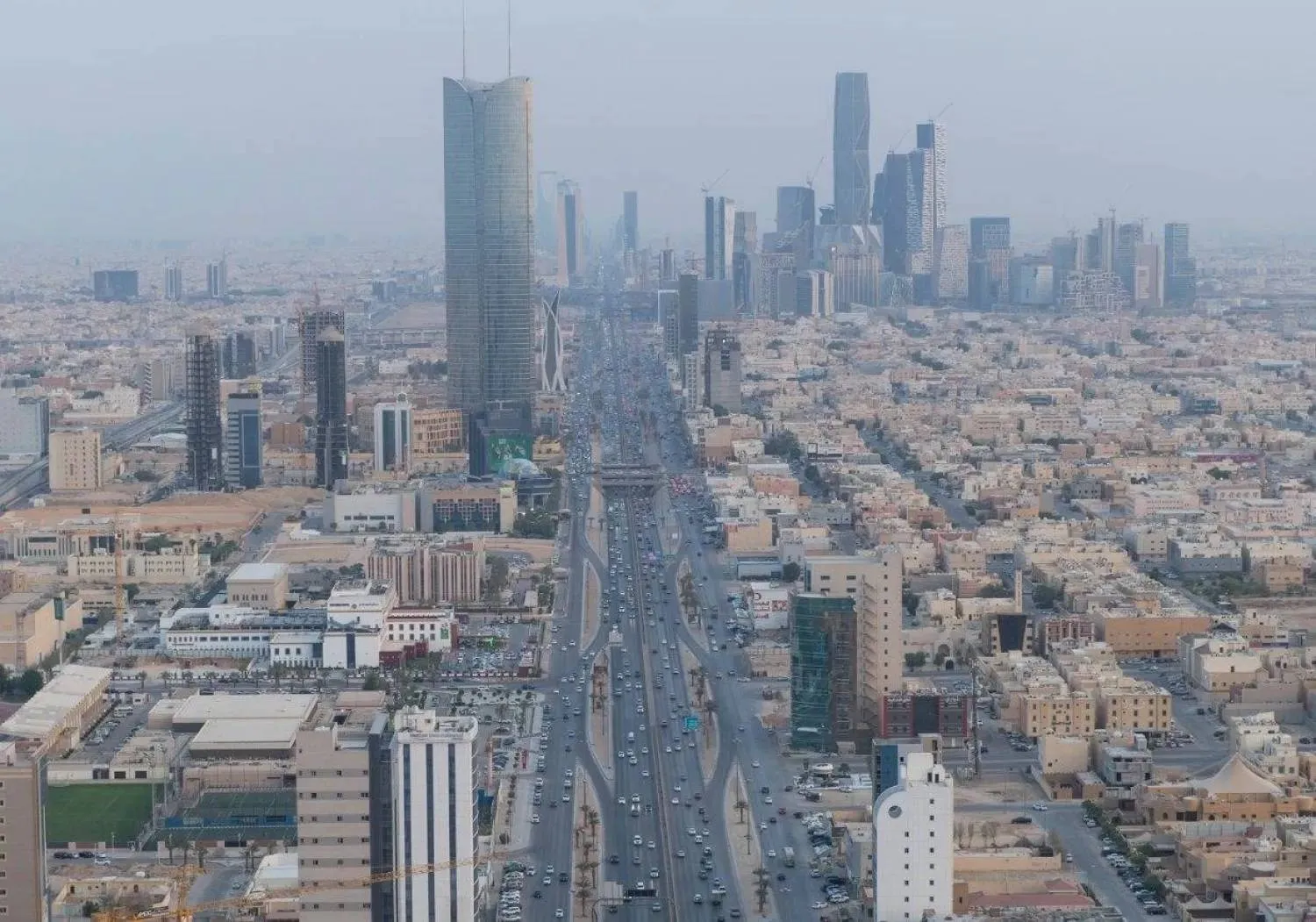

UN Convention Boosts Confidence in Saudi Arabia’s Cross-Border E-Commerce Transactions

 Riyadh, Saudi Arabia (SPA)
Riyadh, Saudi Arabia (SPA)
TT

UN Convention Boosts Confidence in Saudi Arabia’s Cross-Border E-Commerce Transactions

 Riyadh, Saudi Arabia (SPA)
Riyadh, Saudi Arabia (SPA)

Saudi Arabia’s Cabinet, chaired by Custodian of the Two Holy Mosques King Salman bin Abdulaziz, has approved the Kingdom’s accession to the United Nations Convention on the Use of Electronic Communications in International Contracts, bolstering the legal standing of cross-border digital transactions and electronic contracts in international trade.

The 2005 New York convention, drafted by the United Nations Commission on International Trade Law (UNCITRAL), aims to ensure that electronic contracts and communications used in international trade receive the same legal recognition and enforceability as paper-based documents.

The Cabinet decision gives Saudi companies and their international partners a clearer, more reliable legal framework, helping ease digital trade, cut procedural costs and strengthen the competitiveness of Saudi Arabia’s business environment globally.

Legislative environment

The move builds on Saudi Arabia’s efforts to modernize its business legislation and align it with international best practices and standards.

It is expected to make electronic communications easier to use in international contracts and commercial transactions, while increasing trust and legal certainty over their validity and enforceability.

Commerce Minister and Chairman of the Saudi Center for Competitiveness and Business Dr. Majid Al-Qasabi said the Cabinet’s ratification of the UN convention on the reliable use of electronic communications and transactions in international contracts would facilitate global trade and support business competitiveness and its legislative frameworks.

Legal certainty

International trade expert Dr. Fawaz Al-Alami told Asharq Al-Awsat that the significance of the step went beyond recognizing electronic contracts and communications, saying it marked a shift in how trust is built in international trade.

“Today, the speed of completing a transaction is no longer the only measure of competitiveness. Clear legal rules governing it, and the ability of parties in different countries to operate within a common and understandable framework, have become key factors in commercial decision-making,” he said.

Al-Alami said joining the international framework would give Saudi companies greater confidence to operate in global markets, particularly as digital trade and electronic services expand rapidly.

Faster deals

The move also sends an important signal to foreign investors and trading partners that Saudi Arabia is not simply keeping pace with digital transformation, but is building a legal framework suited to modern trade, Al-Alami said.

Its value, he added, would ultimately depend on implementation.

“The clearer, more reliable and less complex electronic procedures become, the more they will reduce the cost of doing business and speed up dealmaking, and in turn strengthen the competitiveness of the Saudi economy,” he said.

Al-Alami said the measure might appear technical, but was fundamentally part of Saudi Arabia’s shift toward an economy that is more open, digital and connected to global markets.

Automated systems

The government’s move is also expected to strengthen trust between Saudi companies and their foreign counterparts.

Negotiations, offers, acceptances and document exchanges can take place electronically under a clearer international legal framework, reducing administrative time and costs, reliance on paper documents and traditional correspondence, disputes over the evidentiary value of electronic communications, and legal uncertainty when dealing with companies abroad.

The convention also addresses key issues, including the time and place at which an electronic communication is sent and received.

It also sets out rules for contracts formed through automated systems without human review at any stage, an increasingly important issue as digital trade and automation expand.



Gold Gains with Fed Rate Decision in Spotlight

A shop attendant displays pairs of gold bracelets for Chinese weddings during a media preview of the Chow Tai Fook Jewellery Group flagship store soft opening, in Hong Kong, China, February 11, 2026. (Reuters)
TT

Gold Gains with Fed Rate Decision in Spotlight

A shop attendant displays pairs of gold bracelets for Chinese weddings during a media preview of the Chow Tai Fook Jewellery Group flagship store soft opening, in Hong Kong, China, February 11, 2026. (Reuters)

Gold prices ticked up on Wednesday as oil prices eased, while market participants looked ahead to the US Federal Reserve's policy decision, with a rate hike largely priced in.

Spot gold was up 0.8% at $4,328.39 per ounce, as of 0310 GMT, after scaling a more than one-month low on Monday. US gold futures for December delivery were down ‌0.9% at $4,369.50.

"A ‌hawkish Fed could pull gold down, ‌while ⁠any soft messaging may ⁠ease bets on hikes and help the metal recover. Traders are also monitoring oil prices and developments in the Middle East," said Frank Walbaum, a market analyst at trading platform Naga.com.

Gold is often seen as an inflation hedge, but higher rates increase the opportunity cost of holding ⁠non-yielding bullion.

Oil prices fell after an unexpected ‌build in US crude inventories, ‌while investors assessed supply risks after Saudi Arabia suspended oil loading ‌at its Yanbu port.

Traders are pricing in a ‌92.4% chance of at least a 25-basis-point US rate hike later in the day, according to CME FedWatch. The policy decision will be followed by a press conference from Fed Chair Kevin ‌Warsh.

On the geopolitical front, Saudi Arabia air defenses destroyed a Houthi drone south of ⁠Makkah before ⁠it entered prohibited airspace over the holy city, a spokesperson for the Saudi-led military coalition in Yemen said.

Commerzbank said it was somewhat surprising that gold prices had not come under greater pressure so far. It noted that gold's resilience may be supported by persistent fiscal concerns, reflected in elevated long-term government bond yields, as well as a recent rise in US political risks.

Among other metals, spot silver rose 1.5% to $64.60 per ounce, platinum edged 0.7% higher to $1,788.25, while palladium gained 1.6% to $1,309.80.


Saudi Cement Companies Balance Investment Gains, Demand Prospects

Saudi Cement Company’s factory. (Saudi Cement Company)
TT

Saudi Cement Companies Balance Investment Gains, Demand Prospects

Saudi Cement Company’s factory. (Saudi Cement Company)

Saudi Arabia’s listed cement companies maintained high profitability in the first half of 2026 despite wide disparities in performance and differing sources of growth. Combined net profit stood at about SAR 1.1 billion ($293.9 million), down a modest 2.4% from a year earlier, while the sector recorded profit growth in the second quarter.

The results show that cement and clinker sales were not the only drivers. Investment income, gains from the revaluation and disposal of some underused assets, and tighter control of expenses and financing costs supported several companies. Those farther from major demand centers faced greater pressure from transportation and logistics costs, financing burdens and excess production capacity.

While major producers, led by Yamama Cement Co., Saudi Cement Company and Eastern Province Cement, continued to lead sector profits, the results raise a more important question for the period ahead: To what extent do these profits reflect a sustainable improvement in operating activity, and how much have they benefited from investment and non-recurring items?

Thirteen companies posted first-half profits. Yamama Cement led with net profit of SAR 265.39 million, up 0.88% from SAR 263.08 million a year earlier. Saudi Cement followed with SAR 202.2 million, down 0.88% from SAR 204 million, while Eastern Province Cement ranked third, with profit rising 12.8% to SAR 141 million from SAR 125 million.

Second-quarter net profit for the sector reached SAR 508.7 million ($135.7 million), up 2.27% from SAR 497.4 million ($132.6 million) a year earlier. Nine companies reported profit growth, seven posted declines, while Al-Jouf Cement Company deepened its net losses.

Mohamed Hamdy Omar, CEO of G.WORLD, told Asharq Al-Awsat that the results presented a mixed picture: While the overall figures demonstrate the resilience of financial buffers and the ability of leading companies to adapt, they also reveal wide operational and structural disparities across the sector.

Omar identified four main factors supporting first-half profits, led by non-operating items. Cement and clinker sales were not the sole drivers of profitability, with gains from the fair-value revaluation of investments and capital gains from the disposal of some underused assets also supporting results.

Riyadh Cement Company plant. (Riyadh Cement Company)

He cited Yamama Cement as a prominent example, saying it benefited from the sale of equipment from the old plant’s production lines, as well as investment income.

Spending efficiency and financing-cost management also supported major companies. Saudi Cement and Eastern Province Cement reduced selling and distribution expenses and controlled financing costs, helping limit pressure on profit margins.

Companies based in Riyadh and the Eastern Region also benefited from proximity to major demand centers and projects, Omar said. The accelerated implementation of infrastructure projects and urban expansion provided operating volumes that helped them better absorb cost fluctuations.

Performance gap

Companies farther from major demand centers faced greater operational and logistical challenges. Omar pointed to an approximately 96.4% decline in Tabuk Cement Company’s profit and deeper losses at Al-Jouf Cement, attributing this to higher transportation and logistics costs and heavier financing and debt-servicing burdens among highly leveraged companies or those with lease-based financing structures.

Omar noted that the gap underscored the importance of geography and company size in determining competitiveness, particularly in a market characterized by excess production capacity and uneven regional demand.

He cautioned that relying on asset sales or investment portfolio revaluations to support profits was temporary and could not guarantee sustainable growth.

The real test would be a recovery in domestic demand and improvement in average selling prices per ton, he added.

Lower interest rates could ease debt-servicing burdens, potentially improving net margins and providing greater liquidity for rehabilitation and expansion.

Omar noted that mergers and acquisitions could become a more pressing strategic option as the performance gap between large and small producers widens, helping companies strengthen pricing power, reduce administrative and general expenses and address excess production capacity.

The ability to sell surplus production in neighboring regional markets will remain crucial in the second half, he stressed, alongside energy costs and feedstock-use efficiency.


Oil Slips on US Stock Build, Middle East Disruptions Limit Losses

 An oil tanker sails near the oil hub at the port of Fos-Lavera at sunset near Marseille, southern France, September 15, 2026. (Reuters)
An oil tanker sails near the oil hub at the port of Fos-Lavera at sunset near Marseille, southern France, September 15, 2026. (Reuters)
TT

Oil Slips on US Stock Build, Middle East Disruptions Limit Losses

 An oil tanker sails near the oil hub at the port of Fos-Lavera at sunset near Marseille, southern France, September 15, 2026. (Reuters)
An oil tanker sails near the oil hub at the port of Fos-Lavera at sunset near Marseille, southern France, September 15, 2026. (Reuters)

Oil prices fell on Wednesday, retreating after a two-day rally following an unexpectedly large build in US crude inventories, while supply disruptions in the Middle East lingered.

Brent crude futures fell 73 cents, or 0.67%, to $108.02 a barrel at 0450 GMT, while US West Texas Intermediate futures were down $1.1, or 1.04%, at $104.73 a barrel.

Both benchmarks settled more than $3 higher and at their highest levels since May 19 on Tuesday.

US crude oil, ‌gasoline ⁠and distillate inventories ⁠all rose last week, market sources said on Tuesday, citing data from the American Petroleum Institute.

Crude inventories rose by 7.1 million barrels in the week ended September 11, the sources said, citing API data. That compared with analysts' expectations for a draw of about 1.6 million barrels, according to a Reuters poll.

API's data showed unexpected builds in gasoline and diesel inventories have weighed on prices, but regional stock ⁠increases do not change the underlying tightness in the global ‌crude market, Haitong Futures said in a ‌note.

Despite the inventory pressure, prices remained resilient as traders focused on disruptions to physical supplies, ‌said Priyanka Sachdeva, head of market insights at Phillip Nova, in a report ‌on Wednesday.

European diesel futures rose to a record high on Tuesday, further highlighting tightness in fuel markets as Middle East disruptions constrained ‌crude and product flows.

Visible vessel transits through the Strait of Hormuz remained in the single digits at four on Tuesday, down from seven a day earlier, preliminary shipping data showed on Wednesday, falling well short of the 10-day average of 18.

The drop in traffic through the waterway that handled a fifth of the world's oil and liquefied natural gas supply before the US-Israeli war on Iran started comes after attacks in the region intensified.