


Saudi Inflation Holds Steady at 1.8% Despite Global Commodity Market Turmoil

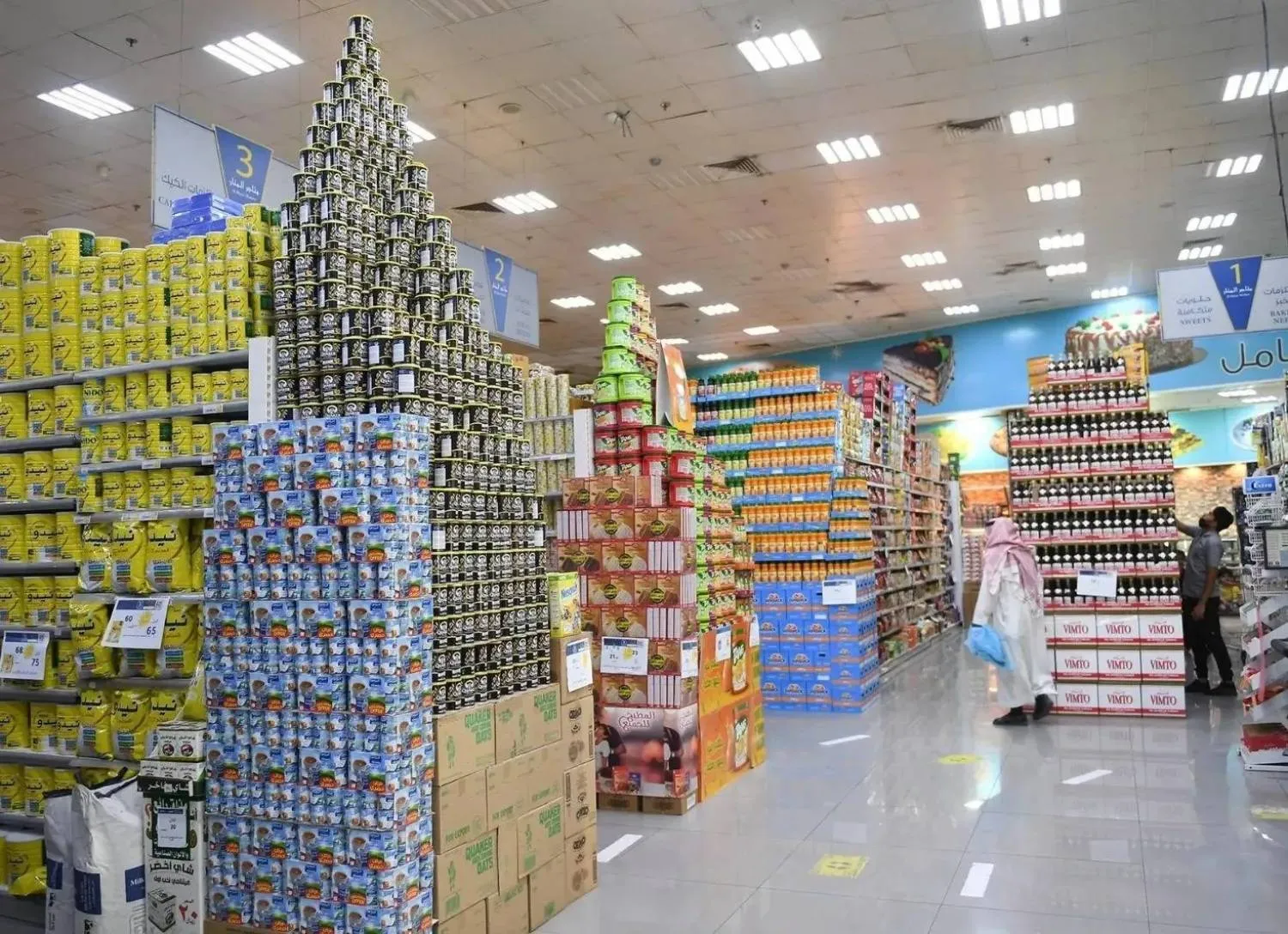
A grocery store in Saudi Arabia (SPA)
TT

Saudi Inflation Holds Steady at 1.8% Despite Global Commodity Market Turmoil

A grocery store in Saudi Arabia (SPA)

Saudi Arabia’s inflation remained subdued in July at 1.8% year on year, reflecting continued overall price stability despite housing and rents remaining the main source of inflationary pressure.

Data released Thursday by the General Authority for Statistics (GASTAT) showed prices for housing, water, electricity, gas and other fuels rose 4.2%, driven by a 4.3% increase in actual housing rents. Food and beverages increased 1.5%, while transport rose 1.4%.

The figures show that inflation remains concentrated in a limited number of categories rather than reflecting broad-based price increases. Saudi Arabia is among the G20 economies with relatively low inflation.

King Abdulaziz University economics professor Salem Baajajah told Asharq Al-Awsat that the 1.8% rate was “a positive reading for the economy, particularly given continuing global inflationary pressures.”

Increases are concentrated largely in housing and rents rather than spreading across the consumer basket, he said.

Economist Ahmed Al-Shahri cautioned that the figure should not be viewed as evidence that price pressures had disappeared, particularly with continued housing demand in major cities.

“The challenge in the coming period will not only be controlling overall inflation, but ensuring that pressures in the housing sector do not develop into a broader wave extending to other spending categories,” he stated.

Housing was the largest driver of inflation in July. Personal care, social protection and miscellaneous goods and services rose 2.9%, driven by an 11.1% increase in other personal effects, while jewelry and watch prices rose 12%. Recreation, sport and culture increased 2.4%.

By contrast, furnishings, household equipment and routine household maintenance declined 0.5%, while clothing and footwear fell 0.4%, helping contain overall inflationary pressures.

Food and beverages contributed 0.3 percentage point to overall inflation, while transport and personal care, social protection and miscellaneous goods and services each contributed 0.2 percentage point.

On a monthly basis, consumer prices rose 0.2% in July from June. Housing, water, electricity, gas and other fuels increased 0.9%, driven by a 7.1% rise in electricity, gas and other fuels. Restaurants and accommodation services rose 0.5%, recreation, sport and culture 0.4%, and transport 0.2%.



Euro Zone Yields Fall after Iran Raises Prospect of Hormuz Reopening

Euro banknotes (Reuters)
TT

Euro Zone Yields Fall after Iran Raises Prospect of Hormuz Reopening

Euro banknotes (Reuters)

Euro zone bond yields fell for a second straight day on Tuesday, hitting their lowest in almost two weeks after Iran raised the prospect of reopening the Strait of Hormuz and Washington hinted it could restart talks with Tehran, pushing oil prices lower.

Germany's 10-year bond yield, the benchmark for the bloc, fell 1 basis point to 3.44% after rising as much as 4 bps earlier in the session. It fell 7 bps on Monday as energy prices retreated.

A senior Iranian official told Reuters that the strait, which carried about a fifth of global energy supplies before the war, could reopen within seven days if the US also lifts its blockade of Iranian ports.

The official added that Iran's delegation to a UN meeting in New York this week has full authority to revive diplomacy over the conflict.

US Secretary of State Marco Rubio told NBC's "Today" show that Washington was open to speaking with Tehran.

The dip in energy prices helped pull yields lower globally after a surge in recent weeks fuelled by expectations of further interest-rate hikes to combat energy-driven inflation. Traders are pricing in around 35 bps of additional European Central Bank tightening this year, down from 40 bps on Friday.

Germany's two-year bond yield, which is sensitive to interest-rate expectations, fell 1 bp to 3.19%, following a 6-bp drop on Monday.

Rabobank senior rates strategist Lyn Graham-Taylor said lower oil prices following the Iranian comments were weighing on bond yields.

Brent crude futures were last down 1% to $100 a barrel after earlier falling to $97.40, the lowest in two weeks.


Libya's NOC Says Sharara Crude Pipeline Closure Losses at 130,000 bpd

General view of the Sharara oil field in Libya (Reuters)
TT

Libya's NOC Says Sharara Crude Pipeline Closure Losses at 130,000 bpd

General view of the Sharara oil field in Libya (Reuters)

Libya's National Oil Corporation said on Tuesday that the Sharara-Zawiya crude loading pipeline closure has led to daily losses of about 130,000 barrels per day, Reuters reported.

An armed military group closed valve seven on the Sharara crude pipeline to Zawiya port on Monday, resulting in a significant decline in production at the Sharara oilfield, the National Oil Corporation said in a statement.


Sources: Saudi Arabia Restarts East-West Oil Pipeline

FILE PHOTO: A model of an oil pump is seen in front of a Saudi Arabian flag in this illustration taken January 9, 2026. REUTERS/Dado Ruvic/Illustration/File Photo
TT

Sources: Saudi Arabia Restarts East-West Oil Pipeline

FILE PHOTO: A model of an oil pump is seen in front of a Saudi Arabian flag in this illustration taken January 9, 2026. REUTERS/Dado Ruvic/Illustration/File Photo

Saudi Arabia has restarted operations at its East-West Pipeline and could resume exports from the Red Sea port of Yanbu later on Tuesday, three sources briefed on the matter said.

Drone attacks forced Saudi Arabia to shut its East-West Pipeline on September 13, halting crude loadings at the kingdom's Yanbu port.

The resumption of supplies on Tuesday helped to drive selling on global oil markets, traders said. Brent crude futures fell by more than $2 a barrel to its lowest since September 8.

Two trading sources said traders were getting ready for Saudi oil loadings by moving tankers to Egypt's Mediterranean Port Said for ship-to-ship transfers and also to Sidi Kerir.