



Alphabet's Investment in SpaceX Multiplies 100-Fold to $94 Billion

The letters of the word "Alphabet" on a computer screen featuring a Google search page in an illustration (Reuters)
TT

Alphabet's Investment in SpaceX Multiplies 100-Fold to $94 Billion

The letters of the word "Alphabet" on a computer screen featuring a Google search page in an illustration (Reuters)

Alphabet's early bet on SpaceX has multiplied more than 100-fold, with the Google parent disclosing a stake worth about $94 billion at the end of June compared with the $900 million investment it said it made in Elon Musk's rocket company in 2015.

Alphabet has emerged as by far the largest single institutional holder of SpaceX following its $86 billion IPO in June, according to a Reuters analysis of quarterly filings made public so far.

The filings shed new light on the scale of positions acquired by SpaceX's backers as the company transitioned from a closely held startup to a publicly traded giant. Together with separate public disclosures on early investments, including Alphabet's, they also highlight how dramatically the value of some early investments in SpaceX has grown.

Because the 13F filing data is compiled once ⁠per quarter and disclosed ⁠within six weeks of quarter-end, the information is dated and will not capture any buying or selling done by these large investors since June 30.

There are other limitations as well, given the vast universe of SpaceX investments and the evolving schedule of when they stand to become eligible to be sold in public markets.

"It's very, very difficult to tease out which of these institutions were holding pre-IPO shares," said Steve Sosnick, market strategist at Interactive Brokers.

Alphabet is an exception because the company publicly disclosed that it invested $900 million in SpaceX ⁠in 2015, providing a rare benchmark against which to compare the value of its current holding.

Alphabet did not immediately respond to a request for comment. Sosnick added that the 13F filings did not reveal investors' lockup status or intentions with respect to realizing profits on pre-IPO positions.
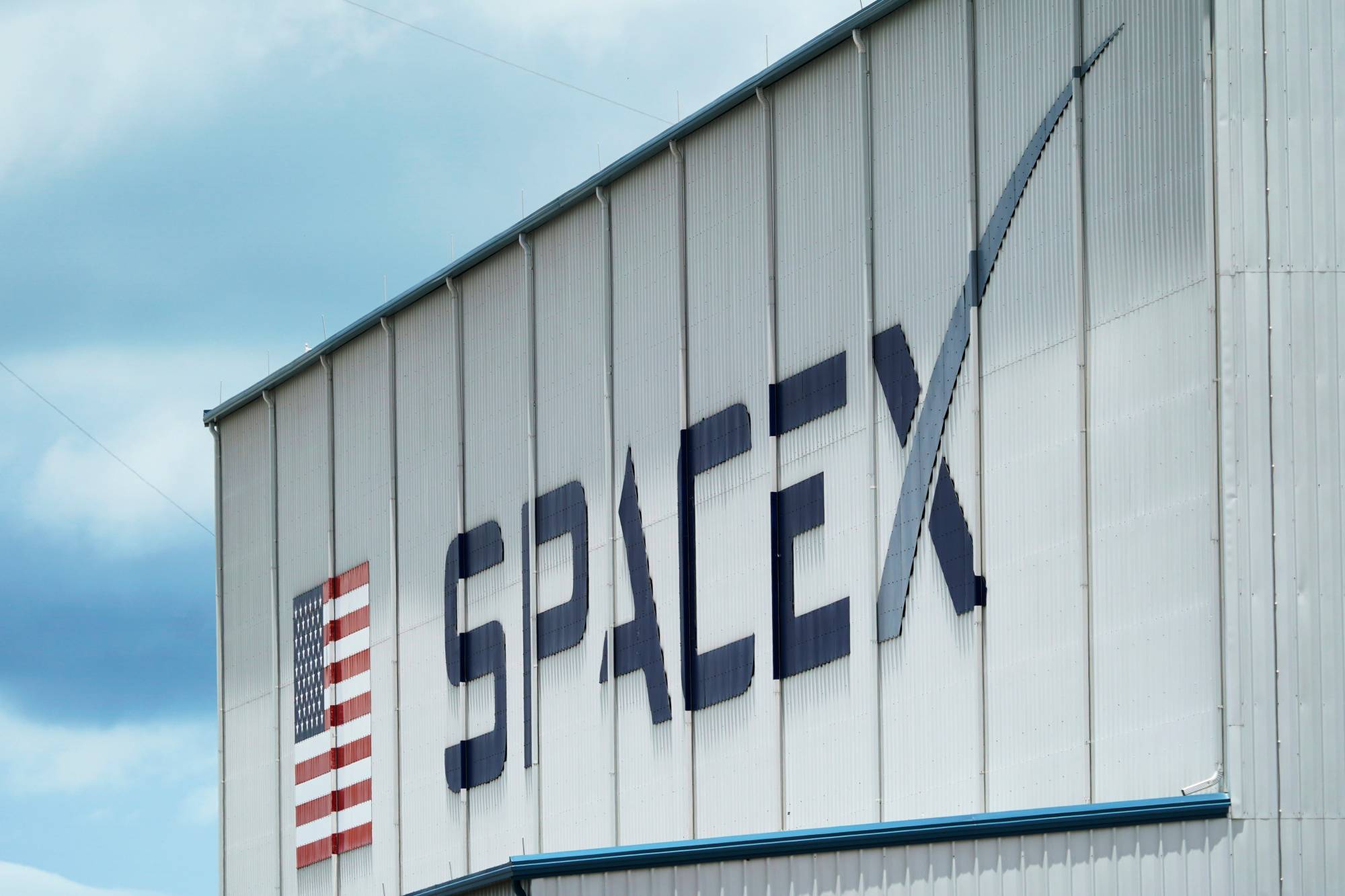
FILE - The SpaceX logo is displayed on a building, May 26, 2020, at the Kennedy Space Center in Cape Canaveral, Fla. (AP Photo/David J. Phillip, File)

Alphabet held 551.2 million SpaceX shares at the end of the second quarter, according to the firm's filing, worth about $94.2 billion at SpaceX's June 30 share price of $170.86.

At Thursday's price, Alphabet's disclosed position would be worth about $77.9 billion, still about 86.5 times the size of Google's original investment. Fidelity Investments was the second-largest reported institutional holder, with 302.6 million SpaceX shares, followed by Gigafund Management with 171.8 million, Baillie Gifford with 51.4 million and BlackRock with 51.0 million.

Alphabet, Fidelity, Gigafund Management, Baillie Gifford and BlackRock, the five largest reported holders in the data, accounted for nearly three quarters ⁠of reported SpaceX ⁠shares, highlighting the concentration of reported institutional ownership among a handful of investors.

Separately, SpaceX said in a regulatory filing that Musk owned a 48.4% stake in the company. SpaceX went public on June 12 at $135 a share. Its shares have since retreated from their end-June level. SpaceX closed at $141.29 on Thursday, 4.7% above its IPO price but 17.3% below the June 30 close.

Sosnick told Reuters that SpaceX remains one of the most actively traded stocks among customers at Interactive Brokers, receiving a "fresh jolt of buying last week when market fears about what would happen when the first lockup expiry arrived proved to be unfounded."

Retail owners of SpaceX shares, who do not have to submit their holdings to the SEC, turned into net sellers of the stock on Friday for the first time since the IPO, according to data from Vanda Research.

The research firm, which tracks the activity of self-directed individual investors, calculated that this group sold a net $4.5 million on that day. SpaceX shares were down 3% on Thursday but have risen 30% since August 5.



Data Centers Open New Avenue for Localizing Saudi Cooling Industry

Nabil Shahin discusses standards developed by the US-based Air-Conditioning, Heating, and Refrigeration Institute (AHRI). (LinkedIn) 
TT

Data Centers Open New Avenue for Localizing Saudi Cooling Industry

Nabil Shahin discusses standards developed by the US-based Air-Conditioning, Heating, and Refrigeration Institute (AHRI). (LinkedIn) 

From buildings and megaprojects to data centers, demand for air-conditioning and cooling solutions is expanding across Saudi Arabia, driven by rapid construction and accelerating investment in digital infrastructure.

As artificial intelligence and cloud computing enter a period of rapid expansion, data centers are emerging as a new growth driver for the cooling industry, requiring advanced levels of efficiency and reliability and equipment capable of operating under harsh climatic conditions.

The boom extends beyond Saudi Arabia. Globally, the cooling industry is expanding as temperatures rise and demand for data centers grows. The International Energy Agency estimates that global electricity demand for building cooling has risen by about 50% since 2015 to around 2,900 terawatt-hours, while worldwide air-conditioner shipments reached about 200 million units in 2024.

Cooling buildings is placing increasing pressure on power grids, particularly during heat waves, while data centers and AI are adding another layer of demand for advanced cooling technologies.

Global data-center electricity consumption stood at around 415 TWh in 2024 and is projected to reach about 945 TWh by 2030, with cooling and environmental-control systems accounting for a significant share of energy use at these facilities.

The growth comes amid mounting pressure to improve air-conditioning efficiency and reduce its environmental impact. According to the UN Environment Program, global cooling demand could more than triple from current levels by 2050 under existing policies, making equipment efficiency and less energy-intensive technologies increasingly important.

These shifts offer Saudi Arabia an opportunity to expand its domestic air-conditioning and cooling manufacturing base as the Kingdom seeks to increase local content and meet more of its market needs through domestic production.

Nabil Shahin, managing director of the Middle East and North Africa office of the US-based Air-Conditioning, Heating, and Refrigeration Institute (AHRI), told Asharq Al-Awsat that Saudi Arabia accounts for more than half of the Gulf air-conditioning market. He attributed the market’s growth to expanding commercial and construction projects, alongside the boom in data centers.

Data Centers Reshape Cooling Market

The Kingdom is experiencing a “growth boom” in data centers, according to the AHRI executive, fueled by the rapid spread of AI and rising demand for cloud-computing services. He noted that several US and European companies are developing data-center projects in Saudi Arabia.

As their cooling requirements increase, AHRI is working with the Saudi Standards, Metrology and Quality Organization (SASO) to develop and modify standards for data-center equipment to reflect the Kingdom’s temperatures, climatic conditions and local requirements.

Saudi Standard for Evaporative Coolers

Shahin noted that SASO had asked AHRI to develop a new standard for evaporative cooling systems, locally known as “desert coolers,” which use water in the cooling process rather than the refrigerants used in conventional air-conditioning systems.

There is currently no unified global standard for such systems, he explained. AHRI is developing the standard for submission to SASO, with the aim of providing a reference for manufacturers in the Saudi market.

The new standard will include energy-efficiency measurement criteria to assess equipment performance and suitability for local conditions.

Improving air-conditioning efficiency is particularly important in Saudi Arabia because of the sector’s high electricity consumption. More efficient systems could reduce power demand and emissions associated with electricity generation.

Saudi Arabia Leads Gulf Market

The AHRI executive estimated Saudi Arabia’s share of the Gulf air-conditioning market at more than 50%, with demand continuing to rise alongside commercial and construction projects, particularly in Riyadh, coastal areas and Makkah.

Some estimates put the Kingdom’s share at about 60%, he noted, but he prefers the more conservative figure of over 50% because no verified official data precisely establish its market share.

The scale of demand has made Saudi Arabia attractive to international companies, several of which have expanded their presence over the past two years by establishing new factories or enlarging existing facilities.

Local manufacturing can give companies an additional advantage by reducing some import costs, which can range from 5% to 12%, according to Shahin. He pointed to three large domestic factories that are expanding their operations.

From Assembly to Component Manufacturing

Localization, however, still faces the challenge of dependence on imported components. Most key air-conditioning components — including electric motors, compressors, copper and refrigerants — continue to come from abroad.

Much of Saudi Arabia’s current manufacturing activity remains focused on assembly, although some components, including heat exchangers, are produced domestically.

The next step, the AHRI official argued, is to move gradually from assembly toward manufacturing a greater proportion of air-conditioning components in the Kingdom, including electronics, circuit boards and electric motors.

He called for additional government incentives and support, including land, industrial space, free zones and investment facilities, to help Saudi factories expand and increase the share of locally manufactured components.


Gold Slips on Rate-Hike Bets; Inflation Data in Focus

Gold jewelry is displayed at an exhibition in Kabul, Afghanistan, 03 September 2026. (EPA)
TT

Gold Slips on Rate-Hike Bets; Inflation Data in Focus

Gold jewelry is displayed at an exhibition in Kabul, Afghanistan, 03 September 2026. (EPA)

Gold slipped on Monday as strong US jobs data reinforced expectations for higher interest rates, while investors awaited key US inflation reports due later this week for further clarity on the Federal Reserve's policy path.

Spot gold was down 0.6% at $4,402.86 per ounce, as of 0420 GMT, after falling 1% on Friday.

US gold futures for December delivery were down 0.6% at $4,447.60.

Data ‌on Friday ‌showed US job growth accelerated sharply in August ‌while ⁠the unemployment rate ⁠held steady at 4.1%, suggesting an improvement in the labor market after recent struggles and keeping a rate increase this month on the table.

US producer price index (PPI) data is due on Thursday, followed by consumer price index (CPI) data on Friday.

"The jobs number delivered a clear upside surprise and put some pressure ⁠on the metal, but it wasn't a ‌complete slam dunk for a September ‌rate hike. The real missing piece of the puzzle arrives this ‌week with U.S. CPI," said Tim Waterer, chief market analyst ‌at KCM Trade.

"A strong inflation print would reinforce expectations of a Fed hike, lift yields further and weigh more heavily on gold."

Traders are pricing in a 58.4% chance of a rate hike ‌at the Fed's September 15-16 meeting, CME's FedWatch tool showed.

While gold is typically viewed as ⁠an inflation ⁠hedge, higher interest rates tend to weigh on the appeal of non-yielding bullion.

US President Donald Trump said on Friday that unless the Fed cuts interest rates, he would stop trading with countries with which the United States had a deficit.

On the Middle East front, Iran said it will step up efforts to tackle problems created by US sanctions that are crippling its economy, while a senior Iranian official warned of a "painful response" if it comes under further attack.

Among other metals, spot silver eased 0.6% to $65.80 per ounce, platinum lost 1.1% to $1,800.59 and palladium declined 0.5% to $1,394.00.


SEREDO 2026 Real Estate Expo Opens in Jeddah with Broad Participation

SEREDO 2026 real estate expo opens in Jeddah with broad participation. (SPA)
TT

SEREDO 2026 Real Estate Expo Opens in Jeddah with Broad Participation

SEREDO 2026 real estate expo opens in Jeddah with broad participation. (SPA)

Undersecretary of the Ministry of Municipalities and Housing for Stimulating Housing Supply and Real Estate Development Abdulrahman bin Abdullah Al-Tawil opened the fifth edition of the SEREDO Expo for Real Estate Development and Ownership 2026 at Jeddah Superdome.

Held under the ministry’s patronage, the event is bringing together government entities, real estate developers and financing companies, with broad participation from across the sector, the Saudi Press Agency reported on Sunday.

During the opening, Al-Tawil reviewed the key real estate and financing projects, products, and services offered by participating entities, as well as investment opportunities, solutions, and ownership options available to visitors and investors.

The expo brings together leading real estate entities and companies, providing a platform for industry stakeholders to connect, showcase their projects and products, and explore investment opportunities and ownership options available in the Saudi real estate market.

The opening ceremony also honored the event's patron, sponsors, and supporting partners in recognition of their contributions to SEREDO 2026 and their role in encouraging participation from across the real estate sector.

The exhibition runs through September 8, targeting real estate professionals, industry stakeholders, business leaders, and investors, as well as those interested in exploring projects and opportunities in real estate development, ownership, and investment.