
China’s Fuel Exports Edge Back Towards Levels Before Iran War as Beijing Eases Curbs

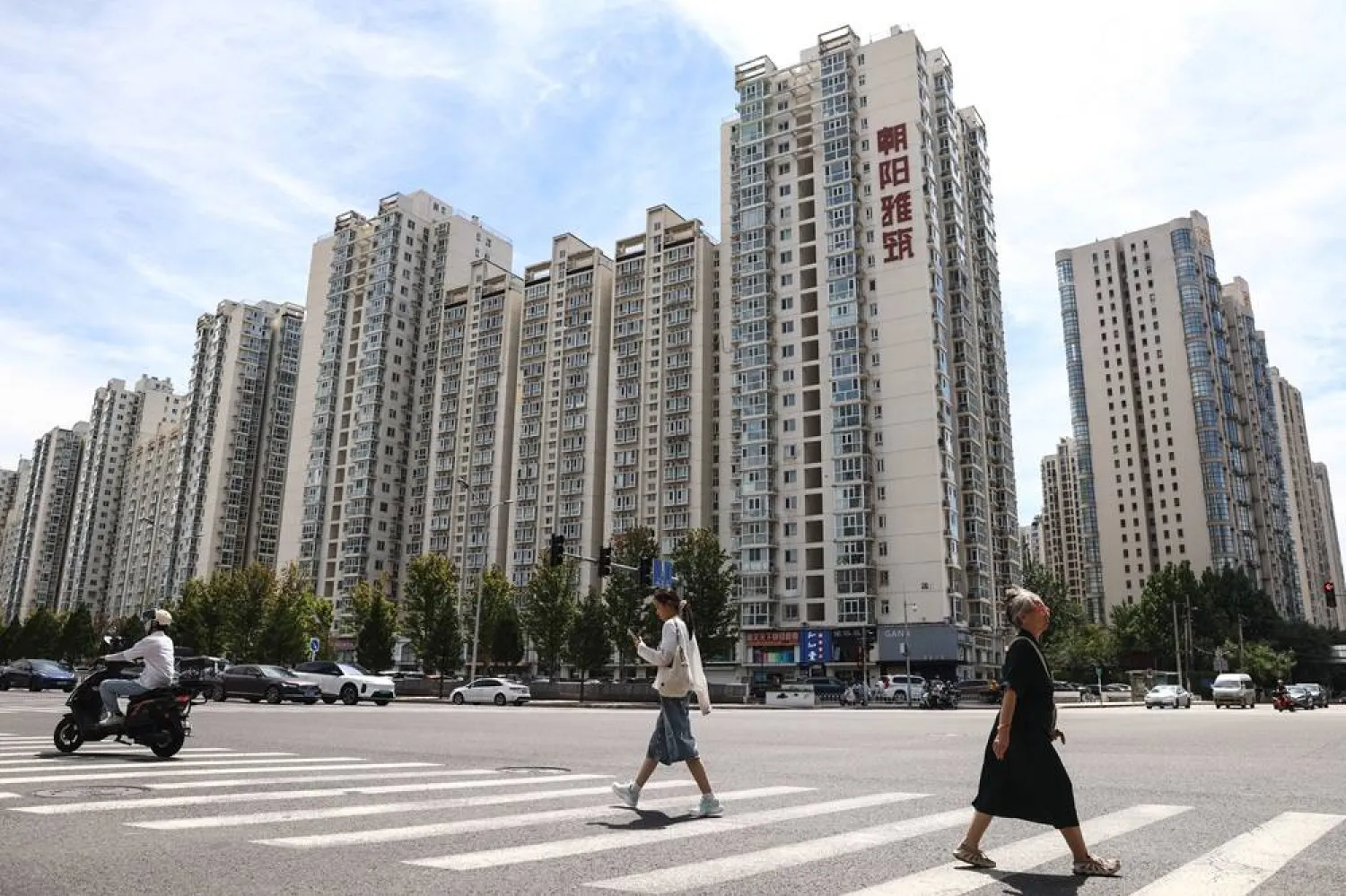
People cross a street past highrise buildings in Beijing, China, 17 August 2026. (EPA)
TT

China’s Fuel Exports Edge Back Towards Levels Before Iran War as Beijing Eases Curbs

People cross a street past highrise buildings in Beijing, China, 17 August 2026. (EPA)

China's exports of ‌refined oil products in July fell 12.9% year-on-year but rose 6.7% from the previous month, customs data showed on Tuesday, as the easing of export curbs allowed refiners under pressure to ship more fuel overseas.

The key fuel supplier to Asia curbed exports sharply in March to protect its domestic market from the oil shock caused by the closure of the Strait of Hormuz in the Iran war. Beijing eased those controls ‌in July ‌and again in August, when officials approved ‌enough ⁠exports to exceed ⁠pre-war levels.

In July, the latest month for which data is available, refined oil exports, which include diesel, gasoline, aviation fuel and marine fuel, totaled 4.65 million metric tons, up from 4.36 million in June, when exports jumped 29% from May.

Diesel exports are ⁠roughly back to the level of last ‌July after rising 88% ‌month-on-month to 810,000 tons, or about 50% higher than the monthly ‌average last year.

Rising exports are a boon ‌for customers in a tight market. They are also a precondition for the normalization of China's oil imports, which remain well below pre-war levels.

By allowing refiners to export more ‌product overseas, where prices are higher, the sector receives greater incentive to increase output ⁠and, in ⁠time, oil imports.

Exports of other fuels remain below pre-war levels, although rising. Gasoline exports stood at 420,000 tons in July, down 55.3% year-on-year but up 320% from June.

China's aviation fuel exports rose 42% from June to 1.32 million tons in July, but were down 33% from the same period last year.

The data also showed LNG imports rose 2.4% year-on-year to 5.5 million tons in July.

China's LNG imports in the first seven months dropped 4.6% from the same period last year.


First Syrian Industries Expo SYRIX Opens in Jeddah to Foster Saudi-Syrian Trade, Investment

Officials are seen at the opening of the expo in Jeddah on Tuesday. (SPA)
TT

First Syrian Industries Expo SYRIX Opens in Jeddah to Foster Saudi-Syrian Trade, Investment

Officials are seen at the opening of the expo in Jeddah on Tuesday. (SPA)

The inaugural edition of the Syrian Industries Expo, SYRIX Jeddah, 2026, organized by Jeddah Chamber, opened in Jeddah on Tuesday.

The expo brings together a wide range of Syrian companies and manufacturers, alongside businesspeople, importers, distributors, and others interested in commercial and investment opportunities in the Saudi market. Deputy Mayor of Jeddah Governorate Ali Al-Qarni attended the event.

Running through September 11, the expo serves as an economic platform to showcase Syrian products and industrial capabilities. It also aims to open new avenues for trade and investment cooperation between Saudi and Syrian business communities through direct meetings and the development of sustainable commercial partnerships.

The event features business-to-business meetings between businesspeople, investors, manufacturers, importers, and distributors. The meetings will explore sourcing, distribution, and investment opportunities, helping expand the presence of Syrian products in the Saudi market and open new trade channels.

The expo covers a range of Syrian sectors and industries, including textiles, engineering, chemicals and food, as well as sectors related to agriculture, tourism, culture and labor. This reflects the diverse opportunities for cooperation between the two countries' business communities.

SYRIX Jeddah marks a new step in strengthening economic and trade relations between Saudi Arabia and Syria. It provides investors and business owners with an opportunity to explore promising opportunities and build partnerships that support trade and investment while advancing the two countries’ shared interests.


Higher Foreign Ownership Cap Could Open New Chapter for Saudi Market

Two investors monitor shares on a screen in the Saudi market. (AFP)
TT

Higher Foreign Ownership Cap Could Open New Chapter for Saudi Market

Two investors monitor shares on a screen in the Saudi market. (AFP)

Saudi Arabia’s stock market is approaching another milestone in its opening to international investors, as it eases foreign ownership restrictions on listed companies. The move could pave the way for billions of dollars in new inflows while raising questions over the market’s ability to translate regulatory opening into sustained investor demand.

Morgan Stanley estimates that increasing the foreign ownership ceiling from 49% to 75% could attract about $4.3 billion in index-tracking inflows, rising to $7.4 billion if the cap is removed entirely.

The estimates followed the appointment of Mazen al-Sudairi as chairman of the Capital Market Authority, reinforcing expectations that further measures could be introduced to increase the Saudi market’s appeal and depth and draw additional foreign capital.

Saudi stock market data, however, show that overseas holdings are not necessarily distributed according to company size or market capitalization. Rasan leads with foreign ownership of about 38.87%, followed by East Pipes Integrated Company at 30.05%, Al-Babtain Power and Telecommunication at 26.42% and Edarat Communication and Information Technology at 24.22%.

The companies with the highest foreign ownership also include Mobily at 23.19%, Jarir Marketing at 21.95%, Saudi National Bank at 18.92%, Tawuniya at 18.88% and eXtra at 17.90%.

The disparities raise questions over whether a higher ownership ceiling alone would be enough to strengthen international demand for Saudi stocks, or whether additional inflows will depend more heavily on listed companies’ appeal, valuations and financial performance, alongside any forthcoming regulatory changes.

Billions tied to indexes

Financial markets analyst Abdullah al-Hamed said that expanding the foreign ownership limit would boost international capital flows through two main channels.

The first involves passively managed funds that track global indexes such as S&P and FTSE. Allowing foreigners to own up to 75% or 100% could increase Saudi Arabia’s potential weighting in those indexes, generating flows in line with benchmark weights regardless of the investment appeal of the individual stocks themselves.

The second involves actively managed funds, which may take longer to enter because their decisions depend on overall market conditions and corporate performance rather than index weightings.

Al-Hamed expects the measure to have a positive effect, with inflows potentially reaching about $7 billion in the best-case scenario.

Decisions by international investors to increase their Saudi equity holdings also depend on the performance of the domestic economy, driven by Saudi Vision 2030 initiatives, economic diversification and the expanding role of the private sector, as well as valuations, earnings growth and companies’ future prospects.

Al-Hamed added that steps by regulators, particularly the Capital Market Authority and Ministry of Investment, to facilitate investor access enhance Saudi equities’ appeal to international institutions. Major stocks, such as Al Rajhi Bank and Saudi National Bank, could be among the main beneficiaries, given global investors’ interest in heavily weighted index constituents.

Growth opportunities

Financial and economic adviser Hussein al-Attas said easing the ownership restriction would be positive for Saudi equities, but is neither the only nor the main factor behind higher inflows, given that most listed companies remain well below the current 49% ceiling.

The direct impact could therefore be concentrated in a limited number of stocks that attract strong overseas demand or face constraints on their relative index weightings. More broadly, the change would remove a potential future obstacle for global investors and institutions and broaden the range of opportunities available in Saudi Arabia.

Al-Attas noted that allocation decisions are shaped by valuations, earnings growth, liquidity, governance and market depth, as well as the ease of entering and exiting investments.

Regulatory clarity, continuity of economic reforms and the diversity of opportunities have also become increasingly important, particularly as the Kingdom undergoes transformation in technology, tourism, logistics, energy and mining.

Al-Attas also pointed to a gradual shift in foreign appetite away from index-related investments and blue-chip stocks toward more specialized growth opportunities. International investors have become more selective and increasingly view Saudi Arabia not simply as an oil or banking market, but as one offering opportunities tied to economic transformation and Vision 2030.

He expects overseas investors to maintain a strong presence in blue-chip stocks because of their liquidity, depth and ability to absorb large institutional allocations.

However, the strongest potential growth in foreign ownership could come from high-growth companies, particularly in newer sectors or those underrepresented in global portfolios, including technology, healthcare, consumer services and logistics.

Al-Attas argued that greater market depth and a broader base of companies and sectors capable of generating sustainable earnings growth will be the most important factors in increasing foreign allocations.

A higher ownership ceiling is important, but investors ultimately need sizable opportunities, high liquidity, attractive valuations and companies capable of translating economic growth into tangible earnings and returns, he said.

Slight decline in foreign ownership

Saudi stock market data showed limited changes in overseas holdings in several listed companies during the Sept. 1, 2026 session.

Foreign ownership in Saudi Fisheries rose 0.57 percentage point to 5.42%, while Yanbu Cement gained 0.50 point to 9.39%. Holdings also increased to 7.04% in MESC and 18.26% in eXtra.

By contrast, foreign ownership declined in several companies, including Rasan to 39.29%, Al-Babtain to 25.56%, Edarat to 24.31%, Mobily to 22.67% and Jarir to 22.04%.

Easing foreign ownership restrictions would mark another step in opening the Saudi market, but would not by itself guarantee additional capital inflows.

Recent ownership movements reveal clear differences in investor appetite across listed companies, underscoring that stocks’ appeal will continue to depend on earnings growth, performance, valuations, liquidity and market depth.

The real test, therefore, will be the market’s ability to turn regulatory opening into sustainable opportunities capable of attracting foreign capital.


Canada’s Counter-Tariffs Take Effect on Various US Goods

View of the International border on the Gordie Howe International bridge that connects Windsor, Ontario, Canada and Detroit, Michigan on September 6, 2026. (AFP)
TT

Canada’s Counter-Tariffs Take Effect on Various US Goods

View of the International border on the Gordie Howe International bridge that connects Windsor, Ontario, Canada and Detroit, Michigan on September 6, 2026. (AFP)

Canada's retaliatory tariffs on billions of dollars in US products took effect Tuesday, as a trade war between the North American neighbors heats up.

The announced duties of 15 percent, 25 percent and 50 percent apply to $27.6 billion (US$20 billion) in imports from the United States, covering steel and aluminum products as well as dairy goods like cheese. But Canada removed some seafood products from the initial list.

Ottawa's pushback comes weeks after US President Donald Trump imposed 50-percent tariffs on a similar value of Canadian products, over what Washington deemed as "discriminatory treatment" against US alcohol, automobile and dairy industries.

The US tariffs hit items like hockey sticks and cement, impacting about 5.5 percent of Canadian exports to the United States.

On Monday, Trump threatened to block sales of Canada's Bombardier Aviation in the United States, unless the Quebec-based plane maker moves manufacturing to the US.

"No more selling Bombardier in the United States!" Trump posted in all caps on his Truth Social platform, though he did not specify how he would achieve a sales halt.

Thousands of Bombardier aircraft currently operate in US airlines' domestic fleets.

In a statement Monday, the aerospace company touted its creation of "tens of thousands of jobs across the United States," with "direct employment" in more than 20 states, including Kansas, Texas, Arizona and California.

The company also noted that it spends over $2.5 billion annually with suppliers, and said its supply chain is "made up of approximately 2,800 American companies across 47 states."

"Bombardier values its great partnership with American companies and its US employees," the company's statement said.

US tariffs pose a modestly negative risk to Canada's overall economy, but analysts note that they have a sharper impact on Central Canada's manufacturing sector.

Negotiations between both sides broke down August 21 after days of meetings in Washington, with Canadian Prime Minister Mark Carney saying he decided to suspend the trade talks.

At the time, Carney said the Trump administration's terms were ultimately unacceptable, adding that US negotiators had introduced restrictions on Canadian trade deals with other countries at the eleventh hour.

US officials also made unacceptable "threats" to the French language and "Quebec culture," he added, referencing the French-speaking province in eastern Canada.

But Trump's top trade official Jamieson Greer later noted that the US government is aware that French language protections are sensitive and important.

"This is not something where we push hard, or condition, or red-line," he told Canadian public broadcaster CBC last month.

- War of words -

Ottawa and Washington have not resumed negotiations since, and have continued trading barbs.

Asked if both sides were in a trade war, US Treasury Secretary Scott Bessent told CNBC last week (Aug 31) that he did not think one could be in a tit-for-tat fight with a country that is 13 times larger.

"We're not at war with Canada," Bessent said on the sidelines of a G20 finance leaders' meeting. "How are we going to be at war with Canada? They're going to take their two set submarines from the Edmonton Mall and sic them on us?"

He was referring to a former attraction at a shopping center in the Alberta province.

Pentagon chief Pete Hegseth separately appeared to mock the physical appearance of a Canadian soldier on social media.

Carney said a day later that the remarks were "beneath their office," adding that this was "not constructive."

He said both sides can have discussions "when the Americans stop doing memes" and start being serious.

Trump also signed an order in August to rename Lake Ontario, on the border with Canada, as "Lake America."

This has sparked anger in Canada, amid a broader wave of patriotism triggered by Trump's hostility.

At the start of his second presidency, Trump also ordered the Gulf of Mexico be renamed the Gulf of America. He has made claims that Canada should become the 51st US state as well.

Although Carney is backed by Canadian public opinion, his country remains reliant on its neighbor. Nearly 60 percent of Canada's imports come from the United States and about 70 percent of its exports go to the US market.

To help businesses and workers, Canada's government has unveiled an aid package of $7.5 billion (US$5.4 billion).