


US National Debt Crosses $40 Trillion Threshold

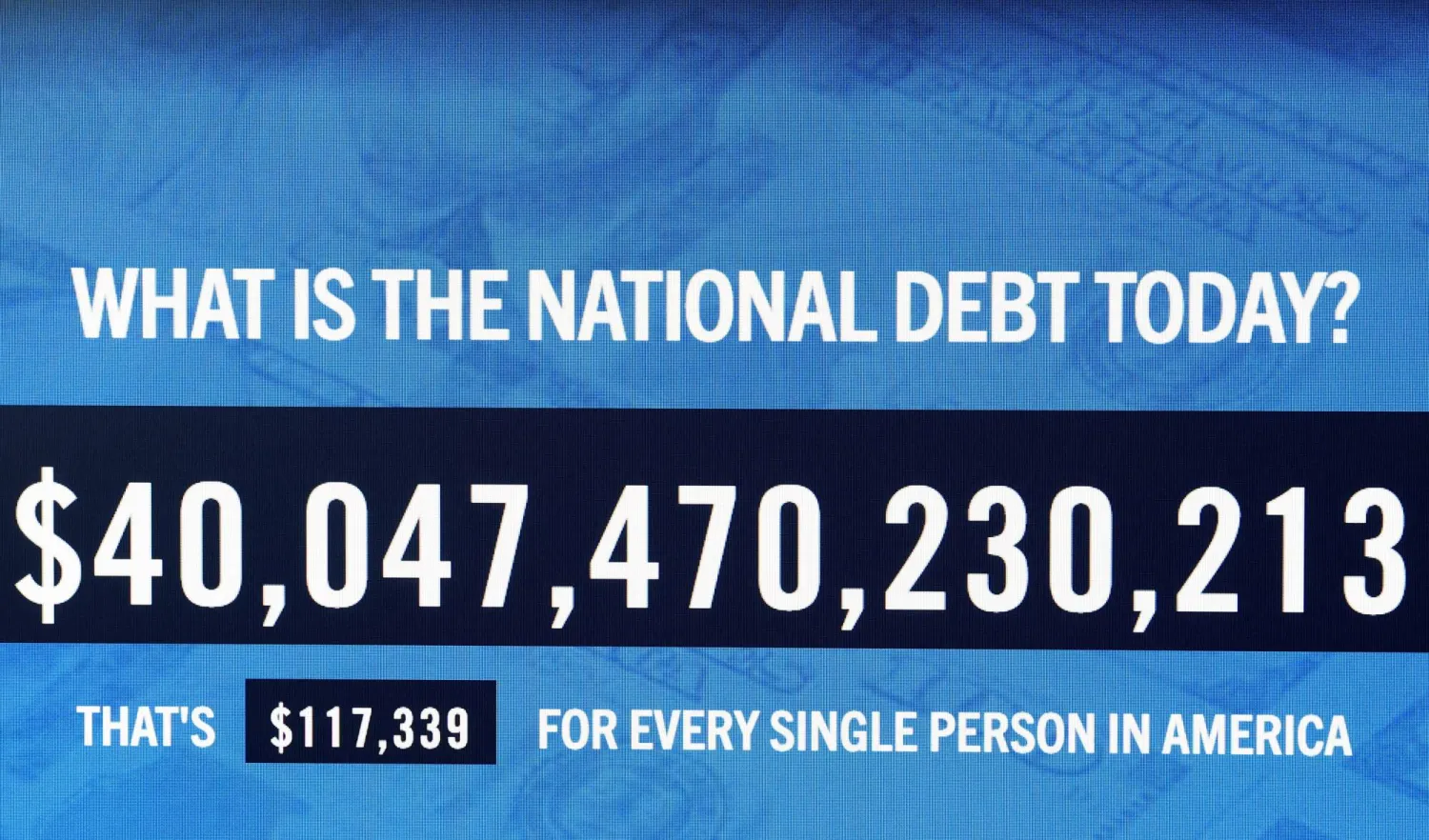
A screen displays the total US National Debt, which surpassed $40 trillion for the first time according to the Treasury Department, in New York City, US, August 19, 2026.  REUTERS/Brendan McDermid
A screen displays the total US National Debt, which surpassed $40 trillion for the first time according to the Treasury Department, in New York City, US, August 19, 2026. REUTERS/Brendan McDermid
TT

US National Debt Crosses $40 Trillion Threshold

A screen displays the total US National Debt, which surpassed $40 trillion for the first time according to the Treasury Department, in New York City, US, August 19, 2026.  REUTERS/Brendan McDermid
A screen displays the total US National Debt, which surpassed $40 trillion for the first time according to the Treasury Department, in New York City, US, August 19, 2026. REUTERS/Brendan McDermid

The national debt surpassed a record $40 trillion on Wednesday, a staggering milestone as defense costs, social programs like Social Security and Medicare and interest on the burgeoning deficit make up an enormous share of federal spending.

The milestone figure was recorded just five months after the US hit a record $39 trillion debt in March. It reached $38 trillion five months before that, in October.

The unprecedented $40 trillion figure highlights competing administration priorities, from boosting defense spending that the US relies on to carry out President Donald Trump's almost-6-month-old war in Iran to lowering the cost of gas and groceries.

Kush Desai, a White House spokesman, said the Trump administration “has been focused on slashing waste, fraud, and abuse in federal spending while accelerating economic growth to get America’s debt-to-GDP ratio trending in the right direction.”

However, experts say the exploding debt and the latest record milestone are already affecting Americans' pocketbooks by raising borrowing costs for things like mortgages and cars, lowering wages from businesses that have less money available to invest, and creating more expensive goods and services.

“If we want to improve our living standards, today and for the next generation, now is the time for lawmakers to put our nation on a more affordable and sustainable path," says Michael A. Peterson, CEO of the Peter G. Peterson Foundation, a think tank focused on US fiscal challenges.
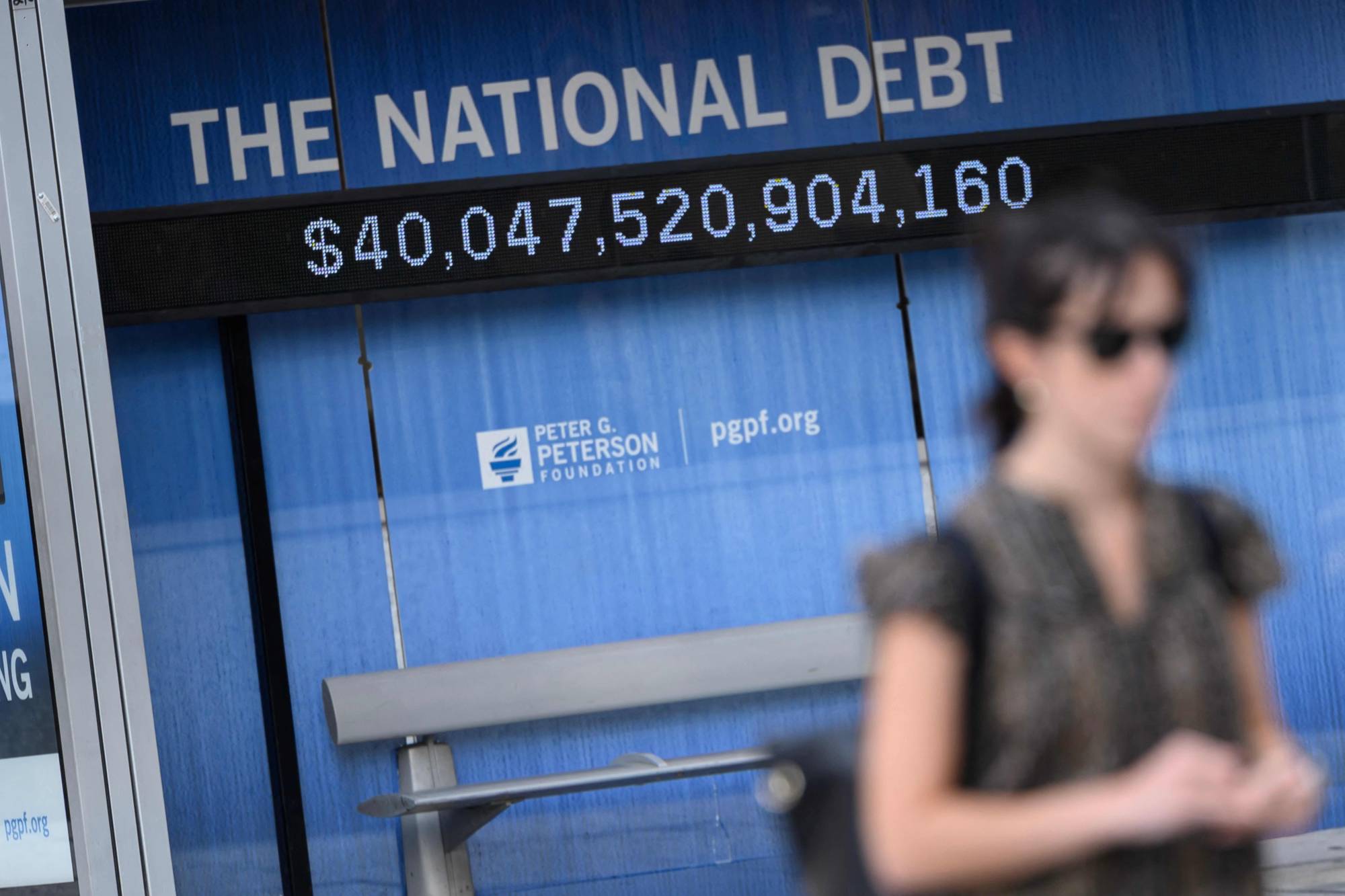
An electronic display shows the national debt in Washington, DC on August 19, 2026. (Photo by Mandel NGAN / AFP)

The debt has exploded over several presidential administrations, as the nation's leaders spend more money than it collects in taxes.

In recent memory, the multi-year COVID-19 pandemic shut down much of the US economy, where the federal government borrowed heavily during President Trump's first term and under former President Joe Biden to stabilize the economy and support a recovery.

More government spending was approved after Trump signed Republicans’ tax cut and spending legislation into law last year.

Advocates for a balanced budget also warn that the long-term trend of borrowing more and paying more in interest will force Americans to face tougher fiscal tradeoffs ahead.

"The federal debt is already raising the cost of living and choking out other spending and investment, threatening our economy and Americans’ long-term prosperity,” said Margaret Spellings, president and CEO of the Bipartisan Policy Center.

“Our current fiscal trajectory is plainly unsustainable, and that’s the best-case scenario. AI disruption, a recession, global war, or any number of other events could quickly push us over the edge from a challenge into a full-blown crisis," The Associated Press quoted Spellings as saying in a statement.

The US is subject to a statutory debt limit, or a limit to federal borrowing, which Congress has the authority to set, adjust or abolish.

The Bipartisan Policy Center estimates that the US will most likely reach the $41.1 trillion debt limit sometime between late winter and mid-summer of 2027, requiring Congress to again vote on whether to raise or suspend it.

The US' fiscal position stands as the worst among other developed countries, according to recent data analysis from the Organization for Economic Co-operation and Development.



Al-Moammar Receives First Work Order Under HUMAIN Agreement, Worth More Than 148% of 2025 Revenue

A sign identifying Al-Moammar Information Systems Company in Riyadh (company website).
TT

Al-Moammar Receives First Work Order Under HUMAIN Agreement, Worth More Than 148% of 2025 Revenue

A sign identifying Al-Moammar Information Systems Company in Riyadh (company website).

Al-Moammar Information Systems Company (MIS) has received its first work order under its agreement with HUMAIN, with a total value exceeding 148 percent of the company's total revenue for 2025, including value-added tax.

In a statement on Saudi Exchange on Sunday, the company said Work Order No. 1, received on October 1, covers the scope of work related to a capacity of 50 megawatts. This was the scope previously announced as part of a project to design and build data centers dedicated to artificial intelligence technologies.

The company said the financial impact of the work order began in the second quarter of fiscal year 2026.

The work order was received under an agreement signed by Al-Moammar Information Systems with HUMAIN last September, with a value exceeding 689 percent of the company's total revenue for 2025, including value-added tax. The agreement includes an expansion of the project's scope from 50 megawatts to 250 megawatts.

When the agreement was announced, the company said the engineering, procurement, and construction works would be carried out through work orders issued by HUMAIN in accordance with the terms of the agreement. The company would announce each work order upon receipt, including its value, implementation period, and financial impact.

Al-Moammar Information Systems expects to receive additional work orders related to the further expansion of the project in the coming period and will announce any material developments in this regard when they occur.


OPEC+ Agrees to Keep November Oil Output Targets Steady

FILE PHOTO: A view shows the logo of the Organization of the Petroleum Exporting Countries (OPEC) outside its headquarters in Vienna, Austria, May 28 , 2024. REUTERS/Leonhard Foeger/File Photo
TT

OPEC+ Agrees to Keep November Oil Output Targets Steady

FILE PHOTO: A view shows the logo of the Organization of the Petroleum Exporting Countries (OPEC) outside its headquarters in Vienna, Austria, May 28 , 2024. REUTERS/Leonhard Foeger/File Photo

OPEC+ agreed to keep oil production targets steady for November at a meeting on Sunday, the producer group said, in line with expectations that further output policy adjustments are unlikely until next year.

Seven core members of the group comprising the Organization of the Petroleum Exporting Countries and allies including Russia made the decision for November in a brief online meeting on Sunday. The core members are Saudi Arabia, Russia, Iraq, Kuwait, Algeria, Kazakhstan and Oman.

Oil prices had dropped on Friday after European leaders agreed to US President Donald Trump's request to release diesel reserves. Even so, Brent crude remains above $100 a barrel, up from about $73 before the Iran war started in late February.

The Iran war has also delayed the group's output capacity review — crucial to determine members’ 2027 output quotas — because it has thrown estimates of future production potential into uncertainty, industry sources told Reuters last week.

OPEC+ has been raising output targets for much of 2026 after years of production cuts, but most of the increases stayed on paper because of the Middle East conflict.

The seven core OPEC+ members pumped 25 million barrels per day in August, up 630,000 bpd from July, yet still roughly 5 million bpd below prewar levels in February, OPEC data shows.

The seven hold their next meeting on November 1.

OPEC+ still has about 2 million bpd of output cuts in place covering most members. It needs the result of the capacity review to decide how to distribute increases and any changes to output are unlikely before 2027, sources have said.

A separate OPEC+ ministerial group called the Joint Ministerial Monitoring Committee (JMMC), which does not decide policy, also met on Sunday to review the market.


Saudi Arabia Announces Results of Natural Gas Distribution Licensing Competition in Al-Kharj

A worker at one of Saudi Aramco's gas facilities.
TT

Saudi Arabia Announces Results of Natural Gas Distribution Licensing Competition in Al-Kharj

A worker at one of Saudi Aramco's gas facilities.

The Ministry of Energy today announced the results of a competition for a license to establish, own, and operate a natural gas distribution network in the industrial city of Al-Kharj in central Saudi Arabia.

The ministry had previously invited interested investors to participate in the competition to obtain the license and completed the procedures for qualifying bidders, launching the competition, and evaluating the bids.

As part of the competition, Natural Gas Distribution Company was awarded a license to establish, own, and operate the distribution network in the industrial city of Al-Kharj.

The competition will contribute to the objectives of the Liquid Fuel Displacement Program and the replacement of liquid fuels with natural gas, with the aim of maximizing the economic, environmental, and social benefits that the Kingdom derives from its petroleum resources as part of Vision 2030.

The launch of the competition is part of the ministry's efforts to strengthen the natural gas sector's infrastructure and stimulate investment in the sector by creating an attractive competitive environment that enables beneficiaries to access natural gas and improves the quality of services provided.