


Oil Hits 3-week High on Middle East Supply Concerns amid War Impasse

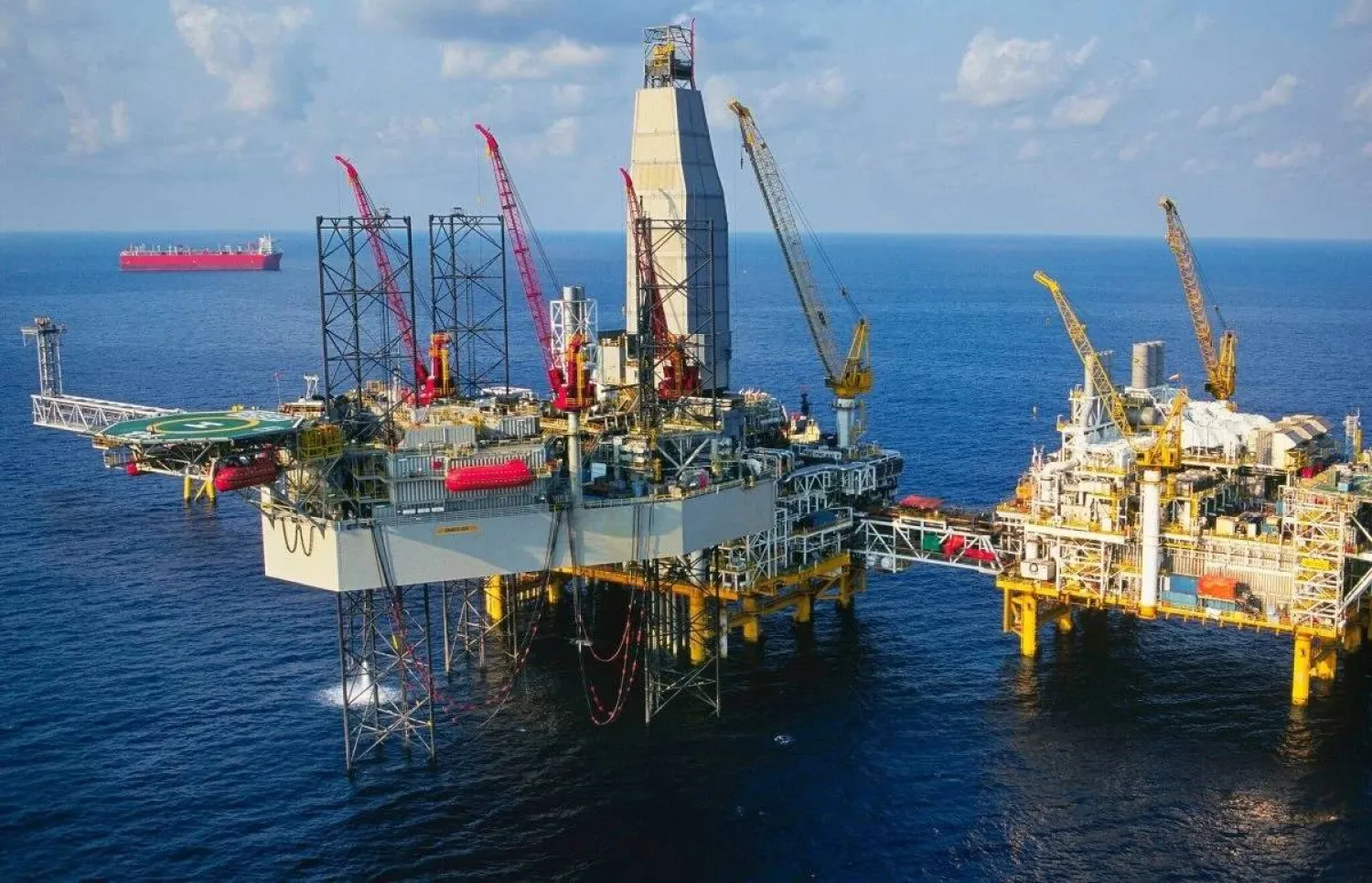
Oil platforms operated by Australian company Santos (Company website)
TT

Oil Hits 3-week High on Middle East Supply Concerns amid War Impasse

Oil platforms operated by Australian company Santos (Company website)

Oil prices climbed to three-week highs on Thursday, driven by concerns that the impasse in the Iran war will continue to disrupt supply from the key Middle Eastern producing region.

Brent crude futures for October delivery rose $1.20, or 1.3%, to $92.82 a barrel by 0813 GMT, while US West Texas Intermediate crude futures for September added 92 cents to $86.75 a barrel. The more-active October WTI contract was ‌up $1.13, or 1.3%, ‌to $85.52.

Both Brent and WTI benchmarks hit their highest ‌since ⁠late July during the ⁠session, gaining for a fifth straight session and having settled on Wednesday at their highest since July 24. The September WTI contract expires later on Thursday, Reuters said.

"Tensions in the Middle East remain high, leaving room for further supply disruptions," said UBS analyst Giovanni Staunovo. "Lower oil exports from the Middle East are once again tightening the oil market." The UAE's decision to suspend all financial and economic transactions with Iran until ⁠further notice has refocused the spotlight on fraught ties between ‌the major Gulf Arab oil producer and Iran.

"Oil ‌prices remained elevated as the market is supported by sporadic attacks in the Middle ‌East but lacks fresh momentum without a major escalation," said Hiroyuki Kikukawa, chief strategist ‌of Nissan Securities Investment.

"The market is likely to maintain a gradual upward trend given uncertainty over peace talks and tensions ...," he added. On Tuesday, US President Donald Trump said no talks were taking place with Iran ‌and that the Strait of Hormuz was open. Iran, however, said the waterway remained shut. Trump on Wednesday warned of ⁠economic consequences against ⁠any country that provided "any type of lifeline to Iran". Shipping traffic through the strait on Wednesday was unchanged from the day before as discussions to end the conflict remained deadlocked, according to the latest shipping data.

Prior to the war that began with US and Israeli strikes on Iran on February 28, shipments equal to about one-fifth of global consumption moved through the waterway. Current flows are far below pre-war levels.

The war has also impacted the supply of refined fuels and drawn down inventories with less crude available to refiners.

US stockpiles of distillate fuel, including diesel and heating oil, fell last week for a third week, the Energy Information Administration said on Wednesday. However, crude inventories unexpectedly rose by 4.4 million barrels.



Oil On Track for First Weekly Gain in November on Supply Fears

 Flames emerge from flare stacks at the oil fields in Kirkuk, Iraq October 18, 2017. REUTERS/Alaa Al-Marjani/File Photo
Flames emerge from flare stacks at the oil fields in Kirkuk, Iraq October 18, 2017. REUTERS/Alaa Al-Marjani/File Photo
TT

Oil On Track for First Weekly Gain in November on Supply Fears

 Flames emerge from flare stacks at the oil fields in Kirkuk, Iraq October 18, 2017. REUTERS/Alaa Al-Marjani/File Photo
Flames emerge from flare stacks at the oil fields in Kirkuk, Iraq October 18, 2017. REUTERS/Alaa Al-Marjani/File Photo

Oil prices were set to snap a three-week losing streak on Friday, on track for their first weekly gain in November.

Brent crude futures fell $1.42 to $95.20 a barrel by 10:16 a.m. ET (1516 GMT). Brent hit its highest since November 9 earlier in the session, but stayed shy of the $100 mark.

US West Texas Intermediate crude futures at $83.74 a barrel were up 5 cents, or 0.06%, from Wednesday's close. There was no Thursday settlement for WTI because of the US Thanksgiving holiday.

"Attacks on Middle Eastern energy facilities and tankers have brought supply disruption back into focus," said Mark Schaefer, a director at brokerage Liquidity Energy, Reuters reported.

Prices retreated in recent weeks as investors were relieved that US President Donald Trump did not step up military action against Iran after the midterm elections.

However, Iran has continued to attack ships transiting the key Strait of Hormuz, disrupting oil exports, while Yemen's Houthis have struck Saudi Arabian infrastructure.

Saudi Aramco's Jazan refinery temporarily halted some operations after a projectile struck it on Thursday, killing a worker, Saudi Arabia's Energy Ministry said.

OPEC+ is set to keep first-quarter 2027 output targets unchanged when the group meets on Sunday, three people with knowledge of the talks said.


Taiwan's Economy Expected to Grow at its Fastest Rate in Nearly 50 Years

A woman rides past poster of Taipei Mayor Chiang Wan-an displayed on a public transport bus in Taipei on November 27, 2026. (Photo by Punit PARANJPE / AFP)
TT

Taiwan's Economy Expected to Grow at its Fastest Rate in Nearly 50 Years

A woman rides past poster of Taipei Mayor Chiang Wan-an displayed on a public transport bus in Taipei on November 27, 2026. (Photo by Punit PARANJPE / AFP)

Taiwan's tech-reliant economy is expected to expand at its fastest rate in almost half a century this year thanks to continued strong AI demand, the government said on Friday, but US export controls and AI regulation could cloud the outlook.

Gross domestic product is now expected to be 13.28% higher than a year earlier, up from a forecast of 11.05% in August, the Directorate General of Budget, ⁠Accounting and Statistics ⁠said, according to Reuters. That would be the fastest growth since 1978, when GDP grew 13.56%.

Taiwan plays a leading role in fulfilling the demand for AI chips and technology from firms like Nvidia and Apple, with the island being home to the world's largest contract chip manufacturer, Taiwan Semiconductor Manufacturing Co.

For next year, it said it ⁠expected Taiwan's economy to grow 6.51%, upgrading its August prediction of 6.04%.

The agency warned of key uncertainties, including possible tighter US AI regulation and export controls, and the impact of rising financing costs.

There is also uncertainty over US tariff policy, it added.

Demand for AI already drove Taiwan's economy in 2025 to expand 8.76%.

While exports have shown no sign of weakening, there will be a greater risk next year because of a possible slowdown in demand from US clients, President Capital Management Chief Economist Lu ⁠Cheng-tao said.

"Based ⁠on current orders, there is no major problem. However, purchasing momentum in the first half of next year could very likely change," he added.

The statistics agency expects 2026 exports to rise 46.67% from a year earlier, versus a previously forecast 41.07% expansion, and said for next year exports would increase 18.63%, slightly below the prior prediction of 18.7%.

It revised up slightly its third-quarter 2026 economic growth view to 14.39% from a preliminary reading of 14.36%. It also kept its 2026 consumer price index forecast at 2.07%, slightly above the central bank's 2% target.


Gold Gains Nearly 3% as Dollar Rally Stalls, Equities Stabilize

FILE PHOTO: UK gold bullion bars are stacked at Baird & Co in Hatton Garden in London, Britain, October 8, 2025. REUTERS/Hiba Kola/File Photo/File Photo
TT

Gold Gains Nearly 3% as Dollar Rally Stalls, Equities Stabilize

FILE PHOTO: UK gold bullion bars are stacked at Baird & Co in Hatton Garden in London, Britain, October 8, 2025. REUTERS/Hiba Kola/File Photo/File Photo

Gold prices rose nearly 3% on Friday, recovering from a more than one-year low, supported by a pause in the dollar's advance and calmer equity markets.

Spot gold rose 2.9% to $3,670.69 per ounce by 0835 GMT, after it touched its lowest level since August 2025 on Wednesday.

US gold futures for December delivery gained 3.9% to $3,669.30, Reuters reported.

"After days of declines, buyers returned to the market. Technology ⁠and AI stocks ⁠seem to have stabilized after the recent selloff, which is positive for gold because the market rout had forced some investors to liquidate bullion positions to raise cash and cover losses in other positions," said Carlo Alberto De Casa, external analyst for Swissquote.

"I don't see gold ⁠easily back to $5,000, but I see good chances that the price could return to $4,000-$4,200."

The US dollar took a breather after scaling a 22-month peak earlier this week. A softer dollar makes dollar-priced metals less expensive for holders of other currencies.

Equities steadied as they neared the end of a bruising month, with a US holiday lull giving some respite from AI jitters.

The US economy grew much faster than initially estimated in the third quarter, while inflation ⁠accelerated in ⁠October, data showed on Wednesday. These reinforced expectations that the Federal Reserve will raise rates next month and again in early 2027.

Rising interest rates diminish gold's appeal by boosting returns on competing interest-bearing assets.

Meanwhile, physical gold demand in key Asian hubs improved this week, with jewelry and investment buying picking up in India, while strong retail purchases in China kept local premiums firm.

Spot silver climbed 6.6% to $44.25 per ounce, platinum gained 5.4% to $1,360.82 and palladium rose 4.6% to $913.07. All three metals were on track for weekly gains.