


IMF Welcomes Lebanon Bank Law Changes as 'Major Step' 

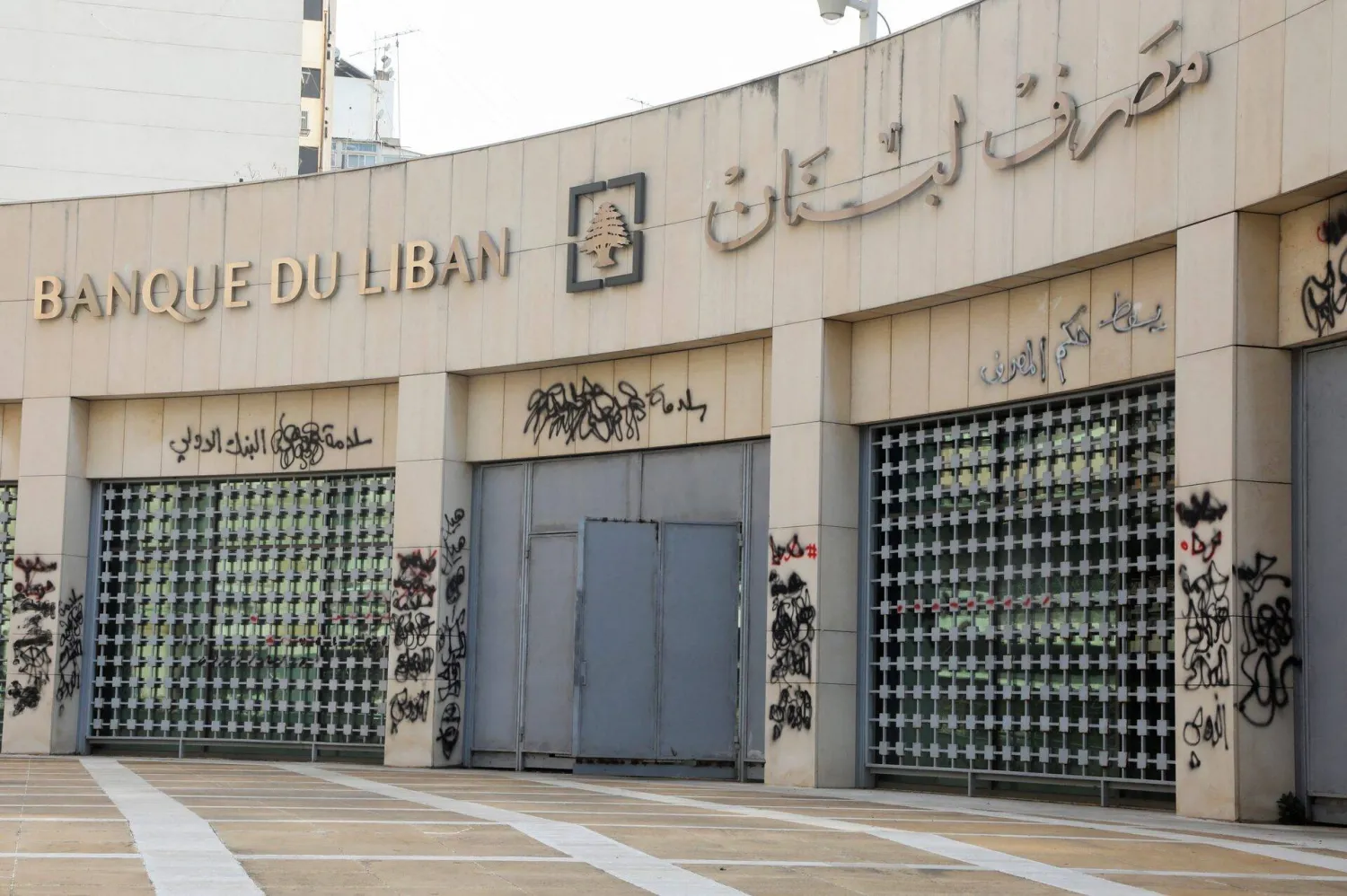
Lebanese Central Bank headquarters in Beirut (Reuters)
TT

IMF Welcomes Lebanon Bank Law Changes as 'Major Step' 

Lebanese Central Bank headquarters in Beirut (Reuters)

The International Monetary Fund has welcomed the Lebanese parliament's passing of amendments to a bank resolution law as a major step, but challenges to implementing the law could further delay recovery for an economy battered by years of financial collapse and the conflict with Israel.

The reforms are among the IMF's requirements for Lebanon to access funding to bring government debt out of default after decades of profligate spending by the country's ruling elite, sending the economy into a tailspin in late 2019. Banks imposed sweeping capital controls, locking depositors out of their savings, and stopped issuing loans.

In January the IMF had demanded changes to the draft rescue law, Lebanon's Prime Minister Nawaf Salam told Reuters at the time.

Now, the bank resolution law aims to address vast funding shortfalls in the financial system and is among a set of measures that ultimately aim to fix the banking sector and allow depositors who have been frozen out of their savings to gradually recover their money.

“We met 99% of what they wanted,” legislator Alain Aoun, who sits on Parliament’s Finance and Budget Committee, told Reuters.

The most notable amendments to the law include changes to the Central Bank’s governance procedures. The makeup of the Higher Banking Commission – a governing body within the Central Bank — will be altered, Aoun said. The amendments empower the body to “decide the fate of Lebanon’s banks,” and would determine if a bank requires restructuring or liquidation and any further steps to rehabilitate it.

Federico Lima, the IMF representative in Lebanon, said on Wednesday that the "effective implementation of this new bank resolution framework is critical."

"In addition, we are continuing discussions with the Lebanese authorities on the improvements needed to align the draft Financial Stabilization and Depositor Recovery (FSDR) law with international principles," he added.

In 2022, the government put losses from the financial crisis at about $70 billion, a figure that analysts and economists forecast is now likely to be higher.

Last week, the parliament passed amendments to the law, but it would still be pending approval by the Lebanese president.

The possibility of members challenging the law before the Constitutional Council — which has precedent for annulling provisions of earlier financial legislation — could also bring further delays.

The draft had already undergone several rewrites because of competing demands from different financial institutions; the IMF called on Lebanon to improve the law to bring it in line with international standards and consider tax reforms to spark public spending on reconstruction efforts.

The World Bank ranks the Lebanese economic crisis among the worst globally since the mid-19th century. Depositors were frozen out of dollar accounts and the Lebanese pound fell by more than 90%. Additionally, the war with Israel was estimated to have caused $7 billion in damages.

"This is the only country in the world that has had a banking crises for seven years and has not tried to find a solution," a senior Lebanese official told Reuters. "Staying where we are shouldn't be an option."



Al-Moammar Receives First Work Order Under HUMAIN Agreement, Worth More Than 148% of 2025 Revenue

A sign identifying Al-Moammar Information Systems Company in Riyadh (company website).
TT

Al-Moammar Receives First Work Order Under HUMAIN Agreement, Worth More Than 148% of 2025 Revenue

A sign identifying Al-Moammar Information Systems Company in Riyadh (company website).

Al-Moammar Information Systems Company (MIS) has received its first work order under its agreement with HUMAIN, with a total value exceeding 148 percent of the company's total revenue for 2025, including value-added tax.

In a statement on Saudi Exchange on Sunday, the company said Work Order No. 1, received on October 1, covers the scope of work related to a capacity of 50 megawatts. This was the scope previously announced as part of a project to design and build data centers dedicated to artificial intelligence technologies.

The company said the financial impact of the work order began in the second quarter of fiscal year 2026.

The work order was received under an agreement signed by Al-Moammar Information Systems with HUMAIN last September, with a value exceeding 689 percent of the company's total revenue for 2025, including value-added tax. The agreement includes an expansion of the project's scope from 50 megawatts to 250 megawatts.

When the agreement was announced, the company said the engineering, procurement, and construction works would be carried out through work orders issued by HUMAIN in accordance with the terms of the agreement. The company would announce each work order upon receipt, including its value, implementation period, and financial impact.

Al-Moammar Information Systems expects to receive additional work orders related to the further expansion of the project in the coming period and will announce any material developments in this regard when they occur.


OPEC+ Agrees to Keep November Oil Output Targets Steady

FILE PHOTO: A view shows the logo of the Organization of the Petroleum Exporting Countries (OPEC) outside its headquarters in Vienna, Austria, May 28 , 2024. REUTERS/Leonhard Foeger/File Photo
TT

OPEC+ Agrees to Keep November Oil Output Targets Steady

FILE PHOTO: A view shows the logo of the Organization of the Petroleum Exporting Countries (OPEC) outside its headquarters in Vienna, Austria, May 28 , 2024. REUTERS/Leonhard Foeger/File Photo

OPEC+ agreed to keep oil production targets steady for November at a meeting on Sunday, the producer group said, in line with expectations that further output policy adjustments are unlikely until next year.

Seven core members of the group comprising the Organization of the Petroleum Exporting Countries and allies including Russia made the decision for November in a brief online meeting on Sunday. The core members are Saudi Arabia, Russia, Iraq, Kuwait, Algeria, Kazakhstan and Oman.

Oil prices had dropped on Friday after European leaders agreed to US President Donald Trump's request to release diesel reserves. Even so, Brent crude remains above $100 a barrel, up from about $73 before the Iran war started in late February.

The Iran war has also delayed the group's output capacity review — crucial to determine members’ 2027 output quotas — because it has thrown estimates of future production potential into uncertainty, industry sources told Reuters last week.

OPEC+ has been raising output targets for much of 2026 after years of production cuts, but most of the increases stayed on paper because of the Middle East conflict.

The seven core OPEC+ members pumped 25 million barrels per day in August, up 630,000 bpd from July, yet still roughly 5 million bpd below prewar levels in February, OPEC data shows.

The seven hold their next meeting on November 1.

OPEC+ still has about 2 million bpd of output cuts in place covering most members. It needs the result of the capacity review to decide how to distribute increases and any changes to output are unlikely before 2027, sources have said.

A separate OPEC+ ministerial group called the Joint Ministerial Monitoring Committee (JMMC), which does not decide policy, also met on Sunday to review the market.


Saudi Arabia Announces Results of Natural Gas Distribution Licensing Competition in Al-Kharj

A worker at one of Saudi Aramco's gas facilities.
TT

Saudi Arabia Announces Results of Natural Gas Distribution Licensing Competition in Al-Kharj

A worker at one of Saudi Aramco's gas facilities.

The Ministry of Energy today announced the results of a competition for a license to establish, own, and operate a natural gas distribution network in the industrial city of Al-Kharj in central Saudi Arabia.

The ministry had previously invited interested investors to participate in the competition to obtain the license and completed the procedures for qualifying bidders, launching the competition, and evaluating the bids.

As part of the competition, Natural Gas Distribution Company was awarded a license to establish, own, and operate the distribution network in the industrial city of Al-Kharj.

The competition will contribute to the objectives of the Liquid Fuel Displacement Program and the replacement of liquid fuels with natural gas, with the aim of maximizing the economic, environmental, and social benefits that the Kingdom derives from its petroleum resources as part of Vision 2030.

The launch of the competition is part of the ministry's efforts to strengthen the natural gas sector's infrastructure and stimulate investment in the sector by creating an attractive competitive environment that enables beneficiaries to access natural gas and improves the quality of services provided.