


Saudi Arabia Closes Loophole in White Land Fees: Develop or Pay

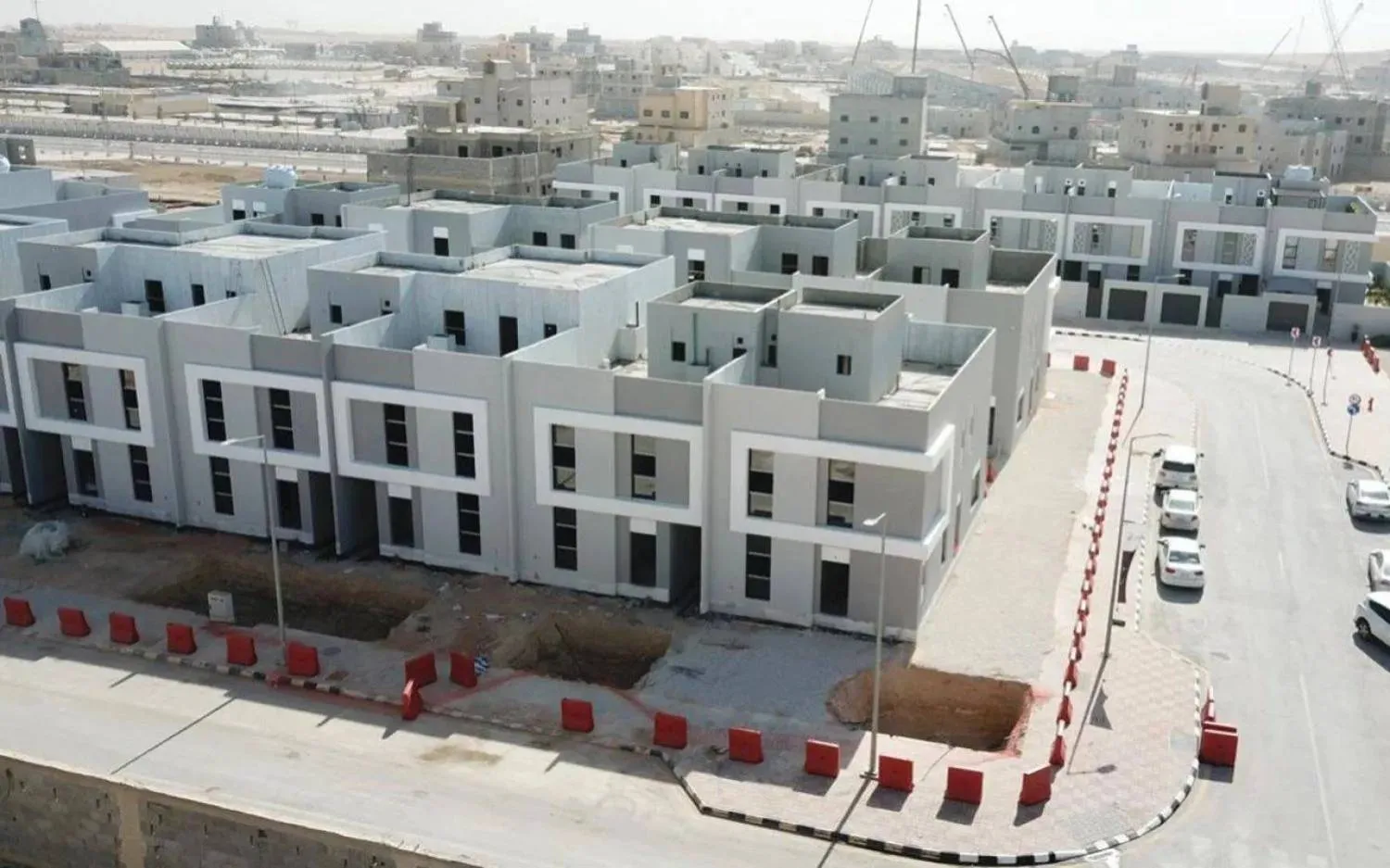
Construction work at the Shams Al-Diyar project, part of the Housing Program in Riyadh (SPA).
TT

Saudi Arabia Closes Loophole in White Land Fees: Develop or Pay

Construction work at the Shams Al-Diyar project, part of the Housing Program in Riyadh (SPA).

Saudi Arabia is moving to make white land fees more closely tied to the actual behavior of landowners, closing one avenue through which ownership of land could previously be transferred before outstanding fees were settled. The new decision gives owners of fee-subject land clearer options: pay the fees, develop the land, or sell it after settling their obligations, strengthening the system's effectiveness in increasing supply and bringing undeveloped land onto the market.

The Saudi Cabinet approved this week a decision not to document any real estate transaction transferring ownership of land subject to the White Land and Vacant Real Estate Fees Law until payment of the fees due on the land has been verified.

Minister of Municipalities and Housing Majid Al Hogail said the Cabinet's approval to regulate the documentation of real estate transactions involving land subject to the fees, by verifying payment of outstanding amounts before documenting any ownership transfer, aims to safeguard the state's rights, encourage landowners to develop their properties and increase real estate supply, thereby improving market efficiency and supporting market balance.

Evolution of the Fees

White land fees in Saudi Arabia have gone through several stages aimed at meeting the country's development targets and injecting more supply into the local market. In 2015, the fees were approved at a fixed rate of 2.5 percent. This was followed by the modern billing system introduced this year, under which annual fees can reach as much as 10 percent of the land's value, in implementation of directives from Crown Prince and Prime Minister Mohammed bin Salman.

The decision puts landowners before a clearer equation: develop the land, pay the fees, or sell after settling their obligations, closing one avenue for avoiding the fees by transferring ownership.

The significance of the move extends beyond the procedural collection of outstanding amounts, as it seeks to influence landowners' behavior, raise the cost of holding undeveloped land, and push more of it toward development or sale.

The modern fee system has expanded to include both white land and vacant real estate, tightening the pressure on vacant properties in the Kingdom to develop them and offer them for rent or sale, increasing market activity and achieving the real estate balance targeted by the government.

Rising Cost of Land

Khaled Al-Mubayyed, CEO of real estate company Manasat, told Asharq Al-Awsat that the Cabinet's approval prevents land from being transferred to a new owner while outstanding fees remain unpaid, or attempts to shed the obligation through a change in ownership. As a result, the fees become effectively tied to the land and transactions involving it, preventing attempts to circumvent the system.

Al-Mubayyed said the measure strengthens the collection of government dues by linking documentation to payment, making collection more effective because a sale and transfer of ownership are among the key pressure points that are difficult to bypass.

The CEO of Manasat added that the significance of the Cabinet's approval lies in putting the owner before two options: either develop the land or pay the fees if they wish to retain or sell it. This increases the cost of keeping land undeveloped and strengthens the incentive to bring it onto the market.

Monitoring the Property's Status

Real estate specialist and developer Ahmed Omar Basoudan told Asharq Al-Awsat that the new measure eliminates attempts to circumvent or evade development or payment of the fees, increases supply, and curbs speculative behavior and land hoarding.

He added that holding undeveloped land has become costly, forcing some owners to sell or develop rather than wait for prices to rise. This could therefore expand the pool of land available for development, which is the primary objective of the fee system.

Basoudan said increased supply of developed land would help ease bottlenecks in the land market, particularly in cities with high demand, and could gradually affect land prices as well as development and housing costs.

He added that the decision comes amid the expansion of the system to include white land and vacant real estate, with implementing regulations allowing fees to be calculated and the status of properties monitored, while reinforcing collection procedures and preventing evasion.

Digital Spending Is Reshaping Saudi Consumer Habits

A woman shops at a retail and grocery center in Saudi Arabia (SPA)
TT

Digital Spending Is Reshaping Saudi Consumer Habits

A woman shops at a retail and grocery center in Saudi Arabia (SPA)

Saudi consumers are rapidly reducing their reliance on cash as digital payments expand across everyday sectors, from grocery shopping to entertainment and electronic gaming. The shift is being driven by a young population, widespread smartphone adoption, and increasingly advanced payments infrastructure.

Grocery shopping is emerging as one of the sectors benefiting most from this transformation. Digital spending in the sector grew by 18 percent over the past year, while spending on electronic gaming has surpassed global averages, pointing to the expanding reach of the digital economy and changing consumption patterns in the Kingdom.

The total value of digital transactions across the Gulf countries is expected to grow at an annual rate of 8.7 percent between 2024 and 2028, reaching $178 billion, according to Oxford Business Group (OBG). This growth comes amid wider adoption of digital wallets, money-transfer applications, and cashless payment methods.

Against this backdrop, Mohamed Nana, Mastercard's Senior Vice President for Digital Partnerships in Eastern Europe, the Middle East and Africa, told Asharq Al-Awsat that this growth is being driven by the digital transformation visions adopted by countries across the region.

He also pointed to the launch of Buna, the Arab regional payments system, which is fully owned by the Arab Monetary Fund and supported by Arab central banks. The system aims to reshape cross-border payments and strengthen economic integration both regionally and globally.

Nana said Mastercard has made its Mastercard Move money-transfer solutions available through Buna, in what he described as the first collaboration of its kind between the public and private sectors. In Saudi Arabia, he said, the company is focused on supporting the growth of the digital economy through technology, secure payments infrastructure, and local partnerships.

Saudi Consumers Expand Their Digital Payment Use

Nana said the adoption of a broader range of digital payment methods is accelerating in Saudi Arabia. In addition to becoming familiar with solutions such as digital wallets, money-transfer applications, biometric identification, and installment-payment services, consumers are becoming increasingly comfortable using them in their everyday lives.

They are also turning to more diverse ways of shopping, including through voice assistants and social media platforms.

He said the continuing shift away from cash is being driven by a young, tech-savvy population and widespread smartphone penetration. Speed, security, convenience, and a seamless payment experience are among the main factors encouraging consumers to adopt digital payments.

Maintaining this momentum, he added, requires giving consumers confidence in new payment methods through secure technologies and an interconnected digital payments ecosystem.

Grocery shopping stands out among the Saudi sectors that have experienced notable growth in digital payment use. The sector recorded annual growth of 18 percent over the past year, driven by the expansion of digital platforms, promotional pricing, delivery services, and integration with mobile devices.

Nana said the fashion and electronics sectors have also recorded strong performance, while digital spending on electronic gaming exceeds global averages. This reflects the strength of Saudi Arabia's esports economy, which is valued at $1 billion and is being developed under the National Gaming and Esports Strategy.

Local Infrastructure for Electronic Payment Processing

Alongside growing demand for digital payments, Mastercard is developing local infrastructure for processing electronic transactions in Saudi Arabia. Nana said the company, under the auspices of the Saudi Central Bank, SAMA, has launched technology infrastructure inside the Kingdom, powered by Mastercard Gateway, allowing e-commerce transactions to be processed locally.

He added that Mastercard Gateway has become part of Mastercard Merchant Solutions, a payments platform that brings together the company's services to help businesses manage their commerce operations. He noted that Mastercard received certification last December allowing it to process electronic transactions through SAMA's new e-commerce payment interface.

Artificial Intelligence

Nana said artificial intelligence has been a core part of Mastercard's ecosystem for nearly two decades. It helps make every digital experience more secure, intelligent, and personalized for consumers and businesses, while improving efficiency for customers and partners.

In Saudi Arabia, AI is a key component of the company's strategic collaboration with Riyadh Air, which aims to redefine the travel experience across multiple customer touchpoints. It is also central to the work of Mastercard's Cyber Resilience Center in Riyadh, strengthening its ability to detect and respond to sophisticated cyber threats and fraud attempts.

Data to Help Attract Visitors

Last August, the Saudi Tourism Authority and Mastercard signed a memorandum of understanding to cooperate in supporting the growth of the Kingdom's tourism sector and strengthening Saudi Arabia's position as a global tourism destination. The partnership involves campaigns and initiatives aimed at attracting international visitors from target markets, supporting the Kingdom's goal of receiving 150 million visitors by 2030.

Nana said the partnership with the Saudi Tourism Authority uses Mastercard data and insights to segment visitor groups, analyze spending, monitor travel trends, measure the impact of events, and conduct predictive analytics. These capabilities help inform marketing strategies and policy development.

He added that the company's goal is to design global campaigns and initiatives to attract international travelers from target markets, in conjunction with the Priceless platform, which promotes unique cultural experiences across the Kingdom.


UK Economic Growth Revised Up to 0.5 Percent in Q2

The British capital, London (Reuters)
TT

UK Economic Growth Revised Up to 0.5 Percent in Q2

The British capital, London (Reuters)

Britain's economy grew more than initially estimated in the second quarter, revised data showed Wednesday, offering a boost to Prime Minister Andy Burnham ahead of next month's annual budget update, AFP said.

Gross domestic product increased 0.5 percent in the April-June period, up from a first estimate of 0.4 percent, the Office for National Statistics said.

The figure still marked a slowdown from the 0.6 percent expansion recorded in the first quarter.

"Stronger services growth in the latest quarter means the economy is now slightly larger than previously estimated," ONS director of economic statistics Liz McKeown said in a statement.

Burnham, who has made easing the cost of living a key focus for his Labor government, has set the stage for difficult decisions to be made in the October 28 budget presentation.

With inflation rising and government bond yields reaching multi-decade highs this month, Finance Minister John Healey, who will unveil the budget, has pledged to maintain strict fiscal discipline.

"Growth has come in marginally better than initially expected, but it remains difficult to come by as households and businesses contend with high borrowing costs, inflationary pressures and a cooling labor market," said Richard Carter, head of fixed interest research at Quilter Cheviot.

He noted that since the second quarter, "the outlook has become more uncertain" following a recent surge in energy prices and borrowing costs.


Russia Extends Diesel Export Ban until End of October

FILE -Diesel prices are displayed at a gas station Thursday, Sept. 10, 2026, in Carlsbad, Calif. (AP Photo/Gregory Bull, File)
TT

Russia Extends Diesel Export Ban until End of October

FILE -Diesel prices are displayed at a gas station Thursday, Sept. 10, 2026, in Carlsbad, Calif. (AP Photo/Gregory Bull, File)

Russia has extended its ban on diesel exports for fuel producers until the end of October, the government said on Wednesday, adding further strain to a global energy market already rattled by ongoing conflicts and supply shortages.

Global fuel shortages and sharp price increases have been in focus, especially in ‌the United ‌States, where diesel prices ‌have shot ⁠to records over $6.50 ⁠a gallon as the wars in Iran and Ukraine constrain deliveries of fuel, a political risk for US President Donald Trump ahead of the midterm elections, Reuters reported.

The price of ⁠diesel at the pump in ‌the United ‌Kingdom has hit record highs due to the ‌US-Israeli war on Iran, motoring body ‌RAC said on Monday.

Russia has repeatedly imposed curbs on gasoline and diesel exports to rein in rising fuel prices and ‌tackle shortages triggered by Ukrainian drone attacks on oil refineries.

In ⁠late ⁠August, Moscow extended a ban on diesel exports until the end of September while allowing supplies to countries such as former Soviet republics and Mongolia under intergovernmental agreements.

Usually the world's second-largest exporter of diesel after the United States, Russia had already reduced its exports in summer before imposing the overseas supply.
