
Austria Seeking Digital Partnerships, Joint Investments with Saudi Arabia

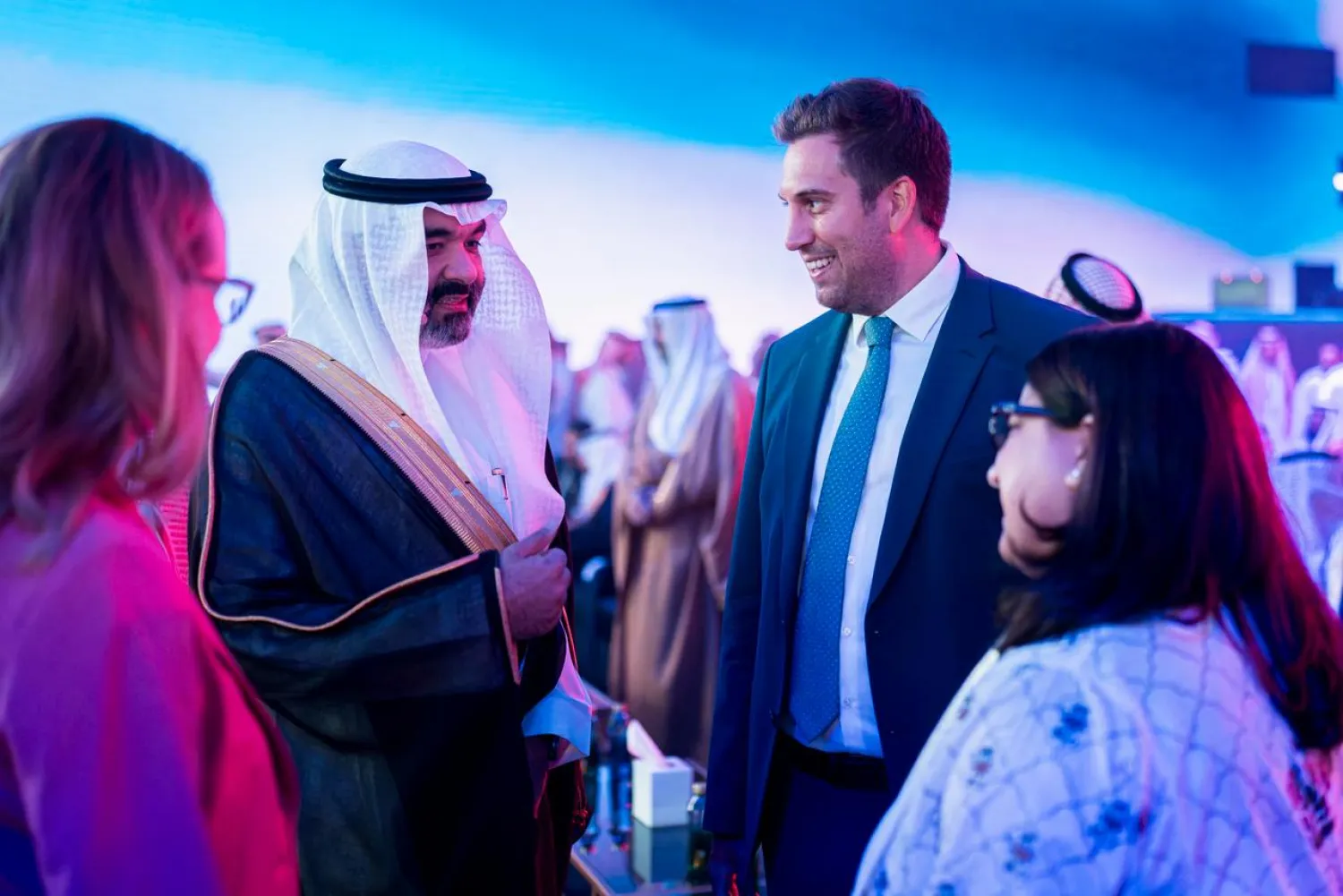
Austrian State Secretary at the Federal Chancellery for Digital Affairs, Constitution and Public Service Alexander Pröll, LL.M., and Saudi Minister of Communications and Information Technology Abdullah Alswaha at LEAP 2026 in Riyadh. (Asharq Al-Awsat)
TT

Austria Seeking Digital Partnerships, Joint Investments with Saudi Arabia

Austrian State Secretary at the Federal Chancellery for Digital Affairs, Constitution and Public Service Alexander Pröll, LL.M., and Saudi Minister of Communications and Information Technology Abdullah Alswaha at LEAP 2026 in Riyadh. (Asharq Al-Awsat)

Saudi-Austrian relations are heading toward a new phase that transcends political and diplomatic cooperation into viable commercial and research partnerships, as well as executable digital projects. This shift places an increasing focus on artificial intelligence, digital government, secure and sovereign digital infrastructure, applied research, and industrial technology.

Austrian State Secretary at the Federal Chancellery for Digital Affairs, Constitution and Public Service Alexander Pröll, LL.M., told Asharq Al-Awsat that his country was seeking “to help translate the political relationship into concrete business and research partnerships”.

Pröll is in Saudi Arabia to take in the LEAP 2026 conference in Riyadh.

“Meeting directly with Saudi ministers gives us the chance to talk frankly about where our two digital agendas overlap and where we can genuinely work together,” he added.

He hoped that the relationships built this week turn into real projects over the coming months.
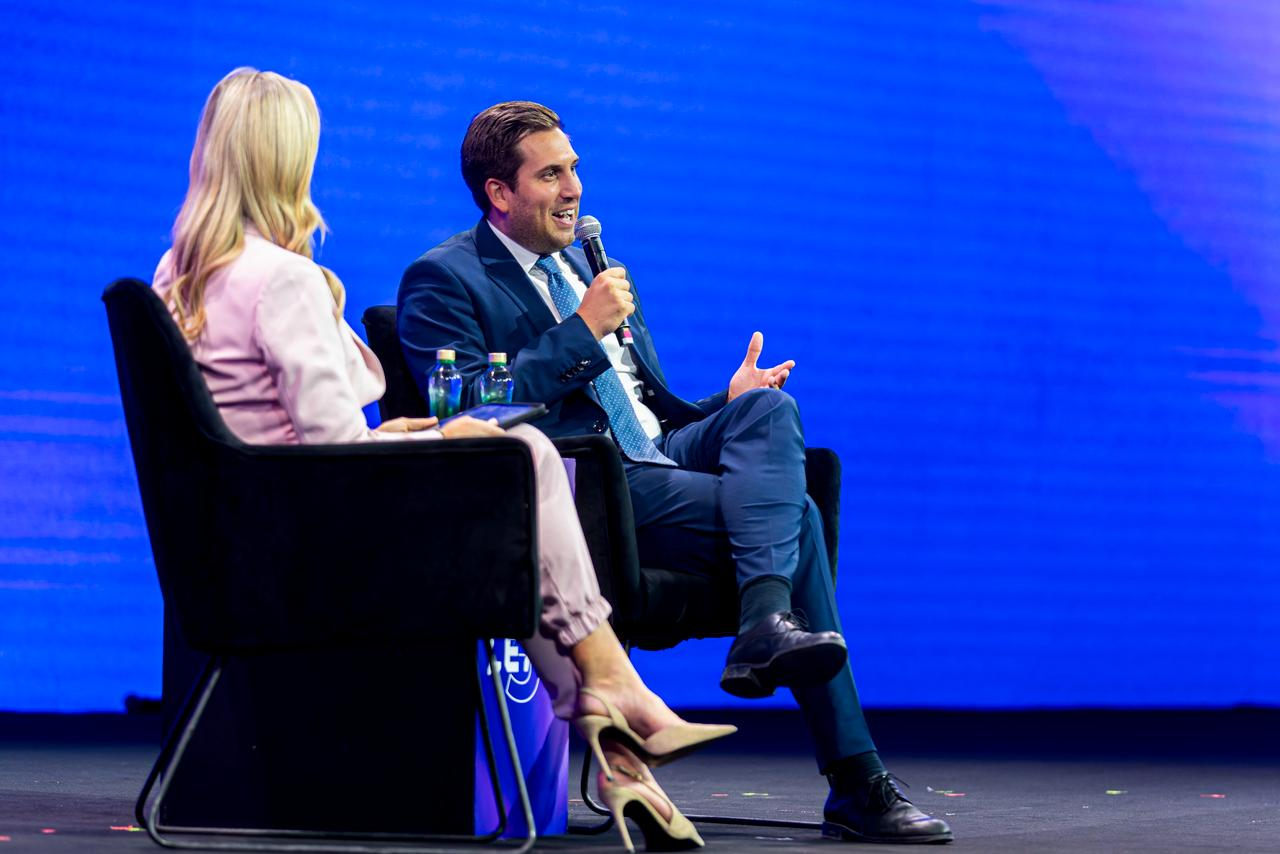
Austrian State Secretary at the Federal Chancellery for Digital Affairs, Constitution and Public Service Alexander Pröll during a dialogue session at LEAP 2026. (Asharq Al-Awsat)

Saudi-Austrian relations

Pröll said: “Saudi Arabia and Austria have a long-standing and friendly relationship, and I see real momentum building specifically in the digital and technology space.”

“Both our countries are pursuing ambitious, government-led digital transformation agendas - Vision 2030 on the Saudi side, and on ours a clear push toward digital sovereignty, from our Public AI Initiative and our Chatbot ‘ida’ for the federal administration, GovGPT, to our digital identity system, ID Austria,” he went on to say.

“That gives us a genuinely shared language: both countries understand digitalization not just as a technology question, but as a question of capability, resilience and sovereignty.”

The delegation at LEAP 2026 “brings together such a broad Austrian delegation - our national research institution, our federal infrastructure and telecom regulatory bodies, and leading companies in cloud infrastructure and engineering technology - is itself a sign of how seriously we take this partnership,” he noted.

LEAP: From dialogue to projects

Commenting on LEAP, Pröll said: “It is one of the very few platforms where you can have serious conversations with governments, researchers and industry from across the world in the space of a few days.”

“My first objective is to present Austria's approach to digital sovereignty and responsible AI to an international audience - what we have built with GovGPT, our Public AI initiatives, and our push for a European approach to digital infrastructure - and to learn from what Saudi Arabia has achieved at a pace and scale that few countries can match,” he stressed.

“We have brought the heads of our national research institution, our federal real estate and infrastructure company, our telecoms and media regulator, and companies active in cloud and data infrastructure and in engineering and mobility technology. My objective is to open doors for them - to introduce them to the right Saudi counterparts, in government and in industry, and to help translate the political relationship into concrete business and research partnerships,” he said.

AI’s ‘immediate potential’

Pröll said AI is probably the area where he sees the most “immediate potential”.

“Digital government is a good example: we have built GovGPT as a tool to make our public administration more efficient and more accessible, and Saudi Arabia has invested heavily in digitizing government services at scale - there is a lot we can learn from each other on implementation, on user adoption, on what actually works,” he stated.

“On data infrastructure, Austria is investing significantly in expanding our own sovereign compute capacity, and Saudi Arabia is building some of the most ambitious digital infrastructure projects in the world. That is an area where I would like to explore how Austrian expertise - in engineering, in energy-efficient and secure infrastructure - can be part of that story,” he told Asharq Al-Awsat.
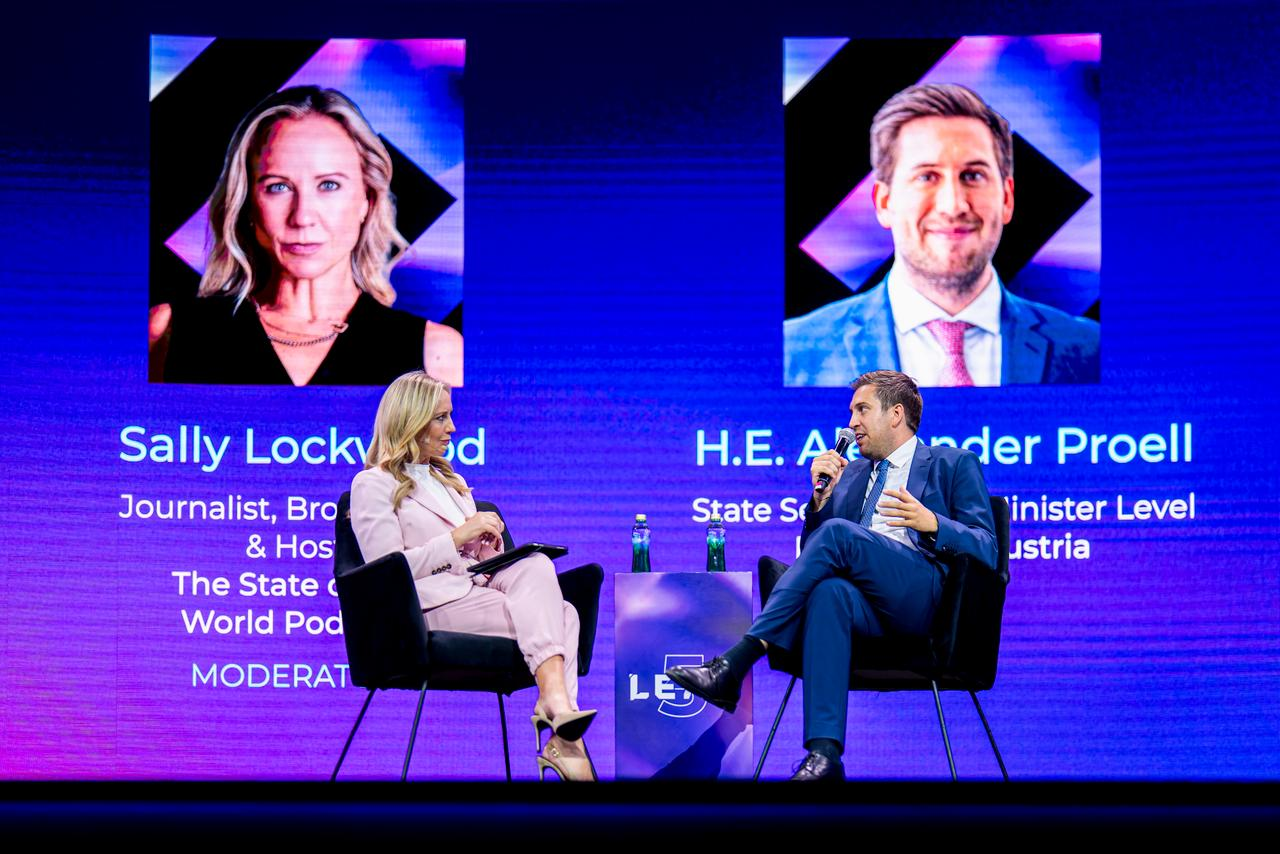
Austrian State Secretary at the Federal Chancellery for Digital Affairs, Constitution and Public Service Alexander Pröll during a dialogue session at LEAP 2026. (Asharq Al-Awsat)

AI governance

Pröll raised the question of responsible and trustworthy AI. “I've argued, including at the UN Global Dialogue on AI Governance, for a binding international framework for AI governance,” he said.

“I don't see that as a brake on innovation. I see trust as a precondition for AI to be adopted at scale, by citizens and by businesses,” he continued.

“I would like Saudi Arabia and Austria to be part of that conversation together, alongside our work on AI research through institutions, like our Austrian Institute of Technology,” he stressed.

Partnerships and investment

Pröll said that opportunities for Saudi and Austrian companies are not limited to exchanging expertise, but extend to joint research and development, projects, and direct investments.

“Each of the organizations travelling with me brings something specific to the table. Our national research institution works on applied AI, data infrastructure and technology research, and is a natural partner for joint R&D with Saudi research institutions and universities,” he went on to say.

“Our federal real estate company manages public infrastructure at national scale and has real expertise to offer on developing the physical infrastructure that digital and data projects need. Our telecoms and broadcasting regulator can offer a regulatory dialogue on everything from spectrum to platform governance, which becomes more important as both our digital sectors grow,” he noted.”

“We have a company specializing in cloud and data center infrastructure that is actively looking at international markets, and a global engineering technology company with deep expertise in powertrain, mobility and simulation technology that is highly relevant to Saudi Arabia's industrial diversification and mobility ambitions,” he added.

Pröll said: “My hope is that this visit is the start - that these meetings lead to concrete pilot projects, business partnerships, and where it makes sense, direct investment in both directions.”

“I see Austrian companies as reliable, high-quality partners for the technology ambitions of Vision 2030, and I hope Saudi partners will see the same potential we do.”
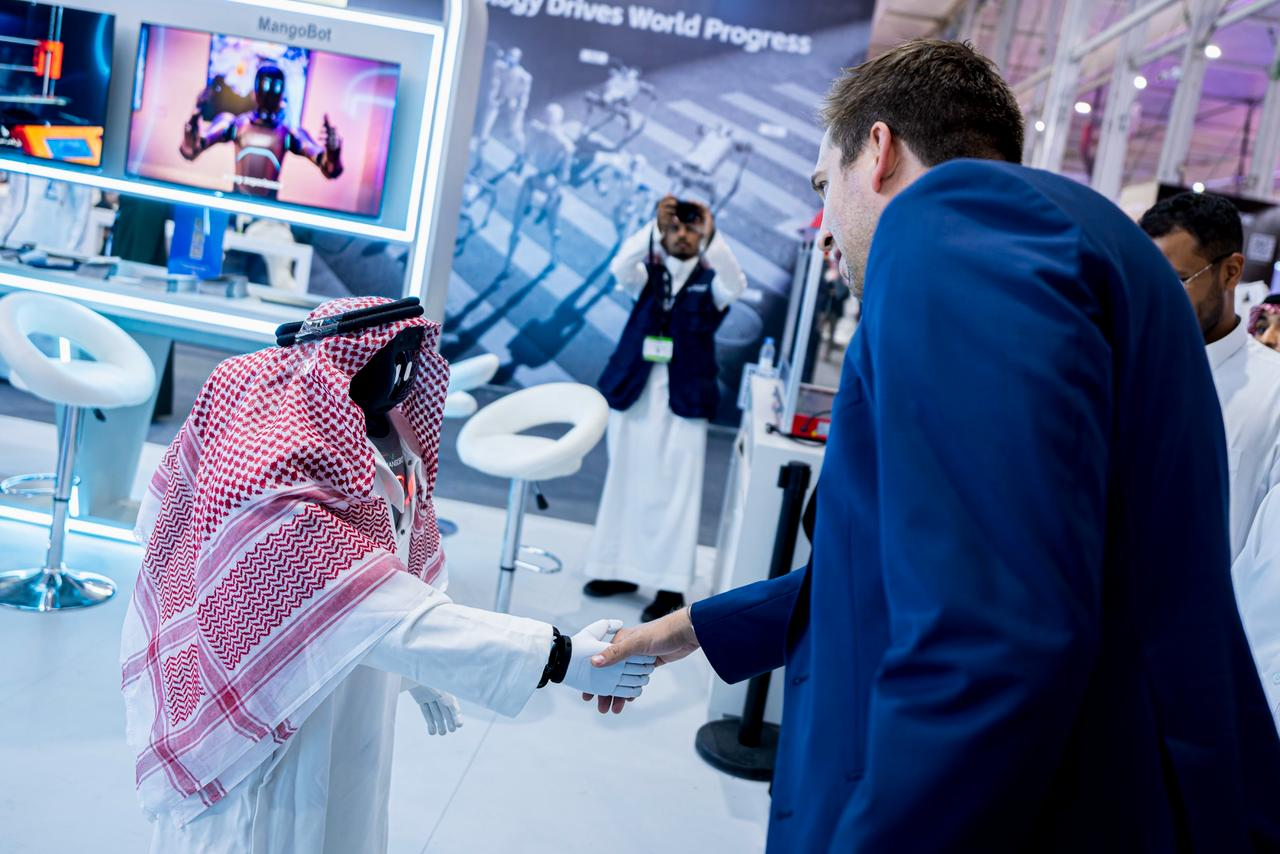
Austrian State Secretary at the Federal Chancellery for Digital Affairs, Constitution and Public Service Alexander Pröll at LEAP 2026. (Asharq Al-Awsat)

Beyond AI

Pröll added that technological cooperation between Austria and Saudi Arabia does not stop at artificial intelligence, pointing to significant potential in quantum technologies and quantum communications.

“Austria has a strong research base in quantum computing and quantum communication, and this is a field where early cooperation between countries can shape the next decade of technological competitiveness,” he explained.

Cybersecurity is another: as our societies digitize, protecting that infrastructure becomes as important as building it, and it's an area where regulatory and technical cooperation go hand in hand,” he revealed.

He also pointed to mobility and engineering technology, “where Austrian companies are global leaders in powertrain development, simulation and testing - directly relevant to Saudi Arabia's ambitions in advanced manufacturing and future mobility.”

Beyond LEAP

Pröll stressed that the most critical step following the Riyadh visit is to ensure that the momentum does not stall once the conference concludes.

“I would like to see this visit translate into a structured, ongoing dialogue - regular contact between our ministries and agencies, and a clear framework for cooperation that the companies and institutions in this delegation can build on,” he said.

“Concretely, I would welcome the chance to follow up with a Saudi delegation visiting Austria, so our partners can see firsthand what we have built and continue these conversations on our home ground,” he remarked.

“What matters most to me is that the relationships built this week don't stay at the level of good intentions, but turn into real projects - in research, in infrastructure, in AI governance - over the coming months,” he added.


Oil Prices Rise 2% as China Suspends Fuel Exports

The Klesch oil refinery, formerly BP, produces petrol, diesel, and jet fuel in Gelsenkirchen, Germany, one day before the German government starts a fuel tax discount, Wednesday, Sept. 30, 2026. (AP Photo/Martin Meissner)
TT

Oil Prices Rise 2% as China Suspends Fuel Exports

The Klesch oil refinery, formerly BP, produces petrol, diesel, and jet fuel in Gelsenkirchen, Germany, one day before the German government starts a fuel tax discount, Wednesday, Sept. 30, 2026. (AP Photo/Martin Meissner)

Oil prices rose around 2% on Thursday after China suspended oil products exports, potentially tightening fuel markets already coping with supply shortages globally, while investors continued to assess renewed diplomatic efforts to end the US-Iran war.

The new front-month December Brent crude futures contract traded at $100.09 per barrel at 0829 GMT, up 2.1%, or $2.06, from Wednesday's close, Reuters reported.

The November contract expired on Wednesday, settling at $103.50 per barrel, marking a monthly gain of around 14% in September for the front-month contract.

US West Texas ⁠Intermediate crude was ⁠up $2.06, or 2.28%, to $92.48 a barrel.

Prices were volatile on Thursday, having slipped more than 1% in early trading, before rebounding.

Chinese refiners have suspended exports of oil products to regions beyond Hong Kong and Macau until further notice, four people briefed on the matter said on Thursday, a move that will further crimp war-constrained fuel markets.

"The Chinese export ban suggests concerns about domestic product availability," UBS analyst Giovanni Staunovo said, adding that it remains to ⁠be seen whether the measures will support higher crude imports after recent drawdowns in Chinese crude and fuel stocks.

Global diesel supplies have tightened as a result of falling refining capacity due to attacks linked to the Middle East and Ukraine wars, raising pressure on governments to intervene to shield consumers.

The Trump administration has told Germany and France to draw down emergency diesel inventories to help ease global fuel prices or face a potential US diesel export ban, three people close to the discussions said.

European diesel refinery profit margins were trading at around $80.05 per barrel at 0829 GMT, down around 4% from the previous session. The margin hit an all-time high of $95 per barrel on September 23.

Investors ⁠continued to watch ⁠diplomacy efforts and oil exports in the Middle East.

Saudi Arabia resumed oil tanker loadings from Yanbu, Reuters reported on Tuesday, after earlier restarting operations on its East-West Pipeline.

Iran said on Wednesday it had received a US response to its latest proposal to resurrect the collapsed ceasefire in the Gulf.

However, US President Donald Trump denied reports by Axios and CNN citing US officials as saying he was willing to give Iran sanctions relief and release frozen Iranian funds in return for "concrete" steps by Tehran on its nuclear program.


Trump Unveils $200 Billion South Korean Investment in US; Seoul Hedges on Alaska Pipeline

US President Donald Trump (L, sitting) makes an announcement in the Oval Office of the White House in Washington, DC, USA, 30 September 2026. EPA/YURI GRIPAS / POOL
TT

Trump Unveils $200 Billion South Korean Investment in US; Seoul Hedges on Alaska Pipeline

US President Donald Trump (L, sitting) makes an announcement in the Oval Office of the White House in Washington, DC, USA, 30 September 2026. EPA/YURI GRIPAS / POOL

US President Donald Trump unveiled plans on Wednesday for South Korea to invest some $200 billion in US projects, but Seoul quickly suggested one key element, a $54 billion pipeline for an LNG project in Alaska, was not yet set in stone.

The announcement from the White House amounted to the first set of major projects under a broader $350 billion strategic investment package South Korea made as part of a trade agreement with Washington last year. The package included $150 billion for shipbuilding and $200 billion for strategic investments.

"Thanks to the agreements my administration has secured with the Republic of Korea, they will invest up to $200 billion," Trump said from the Oval Office.

According to Reuters, he said the investment would include the construction of eight large-scale nuclear power plants, a natural gas pipeline and a 6-gigawatt power generation facility in Texas.

The announcement is the latest in a series of economic and investment deals Trump is highlighting ahead of November's midterm elections, as he seeks to reinforce his economic ⁠record amid voter concerns ⁠over the Iran war and high gasoline prices.

The pipeline project could carry political significance in Alaska, where Republican Senator Dan Sullivan faces a competitive reelection race against Democrat Mary Peltola. Sullivan attended Wednesday's announcement.

South Korea's government, however, said the pipeline project would only go forward if certain commercial and legal conditions are met. Seoul confirmed other elements of Trump's announcement, saying it would invest $22.3 billion in a Texas gas power project to power AI data centers, as well as $120 billion to build eight nuclear reactors.

South Korea will begin reviewing the Alaska LNG project to assess its commercial viability and compliance with legal procedures, Seoul's industry ministry said in a ⁠statement.

"No decision has been made on whether to invest or on the size of the investment," it said.

South Korean President Lee Jae Myung also said in a post on X that the commercial viability of both the LNG project and the nuclear reactors must be confirmed before they proceed.

Any differences between Seoul and Washington over details of the deal could lead to disputes between the allies over its implementation, analysts in Seoul said.

The Alaska LNG project, if it ultimately goes forward, includes an 807-mile pipeline carrying natural gas from the North Slope to a liquefaction facility on Alaska's southern coast, allowing the fuel to be shipped to Asian markets.

The project is designed to transport about 3.9 billion cubic feet of natural gas per day and produce up to 20 million metric tons of LNG annually, according to the White House.

Trump has repeatedly promoted the project as a way to expand US energy exports and strengthen ties with allies including South Korea and Japan.

But the project has faced years of ⁠uncertainty over its cost, financing ⁠and commercial viability.

South Korea's industry ministry said last week that a more than 6-gigawatt gas-fired power plant in Encinal, Texas, was the first project selected under the $200 billion strategic investment program.

Japan's two biggest LNG importers, JERA and Tokyo Gas, have signed preliminary agreements to buy a combined 2 million metric tons a year from Alaska LNG if it is built.

Glenfarne, the project's developer, welcomed Trump's investment announcement. It has lined up commitments for 13 million tons a year, but needs another 3 million tons to support a final investment decision and make commitments binding.

"Glenfarne will work with the US and Korean governments to finalize the investment structure and complete the remaining steps required to reach FID," it said in a statement.

The eight nuclear plants would form part of Trump's effort to expand US nuclear generation as electricity demand rises, including from data centers and manufacturing. South Korea has been discussing a potential investment in US nuclear projects as part of the broader package.

The Texas gas-fired power project is expected to supply electricity to energy-intensive facilities, including semiconductor plants and data centers. South Korean officials have said the project was selected after reviews of its commercial viability.


Asian Shares Mostly Rise amid Market Optimism about AI, Despite Iran Worries

A financial data screen in the dealing room of Hana Bank shows the Korea Composite Stock Price Index (KOSPI) after South Korean shares closed higher in Seoul, South Korea, 23 September 2026. EPA/YONHAP SOUTH KOREA OUT
TT

Asian Shares Mostly Rise amid Market Optimism about AI, Despite Iran Worries

A financial data screen in the dealing room of Hana Bank shows the Korea Composite Stock Price Index (KOSPI) after South Korean shares closed higher in Seoul, South Korea, 23 September 2026. EPA/YONHAP SOUTH KOREA OUT

Asian shares mostly rose in early Thursday trading amid investor interest in technology-related issues, despite ongoing worries about the war in Iran.

Japan's benchmark Nikkei 225 jumped 2.4% in morning trading to 68,355.81. Australia's S&P/ASX 200 lost 1.7% to 8,638.10. South Korea's Kospi edged up 0.5% to 6,873.06. Hong Kong's Hang Seng added 0.4% to 24,613.27, while the Shanghai Composite gained 0.3% to 3,842.19.

In Tokyo trading, issues expected to get a boost from the solid demand in computer chips and AI-related growth have been rising in recent sessions, including Advantest Corp., Tokyo Electron and SoftBank Group Corp.

US stocks mostly fell Wednesday, despite indications that the US economy remains strong. On Wall Street, the S&P 500 slipped 0.3% to close out its third losing month in the last four. The Dow Jones Industrial Average dropped 443 points, or 0.9%, and the Nasdaq composite added 0.2%.

The report that said inflation wasn’t as bad across the United States last month as economists expected. It said the cost of living for US consumers was 3.4% higher overall in August than a year earlier. That was not as high as the 3.7% inflation rate that economists expected, even if it remained worse than the Fed’s 2% target.

In energy trading, benchmark US crude lost 0.56% to $89.91 a barrel. Brent crude, the international standard, fell 0.35% to $97.69 a barrel.

Oil prices have been swinging wildly in recent months amid uncertainty about when the war with Iran will allow the flow of crude to be fully restored. Iranian officials indicated Wednesday they have received an official US response to Tehran’s latest proposal to end the seven-month war. The officials did not say what the latest response contained and whether it was a rejection.

US President Donald Trump publicly rejected Iran's proposal just days earlier to reopen the Strait of Hormuz within a week if the US meets certain conditions.

The yield on the 10-year Treasury, which is the centerpiece of the bond market, rose to 5.29%, up from 5.26% late Tuesday, and it’s back to where it was more than two decades ago in 2002.

The 30-year Treasury yield, which takes into account expectations for inflation and economic growth many years down the line, climbed to 5.64% from 5.59% late Tuesday.

All told, the S&P 500 fell 19.30 points to 7,651.54. The Dow Jones Industrial Average dropped 443.87 to 50,906.05, and the Nasdaq composite added 63.52 to 26,861.06.

In currency trading, the US dollar rose to 158.17 Japanese yen from 157.33 yen. The euro cost $1.1328, down from $1.1334.