

South Korean Chips Head to Saudi Arabia: From Manufacturing to Computing

An AI chip with the South Korean flag (Reuters
TT

South Korean Chips Head to Saudi Arabia: From Manufacturing to Computing

An AI chip with the South Korean flag (Reuters

Chips are no longer merely electronic components hidden inside devices. They have become the foundation of the artificial intelligence economy, as global competition shifts from developing models to having the capacity to run them efficiently and at scale.

As demand for computing chips rises, the semiconductor industry is converging with energy, data centers, and digital infrastructure, creating a new map of technological power that extends beyond countries that manufacture chips to countries capable of hosting and operating the computing power they require.

In this race, Saudi Arabia is emerging as a growing destination for Asian chip and AI companies, driven by the availability of energy, the rapid expansion of data centers, and its ambition to build a sovereign AI ecosystem. South Korea, meanwhile, is moving to strengthen its position at the heart of the value chain by increasing government spending on chips, AI, and the infrastructure that supports both.

The decision by South Korean AI chipmaker Rebellions to establish its regional headquarters in Riyadh embodies this new intersection between those who make chips and those who have the capacity to run them. Its CEO, Sunghyun Park, told Asharq Al-Awsat that three main factors make Saudi Arabia an attractive destination for the company: high levels of energy availability, a commitment to developing AI infrastructure, and strong ambitions in sovereign AI.

Park added that the combination of these factors makes Riyadh a suitable location for Rebellions to expand its AI chip business.

The Korean company's move comes as Saudi Arabia works to expand its ability to accommodate growing demand for computing, alongside rising investment in data centers and AI projects.
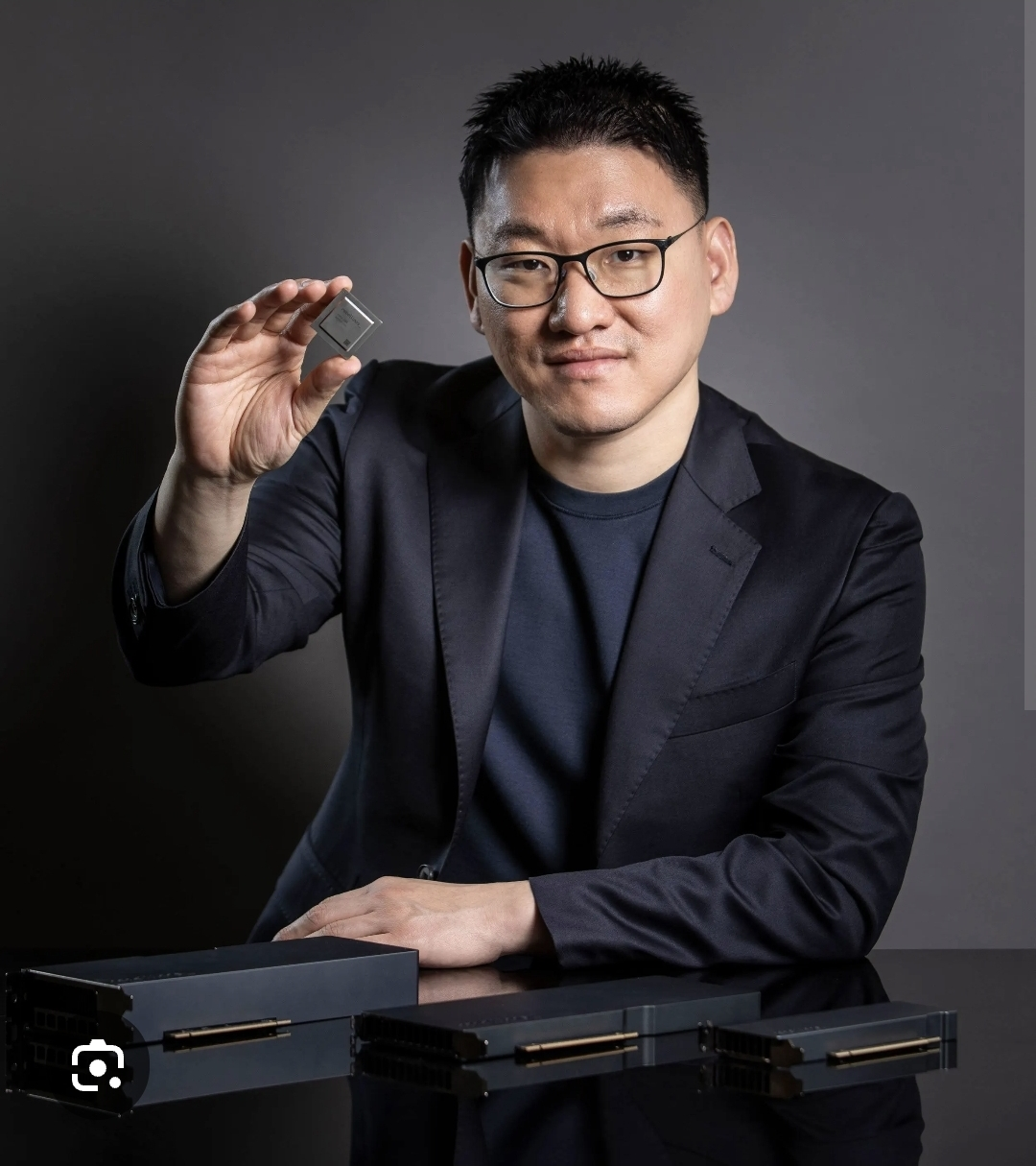
Sunghyun Park, CEO of South Korean AI chipmaker Rebellions (Asharq Al-Awsat)

821 Trillion Won in Spending in 2027

South Korea proposed this week the largest government budget in its history, worth 821 trillion won ($596.92 billion) for 2027, an increase of 12.8 percent from the current year and the largest annual increase ever. A significant portion of the spending will be directed toward AI, semiconductors, and related infrastructure.

Seoul is betting on increased public spending to maintain its position in the semiconductor industry, one of the most important drivers of its economy, as global demand rises for chips used in AI applications.

The proposed budget includes 21.3 trillion won for industrial water systems, electricity grids, and logistics services needed to support the next generation of semiconductor infrastructure, along with 2.6 trillion won in a dedicated semiconductor budget.

South Korea is benefiting from the global surge in demand for high-bandwidth memory (HBM), which is used in AI systems, with Samsung Electronics and SK Hynix reporting strong profits driven by this demand.

"Sovereign AI" Connects Riyadh and Seoul

Park believes that the sovereign dimension of AI has become an important factor in countries' decisions about the technologies they use, particularly as some data and applications are tied to sensitive sectors. He said the need for AI technologies that can be managed locally is linked, among other things, to "national security," noting that sensitive information, such as nuclear energy or weapons programs, requires governments to control how AI is used, set its boundaries, and operate it entirely within the country.

This reflects one of the major trends in the AI market. Governments and companies are no longer focused solely on gaining access to advanced models. They are also concerned with where data is stored, where models are run, and who owns the infrastructure on which they depend.

Aramco and HUMAIN in the Chip Supply Chain

Rebellions already has an investment connection to Saudi Arabia. Park said Aramco invested in the company about two years ago, while Rebellions is in ongoing discussions with HUMAIN about strengthening supply chains for AI infrastructure technologies.

He said HUMAIN has become one of the most important organizations operating in AI in Saudi Arabia and globally, and that cooperation with the company could have a positive impact on the region's AI sector.

These moves come as Saudi Arabia continues to expand its digital infrastructure, including data centers. This provides companies specializing in chips and computing with a potential regional market that goes beyond simply selling components to participating in the construction of the AI ecosystem itself.

Competition Is Shifting From Chip Speed to Operating Cost

Rebellions does not believe that competition in the AI chip market will be decided solely by a chip's ability to process more tokens per second. Instead, it will increasingly come down to the long-term cost of running AI.

Park said the company is focused on developing technologies that deliver "higher AI performance at a lower economic cost," explaining that an important metric for customers is not simply the number of tokens that can be processed per second, but also "cost per token."

The company's model focuses heavily on inference rather than distributing its efforts equally between inference and model training.

Park explained that inference is gradually becoming commoditized, meaning companies and users will increasingly care about obtaining good results at a reasonable cost, regardless of the specific technology used behind the scenes.

Energy Becomes Part of the AI Equation

This factor is becoming particularly important as energy consumption associated with data centers rises. The cost of electricity and chip efficiency have become part of the economic calculation involved in expanding AI use.

This is where the calculations of Riyadh and Seoul meet from two different angles. South Korea is investing in chips, electricity grids, and the industrial infrastructure needed to maintain its position in the value chain. Saudi Arabia, meanwhile, is building the energy supply, infrastructure, and data centers needed to absorb the next wave of computing.

The AI race between countries, therefore, is no longer only about models and software. It is about who makes the chips, who owns the data centers, who can provide the energy, and who can deliver all of it at the lowest possible cost.


Saudi Minister Says AIIB Success Measured by Development Impact, Not Financing

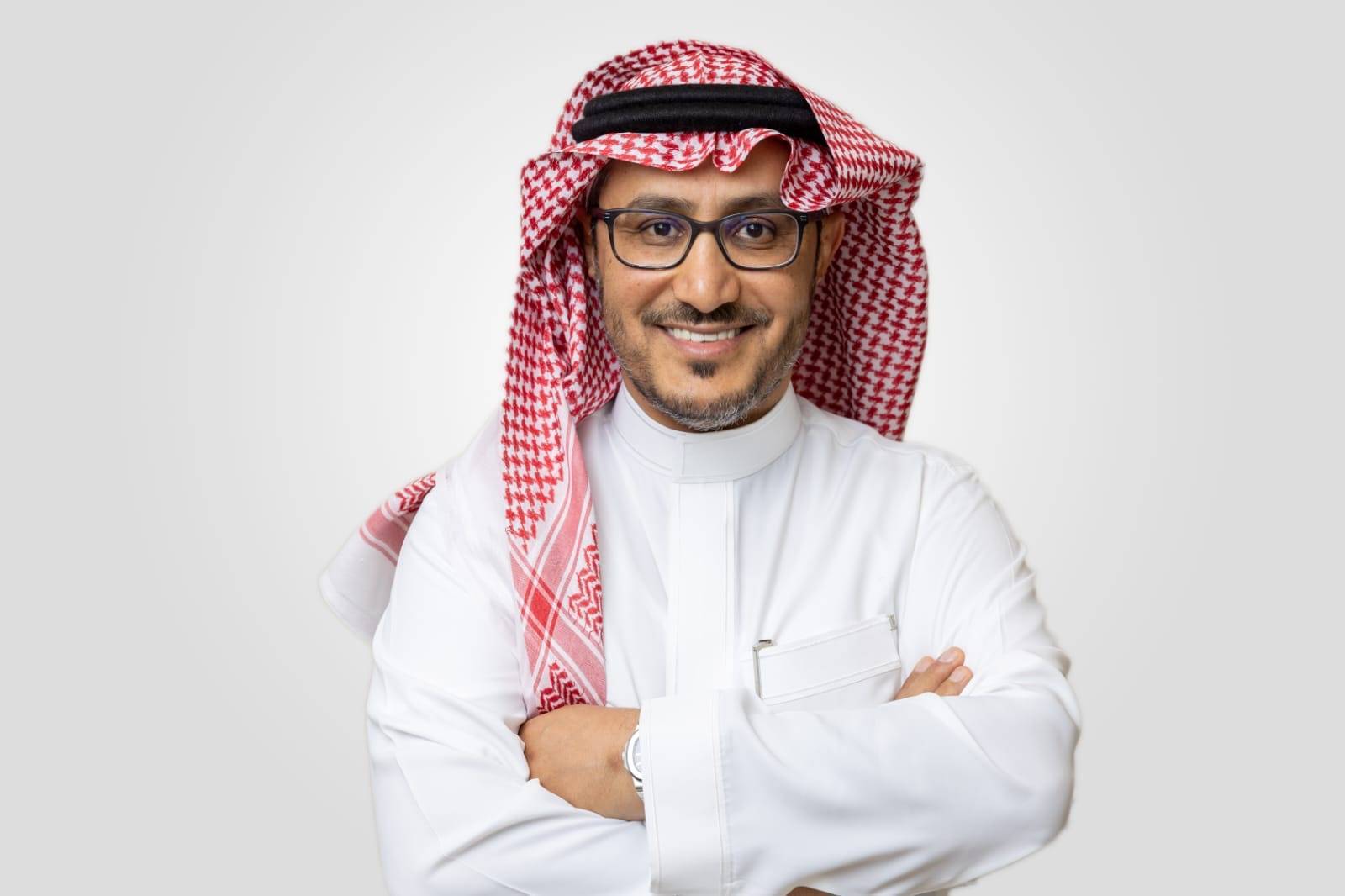
Saudi Finance Minister Mohammed al-Jadaan at the 11th annual meeting of the Asian Infrastructure Investment Bank’s Board of Governors (X)
TT

Saudi Minister Says AIIB Success Measured by Development Impact, Not Financing

Saudi Finance Minister Mohammed al-Jadaan at the 11th annual meeting of the Asian Infrastructure Investment Bank’s Board of Governors (X)

Saudi Finance Minister Mohammed al-Jadaan urged the Asian Infrastructure Investment Bank to judge its success by the impact of its projects, saying financing volumes and approvals alone do not show whether the bank is improving services, strengthening institutions, or building economic resilience.

Speaking at the 11th annual meeting of the bank’s Board of Governors, which concluded on Tuesday in Doha, al-Jadaan said the AIIB had built strong foundations in its early years.

Progress on regional connectivity, cooperation and private-sector participation had strengthened its ability to meet member countries’ infrastructure needs, he said.

As the bank expands, progress “should not be measured by financing volumes or project approvals alone, but by development impact,” he said.

Success should mean “better infrastructure services, stronger institutions, greater economic resilience and broader private-sector participation,” al-Jadaan said, as the bank enters its second decade and seeks to expand infrastructure financing and mobilize more private capital.

He called for earlier engagement with member countries to better understand their circumstances, infrastructure gaps and priorities, and for multiyear programs aligned with national strategies.

Al-Jadaan also urged the bank to broaden partnerships with multilateral development banks and international organizations to share expertise, avoid duplicating efforts and mobilize more public and private resources.

He said the bank should remain guided by member countries’ needs, taking account of differences in institutional capacity, fiscal space and levels of infrastructure development.

The Doha meeting, held under the theme “Future Infrastructure: Impact and Innovation,” comes as the bank prepares for a new phase of expansion.

The AIIB has said it aims to nearly double annual financing to about $20 billion by 2030, focusing on infrastructure linked to climate resilience, renewable energy, digital transformation and regional connectivity, while mobilizing more private capital.

Saudi Arabia is a founding member of the AIIB, a multilateral development finance institution established in Beijing in 2016.


African Leaders to Gather in Egypt for Business Summit

Friday's forum is expected to bring together more than 20 heads of state and government representatives in the Mediterranean city of Alamein, alongside business leaders, bankers and development institutions. © KHALED DESOUKI / AFP/File
TT

African Leaders to Gather in Egypt for Business Summit

Friday's forum is expected to bring together more than 20 heads of state and government representatives in the Mediterranean city of Alamein, alongside business leaders, bankers and development institutions. © KHALED DESOUKI / AFP/File

African leaders will meet in Egypt on Friday for a business summit that Cairo hopes will bolster its clout across the continent.

Friday's forum is expected to bring together more than 20 heads of state and government representatives in the Mediterranean city of Alamein, alongside business leaders, bankers and development institutions.

"This is an African platform," Egypt's deputy foreign minister for African affairs Mohamed Abu Bakr Saleh told AFP.

"A country in East Africa should be able to sign an agreement with a country in West, North or southern Africa through this platform."

Saleh said the forum would become a biennial event under an African Union mandate, focusing on infrastructure, trade, agriculture, healthcare, mining, technology and renewable energy.

Officials estimate Egyptian investments across Africa at around $14 billion. Among Egypt's flagship ventures is Tanzania's $3 billion Julius Nyerere Hydropower Project, built by a consortium led by Egyptian companies.

Yet trade within Africa remains limited, totalling just $192 billion in 2023 and only accounting for around 15 percent of the continent's total trade, compared with more than 55 percent in Asia and over 70 percent in Europe.

Africa also attracted about $70 billion in foreign direct investment in 2025, a fraction of the roughly $1.6 trillion invested globally, according to the UN.

"Africa possesses vast resources, but they are still not being exploited to the level we would like to see," Saleh said.

The gathering also takes place against the backdrop of an unresolved dispute between Egypt and Ethiopia over the $5 billion GERD, Africa's largest hydroelectric project.

Ethiopia says the dam, inaugurated last year, is vital for economic growth, while Egypt says it could threaten Nile water supplies without a binding operating agreement.

More than a decade of negotiations have failed to yield a settlement.

"Our position on Egypt's water security has not changed and will not change," Saleh said. "It is an existential issue for Egypt."


US Ban on $1 Billion Worth of Canadian Imports Goes into Effect

Shipping containers in the Port of Montreal, Canada (Reuters)
TT

US Ban on $1 Billion Worth of Canadian Imports Goes into Effect

Shipping containers in the Port of Montreal, Canada (Reuters)

US-Canada relations, already tense, are likely to deteriorate further after the United States went ahead early Tuesday with a decision to ban nearly $1 billion worth of Canadian imports, including dairy products and motorcycles.

The ban amounts to barely a ripple in $880 billion worth of a two-way annual trade between the two northern neighbors. But it marks another ratcheting up of President Donald Trump’s second-term trade war with America’s longtime ally and trading partner.

The import ban “certainly won't do anything to help the trade tensions between the United States and Canada,'' said trade attorney Patrick Childress, a partner at Holland & Knight and a former US trade official.

The latest sparring began over the summer when Trump reached back to a Great Depression law to impose 50% tariffs on about $20 billion worth of Canadian imports, charging that Canada discriminates against US dairy and auto producers. Canada promptly counterpunched with tariffs of 15% and 25%, matching US imports dollar for dollar.

To punish Canada for retaliating against his tariffs, Trump decided to ban a list of Canadian products, effective 12:01 a.m. Eastern time Tuesday.

The economic impact is likely to be minimal. Childress noted that the products on the banned list were already facing Trump’s tariffs. “For a lot of these goods, the 50% was already acting as a de facto ban by making importation from Canada into the United States uneconomical,″ he said.

Jacob Jensen, director of trade policy at the center-right American Action Forum think tank, calculates that the ban would cover $967 million worth of Canadian imports, based on 2025 numbers.

“This marks yet another escalation in the trade war that may result in further retaliation on the Canadian side,” Jensen said. He expects Canadian exporters and US importers “impacted by these bans will be highly motivated’’ to demand that trade officials on both sides find some way to reach a “resolution of this whole ordeal.’’