

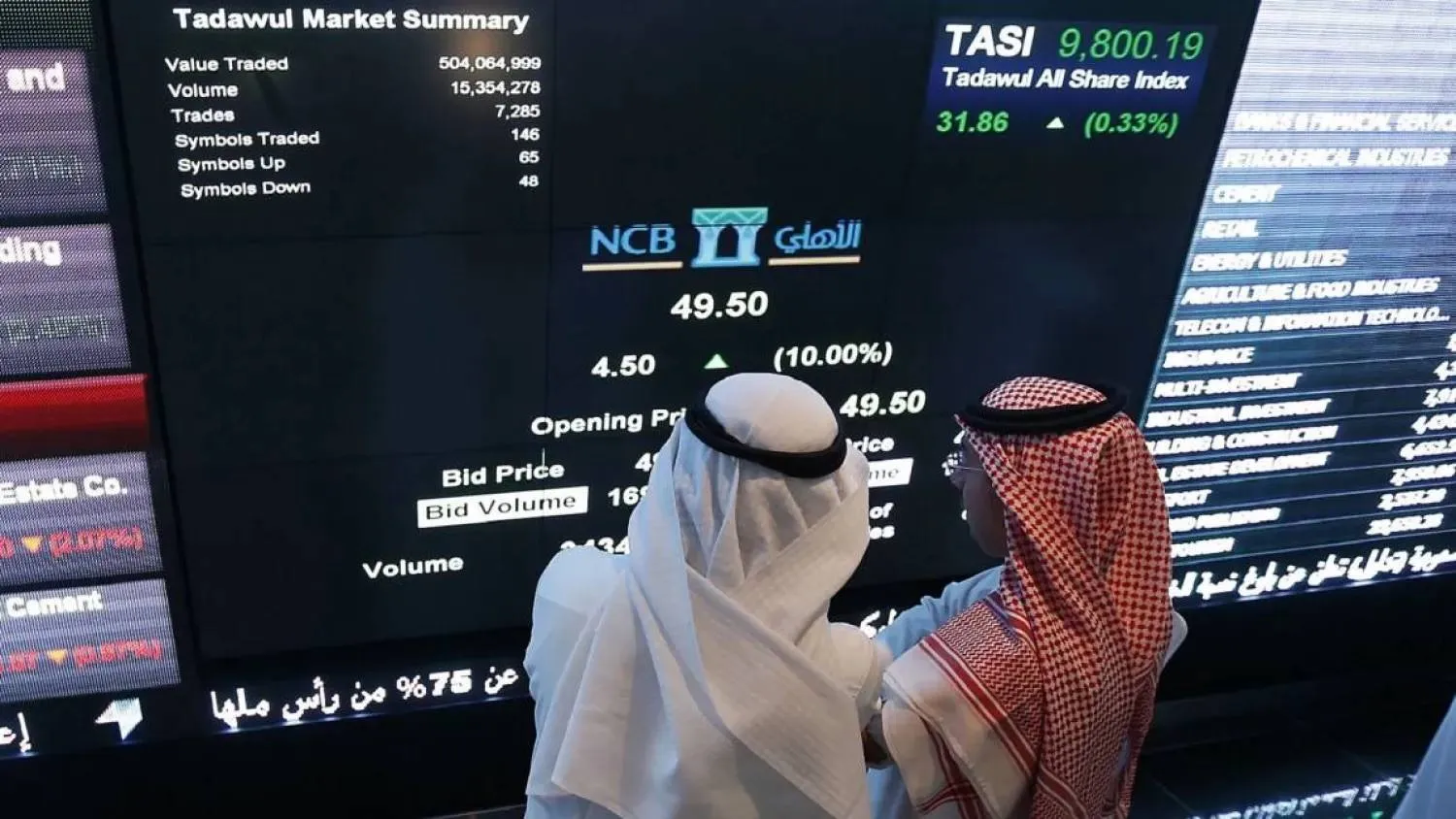

Higher Foreign Ownership Cap Could Open New Chapter for Saudi Market

Two investors monitor shares on a screen in the Saudi market. (AFP)
TT

Higher Foreign Ownership Cap Could Open New Chapter for Saudi Market

Two investors monitor shares on a screen in the Saudi market. (AFP)

Saudi Arabia’s stock market is approaching another milestone in its opening to international investors, as it eases foreign ownership restrictions on listed companies. The move could pave the way for billions of dollars in new inflows while raising questions over the market’s ability to translate regulatory opening into sustained investor demand.

Morgan Stanley estimates that increasing the foreign ownership ceiling from 49% to 75% could attract about $4.3 billion in index-tracking inflows, rising to $7.4 billion if the cap is removed entirely.

The estimates followed the appointment of Mazen al-Sudairi as chairman of the Capital Market Authority, reinforcing expectations that further measures could be introduced to increase the Saudi market’s appeal and depth and draw additional foreign capital.

Saudi stock market data, however, show that overseas holdings are not necessarily distributed according to company size or market capitalization. Rasan leads with foreign ownership of about 38.87%, followed by East Pipes Integrated Company at 30.05%, Al-Babtain Power and Telecommunication at 26.42% and Edarat Communication and Information Technology at 24.22%.

The companies with the highest foreign ownership also include Mobily at 23.19%, Jarir Marketing at 21.95%, Saudi National Bank at 18.92%, Tawuniya at 18.88% and eXtra at 17.90%.

The disparities raise questions over whether a higher ownership ceiling alone would be enough to strengthen international demand for Saudi stocks, or whether additional inflows will depend more heavily on listed companies’ appeal, valuations and financial performance, alongside any forthcoming regulatory changes.

Billions tied to indexes

Financial markets analyst Abdullah al-Hamed said that expanding the foreign ownership limit would boost international capital flows through two main channels.

The first involves passively managed funds that track global indexes such as S&P and FTSE. Allowing foreigners to own up to 75% or 100% could increase Saudi Arabia’s potential weighting in those indexes, generating flows in line with benchmark weights regardless of the investment appeal of the individual stocks themselves.

The second involves actively managed funds, which may take longer to enter because their decisions depend on overall market conditions and corporate performance rather than index weightings.

Al-Hamed expects the measure to have a positive effect, with inflows potentially reaching about $7 billion in the best-case scenario.

Decisions by international investors to increase their Saudi equity holdings also depend on the performance of the domestic economy, driven by Saudi Vision 2030 initiatives, economic diversification and the expanding role of the private sector, as well as valuations, earnings growth and companies’ future prospects.

Al-Hamed added that steps by regulators, particularly the Capital Market Authority and Ministry of Investment, to facilitate investor access enhance Saudi equities’ appeal to international institutions. Major stocks, such as Al Rajhi Bank and Saudi National Bank, could be among the main beneficiaries, given global investors’ interest in heavily weighted index constituents.

Growth opportunities

Financial and economic adviser Hussein al-Attas said easing the ownership restriction would be positive for Saudi equities, but is neither the only nor the main factor behind higher inflows, given that most listed companies remain well below the current 49% ceiling.

The direct impact could therefore be concentrated in a limited number of stocks that attract strong overseas demand or face constraints on their relative index weightings. More broadly, the change would remove a potential future obstacle for global investors and institutions and broaden the range of opportunities available in Saudi Arabia.

Al-Attas noted that allocation decisions are shaped by valuations, earnings growth, liquidity, governance and market depth, as well as the ease of entering and exiting investments.

Regulatory clarity, continuity of economic reforms and the diversity of opportunities have also become increasingly important, particularly as the Kingdom undergoes transformation in technology, tourism, logistics, energy and mining.

Al-Attas also pointed to a gradual shift in foreign appetite away from index-related investments and blue-chip stocks toward more specialized growth opportunities. International investors have become more selective and increasingly view Saudi Arabia not simply as an oil or banking market, but as one offering opportunities tied to economic transformation and Vision 2030.

He expects overseas investors to maintain a strong presence in blue-chip stocks because of their liquidity, depth and ability to absorb large institutional allocations.

However, the strongest potential growth in foreign ownership could come from high-growth companies, particularly in newer sectors or those underrepresented in global portfolios, including technology, healthcare, consumer services and logistics.

Al-Attas argued that greater market depth and a broader base of companies and sectors capable of generating sustainable earnings growth will be the most important factors in increasing foreign allocations.

A higher ownership ceiling is important, but investors ultimately need sizable opportunities, high liquidity, attractive valuations and companies capable of translating economic growth into tangible earnings and returns, he said.

Slight decline in foreign ownership

Saudi stock market data showed limited changes in overseas holdings in several listed companies during the Sept. 1, 2026 session.

Foreign ownership in Saudi Fisheries rose 0.57 percentage point to 5.42%, while Yanbu Cement gained 0.50 point to 9.39%. Holdings also increased to 7.04% in MESC and 18.26% in eXtra.

By contrast, foreign ownership declined in several companies, including Rasan to 39.29%, Al-Babtain to 25.56%, Edarat to 24.31%, Mobily to 22.67% and Jarir to 22.04%.

Easing foreign ownership restrictions would mark another step in opening the Saudi market, but would not by itself guarantee additional capital inflows.

Recent ownership movements reveal clear differences in investor appetite across listed companies, underscoring that stocks’ appeal will continue to depend on earnings growth, performance, valuations, liquidity and market depth.

The real test, therefore, will be the market’s ability to turn regulatory opening into sustainable opportunities capable of attracting foreign capital.



African Leaders to Gather in Egypt for Business Summit

Friday's forum is expected to bring together more than 20 heads of state and government representatives in the Mediterranean city of Alamein, alongside business leaders, bankers and development institutions. © KHALED DESOUKI / AFP/File
TT

African Leaders to Gather in Egypt for Business Summit

Friday's forum is expected to bring together more than 20 heads of state and government representatives in the Mediterranean city of Alamein, alongside business leaders, bankers and development institutions. © KHALED DESOUKI / AFP/File

African leaders will meet in Egypt on Friday for a business summit that Cairo hopes will bolster its clout across the continent.

Friday's forum is expected to bring together more than 20 heads of state and government representatives in the Mediterranean city of Alamein, alongside business leaders, bankers and development institutions.

"This is an African platform," Egypt's deputy foreign minister for African affairs Mohamed Abu Bakr Saleh told AFP.

"A country in East Africa should be able to sign an agreement with a country in West, North or southern Africa through this platform."

Saleh said the forum would become a biennial event under an African Union mandate, focusing on infrastructure, trade, agriculture, healthcare, mining, technology and renewable energy.

Officials estimate Egyptian investments across Africa at around $14 billion. Among Egypt's flagship ventures is Tanzania's $3 billion Julius Nyerere Hydropower Project, built by a consortium led by Egyptian companies.

Yet trade within Africa remains limited, totalling just $192 billion in 2023 and only accounting for around 15 percent of the continent's total trade, compared with more than 55 percent in Asia and over 70 percent in Europe.

Africa also attracted about $70 billion in foreign direct investment in 2025, a fraction of the roughly $1.6 trillion invested globally, according to the UN.

"Africa possesses vast resources, but they are still not being exploited to the level we would like to see," Saleh said.

The gathering also takes place against the backdrop of an unresolved dispute between Egypt and Ethiopia over the $5 billion GERD, Africa's largest hydroelectric project.

Ethiopia says the dam, inaugurated last year, is vital for economic growth, while Egypt says it could threaten Nile water supplies without a binding operating agreement.

More than a decade of negotiations have failed to yield a settlement.

"Our position on Egypt's water security has not changed and will not change," Saleh said. "It is an existential issue for Egypt."


US Ban on $1 Billion Worth of Canadian Imports Goes into Effect

Shipping containers in the Port of Montreal, Canada (Reuters)
TT

US Ban on $1 Billion Worth of Canadian Imports Goes into Effect

Shipping containers in the Port of Montreal, Canada (Reuters)

US-Canada relations, already tense, are likely to deteriorate further after the United States went ahead early Tuesday with a decision to ban nearly $1 billion worth of Canadian imports, including dairy products and motorcycles.

The ban amounts to barely a ripple in $880 billion worth of a two-way annual trade between the two northern neighbors. But it marks another ratcheting up of President Donald Trump’s second-term trade war with America’s longtime ally and trading partner.

The import ban “certainly won't do anything to help the trade tensions between the United States and Canada,'' said trade attorney Patrick Childress, a partner at Holland & Knight and a former US trade official.

The latest sparring began over the summer when Trump reached back to a Great Depression law to impose 50% tariffs on about $20 billion worth of Canadian imports, charging that Canada discriminates against US dairy and auto producers. Canada promptly counterpunched with tariffs of 15% and 25%, matching US imports dollar for dollar.

To punish Canada for retaliating against his tariffs, Trump decided to ban a list of Canadian products, effective 12:01 a.m. Eastern time Tuesday.

The economic impact is likely to be minimal. Childress noted that the products on the banned list were already facing Trump’s tariffs. “For a lot of these goods, the 50% was already acting as a de facto ban by making importation from Canada into the United States uneconomical,″ he said.

Jacob Jensen, director of trade policy at the center-right American Action Forum think tank, calculates that the ban would cover $967 million worth of Canadian imports, based on 2025 numbers.

“This marks yet another escalation in the trade war that may result in further retaliation on the Canadian side,” Jensen said. He expects Canadian exporters and US importers “impacted by these bans will be highly motivated’’ to demand that trade officials on both sides find some way to reach a “resolution of this whole ordeal.’’


Birol: IEA Member States Will Discuss Strategic Oil Reserve Releases if Needed

This photograph shows the entrance to the International Energy Agency (IEA) headquarters in Paris on March 11, 2026. (Photo by Ludovic MARIN / AFP)
TT

Birol: IEA Member States Will Discuss Strategic Oil Reserve Releases if Needed

This photograph shows the entrance to the International Energy Agency (IEA) headquarters in Paris on March 11, 2026. (Photo by Ludovic MARIN / AFP)

The International Energy Agency's member states may discuss whether more strategic oil reserves could be released on the market in the future, IEA head Fatih Birol said on Tuesday.

"We are ⁠following the markets ⁠very closely, especially the product markets, diesel and others. If there is a need, ⁠of course, we will discuss with our member governments to take the necessary steps," he told reporters in Dublin ahead of a meeting of EU energy ministers.

Birol declined to ⁠comment ⁠on proposals hinted at by French President Emmanuel Macron and others to release more strategic reserves in a bid to lower oil prices.