Saudi Renewable Energy Moves from Initiatives to Expansion

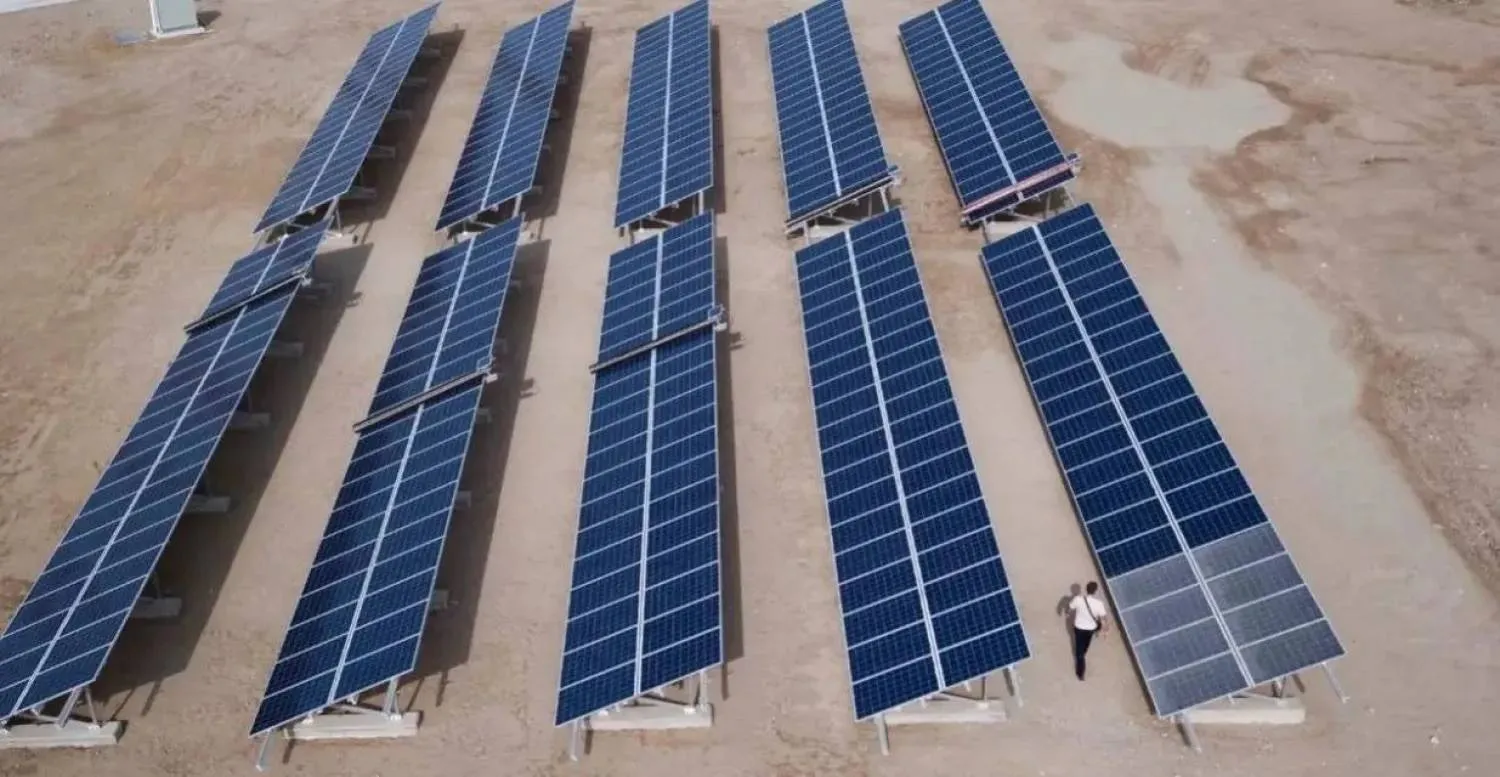
A solar panel project in Saudi Arabia. (SPA)
TT

Saudi Renewable Energy Moves from Initiatives to Expansion

A solar panel project in Saudi Arabia. (SPA)

Saudi Arabia’s renewable energy sector is accelerating its shift from launching initiatives to large-scale operations and expansion, with operational project capacity jumping 88 percent in 2025 to reach 12.313 gigawatts by year-end.

Investment in existing projects exceeded SAR 36 billion ($9.6 billion), reflecting the sector’s growing scale as the Kingdom works to diversify its energy mix and increase the use of renewable energy sources.

According to the latest data from the General Authority for Statistics (GASTAT), 15 renewable energy projects were operational in the Kingdom by the end of 2025.

Specialists said faster project implementation and rising investment in clean technologies are paving the way for further expansion in the coming years, encompassing solar and wind power and green hydrogen, alongside growth in related industries and the localization of supply chains and specialized workforce capabilities.

The figures are part of the authority’s "Raqam Saudi" ("Saudi Number") initiative, which highlights national statistics and indicators and their significance for economic, social and development trends.

Historic transformation

Majid Refae, chairman of the Saudi Polytechnic Institute for Renewable Energy (SPIRE), described the sector as undergoing an unprecedented qualitative transformation in the Kingdom’s modern economic history.

He said the shift goes beyond the growing scale of investment projects to include exceptionally rapid implementation, a more mature regulatory and administrative framework, and greater integration of the infrastructure needed to support the emerging industry.

Refae underlined that the indicators clearly reflect Saudi Arabia’s move from the stage of launching initial initiatives to an advanced phase of operating the renewable energy system on a broad and practical scale, demonstrating greater maturity in implementation and planning capabilities.

He attributed the momentum to three main drivers working in tandem: faster implementation of projects under the National Renewable Energy Program, expanding domestic and international investment in clean technologies, and the Kingdom’s achievement of world-leading levels of competitiveness.

Taken together, he said, these developments confirm that Saudi Arabia has established itself as a major player in the global renewable energy market.

The transformation is being pursued through a strategy led by the Ministry of Energy in cooperation with the Public Investment Fund (PIF) and based on developing projects, infrastructure and local capabilities needed for the sector’s growth.

Sustainable economic base

From an industrial and economic perspective, Refae described renewable energy as an important avenue for diversifying the Saudi economy and building a stronger and more sustainable production base.

He pointed to the importance of the current phase, which extends across four interconnected areas: diversifying the economy and creating new sectors, strengthening energy security and the long-term sustainability of supplies, generating environmental and development benefits, and reinforcing the Kingdom’s regional and international standing.

Saudi Arabia now holds an advanced position regionally and globally in areas including production costs, project scale, infrastructure readiness and the development of green hydrogen projects, stressing that those strengths enhance the Kingdom’s attractiveness for cooperation and investment in the next phase, he added.

Refae expects Saudi Arabia to enter a new phase of growth in the sector between 2026 and 2030, driven by major solar and wind projects coming on stream, alongside an expansion in green hydrogen projects for both production and export.

The Kingdom’s stated target is for renewable energy to account for 50 percent of its electricity mix by 2030. Faster project implementation and growing investment, he said, strengthen its ability to achieve that goal.

Given the scale of the targets, government financing alone will not be sufficient, making broader participation by the local private sector and international companies necessary.

Public-private partnerships can attract further investment, draw on global expertise and technology, accelerate project implementation and develop related supply chains, he remarked.

Local manufacturing

Growth in renewable energy projects is also expected to expand supporting industries and services, increasing the importance of localizing the manufacture of key components and parts.

According to Refae, building a domestic manufacturing base would reduce reliance on imports, create jobs and increase value added to the national economy.

Faster project implementation also places greater responsibility on SPIRE to prepare the skilled workforce required by the industry, he noted, stressing that its role "is not limited to training, but carries multiple strategic dimensions."

Institute strategy

Refae said the institute’s main priority is to prepare specialized Saudi professionals capable of operating and maintaining renewable energy projects in line with international standards, while also contributing to knowledge transfer, skills development and innovation.

SPIRE is developing specialized training programs covering solar and wind power, green hydrogen and energy-storage technologies, with an emphasis on practical and applied instruction that links training to the actual needs of projects and the labor market, he revealed.

He noted that the expansion of renewable energy projects gives SPIRE an opportunity to strengthen its role as a platform for developing capabilities, transferring expertise and supporting innovation, rather than serving merely as a conventional training provider.

Refae noted that the growth of the renewable energy sector represents an important opportunity to diversify the economy and create new areas of activity and investment.

Fully capitalizing on that opportunity will require continued investment in Saudi talent, research and development, innovation, and stronger partnerships with domestic and international companies and institutions, he said.


China and Canada Expand Tariff Relief While Ottawa-Washington Ties Are Strained

17 November 2026, China, Shenzhen: Canada's Prime Minister Mark Carney meets with Chinese President Xi Jinping at the Kylin Villa State guesthouse. Photo: Adrian Wyld/Canadian Press via ZUMA Press/dpa
TT

China and Canada Expand Tariff Relief While Ottawa-Washington Ties Are Strained

17 November 2026, China, Shenzhen: Canada's Prime Minister Mark Carney meets with Chinese President Xi Jinping at the Kylin Villa State guesthouse. Photo: Adrian Wyld/Canadian Press via ZUMA Press/dpa

The leaders of China and Canada agreed Tuesday on additional tariff cuts as they pledged for deeper ties and Ottawa navigates strained relations with the United States.

Chinese President Xi Jinping and Canadian Prime Minister Mark Carney met ahead of the Asia-Pacific Economic Cooperation summit, and both praised the strategic partnership they agreed to pursue this year and pointed to improving economic ties.

Carney’s office said in a statement that the new measures extend and expand an earlier agreement between the countries.
Under the agreement, China will provide additional tariff relief on Canadian exports worth around 400 million Canadian dollars ($280 million), including frozen pork cuts, fish and seafood.

In return, Canada will extend tariff exemptions for certain Chinese steel and aluminum products by two years.

The meeting between the leaders came a day after Carney said Canada could turn to Chinese automakers if trade negotiations with US President Donald Trump fail to maintain an integrated North American auto industry.

“Improving and developing China-Canada relations serves the interests of the people of both countries and is also conducive to safeguarding world peace, stability, development and prosperity,” The Associated Press quoted Xi as saying. “This is the right choice.”

Carney said that the exchanges between Canada and China have increased in the past months and praised that now there is “greater predictability and stability” in their relationship.

“The stabilization of our bilateral trade arrangement is indicative of how we can work together more broadly, pragmatically, to solve problems,” he said.

Carney added that his country is ahead of schedule in its plan to increase exports to China by 50% by the end of the decade.

Xi and Carney reached an agreement in January allowing tens of thousands of Chinese electric vehicles into Canada at reduced tariffs.

Under the January agreement, Canada reduced its 100% tariff on Chinese electric vehicles to 6.1%, initially allowing up to 49,000 vehicles annually, with the cap increasing over time. In exchange, China agreed to lower tariffs on Canadian agricultural products, including canola.


Dar Global Expands Saudi Portfolio with New Jeddah Development Valued at $267 Million

The new project is expected to feature luxury residential units, introducing a new international luxury brand to Jeddah through an exclusive co-branded residential concept. (Dar Global)
TT

Dar Global Expands Saudi Portfolio with New Jeddah Development Valued at $267 Million

The new project is expected to feature luxury residential units, introducing a new international luxury brand to Jeddah through an exclusive co-branded residential concept. (Dar Global)

Dar Global on Monday announced plans for a new mixed-use development in Jeddah with an estimated gross development value (GDV) of about SAR 1 billion ($267 million).

The move comes to expand the company's presence in the Saudi real estate market, capitalizing on growing domestic and international demand, as well as regulatory reforms related to foreign ownership of property in the Kingdom.

The London-listed international luxury real estate developer said in a statement that the project will be built on land Dar Global has acquired for about $56 million as part of its program to expand its Saudi portfolio by up to SAR 4 billion ($1.07 billion).

The company said more land acquisitions will be announced shortly.

Once the program is complete, Dar Global expects its global development pipeline to reach about $24 billion.

The new project is expected to feature luxury residential units, introducing a new international luxury brand to Jeddah through an exclusive co-branded residential concept, further strengthening the city’s luxury real estate offering.

The expansion follows strong market demand for Dar Global’s existing developments in Jeddah, including Trump Plaza and Padel Living, reflecting sustained appetite for high-quality, master-crafted residential and mixed-use developments among both local buyers and foreign investors taking advantage of the new property ownership laws.

Ziad El Chaar, CEO of Dar Global, said: “Saudi Arabia remains one of our most vital growth markets, and Jeddah continues to demonstrate exceptional fundamentals. The success of our existing developments reinforces our confidence in the market and underpins our commitment to delivering world-class residences in the Kingdom.”

He noted that with buyers from 61 nationalities already investing in the company’s Saudi portfolio, Dar Global is witnessing accelerating international confidence in the country's real estate sector.

“This new development marks another significant milestone in our global expansion strategy,” El Chaar added.


Supertanker Rates Plunge More Than 60% From Record Highs

Vessels in the Strait of Hormuz near the beach of Bandar Abbas, Iran, October 13, 2026. Razieh Poudat/ISNA/via WANA (West Asia News Agency) via REUTERS
TT

Supertanker Rates Plunge More Than 60% From Record Highs

Vessels in the Strait of Hormuz near the beach of Bandar Abbas, Iran, October 13, 2026. Razieh Poudat/ISNA/via WANA (West Asia News Agency) via REUTERS

The cost of shipping oil in the largest tankers has declined sharply since the beginning of November, reflecting weaker demand for chartering and an unwinding of the geopolitical risk premium that sent shipping costs to a record high in October.

Freight rates for supertankers, also known as very large crude carriers (VLCCs), carrying oil from the Gulf of Oman to China fell to about 308 on the Worldscale basis on November 13, down by 64% from their record ⁠high of 841 on October 8, Baltic Exchange data shows.

The plunge in rates came as Gulf oil exporters increased crude flows towards levels seen before the start of the US-Israeli war on Iran.

The increase in flows has been achieved using workarounds such as ship-to-ship transfers and so-called dark crossings, where tankers switch off tracking signals to evade detection, even as attacks against ships continued.

The rise in Gulf oil exports reduced demand for crude shipped from other regions, freeing up VLCCs.

“Gulf oil exports recently recovered to near prewar volumes, reducing Asian buyer demand for US and North Sea crudes, which in turn weighed on demand for tankers,” Arrow Shipbroking analyst Delia ⁠He told Reuters.

Vortexa analyst Ioannis Papadimitriou said the recent spike in freight rates had reduced Asian demand for longer-haul US, West African and North Sea crude, which in turn increased the region's use of Middle East crude, and that VLCC demand for longer voyages dropped as a result.

“At the same time, vessel availability is building as ships discharge in East Asia,” ⁠he said. “As more tonnage is freed up, rates come under downward pressure.”

Easing Geopolitical Risk Premium

Rates fell even more sharply on other routes, such as from West Africa to Asia.

The jump in freight costs had been partly driven by factors including ⁠the perception of a higher risk of operating in the Middle East Gulf as Iran and the US attacked tankers, which had also pushed up oil prices.

Oil prices have dropped by 20% this month, partly ⁠on the potential for de-escalation in the Iran war.

“The sharp decline in freight rates is only partly driven by market fundamentals, as such a steep move reflects an exaggerated unwinding of the geopolitical risk premium,” Arrow’s He said.