

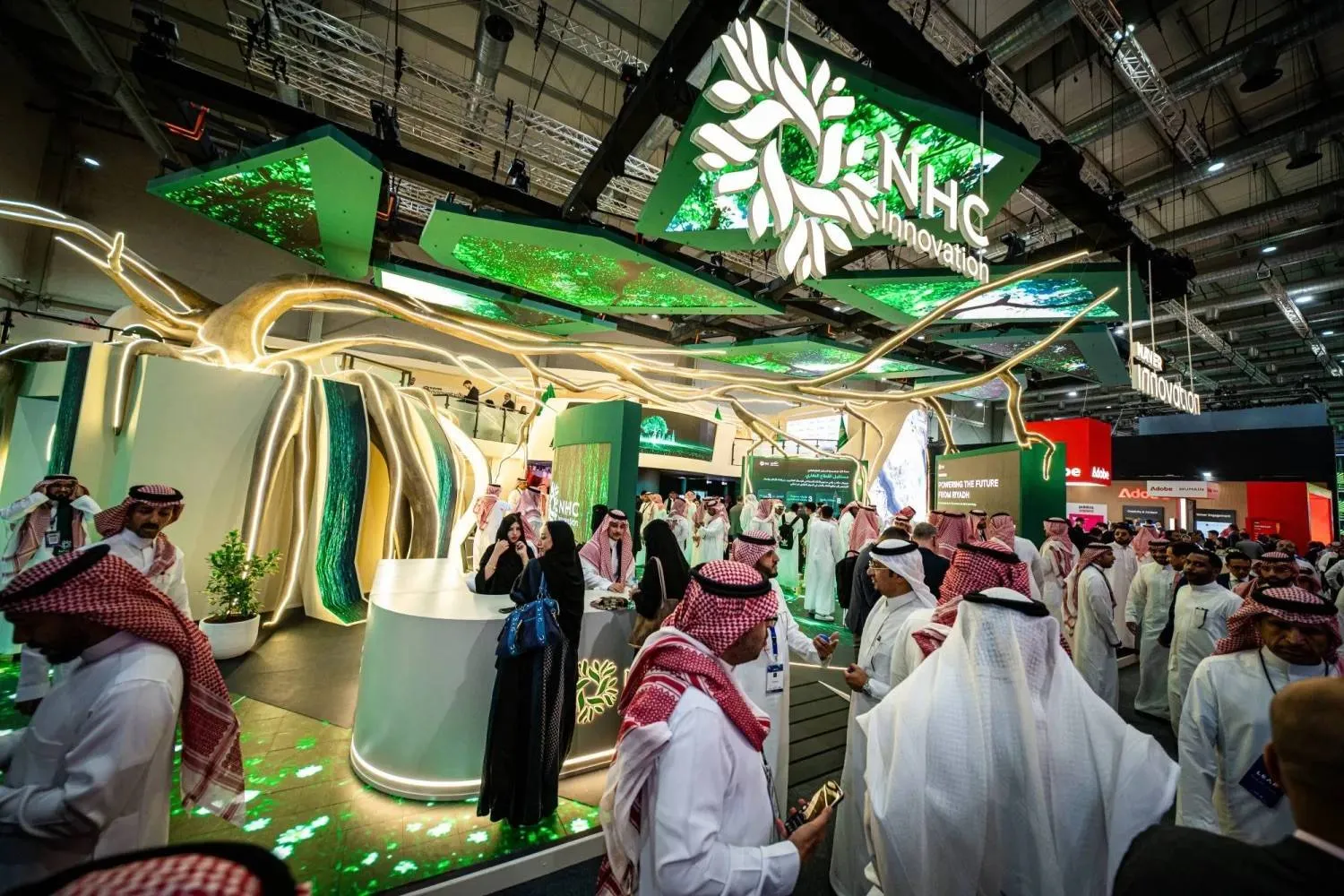

National Housing Company Invests About $880 Million in Riyadh Data Center

Visitors at the company’s pavilion during LEAP 2026 in Riyadh. (Asharq Al-Awsat)
TT

National Housing Company Invests About $880 Million in Riyadh Data Center

Visitors at the company’s pavilion during LEAP 2026 in Riyadh. (Asharq Al-Awsat)

Saudi Arabia’s National Housing Company (NHC) is expanding its technology investments, moving beyond the development of digital platforms and services to deeper infrastructure and technological capabilities for the real estate sector, including data centers, artificial intelligence, data analytics and geospatial technologies.

The shift comes as the company seeks to reshape the real estate customer journey, from searching for a home and securing financing to ownership and managing related services, through an integrated digital ecosystem supported by data and advanced technologies.

Rayan Alaql, CEO of NHC Innovation, the digital and technology arm of NHC, told Asharq Al-Awsat that the company had evolved from building digital platforms serving specific procedures to developing an integrated technology ecosystem that is reshaping the real estate experience, from searching for a home, financing and ownership to managing interactions with municipal and real estate services.

Investment in technology capabilities

Alaql explained that the company’s technology investments had expanded from platforms and digital services to deeper enabling capabilities, including data, AI, infrastructure, data centers and technologies supporting smart cities.

The data center at Khuzam Digital Valley is part of this strategy, with investments totaling SAR 3.3 billion, or about $880 million, and a target IT load of up to 65 megawatts by 2033.

The center is intended to develop digital infrastructure supporting cloud services and advanced technologies. Its services will include hosting and leasing, managed services, cloud computing and IT, power and connectivity, and value-added services.

To support the center’s readiness and attract global technology partnerships, the company signed cooperation agreements with BytePlus, the technology arm of ByteDance, and NAVER Innovation. The agreements include allocating capacity to the two companies as the first customers of the data center, alongside providing technological services supporting their operations and digital needs.

Serving more than 35 million users

Alaql noted that the company’s platforms serve more than 35 million direct and indirect users, including beneficiaries, entities and partners, through an ecosystem of platforms and digital solutions linked to housing, municipal services and real estate regulation. Users have interacted with more than 15 digital platforms.

He said usage patterns had changed significantly in recent years. Users no longer access a platform merely to complete a procedure, but increasingly rely on it to make decisions, compare options, find suitable services and follow their journey more clearly.

This shift, he added, reflects how the platforms have become part of the sector’s operating infrastructure rather than an additional service channel.

AI in real estate services

Alaql stressed that the company regards AI as a fundamental enabling layer rather than a standalone product, using it to improve the customer experience, enhance recommendations, analyze patterns, facilitate access to appropriate real estate options and provide relevant entities with more accurate insights into the market, demand and services.

He cited the Sakani platform as an example, saying the objective is to help users identify options that most closely match their needs, financial capacity and preferences instead of confronting them with thousands of choices.

The real impact of AI, he added, emerges when it produces tangible results: faster service, clearer decisions, lower operating costs and a fairer, more transparent experience for users.

Data and geospatial technologies

He said the next stage of urban and real estate planning requires a more precise understanding of location, demand, mobility, services and infrastructure, with geospatial technologies and AI helping planners view a city as an interconnected system.

Linking spatial data with information on demand, services, utilities and user behavior can make planning decisions more precise and help identify priorities, including where development is needed, where services should be expanded and where gaps can be reduced.

He added that such tools shorten the time required for studies and analysis, reduce decisions based on subjective impressions and allow authorities and developers to plan with greater confidence.

Partnerships and homeownership

Alaql said global partnerships aim to transfer knowledge, accelerate capacity building, develop solutions applicable to the Saudi market and connect local expertise with leading global technologies.

The company has pursued partnerships in AI, data, data centers and smart cities as part of efforts to build local capabilities and develop products addressing market needs.

On financing and homeownership, he pointed that customers have historically had to navigate multiple entities, numerous decisions and incomplete information.

The company is working to build a more connected journey, beginning with understanding the customer’s needs, presenting appropriate options and facilitating financing through to completing procedures clearly and quickly.

The aim is not merely to move procedures onto a digital platform, he stressed, but to redesign the journey itself through integrated data, clearer options and systems capable of recommendation, verification and matching.

The company participated in LEAP 2026 in Riyadh last week. The official underlined that its participation reflected a new stage in its development, focused not only on showcasing digital solutions but on demonstrating how technology can reshape real estate, support smart cities and build digital infrastructure capable of meeting future needs.

Alaql described LEAP as a platform for highlighting the evolution of the company’s business model from developing digital services to building the technological enablers of the digital economy in real estate and cities.



Saudi Renewable Energy Moves from Initiatives to Expansion

A solar panel project in Saudi Arabia. (SPA)
TT

Saudi Renewable Energy Moves from Initiatives to Expansion

A solar panel project in Saudi Arabia. (SPA)

Saudi Arabia’s renewable energy sector is accelerating its shift from launching initiatives to large-scale operations and expansion, with operational project capacity jumping 88 percent in 2025 to reach 12.313 gigawatts by year-end.

Investment in existing projects exceeded SAR 36 billion ($9.6 billion), reflecting the sector’s growing scale as the Kingdom works to diversify its energy mix and increase the use of renewable energy sources.

According to the latest data from the General Authority for Statistics (GASTAT), 15 renewable energy projects were operational in the Kingdom by the end of 2025.

Specialists said faster project implementation and rising investment in clean technologies are paving the way for further expansion in the coming years, encompassing solar and wind power and green hydrogen, alongside growth in related industries and the localization of supply chains and specialized workforce capabilities.

The figures are part of the authority’s "Raqam Saudi" ("Saudi Number") initiative, which highlights national statistics and indicators and their significance for economic, social and development trends.

Historic transformation

Majid Refae, chairman of the Saudi Polytechnic Institute for Renewable Energy (SPIRE), described the sector as undergoing an unprecedented qualitative transformation in the Kingdom’s modern economic history.

He said the shift goes beyond the growing scale of investment projects to include exceptionally rapid implementation, a more mature regulatory and administrative framework, and greater integration of the infrastructure needed to support the emerging industry.

Refae underlined that the indicators clearly reflect Saudi Arabia’s move from the stage of launching initial initiatives to an advanced phase of operating the renewable energy system on a broad and practical scale, demonstrating greater maturity in implementation and planning capabilities.

He attributed the momentum to three main drivers working in tandem: faster implementation of projects under the National Renewable Energy Program, expanding domestic and international investment in clean technologies, and the Kingdom’s achievement of world-leading levels of competitiveness.

Taken together, he said, these developments confirm that Saudi Arabia has established itself as a major player in the global renewable energy market.

The transformation is being pursued through a strategy led by the Ministry of Energy in cooperation with the Public Investment Fund (PIF) and based on developing projects, infrastructure and local capabilities needed for the sector’s growth.

Sustainable economic base

From an industrial and economic perspective, Refae described renewable energy as an important avenue for diversifying the Saudi economy and building a stronger and more sustainable production base.

He pointed to the importance of the current phase, which extends across four interconnected areas: diversifying the economy and creating new sectors, strengthening energy security and the long-term sustainability of supplies, generating environmental and development benefits, and reinforcing the Kingdom’s regional and international standing.

Saudi Arabia now holds an advanced position regionally and globally in areas including production costs, project scale, infrastructure readiness and the development of green hydrogen projects, stressing that those strengths enhance the Kingdom’s attractiveness for cooperation and investment in the next phase, he added.

Refae expects Saudi Arabia to enter a new phase of growth in the sector between 2026 and 2030, driven by major solar and wind projects coming on stream, alongside an expansion in green hydrogen projects for both production and export.

The Kingdom’s stated target is for renewable energy to account for 50 percent of its electricity mix by 2030. Faster project implementation and growing investment, he said, strengthen its ability to achieve that goal.

Given the scale of the targets, government financing alone will not be sufficient, making broader participation by the local private sector and international companies necessary.

Public-private partnerships can attract further investment, draw on global expertise and technology, accelerate project implementation and develop related supply chains, he remarked.

Local manufacturing

Growth in renewable energy projects is also expected to expand supporting industries and services, increasing the importance of localizing the manufacture of key components and parts.

According to Refae, building a domestic manufacturing base would reduce reliance on imports, create jobs and increase value added to the national economy.

Faster project implementation also places greater responsibility on SPIRE to prepare the skilled workforce required by the industry, he noted, stressing that its role "is not limited to training, but carries multiple strategic dimensions."

Institute strategy

Refae said the institute’s main priority is to prepare specialized Saudi professionals capable of operating and maintaining renewable energy projects in line with international standards, while also contributing to knowledge transfer, skills development and innovation.

SPIRE is developing specialized training programs covering solar and wind power, green hydrogen and energy-storage technologies, with an emphasis on practical and applied instruction that links training to the actual needs of projects and the labor market, he revealed.

He noted that the expansion of renewable energy projects gives SPIRE an opportunity to strengthen its role as a platform for developing capabilities, transferring expertise and supporting innovation, rather than serving merely as a conventional training provider.

Refae noted that the growth of the renewable energy sector represents an important opportunity to diversify the economy and create new areas of activity and investment.

Fully capitalizing on that opportunity will require continued investment in Saudi talent, research and development, innovation, and stronger partnerships with domestic and international companies and institutions, he said.


Chinese Inflation Picks up in August but Still Below Target

A man rides a bicycle in the rain in Beijing, Tuesday, Sept. 8, 2026. (AP)
TT

Chinese Inflation Picks up in August but Still Below Target

A man rides a bicycle in the rain in Beijing, Tuesday, Sept. 8, 2026. (AP)

China's consumer and producer prices picked up slightly last month but remained below target, official data showed on Wednesday, as the world's second-largest economy grapples with weak domestic demand.

The consumer price index -- a key measure of inflation -- came in at 0.8 percent in August, according to the National Bureau of Statistics (NBS), which was up from 0.5 percent in July and in line with a forecast in a Bloomberg survey of economists.

Beijing has battled a persistent slump in domestic spending since the end of the Covid-19 pandemic.

The CPI has remained below the current target of two percent for more than three years, slipping into negative territory several times during that period.

The weak activity has presented challenges to leaders aiming to maintain growth momentum, even as exports and various high-tech sectors perform strongly.

Prices paid at the factory gate also picked up in August, the NBS figures showed, expanding 3.8 percent year-on-year.

That was faster than July's 3.5 percent and topped the 3.6 percent forecast in the Bloomberg survey.

The readings come day after data showed China's imports and exports surging last month.

Overseas shipments have been boosted this year by heightened global demand for technology products amid the artificial intelligence boom.

Beijing is targeting economic growth of 4.5-5.0 percent this year, a pace that would outstrip most developed economies but rank among the lowest in decades for China.

The economy expanded just 4.3 percent in the second quarter, missing forecasts and representing the weakest pace in more than three years.


Oil Heads for $100, Asia Stocks Subdued as Middle East Tensions Escalate

An aerial view shows storage tanks at the sprawling BP refinery on September 08, 2026 in Whiting, Indiana. (Getty Images/AFP)
TT

Oil Heads for $100, Asia Stocks Subdued as Middle East Tensions Escalate

An aerial view shows storage tanks at the sprawling BP refinery on September 08, 2026 in Whiting, Indiana. (Getty Images/AFP)

Brent crude rallied towards $100 per barrel on Wednesday, keeping the mood in Asian stock markets subdued, as attacks intensified in the Middle East, stoking inflation worries ahead of the release of closely watched US consumer price data.

The yen strengthened towards the nearly seven-month high touched against the dollar on Tuesday as traders exited short positions in the Japanese currency amid expectations for faster Bank of Japan interest rate hikes and a potential rush of repatriation of Japanese capital.

The euro edged higher ahead of the European Central Bank's policy decision on Thursday, with markets widely expecting a hike amid inflationary pressures from the Iran war.

Iranian-backed ‌Houthis in Yemen ‌launched strikes on several Saudi cities on Tuesday, ⁠while US forces hit multiple Iranian oil tankers and Iran struck Jordan.

Oil prices jumped for a fourth straight session on Wednesday, with Brent crude futures rising $1.10 to $99.02 a barrel. US West Texas Intermediate crude was at $93.95 a barrel, up $0.93.

Japan's Nikkei slipped 0.2%, Hong Kong's Hang Seng dropped 0.3% and mainland Chinese blue chips were little changed.

A rebound in chip and AI stocks helped some other regional benchmarks though, with South Korea's KOSPI jumping 1.2% and Taiwan's TAIEX eking out a ⁠0.2% gain.

Overnight, the Philadelphia SE semiconductor index jumped 1.3%, despite declines on ‌Wall Street's three main indexes.

US S&P 500 futures added ‌0.1%, after the cash index sank 0.6% on Tuesday.

Pan-European STOXXX 50 futures fell 0.5%.

"Across several of the major ‌macro markets, we see indecision in the price action -- tight ranges and a general holding/consolidation pattern," ‌Chris Weston, head of research at Pepperstone, wrote in a client note.

Brent crude is currently "one of the clearest real-time signals for sentiment" for the overall market, and $100 "now feels like a highly achievable level," he said.

Inflation worries have weighed on global equities in recent weeks and lifted bond yields as traders price higher odds ‌for central bank tightening.

US CPI data is due on Friday.

Traders assign close to even odds for a quarter-point hike or a hold from ⁠the US Federal Reserve ⁠on Wednesday of next week, while being all but certain of a quarter-point increase from the BOJ two days later.

The yen strengthened around 0.5% to 153.32 per dollar, edging back towards its high of 152.89 from the previous session. It had surged around 4% over the last five sessions, with hawkish comments from BOJ officials ostensibly initiating a move that then snowballed as breaks of key levels triggered additional buying, market players said.

The ECB is all but certain to raise euro zone rates by a quarter point on Thursday. The euro added 0.1% to $1.1634, putting it in the middle of its tight range of the past three weeks.

Sterling was little changed at $1.3552. The Bank of England is due to announce its latest policy decision on Thursday of next week, with economists predicting the key rate will be on hold for the remainder of this year.

The Aussie rose 0.2% to $0.7230. Bitcoin drifted higher to change hands at $79,009.09. Gold gained 0.7% to around $4,385 an ounce.