CEER to Reveal First Flagship Vehicles in Saudi Arabia on Sept. 21

A glimpse of the car's design that CEER aims to launch later this September (Asharq Al-Awsat)
TT

CEER to Reveal First Flagship Vehicles in Saudi Arabia on Sept. 21

A glimpse of the car's design that CEER aims to launch later this September (Asharq Al-Awsat)

CEER, Saudi Arabia's first automotive company and Original Equipment Manufacturer (OEM), has announced the reveal date of the world premiere of its first flagship vehicles, an electric sedan and SUV, on September 21.

Friday’s announcement reflects the Kingdom’s strategic direction toward developing an advanced industrial sector aligned with the objectives of Saudi Vision 2030 and strengthening Saudi Arabia’s position on the global automotive industry map.

“At the beginning of this year, we said that 2026 is the year of CEER. I am happy to announce that we’ve set the date for the reveal of our first flagship vehicles,” said CEO of CEER James DeLuca.

“The world is about to witness a historic moment, the result of an incredible journey from initial design and intensive engineering to the buildup of one of the most advanced manufacturing facilities in the world, in record time.”

CEER was created as a joint venture between the Public Investment Fund and Foxconn. It is the only company in Saudi Arabia to design, engineer, source, validate, manufacture, and soon sell and service a portfolio of aspirational vehicles.

CEER is positioned to be a key enabler of Saudi Arabia's industrial transformation (Asharq Al-Awsat)

Since its inception in 2022, CEER has been focused on building a diverse mix of Saudi talent and global experts that had grown from 20 employees to 2,300; securing key partnerships with renowned international partners including BMW, Hyundai Transys, Rimac, Siemens, Sabelt, Isoclima, ANDRITZ Schuler, Dürr, XYG, Lear, Benteler, Fangxin, Shin Young, JVIS, as well as leading local companies including Zamil Group, Abdul Latiff Jameel Group and APICO (Balubaid Group) that are driving the target of reaching 45% local content by 2034; building one of the most advanced manufacturing complexes in the world; and designing, engineering and testing vehicles that are tailor-made to the specific requirements of Saudi Arabia and the region.

CEER is positioned to be a key enabler of Saudi Arabia's industrial transformation, creating lasting economic impact and supporting the Kingdom's diversification ambitions under Vision 2030.

CEER is projected to contribute $8 billion (around SAR30 billion) to Saudi Arabia’s GDP, $21 billion (around SAR80 billion) to trade balance improvement, and create approximately 30,000 direct and indirect jobs, with 80% of direct jobs held by Saudis. CEER supports the Saudi Green Initiative target of Net-Zero emissions in Saudi Arabia by 2060.

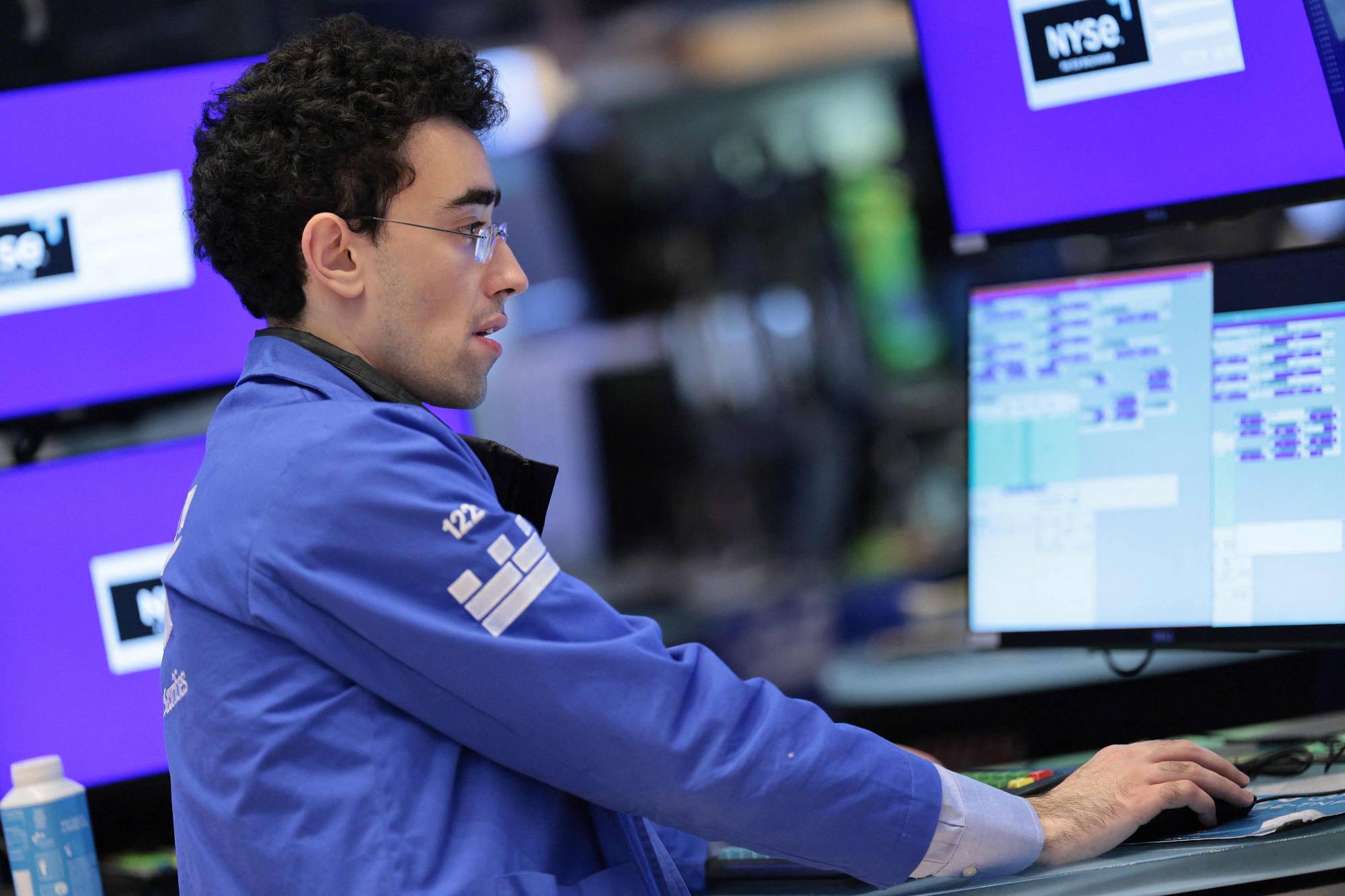

Global Equity Funds Attract Inflows for 5th Consecutive Week

NEW YORK, NEW YORK - OCTOBER 21: Traders work on the floor of the New York Stock Exchange during morning trading on October 21, 2026 in New York City. Michael M. Santiago/Getty Images/AFP
TT

Global Equity Funds Attract Inflows for 5th Consecutive Week

NEW YORK, NEW YORK - OCTOBER 21: Traders work on the floor of the New York Stock Exchange during morning trading on October 21, 2026 in New York City. Michael M. Santiago/Getty Images/AFP

Global equity funds attracted inflows for a fifth consecutive week in the week through October 21, as easing Treasury yields and strong early corporate earnings lifted investor sentiment.

Global equity funds drew net inflows of $28.16 billion during the week, compared with $19.88 billion in the previous week, LSEG Lipper data showed.

The benchmark 10-year US Treasury yield fell about 15 basis points last week and dropped below the psychologically significant 5% level this week, Reuters reported.

Fund investors were encouraged by better-than-expected corporate earnings so far this reporting season.

Of the nearly 18% of MSCI All Country World Index constituents that have ⁠reported earnings to date, ⁠about 73% have exceeded the average analyst estimate, according to LSEG data.

The MSCI World Index, however, fell 1.31% on Thursday after Meta reported strong results on Wednesday but unveiled plans to issue non-voting stock, reviving concerns about its growing capital commitments.

NEW YORK, NEW YORK - OCTOBER 21: Traders work on the floor of the New York Stock Exchange during morning trading on October 21, 2026 in New York City. Michael M. Santiago/Getty Images/AFP

By region, Asian equity funds attracted $11.53 billion, their largest weekly ⁠inflow since at least December 2022. Investors also added $9.14 billion to European equity funds and $5.07 billion to US equity funds.

Among sectoral funds, technology attracted $5.05 billion, reversing net sales of $4.77 billion in the previous week. Investors also bought $1.83 billion in healthcare sector funds but sold a notable $1.29 billion in consumer discretionary sector funds.

Global bond funds remained popular for a fifth consecutive week, attracting net inflows of $9.44 billion.

Swiss franc-denominated bond funds drew $6.8 billion, their largest weekly inflow since at least November 2024. ⁠Investors also added ⁠a significant $2.78 billion to short-term bond funds, while pulling $1.68 billion from high-yield bond funds and $550 million from government bond funds.

Money market funds attracted weekly net inflows of $15.86 billion, following net outflows of $47.51 billion the previous week.

Among commodities, gold and other precious metals funds attracted net inflows of $1.29 billion, marking their fifth week of net purchases in the past six weeks. Investors also added $41.5 million to energy funds.

Data covering 29,174 emerging market funds showed that investors bought $6.28 billion worth of equity funds — the largest weekly net purchase since August 5. However, they withdrew a marginal $48.72 million from bond funds.


UK Pledges More Funding to Guard Against AI Risks

FILE PHOTO: The words "AI Artificial Intelligence", a keyboard, and a robotics hand in this illustration taken October 19, 2026. REUTERS/Dado Ruvic/Illustration/File Photo
TT

UK Pledges More Funding to Guard Against AI Risks

FILE PHOTO: The words "AI Artificial Intelligence", a keyboard, and a robotics hand in this illustration taken October 19, 2026. REUTERS/Dado Ruvic/Illustration/File Photo

The UK government on Saturday outlined plans to expand funding for artificial intelligence safety amid growing concerns over the cyber risks posed by the increasingly advanced technology.

"The economic opportunities from AI will only be realized if our critical infrastructure, public services and businesses are resilient to cyber, biological and emerging AI-enabled threats," the government said in a statement ahead of its annual budget update on Wednesday.

Concerns about AI safety have escalated in recent months after models developed by OpenAI and Anthropic were involved in security incidents during testing, piling pressure on governments to regulate the technology and protect against threats.

As part of a package of AI-related measures in the budget, the government will invest an additional £120 million ($161 million) in Britain's AI Security Institute, which tests the most powerful AI models before they are released.

According to AFP, it will also invest £100 million to establish a national AI Biosecurity Lab, which will use AI to detect and track biological threats.

"As AI becomes more powerful, Britain must have the capabilities to protect its people and shape its own future," said AI minister Kanishka Narayan.

"That means staying ahead of emerging threats, from cyberattacks to biological risks, while building more of the critical technology our security depends on," he added.

The plans include investment in AI tools to identify cyber vulnerabilities across critical infrastructure.

Governments and companies around the world shut down websites Thursday as they raced to protect themselves from hacks after AI models uncovered critical flaws in a widely used programming language called PHP.

Cybersecurity experts fear state-of-the-art AI technology could be used to hack banks, hospitals and government systems.

Last month it emerged that a rogue OpenAI model bypassed safeguards during training and hacked an Australian government health statistics website.


Trump Lifts Some Canada Tariffs Ahead of Midterms

President Donald Trump arrives on Air Force One, Friday, Oct. 23, 2026, at President Donald J. Trump International Airport in West Palm Beach, Fla. (AP Photo/Mark Schiefelbein)
TT

Trump Lifts Some Canada Tariffs Ahead of Midterms

President Donald Trump arrives on Air Force One, Friday, Oct. 23, 2026, at President Donald J. Trump International Airport in West Palm Beach, Fla. (AP Photo/Mark Schiefelbein)

President Donald Trump's administration lifted some tariffs on Canadian imports Friday, two weeks ahead of midterm elections, after a vulnerable Republican candidate said she'd lobbied for the change.

The easing of tariffs will apply to products including "plywood sheets, some paper products, certain machinery and refrigeration equipment," the White House said in a statement.

The change could help Senator Susan Collins, who faces a strong challenge from a Democrat in the US-Canada border state of Maine, which has been hit hard by Trump's trade war.

She posted on social media that she had "secured" the exemptions for "products crucial to Maine's agricultural industries, including blueberry, potato, apple, and seaweed producers."

Democrats are targeting Collins's seat in their attempt to win control of Congress from the Republicans in the November 3 midterms.

The economies of the United States and Canada are heavily inter-connected, with roughly 70 percent of all Canadian exports heading to the United States.

Tensions between the North American neighbors have been high since trade talks broke down in August, with Trump imposing a slew of new tariffs in response.

Friday's action lifts tariffs on certain goods, but imposes levies on new ones, including carpets, certain valves and waste products, the White House said. The new measures will take effect on October 30.

"The Canadian government takes note of these recent tariff measures adopted by the United States," Dominic LeBlanc, Ottawa's minister in charge of US-Canada trade, said in a statement to AFP.

"While evaluating these recent measures, Canada remains ready to work together in a constructive and good-faith manner" with the US, he added.

Collins said many farmers in her state "rely on specialized equipment, packaging materials, and other products from Canada that are either unavailable from American suppliers or cannot be replaced without incurring significant expense."

Previous Trump levies on autos, steel, aluminum and lumber have hit Canada hard, forcing job losses and stunting growth. Canada has entered a technical recession this year after two consecutive quarters of economic contraction.

Trump's tariffs enforced after the talks broke down impacted around $20 billion worth of goods, or 5.5 percent of Canadian exports to the United States, targeting products ranging from hockey sticks to cement.

Since taking power in his second term, Trump has upended the global trade order by imposing wide-ranging tariffs on friend and foe alike, saying that other countries have been taking advantage of the United States.

He has also explicitly tied some threatened tariffs to political or foreign policy objectives.