Saudi Arabia Bets on Small Businesses to Drive Its Next Growth Phase

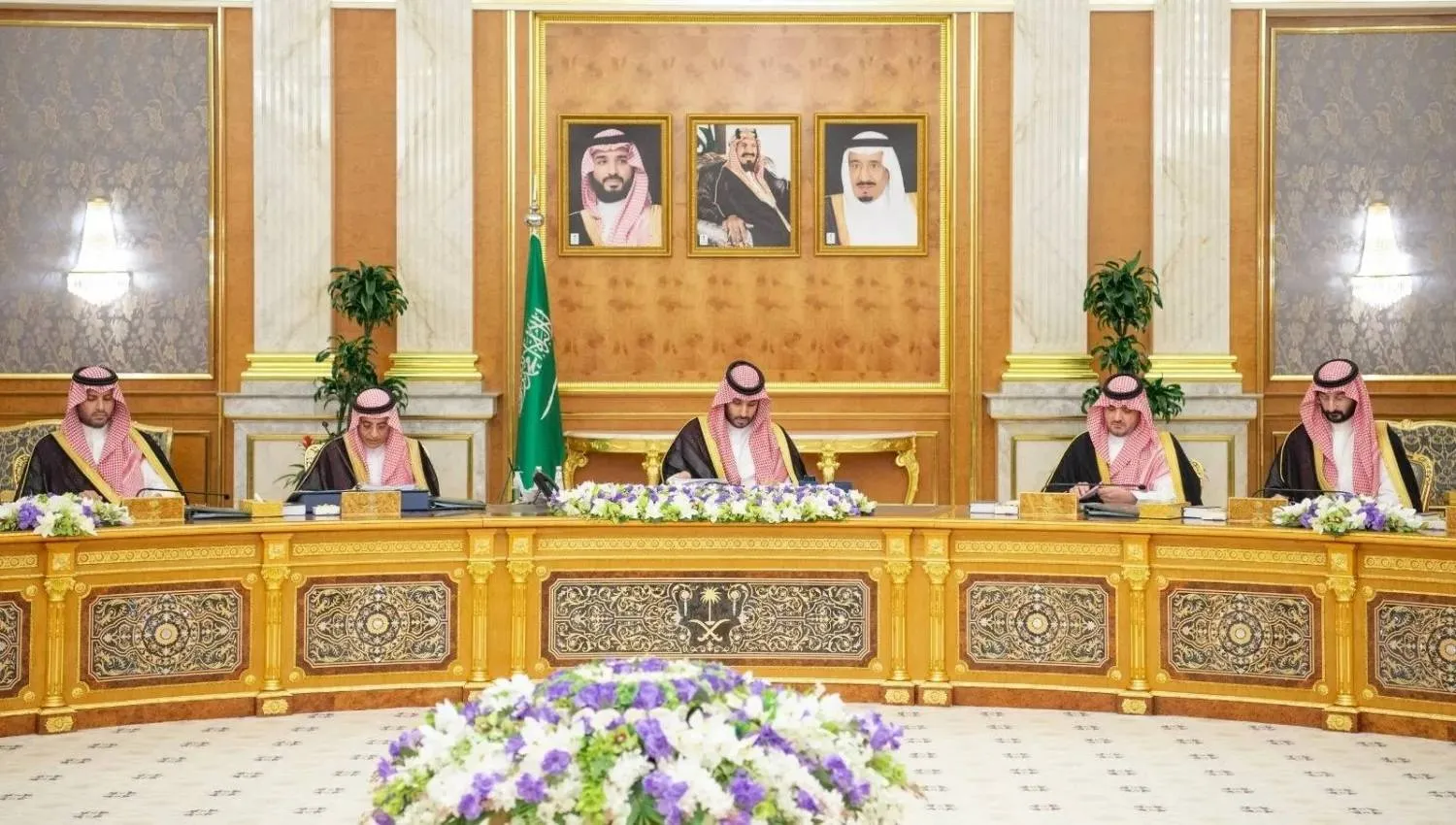
Crown Prince and Prime Minister Mohammed bin Salman during the Cabinet meeting in Jeddah (SPA)
TT

Saudi Arabia Bets on Small Businesses to Drive Its Next Growth Phase

Crown Prince and Prime Minister Mohammed bin Salman during the Cabinet meeting in Jeddah (SPA)

Saudi Arabia is entering a new phase in its economic diversification drive, placing small and medium-sized enterprises and entrepreneurship at the heart of growth.

The shift follows the Cabinet’s Tuesday approval of a new national strategy for the sector at a meeting chaired by Crown Prince Mohammed bin Salman.

The kingdom aims to turn SMEs from a broad base of business activity into a stronger force in production, investment, and job creation. The strategy seeks to widen access to financing and markets while helping businesses scale up and compete.

It reflects a Saudi bet on a new generation of growing companies that can help build a more diversified and resilient economy—one less reliant on large corporations alone to drive economic activity.

GDP Contribution

Commerce Minister Majid bin Abdullah Al-Qasabi, chairman of the Small and Medium Enterprises General Authority, known as Monsha’at, said the strategy would develop the entrepreneurship ecosystem, help businesses grow and expand, and increase their contribution to the national economy.

The goal is to raise SMEs’ share of gross domestic product to 35%, in line with Saudi Vision 2030, he said.

The strategy comprises 13 initiatives within an integrated framework. They aim to improve access to financing and markets, strengthen businesses’ operational readiness and capabilities, develop the regulatory and innovation environment, and make it easier to do business.

Together, the measures are designed to create a more efficient environment for business growth and expansion.

The strategy also aims to help create more than 500,000 direct and indirect jobs and propel Saudi Arabia to first place in the Entrepreneurial Skills and Knowledge Index by 2030, Al-Qasabi said.

Access to Megaprojects

“The strategy reflects the attention and support the government gives to entrepreneurship and small and medium-sized enterprises,” Al-Qasabi said.

It translates that support into “a more integrated and efficient ecosystem that opens wider avenues for businesses to grow and increases their contribution to economic development,” he added.

Implementation will depend on coordination among the relevant entities, enabling SMEs to capture opportunities across sectors, expand their roles in value chains and megaprojects, and reach new markets in Saudi Arabia and abroad.

Beyond Growth in Numbers

The number of SMEs in Saudi Arabia exceeded 1.83 million by the end of the second quarter of 2026, Monsha’at Deputy Governor for Entrepreneurship Saud Al-Subhan told Asharq Al-Awsat.

“The ecosystem has achieved significant growth in recent years, with considerable opportunities for further growth and expansion,” he said.

The strategy marks a shift away from focusing primarily on the number of businesses toward sustainable growth, higher productivity, and greater capacity to scale up and enter new markets.

It also seeks to strengthen competitiveness, increase SMEs’ contribution to the national economy, and support promising, established, and new businesses in key and emerging sectors.

The broader aim is to build an enabling ecosystem that firmly establishes a culture of entrepreneurship, Al-Subhan said.

Twelve Priority Challenges

A comprehensive assessment of the sector identified 12 priority challenges, ranked according to their impact and how readily they could be addressed.

They include limited support for commercializing innovations, a heightened fear of failure linked to a weak entrepreneurship culture, and a shortage of specialized talent needed by businesses and entrepreneurs across sectors and regions.

Other challenges include weak infrastructure and purchasing power in outlying regions, high and difficult-to-predict business costs, limited access to financing, and a shortage of market data needed for decision-making.

SMEs also struggle to retain talent amid competition from large companies and the public sector, while manufacturing and supply chains face weaknesses in infrastructure and support services.

“The strategy does not stop at identifying the challenges,” Al-Subhan said. “It links them to initiatives designed to address them directly.”

Monsha’at prepared the national strategy and will oversee its implementation in coordination with relevant public, private, and nonprofit sector entities, in accordance with their respective regulatory responsibilities.

Execution will not rest with a single body, but on complementary roles across an integrated ecosystem, Al-Subhan said.

The strategy’s 13 core initiatives directly address the obstacles SMEs face and cover several areas critical to their growth.

They include developing open commercial innovation, increasing participation in government procurement, supporting exports and international expansion, improving access to financing, and reducing business costs.

The initiatives also call for a comprehensive sector database and a framework to monitor implementation and assess its impact.

The intended effect on Vision 2030 indicators is clear: SMEs contributing 35% of GDP, more than 500,000 direct and indirect jobs, and placing Saudi Arabia first in the Entrepreneurial Skills and Knowledge Index.

Empowering the Private Sector

The new strategy is part of a wider set of national strategies supporting Vision 2030.

Together, they form a long-term road map for empowering the private sector and directing efforts toward ambitious economic and development priorities. The aim is to strengthen Saudi Arabia’s position and competitiveness as a more diversified, innovative, and sustainable economy.

The initiatives include supporting open commercial innovation and enabling SMEs and startups to operate and grow in industrial cities and special economic zones.

They also seek to support exports and international expansion, increase SME participation in government procurement and purchases by large corporations, and create a comprehensive sector database linked to other relevant databases across the ecosystem.

Further measures include attracting global innovative startups and encouraging them to establish operations in Saudi Arabia, reviewing minimum Saudization requirements by sector, and reducing the cost of doing business.

The strategy also aims to strengthen financial awareness and literacy, develop financing enablers, and provide incentives for SME financing institutions, creating a business environment better equipped to support the sector’s expansion and sustain its economic impact.

Gold Eases on Firmer Dollar Ahead of Fed Decision

Gold bars bearing the phrase 'Lucky Gold' written in Chinese characters displayed at a gold shop in Hangzhou (AFP)
TT

Gold Eases on Firmer Dollar Ahead of Fed Decision

Gold bars bearing the phrase 'Lucky Gold' written in Chinese characters displayed at a gold shop in Hangzhou (AFP)

Gold prices slipped on Tuesday, weighed down by a firmer dollar, while investors looked ahead to the Federal Reserve's policy meeting for fresh guidance on the outlook for interest rates.

Spot gold eased 0.3% to $4,004.55 per ounce by 0721 GMT, while US gold futures for December delivery dropped 0.5% to $4,017.00, Reuters reported.

The US dollar held steady near a two-week high, reducing the appeal of greenback-priced bullion for overseas buyers.

"We're seeing gold basically digest ⁠within Friday's range (after) ⁠the big drop last week," said Ilya Spivak, head of global macro at Tastylive.

"If we can get a break through $3,900, we're in for a pretty significant further decline, maybe to test the $3,800 area."

Bullion dropped below the $4,000 mark for the first time since mid-July last week, and posted a weekly fall ⁠of 4%, its worst in about four months, as higher energy prices fueled inflation concerns and reinforced US rate hike expectations.

Federal Reserve policymakers have telegraphed they will not raise US short-term borrowing costs again this week, but with inflation concerns still front and center, investors doubt a pause will last for long.

Markets await the Fed's policy decision on Wednesday along with the Personal Consumption Expenditures data on Thursday, the central bank's preferred gauge as it targets a 2% inflation rate.

Traders are pricing in about an 11% ⁠chance of ⁠a rate hike this week and an 80% chance of a December increase, according to the CME's FedWatch Tool.

While gold is often seen as a hedge against inflation, higher interest rates hurt its appeal as a non-yielding asset.

Among other metals, spot silver slid 2.1% to $52.77 per ounce, platinum lost 2.1% to $1,495.62 and palladium dropped nearly 3% to $1,020.18.


Egypt Signs Preliminary Financing Agreement on $650 Million Solar Project in Upper Egypt

A general view of the Benban plant of photovoltaic solar panels in Aswan, Egypt, November 17, 2019. (Reuters)
TT

Egypt Signs Preliminary Financing Agreement on $650 Million Solar Project in Upper Egypt

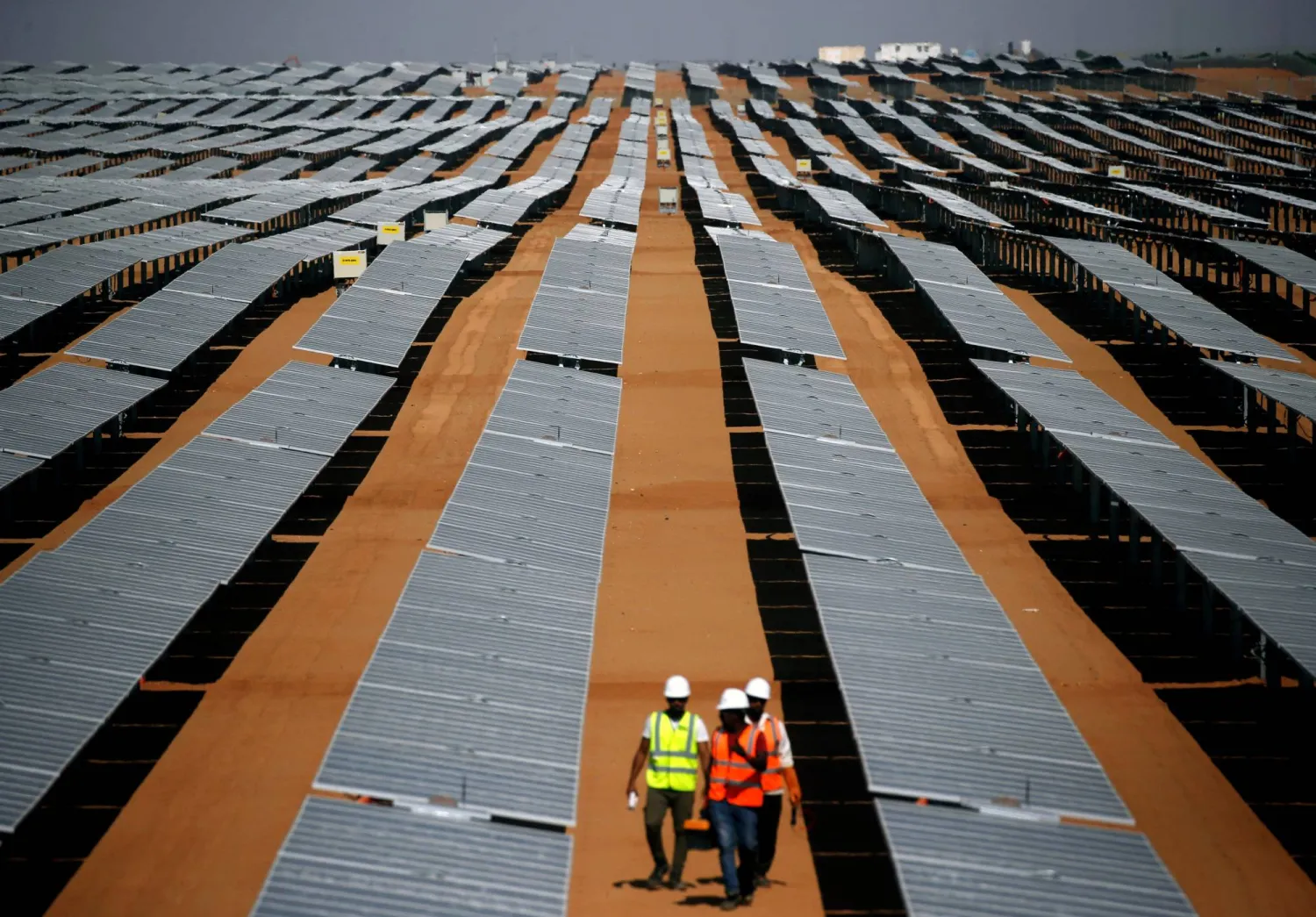
A general view of the Benban plant of photovoltaic solar panels in Aswan, Egypt, November 17, 2019. (Reuters)

Egypt has signed a preliminary financing agreement with Norway's Scatec and three multilateral development banks for a $650 million solar power project in the southern province of Qena, the cabinet said on Monday.

Egypt ‌is scaling ‌up renewable energy ‌projects ⁠to reduce its natural ⁠gas import bill, targeting a 42% share of renewable energy in its electricity generation mix by 2030.

The Dandara project in ⁠Nagaa Hammadi city will ‌have generation ‌capacity of 1 gigawatt and ‌battery storage of 200 megawatt ‌hours, the cabinet said.

The European Investment Bank, European Bank for Reconstruction and Development and African ‌Development Bank are participating in the financing arrangements while ⁠the ⁠National Bank of Egypt will take an equity stake in the project company.

The project will be built in two phases, each adding 500 megawatts of solar capacity and 100 megawatt hours of battery storage.


RSNF Launches HMS NEOM Under Second Phase of Sarawat Project

HAZEM, the first Saudi naval combat management system of its kind, is among the project’s most significant outcomes. It was developed through a strategic partnership between Saudi Arabian Military Industries (SAMI) and Spain’s Navantia - SPA
TT

RSNF Launches HMS NEOM Under Second Phase of Sarawat Project

HAZEM, the first Saudi naval combat management system of its kind, is among the project’s most significant outcomes. It was developed through a strategic partnership between Saudi Arabian Military Industries (SAMI) and Spain’s Navantia - SPA

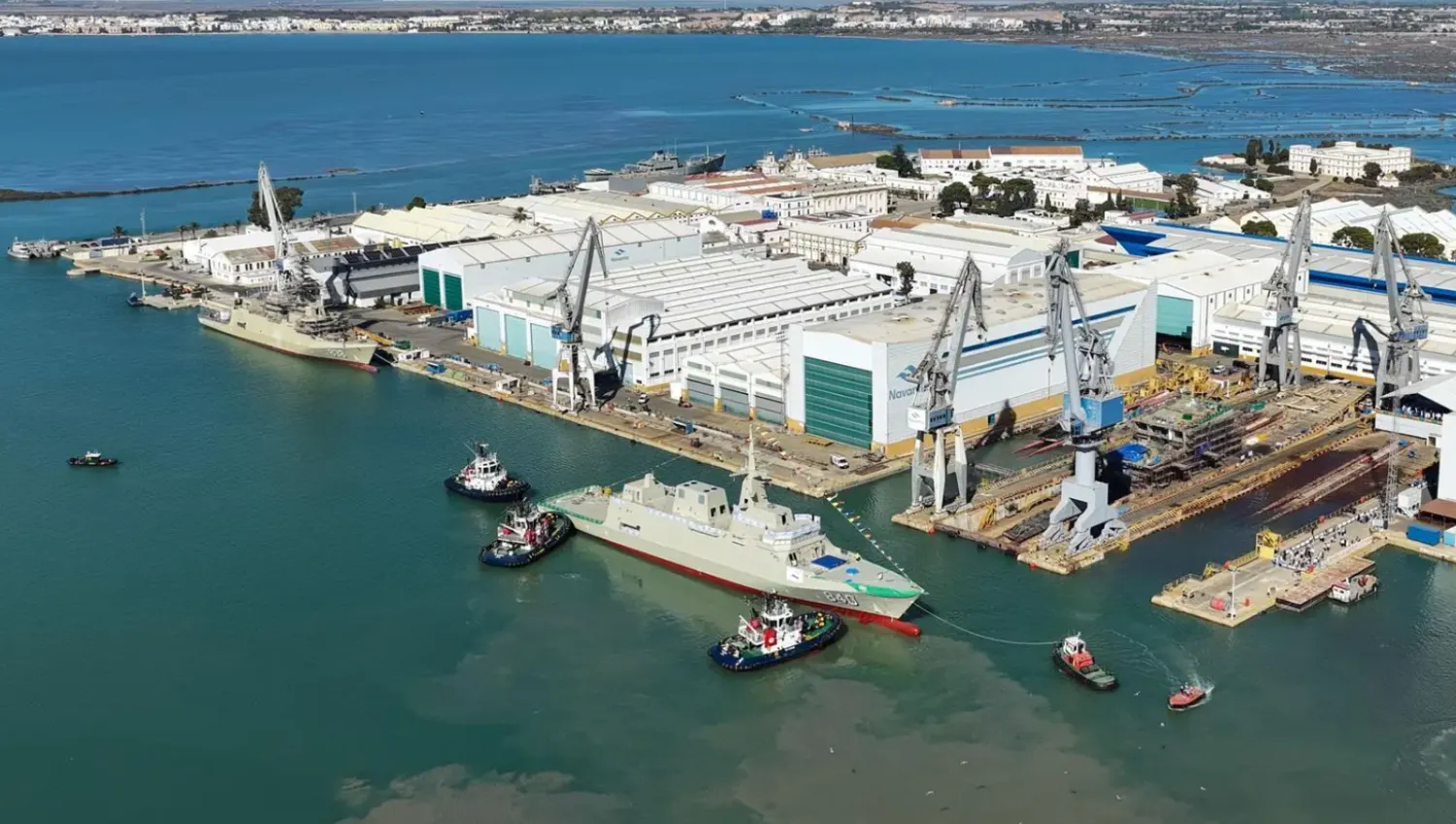
The Royal Saudi Naval Forces (RSNF) launched His Majesty's Ship NEOM (HMS NEOM), the second ship in the second phase of the Sarawat Project, at Navantia’s shipyard in San Fernando, Spain, following the completion of hull construction and assembly.

The outfitting, installation and integration of the ship’s systems will be completed in Saudi Arabia, followed by acceptance trials on Saudi lands and in Saudi waters, supporting technology transfer and the localization of military shipbuilding.

The launching ceremony was attended by Chief of Staff of RSNF Vice Adm. Mohammed bin Abdulrahman Alghuraiby, Saudi Ambassador to Spain Princess Haifa bint Abdulaziz bin Ayyaf Al Muqrin, Navantia Chairman Ricardo Domínguez, Chief Operating Officer at the company Gonzalo Mateo-Guerrero, San Fernando Shipyard Director Alberto Cervantes Sánchez, and senior naval officers from both countries.

Speaking at the ceremony, Vice Adm. Alghuraiby expressed appreciation for the unwavering support extended to the Armed Forces, particularly the RSNF, by Custodian of the Two Holy Mosques King Salman bin Abdulaziz Al Saud, Prince Mohammed bin Salman bin Abdulaziz Al Saud, Crown Prince and Prime Minister, and Minister of Defense Prince Khalid bin Salman bin Abdulaziz. He said this support has helped develop defense capabilities and enhance operational readiness and effectiveness.

He praised the Saudi-Spanish partnership and its role in developing naval capabilities, as well as the efforts of the project’s engineers and technicians in achieving this milestone. He emphasized that the Sarawat Project strengthens naval readiness and develops national expertise through a comprehensive package of logistics support and crew qualification and training, equipping personnel with the knowledge and experience needed to operate and maintain the ships.

The contract for the second phase of the Sarawat Project includes a comprehensive logistics support package, crew training programs and a plan to qualify more than 100 Saudi engineers, alongside the localization of combat systems integration and maintenance.

HAZEM, the first Saudi naval combat management system of its kind, is among the project’s most significant outcomes. It was developed through a strategic partnership between Saudi Arabian Military Industries (SAMI) and Spain’s Navantia.

As the regulator of the military industries sector, the General Authority for Military Industries (GAMI) supported the project through its industrial participation agreement with Navantia. The agreement includes specific targets for localization and the development of domestic capabilities, supporting Saudi Arabia’s military industries, advancing knowledge and technology transfer, and enhancing military readiness.

The second phase of the Sarawat Project comprises three Avante 2200 multirole corvettes: HMS AlMadinah, HMS NEOM and HMS AlUla. It builds on the first phase, which delivered five warships to the Royal Saudi Naval Forces.

The ships feature advanced systems to counter aerial, surface and subsurface threats, strengthening their ability to protect Saudi Arabia’s strategic interests and secure vital sea lanes.