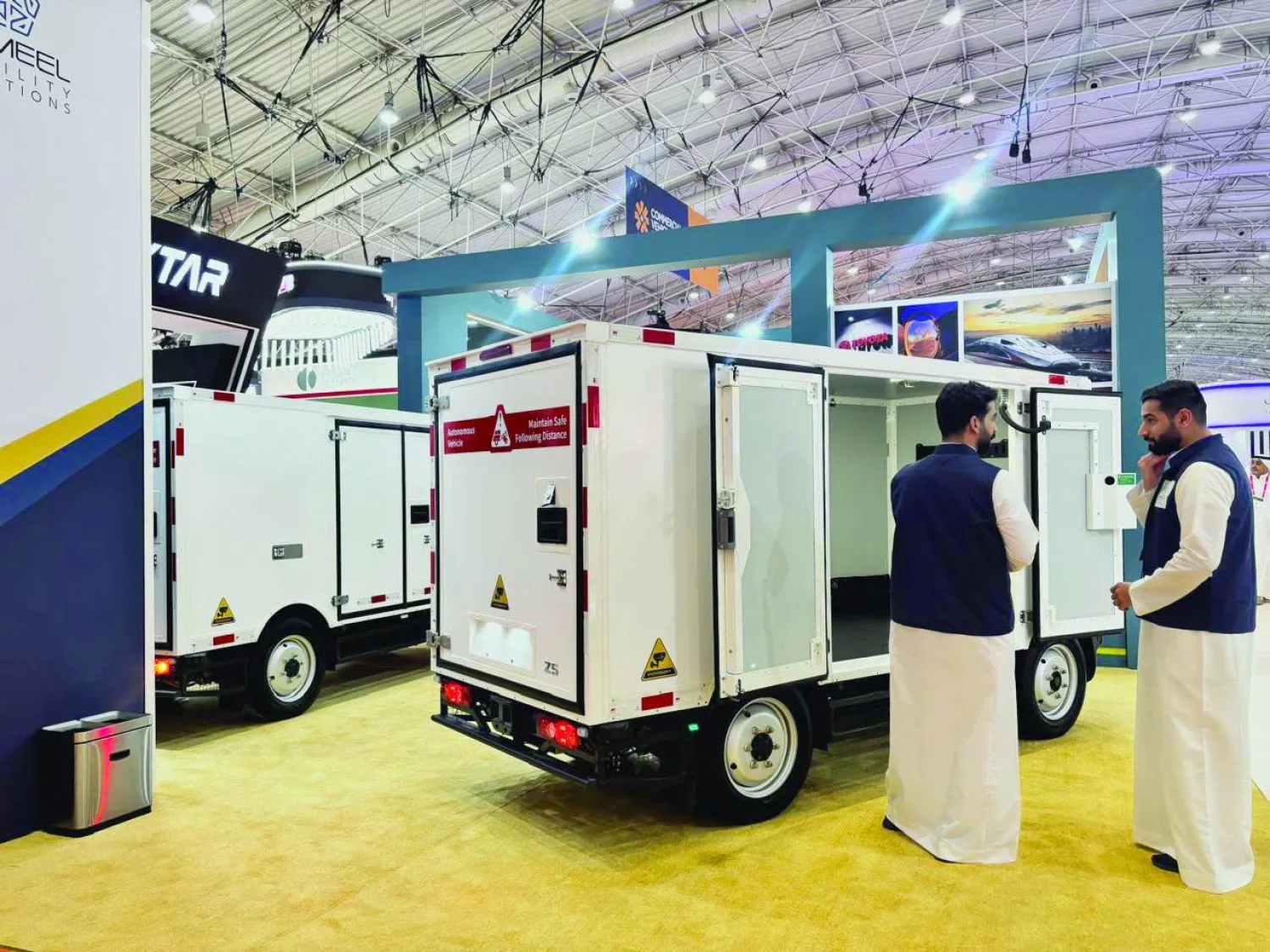

As the mobility landscape within Saudi cities continues to evolve, Riyadh is preparing to embark on a new experience in which no driver sits behind the wheel and the success of a journey does not depend on a driver's ability to navigate the road. By mid-November, 24 autonomous trucks are expected to begin trial operations on the capital's roads, opening the door for the technology to move from passenger transport into parcel and freight delivery.
The move follows the General Transport Authority's sponsorship in May of a memorandum of understanding between Abdul Latif Jameel Motors and China's Zeelos Technology, a company specializing in autonomous driving technologies, with the aim of adopting and enabling autonomous mobility solutions in the Kingdom.
The trucks expected to operate in Riyadh represent one of the practical applications of this cooperation. The first phase will focus on testing the ability of autonomous vehicles to transport parcels within the capital, paving the way for an assessment of their performance and efficiency before moving to broader stages of operation.
Ammar Baterdok, General Manager of Mobility Solutions Projects at Abdul Latif Jameel Motors, told Asharq Al-Awsat that the pilot operation will begin after the completion of geospatial mapping and the training of autonomous driving systems on local roads.
He explained that the fleet allocated to the first phase comprises 24 trucks of different sizes and models. Four have already arrived in the Kingdom, while another 20 are currently in transit, amid logistical challenges affecting shipments from China due to developments in the region.
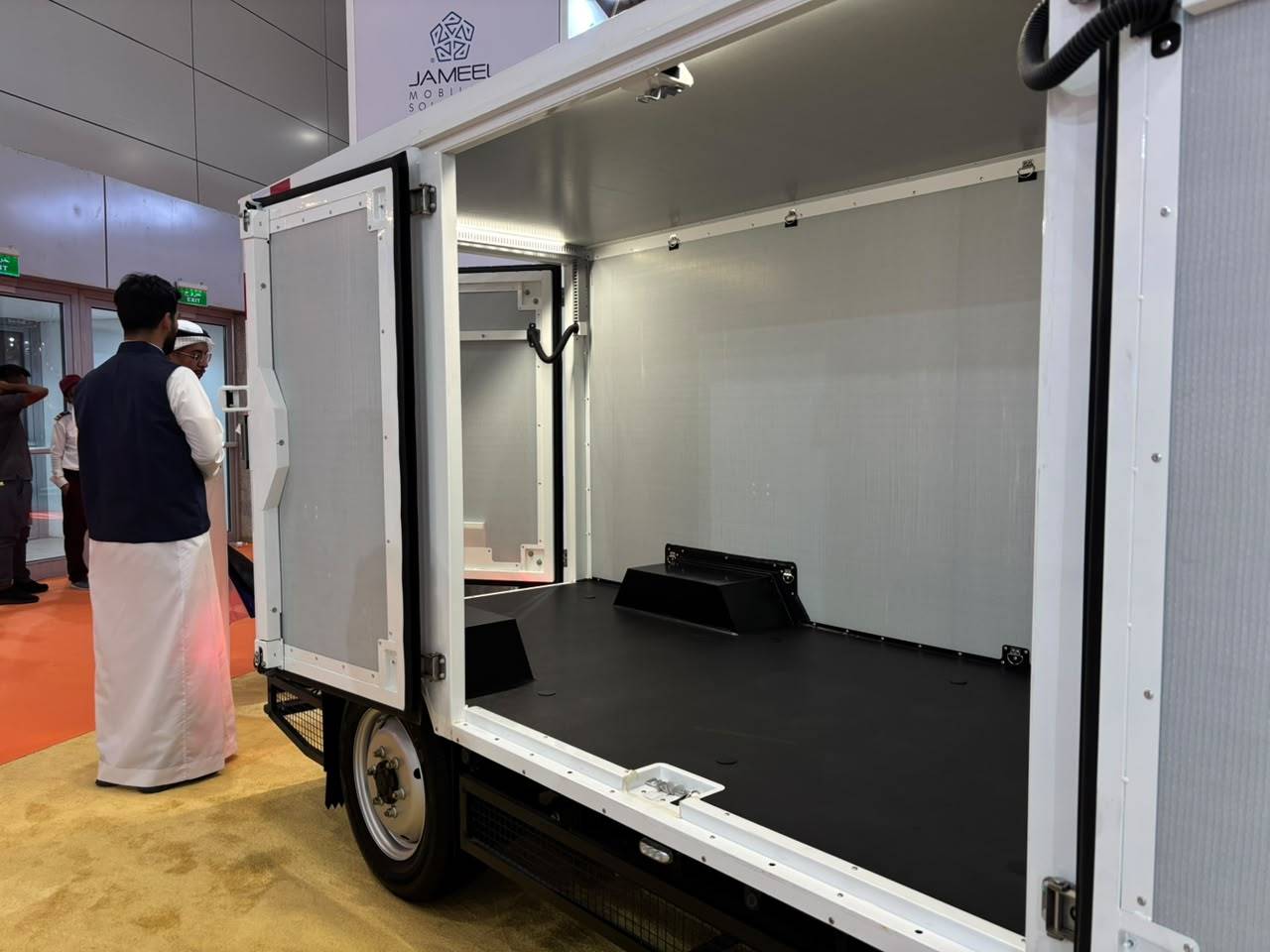
The trucks have payload capacities of 0.5 tons, 1.5 tons, and 2.5 tons. The fleet includes refrigerated and non-refrigerated models, with the remaining batches expected to arrive successively during October and November.
Free Trials with SPL
Abdul Latif Jameel Motors is carrying out the pilot phase in cooperation with Saudi Post | SPL to transport parcels from the main center to neighborhood centers in Riyadh. The service will be provided free of charge throughout the trial period.
Baterdok said the company is prepared to extend the pilot period for several months if necessary in order to collect sufficient operational and investment data to assess the fleet's performance and economic viability before making a decision on commercial expansion.
The phase will allow the company to test the vehicles under actual driving conditions within the capital, including their ability to navigate local roads and traffic, while also measuring their performance during different operating hours.
Millions Invested to Test Viability
The cost of the pilot phase amounts to millions of riyals, according to Baterdok, covering the purchase of vehicles, customs clearance, fees, and taxes. He explained that the investment is not intended to generate a direct financial return, but rather to test the technology's economic and technical viability and collect the data needed before decisions are made regarding commercial expansion and the size of the future fleet.
Operating Savings Could Exceed Truck Costs
The company is banking on autonomous trucks being able to reduce operating costs compared with conventional vehicles. Baterdok explained that the price of an autonomous truck is approximately half that of a conventional fuel-powered truck, whether gasoline or diesel.
The cost gap becomes wider during operation due to lower labor and maintenance expenses, in addition to the possibility of operating the trucks around the clock, except for the periods required for recharging.
In an analysis, logistics expert Hassan Al Halil told Asharq Al-Awsat that the most significant economic impact would come from reducing operating costs and improving supply-chain efficiency. He noted that autonomous trucks could increase fleet utilization, improve route planning, and allow for longer operating periods, particularly on repetitive and defined routes.
Al Halil added that it is too early to establish a fixed percentage for reductions in logistics costs in Saudi Arabia, given that savings vary depending on the type of shipment, distance, and operating model. He said that "the greatest opportunities for savings lie in operating labor costs, increasing truck utilization, reducing waiting times, improving fuel consumption, and maintenance," adding that "the economic value will come from increasing fleet productivity and completing more trips efficiently."
Baterdok, meanwhile, said the absence of a driver allows supply and delivery operations to be shifted to nighttime hours, increasing the efficiency of fleet utilization in major cities such as Riyadh by taking advantage of periods when road traffic is less dense.
According to company estimates, electricity costs account for only about 20 percent of the cost of conventional fuel, while maintenance expenses decline due to the absence of conventional engines and transmissions. Routine servicing therefore focuses to a greater extent on components such as brakes and tires.
The trucks rely on sensors and radar systems for autonomous driving, enabling them to operate in nighttime driving conditions without relying on human vision.
Road Readiness Determines the Path to Expansion
Despite these advantages, Al Halil believes that large-scale operation of autonomous trucks in Riyadh requires more than well-maintained roads. It requires highly accurate maps that are continuously updated, reliable communications systems, smart infrastructure, and coordination among the relevant authorities.
He pointed out that the main challenges within cities include congestion, sudden changes in routes, roadworks, unexpected behavior by some vehicles, dusty conditions, and the handling of loading and unloading points. He said that "the most realistic starting point will be defined, repetitive roads and logistics routes before moving to more complex urban operations."
From Passenger Transport to Parcel Delivery
The truck trial comes as Saudi Arabia expands its testing of autonomous mobility applications, as the technology moves from passenger transport into freight and delivery.
Last year, Saudi Arabia launched autonomous passenger vehicles and is currently operating more than five routes, including the Roshn area, Princess Nourah bint Abdulrahman University, and the route connecting Riyadh Gallery and Hayat Mall.
The service has transported more than 3,100 passengers across 1,600 trips under the supervision of the General Transport Authority, as part of efforts to test autonomous driving technologies in the Saudi urban environment.
The expansion of these applications into the freight sector opens a new field for testing the impact of autonomous driving on the efficiency of delivery operations within cities, at a time when e-commerce is expanding and supply chains are seeing growing demand for more efficient and flexible solutions.
From Roads to the Sky
Abdul Latif Jameel Motors' plans do not stop at ground transportation. The company has begun studying the market for drone-based goods delivery in preparation for entering the field once the necessary regulatory frameworks are in place.
Baterdok expects the process of developing regulations governing goods delivery by drones to take between one and a half and three years. He noted that the company is in discussions with global suppliers of trucks and drones designed to transport goods and individuals.
In evaluating these solutions, the company is focusing on technical readiness, range, speed, the ability of vehicles and aircraft to operate under different weather conditions, and resistance to wind, with the aim of achieving operational readiness as soon as official licenses are issued.
Accordingly, Abdul Latif Jameel Motors' plan is not limited to testing autonomous trucks in Riyadh. It extends to developing a broader system of autonomous mobility solutions, beginning with ground transportation and eventually reaching air-based goods delivery, while testing the technical and economic viability of each solution before moving from trials to commercial expansion.