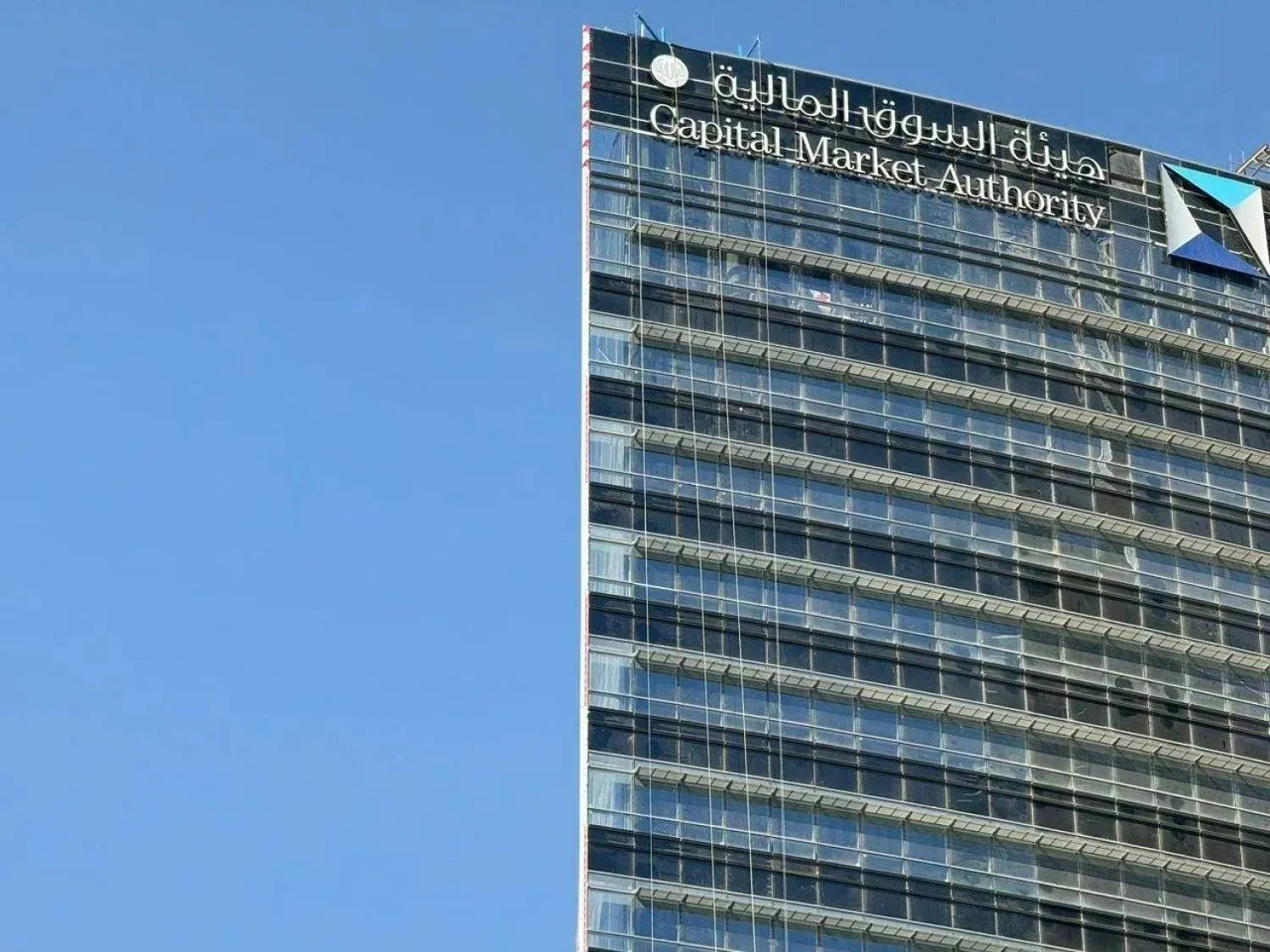
Saudi Money Market Funds Face Investment Reshuffle

The Saudi Capital Market Authority’s headquarters in Riyadh (Asharq Al-Awsat)
TT

Saudi Money Market Funds Face Investment Reshuffle

The Saudi Capital Market Authority’s headquarters in Riyadh (Asharq Al-Awsat)

Saudi money market funds are entering a new phase of liquidity management and portfolio restructuring as new rules cap foreign investments at 5% of net asset value.

Fund managers will have to balance returns, liquidity and risk more carefully.

The rules do not require funds to exit existing foreign investments immediately. The Capital Market Authority has given managers transition periods to bring portfolios into compliance. This allows deposits and murabaha transactions to mature before funds are reallocated, avoiding early exits that could hurt returns or disrupt liquidity management.

The measures also require foreign counterparties to hold investment-grade credit ratings, strengthening protection against overseas exposure risks.

Financial analysts say the main impact may not be an immediate shift in capital flows. Instead, the rules are likely to reshape money market fund portfolios and how managers allocate liquidity between domestic and foreign instruments, based on returns, liquidity and credit quality.

As investment options in the Saudi market expand, the restructuring could direct greater attention toward domestic liquidity instruments. The transition periods will allow managers to adjust gradually, retain flexibility over existing investments and reduce the risks of rapid reinvestment.

Investor protection

Financial analyst Abdullah Al-Jabali told Asharq Al-Awsat that the move was part of the Capital Market Authority’s efforts to regulate higher-risk investments and strengthen investor protection, particularly amid global market shifts and continued uncertainty over interest rates.

The decision seeks to reduce Saudi money market funds’ exposure to foreign investments and limit the impact of related volatility, he said. The timing and scale of interest-rate cuts in the coming years remain unclear.

Al-Jabali said the measures go beyond imposing a cap on foreign investments. They also tighten requirements governing the entities through which funds may invest, taking into account credit ratings, solvency and reliability. This would help reduce risk and safeguard investors’ money.

The rules also seek to prevent money market funds from concentrating investments in instruments or entities that could be difficult to exit when needed. This would strengthen liquidity and improve funds’ ability to respond to market changes, he said.

Al-Jabali expected further regulations to follow, potentially covering other foreign investments such as real estate funds, financing funds and foreign sukuk. The measures could also extend to funds’ private-equity investments outside the kingdom.

He said the changes reflected the authority’s efforts to reduce risks linked to some investment practices, strengthen the investment environment and protect investors in the Saudi market.

Financial analyst Tariq Al-Atiq told Asharq Al-Awsat that the decision was primarily intended to reduce risk, strengthen investor protection and impose greater discipline on the placement of liquidity outside the kingdom.

Money market funds typically invest in deposits, murabaha transactions and short-term sukuk. Financial companies affiliated with banks manage a large proportion of these funds, he said.

A fund valued in Saudi riyals does not necessarily hold all its investments inside the kingdom, Al-Atiq said. Some liquidity may be placed with Gulf or foreign banks in search of higher returns. The decision would reduce that exposure and return some liquidity to the domestic market.

Giving funds up to two years to comply takes into account the fixed maturities of deposits and murabaha transactions, he said. Early exits could hurt fund performance, while allowing foreign deposits to expire without renewal would support a gradual, orderly transition.

Gradual compliance

The Saudi Capital Market Authority has capped foreign investments by public money market funds at 5% of net asset value and given managers transition periods to bring existing holdings into compliance.

Under a circular sent to capital market institutions, managers of public money market funds whose foreign investments exceed 5% must comply with the cap within two years of the circular’s date.

The requirement also affects transactions made during the transition. Until compliance is achieved, managers must not make an investment or enter into or renew any transaction that would breach the limit.

Funds with foreign investments exceeding 20% of net asset value face a shorter deadline. Their managers must reduce that exposure to below 20% within six months of the circular’s date.

They must then continue reducing foreign investments until they reach the final 5% cap within the timeframe set by the circular.

The rules therefore set different paths based on the level of foreign exposure. Funds above the 5% cap have up to two years to comply, while those above 20% must first bring their exposure below 20% within six months.

The authority also required all foreign investments by public money market funds to be made with counterparties holding investment-grade credit ratings issued by licensed credit-rating agencies.

Managers whose funds hold foreign investments that do not meet this requirement must bring them into compliance within two years of the circular’s date.

The Capital Market Authority stressed that capital market institutions must comply with the circular, the Capital Market Law and its implementing regulations. It designated the Collective Investment Schemes Compliance Department to answer questions about the new requirements.


UK Govt Promises to Save Businesses £800 Million in Paperwork and Tariffs

 Britain's Prime Minister Andy Burnham meets pharmacy staff before receiving an annual seasonal flu vaccination at Kapoor Pharmacy Services in Chorlton-cum-Hardy in Manchester on October 22, 2026. (AFP)
Britain's Prime Minister Andy Burnham meets pharmacy staff before receiving an annual seasonal flu vaccination at Kapoor Pharmacy Services in Chorlton-cum-Hardy in Manchester on October 22, 2026. (AFP)
TT

UK Govt Promises to Save Businesses £800 Million in Paperwork and Tariffs

 Britain's Prime Minister Andy Burnham meets pharmacy staff before receiving an annual seasonal flu vaccination at Kapoor Pharmacy Services in Chorlton-cum-Hardy in Manchester on October 22, 2026. (AFP)
Britain's Prime Minister Andy Burnham meets pharmacy staff before receiving an annual seasonal flu vaccination at Kapoor Pharmacy Services in Chorlton-cum-Hardy in Manchester on October 22, 2026. (AFP)

British ‌Prime Minister Andy Burnham said on Friday his government would help businesses save almost £800 million ($1 billion) a year by cutting back on paperwork and extending the suspension of some trade tariffs.

Speaking ahead of his government's first annual budget statement ‌next week, Burnham ‌said the measures ‌would ⁠give businesses "breathing space to ⁠grow".

The changes would make compliance guidance simpler and easier for small firms, saving £290 million, and extend £155 million of import tariff suspensions on 250 products ⁠used by businesses, Britain's finance ‌ministry ‌said.

Another measure would reduce duplicative reporting ‌burdens for asset management firms, ‌saving £105 million, and remove £116 million in costs for businesses involved in residential property transactions, the government said in ‌a statement.

British finance minister John Healey is due ⁠to ⁠announce his first budget on Wednesday next week and he has promised to reduce the cost of business as well as help households with the high cost of living – though his ambitions will be limited by the fragile state of the public finances.


Oil Prices Rise as Supply Concerns Linger amid Middle East Attacks

Oil pumps operate after sunset outside Vaudoy-en-Brie, near Paris, France, March 18, 2026. (Reuters)
TT

Oil Prices Rise as Supply Concerns Linger amid Middle East Attacks

Oil pumps operate after sunset outside Vaudoy-en-Brie, near Paris, France, March 18, 2026. (Reuters)

Oil prices rose on Friday after Houthi attacks in Saudi Arabia stoked concerns of further disruption to energy supplies from the Middle East.

Brent crude futures climbed 58 cents, or 0.5%, to $113.75 a barrel as of 0439 GMT, while US West Texas Intermediate crude futures rose 66 cents, or 0.7%, to $100.13.

On a weekly basis, Brent, which settled at its highest since May 4 on Thursday, is set to close higher for a third ‌successive week, while WTI ‌is on track to finish lower, ‌following ⁠two weeks of gains.

"Markets are increasingly worried about renewed escalation in the Gulf, a scenario that could threaten oil ⁠flows that have so far remained remarkably ‌resilient," ING analysts said in a ‌note on Friday.

"Re-escalation seems the most likely path. Even ‌if tensions don't re-escalate, the mere possibility is likely ‌to keep a sizeable geopolitical risk premium embedded in prices."

"The key factors ⁠to monitor ⁠now are the extent of actual disruption and the time needed to restore operations, as these will ultimately determine how much of a supply risk premium the market is willing to pay," said Linh Tran, an analyst at XS.com.

"If attacks persist and delay deliveries, elevated prices will have a firmer foundation."

In Libya, an oil pipeline valve from the Hamada and Tahara oilfields to Zawiya port has been shut, leading to a reduction in production at both fields, the head of the National Oil Corporation told Reuters on Thursday.


Port Security and Trade Continuity: A New Formula for Saudi Competitiveness

A panel discussion featuring Professor Waheed Sami Abu Shanab (Conference)
TT

Port Security and Trade Continuity: A New Formula for Saudi Competitiveness

A panel discussion featuring Professor Waheed Sami Abu Shanab (Conference)

Port competitiveness is no longer just about handling more ships and containers. Keeping trade moving and infrastructure secure against physical and cyber threats has become just as critical, as ports grow more reliant on digital systems and supply chains become increasingly complex.

The economic fallout from port disruptions and their impact on global trade took center stage at a session titled "Securing Infrastructure" during the Saudi Maritime and Logistics Congress 2026, which opened Wednesday in Jeddah with maritime and infrastructure security experts in attendance.

Discussions focused on threats facing ports and shipping companies, particularly cyberattacks capable of crippling operations and disrupting trade, and the need to strengthen port readiness to keep services running and limit economic losses.

Professor Waheed Sami Abu Shanab, a professor of marine engineering at King Abdulaziz University's Faculty of Maritime Studies, said Saudi ports now face a challenge that goes beyond expanding capacity: withstanding disruptions while keeping trade flowing at the lowest possible cost.

Speaking to Asharq Al-Awsat on the sidelines of the session, Abu Shanab said Saudi Arabia's ports on the Red Sea and Arabian Gulf gave the kingdom a strategic advantage as international trade routes shift. But making the most of that position requires greater investment in operational resilience, logistics connectivity and cybersecurity.

Investments top $3.7 billion

The challenges come as Saudi Arabia ramps up investment in port infrastructure. Its ports now have 34 logistics centers, including 17 at Jeddah Islamic Port, backed by investments exceeding 14 billion riyals ($3.7 billion), alongside projects to upgrade container terminals and boost handling capacity.

Abu Shanab said the investments include more than 2 billion riyals to develop a container terminal at Jubail Port and an initial 1.6 billion riyals for a fourth container terminal at Jeddah Islamic Port. Other projects involve upgrading cargo-handling equipment and expanding the use of modern operating systems.

He said future investment must focus on operational efficiency, reserve capacity and stronger links between ports, roads, railways and logistics hubs to absorb sudden surges in shipping volumes and redirect cargo when routes are disrupted.

Abu Shanab floated a preliminary proposal for an additional 10 billion to 20 billion riyals in investment over five years to strengthen strategic ports' readiness.

He stressed that the figure was a proposed planning scenario, not an official assessment of the sector's needs or an approved budget.

Cyberattacks threaten trade beyond ports

Abu Shanab warned that growing reliance on digital systems exposes ports to cyber threats whose economic impact could ripple through factories, markets and supply chains.

He pointed to the 2017 cyberattack on global shipping group Maersk, which the company estimated cost it between $200 million and $300 million after widespread disruption to its operations and systems.

A failure of digital systems managing containers, vessel schedules and cranes could leave cargo stranded, drive up delay and insurance costs, and undermine shipping companies' commitments and customer confidence, he said.

To illustrate the potential costs, Abu Shanab offered a hypothetical scenario: a delay affecting 5,000 twenty-foot equivalent units (TEUs), each incurring an additional 1,000 riyals in costs, would generate a direct bill of 5 million riyals before indirect losses.

He stressed that the calculation did not reflect actual losses at Saudi ports but illustrated the potential cost of disruptions. Investing in prevention and business continuity, he argued, could be cheaper than shutting down a strategic port.

Competitiveness goes beyond handling fees

Abu Shanab said regional ports should be judged not simply by their handling charges but by the total cost of getting goods from ships to markets, including customs clearance, storage, inland transport and schedule reliability.

Saudi ports overseen by the Saudi Ports Authority handled about 8.3 million TEUs in 2025, up 10.58% from a year earlier, highlighting growing activity and the need to expand capabilities without compromising service efficiency.

Artificial intelligence could help schedule vessel arrivals and allocate berths, while upgraded handling equipment could cut waiting times and fuel, storage and transportation costs, making services more reliable for shipping lines, he said.

"The most competitive port is not necessarily the one with the lowest fees, but the one offering the lowest total logistics cost, the greatest reliability and the fastest access to markets," Abu Shanab said.

Simulating crises before they strike

Abu Shanab called for a national simulation model using digital twins and artificial intelligence to test how ports and supply chains would respond to facility shutdowns or shifting maritime routes, and measure the time and cost of restoring operations.

He also urged stronger protection for critical infrastructure, including submarine cables, energy and telecommunications facilities, alongside improved vessel monitoring systems, disaster recovery centers and backup operating plans to keep essential services running.

Saudi Arabia's ports on two coastlines, coupled with expanding logistics services and transport networks, offer a foundation for more reliable supply chains, he said. But realizing that potential depends on matching existing investments with operational and technological readiness.

Protecting maritime infrastructure, Abu Shanab concluded, is no longer a standalone security or technical concern. It is central to port competitiveness and Saudi Arabia's ability to keep trade flowing, attract shipping lines and secure long-term investment.