'AlUla Peregrina': From Fields to Global Markets

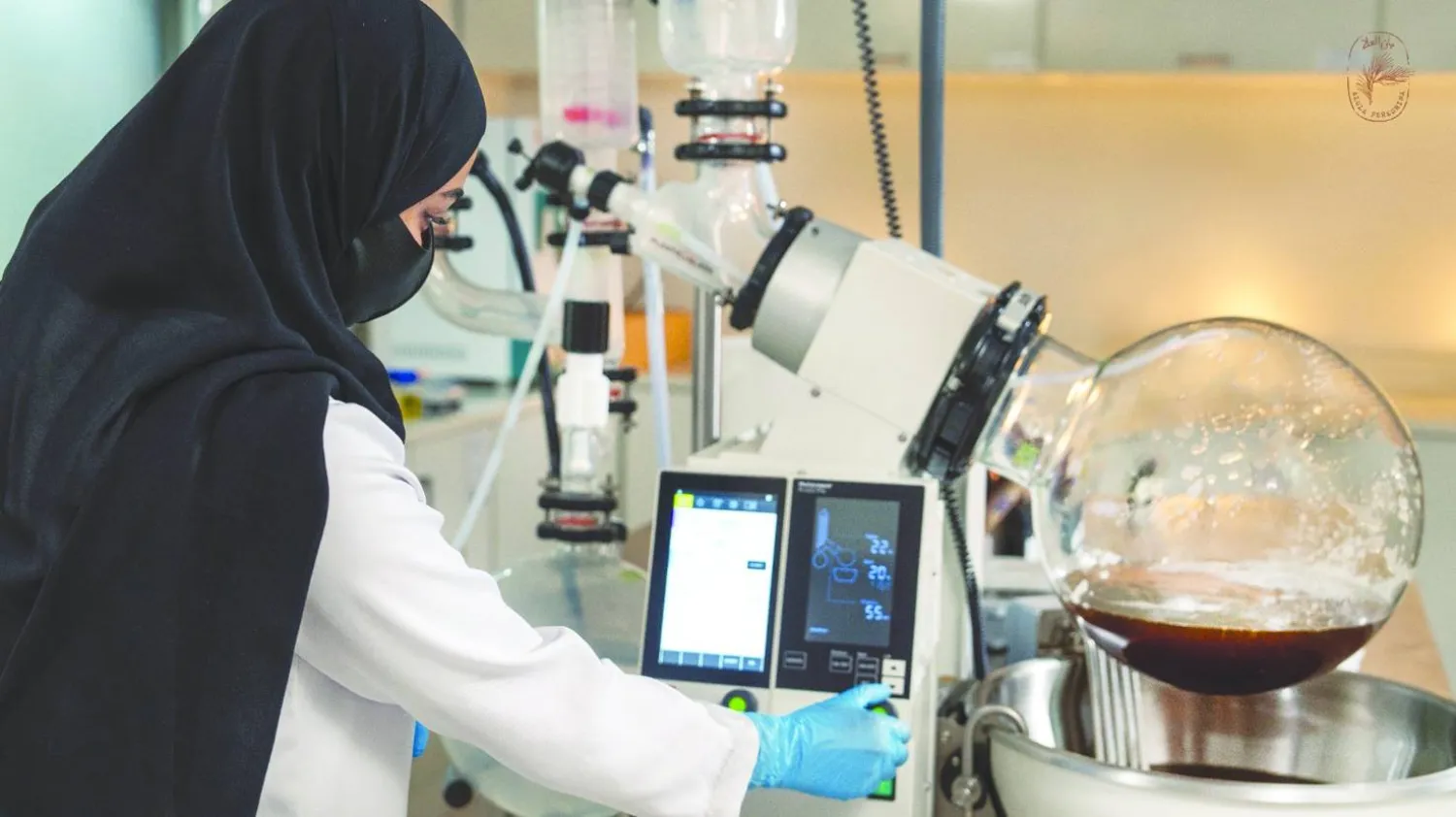
A Saudi woman works on products derived from the Peregrina tree in AlUla.
TT

'AlUla Peregrina': From Fields to Global Markets

A Saudi woman works on products derived from the Peregrina tree in AlUla.

In AlUla, where the Peregrina tree has been part of the local environment for generations, the tree is taking a new path from fields to laboratories and global markets. Rather than simply marketing raw materials, AlUla Peregrina is seeking to develop oils, extracts, and natural ingredients for applications in beauty and personal care, adding value to a local resource before it reaches overseas markets.

AlUla Peregrina was established in 2021 by the Royal Commission for AlUla, with the aim of developing economic uses for the tree and its extracts. The company is now expanding its applications in skincare, haircare, and wellness products, while also developing its presence in international markets.

The strategy comes as efforts to increase the added value of local resources and expand non-oil exports gain importance. The company is betting that developing and manufacturing ingredients within Saudi Arabia can generate greater economic returns than exporting raw materials, while creating opportunities for products that carry Saudi knowledge and technology into international markets.

In an exclusive interview with Asharq Al-Awsat, Eng. Abobakar Alanazi, Chairman of the Board of AlUla Peregrina, said the company's ambition is to establish AlUla Peregrina as a leading Saudi platform for high-quality active natural ingredients, expanding from AlUla into regional and global markets, with a focus on skincare, haircare, and personal care.

Added Value

According to Alanazi, the company is gradually building a presence in international markets, benefiting from growing demand for natural ingredients with traceable origins and scientific evidence, alongside increasing interest in responsible supply chains.

He said the goal extends beyond exporting a Saudi product to developing ingredients and products based on local natural resources and combining scientific research, development, and manufacturing within Saudi Arabia, thereby increasing the product's added value before it reaches overseas markets.

Development efforts focus on the Arabian Peregrina tree, Moringa peregrina, and its natural compounds, including ceramides, plant exosomes, bioactive peptides, and antioxidants. Alanazi said the company has developed a range of oils and extracts that can be used in various skincare applications.

The development of these products is based on scientific research, laboratory testing, and clinical evaluations to verify their effectiveness before moving into commercial applications. Alanazi said these efforts have resulted in four registered patents, reflecting part of the company's research and development work.

Hospitality Sector

In the hospitality sector, Alanazi said the company is developing customized formulations and solutions for hotels and spas, inspired by Arab traditions of personal care but presented in contemporary formulations. These solutions include formulations and fragrances that can be tailored to reflect the identity of each establishment rather than offering a standardized product.

He explained that product development begins by identifying the needs of the market and partners, followed by scientific and technical evaluation before arriving at the final formulation.

On sustainability, he said responsible practices form part of the company's business model and supply chain, from cultivation and harvesting in cooperation with local farmers to the processing and development of ingredients in AlUla. The company is focusing on tracing raw materials and identifying their sources and journey throughout the production process, alongside responsible sourcing practices.

He noted that the supply chain has undergone verification by the Union for Ethical BioTrade (UEBT) in relation to responsible sourcing, in line with relevant international standards. He said developing processing and production operations within Saudi Arabia contributes to increasing local added value and supports the emergence of an integrated economic value chain around the activity in the region.

The company is also working to strengthen the participation of local farmers and suppliers, transfer knowledge, and develop the capabilities needed to support the growth of the natural ingredients sector in Saudi Arabia.

Economic Diversification

Alanazi said AlUla Peregrina's business model aligns with several objectives of Saudi Vision 2030, particularly economic diversification, increasing local content, and developing value-added industries, while also benefiting from growth in the tourism and hospitality sectors.

“We are transforming a natural resource from AlUla into ingredients and products that are developed and manufactured locally, creating economic value beyond the sale of raw materials,” he said.

He added that the growth of tourism and hospitality in Saudi Arabia is creating opportunities to develop Saudi solutions for hotels, resorts, and the wellness sector that are connected to the identity of the place and the visitor experience.

He pointed to an opportunity to develop a specialized sector for natural ingredients and their applications in personal care and beauty that could expand beyond the domestic market, bringing together natural resources, scientific research, manufacturing, and services linked to tourism and hospitality.

International Expansion

The Chairman of the Board said exports are a key pillar of the company's growth strategy, amid growing global demand for natural ingredients with traceable origins and scientific evidence supporting their use.

“What distinguishes our model is that the added value is created within Saudi Arabia, starting with the natural resource and research and development, through processing and manufacturing, and ultimately to the finished product or ingredient tailored for overseas markets,” he said.

He explained that the company is not simply seeking to export raw materials, but to develop specialized, higher-value products and ingredients.

Alanazi revealed that the company is working to expand its commercial relationships and presence in international markets through trade fairs and specialized platforms, as well as by building partnerships with global companies and brands. He said international expansion could support the growth of Saudi non-oil exports while opening new markets for products and ingredients developed locally.

The long-term goal, he added, is for products developed in AlUla to reach global markets under the “Made in Saudi” brand, reflecting not only their country of origin but also the development, knowledge, and manufacturing added to the products locally.

Crypto Platform Binance Confirms ‘Complex’ $6.3 Bn Hack

Representations of cryptocurrencies are seen in front of displayed Binance logo in this illustration taken November 10, 2022. (Reuters)
TT

Crypto Platform Binance Confirms ‘Complex’ $6.3 Bn Hack

Representations of cryptocurrencies are seen in front of displayed Binance logo in this illustration taken November 10, 2022. (Reuters)

Cryptocurrency platform Binance said Friday it was working to resolve a "complex attack" that hit around $6.3 billion in funds, with about half that amount frozen to prevent a massive theft. 

The company -- the world's largest crypto exchange by daily trading volumes -- said investigations had "uncovered additional points of breach", contrary to initial findings that suggested the hack involved a single compromised laptop. 

"This was a complex attack, and we are doing all we can in coordination with law enforcement to resolve it," Binance wrote on X. 

The firm earlier posted a series of sometimes contradictory messages, insisting that "user funds are completely safe" but also saying it would "cover all losses." 

The company confirmed on its X account for Latin America that "the total estimated impact is around $6.3 billion." 

That is four times the amount impacted in the biggest-ever cyberattack of its kind to date: $1.5 billion taken in February last year from the Bybit platform. 

Binance warned the figure "may continue to increase as our teams work closely with law enforcement, issuers, blockchain intelligence firms and industry partners to trace and freeze additional assets." 

It said around $3 billion in affected assets had been frozen. 

The 2023 Bybit heist was attributed at the time to a group of hackers affiliated with North Korea called TraderTraitor. 

Blockchain investigation firm TRM Labs said Thursday it had "high confidence" that the Binance hack was also orchestrated by TraderTraitor, citing "robust on and off-chain intelligence." 

"Several features of this attack match earlier North Korea-linked heists," TRM said. 

TraderTraitor is believed to be part of Lazarus Group -- which gained notoriety in 2014 when it was accused of hacking into Sony Pictures as revenge for "The Interview," a film that mocked North Korean leader Kim Jong Un. 

- Fund freeze - 

At about 0900 GMT Friday, Binance said it was on track to resume withdrawals in 45 hours, after announcing earlier that all deposits and withdrawals had been "temporarily suspended". 

"Deposits remain unaffected," it said. 

The company had said on X that initial investigation suggested the hack involved a compromised laptop belonging to a "DevOps engineer," allowing the unauthorized party to access a "service container" and execute unauthorized withdrawal transactions. 

"We have found no evidence of any private key leaks from wallets," it said, promising to share a detailed technical analysis once investigations were complete. 

But it said later that "subsequent investigation has uncovered additional points of breach." 

Paolo Ardoino, the boss of Tether -- a company that issues a cryptocurrency known as USDT -- said his firm froze about $1.6 billion "related to a potential Binance exchange hack." 

Jeremy Allaire, who runs cryptocurrency platform Circle, said his company had frozen more than $800 million in USDC. 

USDT and USDC are both "stablecoins," or digital currencies whose value is linked to a traditional currency, the US dollar. 

The US Department of Justice and the FBI did not immediately respond to requests for comment. 

- Crypto prices tumble - 

For several hours before Binance confirmed the attack, industry observers said hackers had managed to reach the platform. 

The prices of most major cryptocurrencies fell on news of the cyberattack, except for the stablecoins, which by definition can only fluctuate within tight margins. 

Bitcoin and Ethereum plunged nearly five percent and nearly six percent respectively on the news. BNB, native to Binance, tumbled nearly 10 percent. 

The attack on Binance comes as many observers express worries that the ever-expanding capabilities of artificial intelligence (AI) models could compromise cryptography and IT security protocols. 


TotalEnergies to Cut Diesel Prices to €2.15 per Liter at 705 French Stations

A sign of TotalEnergies on a fuel station in Paris, France on October 9, 2022. (AFP)
TT

TotalEnergies to Cut Diesel Prices to €2.15 per Liter at 705 French Stations

A sign of TotalEnergies on a fuel station in Paris, France on October 9, 2022. (AFP)

TotalEnergies said on Friday it will cut diesel prices to €2.15 ($2.40) a liter at 705 French stations from ‌Saturday, October ‌31.

The price ‌reduction ⁠comes after France ⁠announced it would release 10 million barrels of diesel from its strategic reserves on November ⁠1.

TotalEnergies said it ‌is ‌passing on the savings ‌from these older, cheaper ‌fuel stocks immediately, without waiting for physical deliveries to arrive.

The company ‌said in a statement the Access ⁠stations ⁠account for 60% of its fuel sales in the country, adding it will maintain a nationwide diesel price cap of €2.25 per liter.


Türkiye’s Q3 Tourism Revenues Rise 5%, Minister Sees Full-Year Topping $65 Billion

People walk on a small street that leads to the historical Galata Tower, Istanbul, Türkiye, April 25, 2025. (Reuters)
TT

Türkiye’s Q3 Tourism Revenues Rise 5%, Minister Sees Full-Year Topping $65 Billion

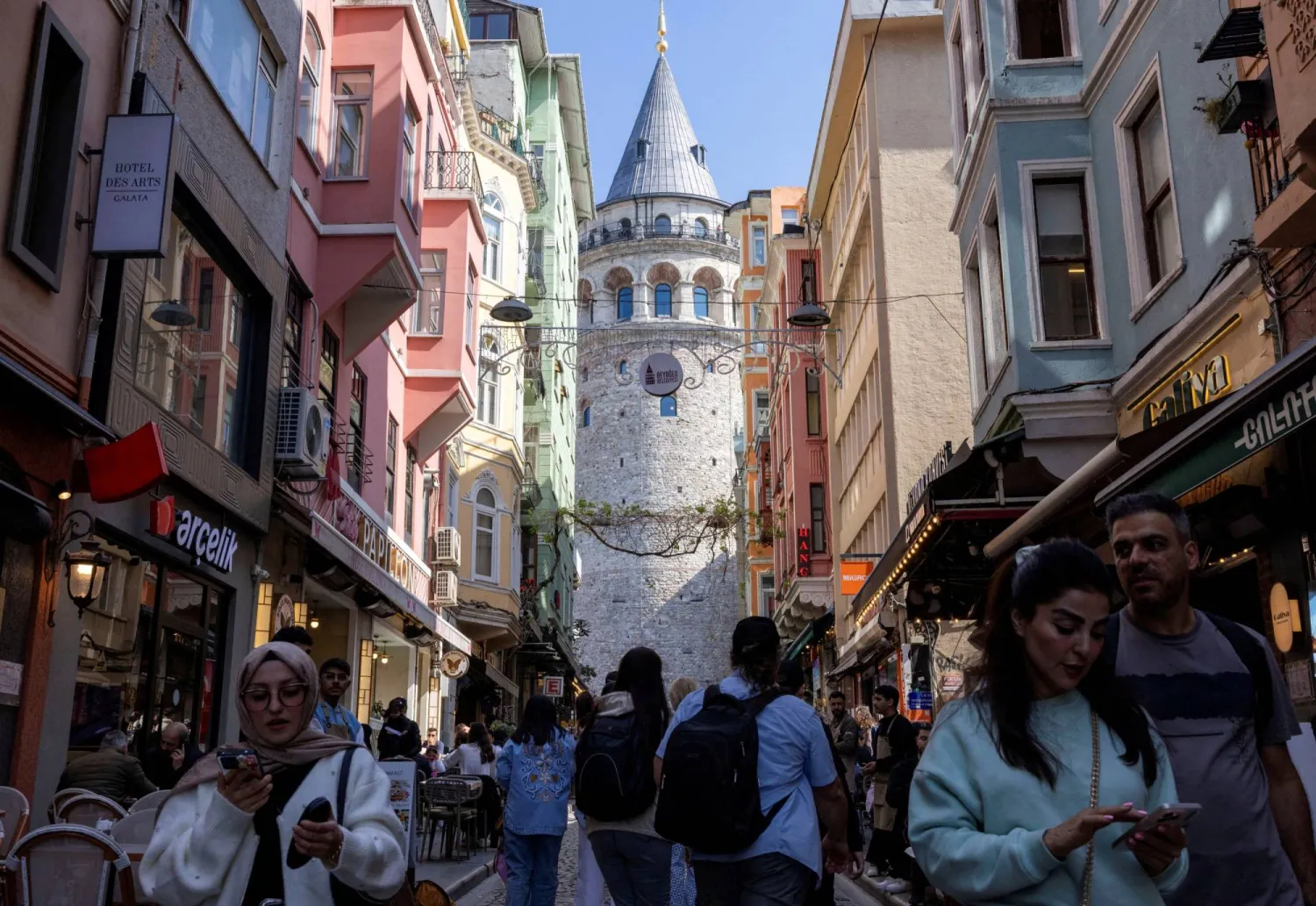
People walk on a small street that leads to the historical Galata Tower, Istanbul, Türkiye, April 25, 2025. (Reuters)

Türkiye’s tourism revenues rose 5% year-on-year to $25.53 billion in the third quarter, with revenues in the first nine months increasing 2.4% to $51.29 billion, Turkish Statistical Institute data showed on Friday. 

Tourism Minister Mehmet Nuri Ersoy said Türkiye was on track to generate more than $65 billion in full-year tourism revenues. 

"Longer-than-expected average stays and higher overnight spending have boosted tourism revenues," Ersoy told a news conference on the sector's performance in the ‌first nine ‌months of the year. 

The number of visitors ‌fell ⁠1% year-on-year to ⁠23.37 million in the third quarter, while total arrivals reached 49.13 million in the January-September period, the data showed. 

Separately, data from the Tourism Ministry showed that the number of foreign visitors rose 0.4% year-on-year to 6.11 million in September. However, foreign arrivals fell 1.52% to 40.93 million ⁠in the first nine months of the ‌year. 

Russians accounted for the ‌largest group of foreign visitors in September, with 979,647 arrivals, ‌followed by visitors from Germany, Britain, Iran and Poland. 

Average ‌overnight spending per visitor declined 1.3% year-on-year to $723 in the third quarter. For the first nine months, it fell 9.6% to $778. 

Ersoy said average visitor stays continued to exceed expectations, but warned ‌of risks to the sector in the final quarter, including a possible escalation of ⁠the Iran ⁠war, as well as an increase in drone attacks on cities amid the Russia-Ukraine war. 

In 2025, revenues increased by 6.8% from the previous year to a record $65.2 billion, according to official data. Before the Iran war began, the government's target for this year was $68 billion. 

Lower revenues could add to Türkiye's current account deficit, which is already under pressure from soaring energy prices due to the fallout from the Iran war. 

The war has hurt demand for travel to Türkiye's historic sites and Mediterranean beaches.