


Ban on US Diesel Exports Would Hurt, Not Help Fuel Markets, Analysts Say

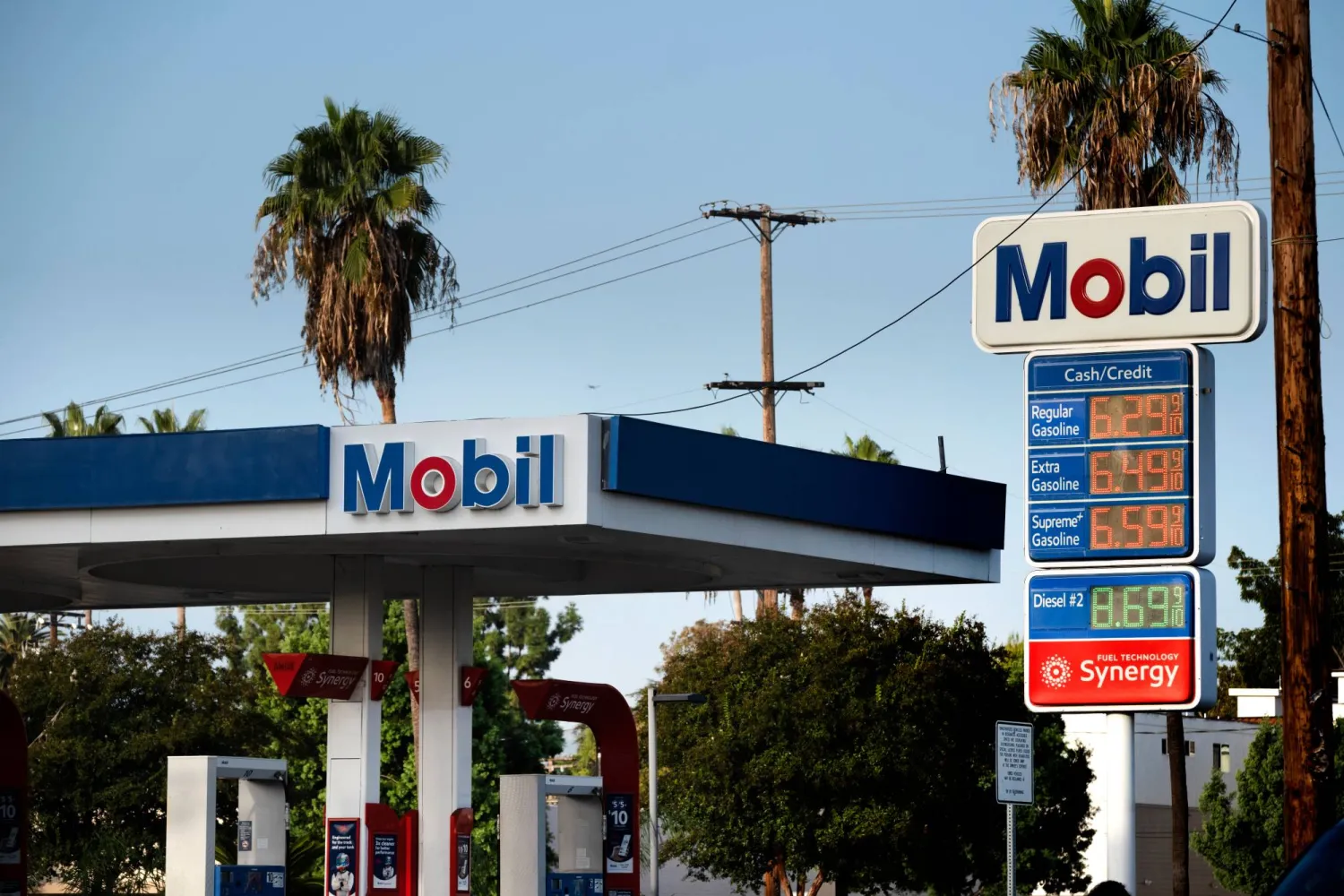
Gas and diesel prices are displayed at a Mobil station, Tuesday, Sept. 22, 2026, in Los Angeles. (AP Photo/Richard Vogel)
TT

Ban on US Diesel Exports Would Hurt, Not Help Fuel Markets, Analysts Say

Gas and diesel prices are displayed at a Mobil station, Tuesday, Sept. 22, 2026, in Los Angeles. (AP Photo/Richard Vogel)

US President Donald Trump on Tuesday said he backed the idea of a diesel export ban as a way to lower prices that have hit record highs due to a global supply shortage. But analysts and market watchers warn that such a measure would do little to ease high energy prices, and could worsen supply and economic disruptions around the globe, Reuters said.

Trump's comments come as average US diesel prices have jumped to a record $6.5107 a gallon, according to AAA. Diesel is critical to the global economy because it powers transportation, farm equipment and the machinery used to make and move goods.

Shortages in the fuel can lead to price spikes that stoke inflation by raising the cost of moving everything from groceries and consumer goods to industrial materials — already a major pain point for Trump and Republicans headed into the November midterm elections.

WHY ‌ARE DIESEL PRICES HIGH?

Diesel ‌prices have surged amid supply disruptions from Ukrainian strikes on Russia's refineries and the US-Iran ‌war, which ⁠has disrupted or ⁠halted trade along major routes including the Strait of Hormuz. The US is a major exporter of diesel, and countries have increasingly turned to it amid disruptions abroad.

The US exported a record 1.6 million barrels per day of diesel in August, up from about 1 million bpd in February before the war began. Top buyers include Brazil, Chile, Mexico, Peru, Morocco, France and the United Kingdom, according to Kpler.

US on-road diesel inventories have fallen to 96.97 million barrels, nearly 13% under the seasonal average for the previous five years. The drop in inventories comes even as refiners in the US are running at about 97% of capacity.

HOW WOULD A BAN IMPACT THE MARKET?

Major trade groups, including ⁠the American Petroleum Institute, oppose a ban on diesel exports.

"Restricting US diesel exports would wreak ‌havoc on fuel markets at home and abroad, destabilize refinery operations and deepen a global ‌refining crisis already putting upward pressure on US prices. Gulf Coast refineries produce more diesel than the region consumes, while geography and infrastructure constraints prevent ‌that surplus from simply being redirected to every US market that needs it," the API said in a statement.

A ban ‌on diesel exports would push up prices of diesel globally, while pushing down prices in the United States and hurting US refining margins, analysts warned.

"Initially, a diesel ban would send global prices skyrocketing... A ban could raise world prices by as much as 100%, given the fuel’s low price elasticity of demand," said energy economist Philip Verleger.

Any ban would likely push refineries to cut the amount of crude they process. If US refineries cut ‌runs, it would also lower the amount of gasoline and other products produced and push up prices for those fuels, analysts and traders said.

"Banning exports of diesel would drive refiners ⁠to cut runs because the physical ⁠market they can access would be cut, and no market participant in any market sells product at a loss. While an export ban might have a very short-term impact that lowers price, it would not be long-lived...," said Kenneth Medlock III, a fellow in Energy and Resource Economics at the Baker Institute for Public Policy.

WHAT ARE THE POLITICAL AND GEOPOLITICAL IMPLICATIONS?

Some Republican Senate candidates in the most competitive races for the November 3 elections called for administration to implement the export ban to try to alleviate high costs for Americans.

“It is more of political soundings than actual reality,” said Jim Mitchell, director of oil trading analytics at consultancy Wood Mackenzie.

While a diesel export ban could, in theory, lower prices in the United States, it would not ease tightness in Europe, which is structurally short diesel and relies heavily on supplies from the US Gulf Coast.

"That would seem pretty damaging to some key US allies," Mitchell said.

"A ban on US diesel exports, even if temporary, would have the same long-term effect as President (Richard) Nixon’s soybean embargo: the world would no longer view the United States as a dependable source," Verleger said. In 1973 Nixon imposed a temporary soybean embargo that angered importers including Japan and, some analysts say, led to greater dependence on Brazil for the commodity.



China, US Discuss Tariffs, Farm Trade at First Trade Council Meeting

US and Chinese flags are seen in this illustration taken March 20, 2025. (Reuters)
TT

China, US Discuss Tariffs, Farm Trade at First Trade Council Meeting

US and Chinese flags are seen in this illustration taken March 20, 2025. (Reuters)

China and the United States held their first trade council meeting under a bilateral economic and trade consultation mechanism via ‌video link ‌on Friday, China's ‌commerce ⁠ministry said on ⁠Saturday.

The two sides held "candid, in-depth and constructive discussions" on implementing outcomes ⁠from previous trade consultations, ‌including ‌tariffs, a reciprocal ‌tariff-reduction arrangement involving $30 ‌billion on each side, agricultural trade and other issues of ‌note, the ministry said.

Both sides will ⁠continue ⁠to use the council to address trade concerns, expand cooperation and reduce outstanding issues, it added.


IMF Says More Work Needed on Lebanon Reforms

A man walks past Lebanon's Central Bank headquarters in Beirut on November 10, 2026. (AFP)
TT

IMF Says More Work Needed on Lebanon Reforms

A man walks past Lebanon's Central Bank headquarters in Beirut on November 10, 2026. (AFP)

The International Monetary Fund said on Friday that more work was needed to reach an agreement on restructuring Lebanon's banking sector, one of the steps towards unlocking billions of dollars in financial assistance.

An IMF staff-level agreement reached in April 2022 laid out conditions to unlock assistance, including a law on the distribution of losses in the banking sector, known as the financial gap law, which parliament has still not voted on.

In a statement at the end of meetings that began on Tuesday, the IMF said "there was progress in further clarifying the approaches under consideration by the Banque du Liban (BdL) and the Government regarding banking sector reform, the draft financial regulation law and the recovery of deposits, and aligning them with international standards".

It however noted that "further work is needed to reach an agreement on a strategy for an effective and durable restructuring of Lebanon's banking sector, leading to a sound and resilient system".

The cabinet submitted a draft of the law to parliament in 2025, but the text is contested by the banking sector and political parties, preventing a vote.

Differences over estimates of losses and their distribution have stalled negotiations with the IMF.

In 2022, the government estimated losses resulting from the 2019 financial crisis at around $70 billion, a figure believed to have increased over the last seven years during which the crisis has remained unresolved.

Lebanese Finance Minister Yassin Jaber said during a news conference that he hoped to "achieve progress that would allow us to reach an agreement on a program with the IMF and sign it during the first quarter of next year, and by its end at the latest".

Lebanon's economic crisis, which the World Bank has ranked among the worst since 1850, has deprived depositors of access to all of their funds, destroyed confidence in the banking sector and led to greater reliance on cash liquidity in various economic and commercial activities.


Silver Demand Seen Down 5% This Year Due to Weaker Jewellery Purchases

Silver bars are stacked in the safe deposit boxes room of the Pro Aurum gold house in Munich, Germany, January 10, 2025. (Reuters)
TT

Silver Demand Seen Down 5% This Year Due to Weaker Jewellery Purchases

Silver bars are stacked in the safe deposit boxes room of the Pro Aurum gold house in Munich, Germany, January 10, 2025. (Reuters)

Silver demand is expected to fall by 5% in 2026 due to weaker jewellery demand and lower consumption in solar cells, where high prices have accelerated substitution, research showed on Friday.

Research done by consultancy Metals Focus for the Silver Institute puts demand at 1.08 billion troy ounces this year.

Silver, used in jewellery, electronics, electric vehicles and solar panels as well as for investment, is ‌down 59% ‌to $50 an ounce since retail buying drove prices ‌to ⁠a record high ⁠of $121.6 in January.

The base for that rally was created in 2025, when silver surged 147%, as massive inflows of the metal to US inventories due to tariff uncertainty and into silver-backed exchange-traded products (ETPs) tightened liquidity in the London market.

This year, expectations for higher interest rates, a stronger dollar and higher bond yields have weighed on investment ⁠sentiment.

Silver released through ETP selling, outflows from stocks ‌in the US and a smaller ‌market deficit improved liquidity in the physical market, the Silver Institute and ‌consultancy Metals Focus said on Friday.

Metals Focus sees net ETP ‌outflows of 45 million ounces this year after 278 million ounces of inflows in 2025.

As of early November, ETP holdings stood at 1.25 billion ounces.

Industrial demand is expected to fall by 3% in 2026 as installations ‌in photovoltaics have fallen short of expectations, particularly in China, while January's record silver prices accelerated ⁠substitution.

Meanwhile, demand ⁠for jewellery and silverware is forecast to decline by 22% and 17%, respectively, as higher prices and weaker rural spending in India encouraged purchases of smaller, lighter products.

Demand in China and the US is also subdued. Strong retail investment in late 2025 and early 2026 gave way to far more subdued buying from March as silver prices fell, Metals Focus said.

It expects global bar and coin demand to fall 2% this year, with US retail investment hitting its lowest level since 2010.