


Saudi-Egypt Electricity Interconnection Nears Operation

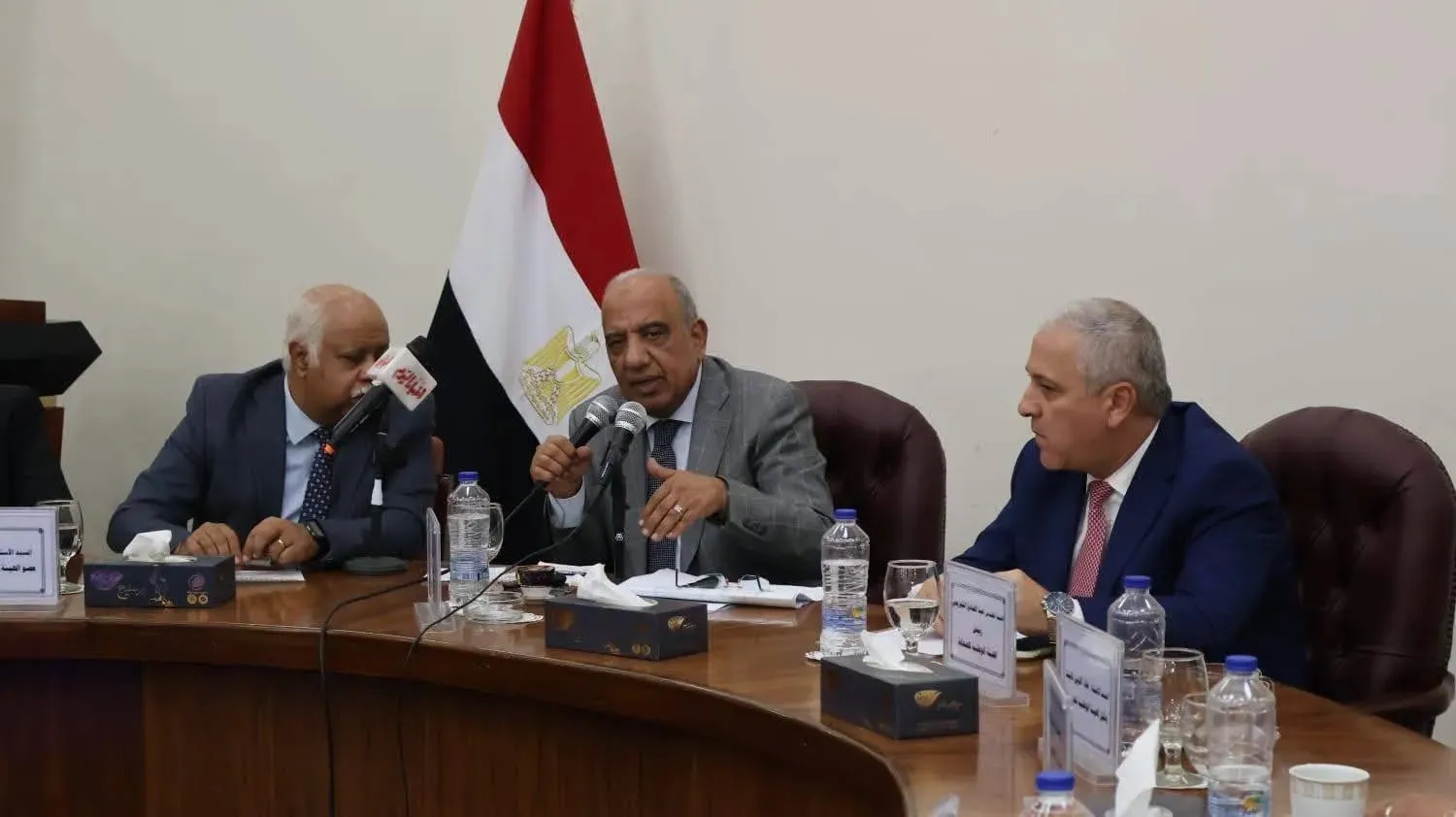
Egyptian Electricity Minister Mahmoud Esmat during a seminar at the National Press Authority on Sunday evening (Electricity Ministry’s Facebook page)
TT

Saudi-Egypt Electricity Interconnection Nears Operation

Egyptian Electricity Minister Mahmoud Esmat during a seminar at the National Press Authority on Sunday evening (Electricity Ministry’s Facebook page)

The Saudi-Egypt electricity interconnection, one of the region’s largest and most ambitious energy projects, is nearing actual operation after an official Egyptian announcement that work on the Egyptian side has been completed and the project has entered trial operations.

The strategic project, with investments of about $1.8 billion and an exchange capacity of up to 3,000 megawatts, is not only a step toward improving the efficiency of the two countries’ national grids, but also represents a pivotal shift in the regional and international energy landscape.

By connecting the two largest electricity grids in the Arab world, the project lays the initial foundation for a common Arab electricity market and reinforces the two countries’ positions as key hubs for energy trading and transmission between Asia, Africa and Europe.

Egyptian Side Ready

Egyptian Electricity and Renewable Energy Minister Mahmoud Esmat said on Sunday that the project aims to exchange 3,000 MW of electricity along a 1,320-kilometer route.

He noted that the pace of implementation and progress accelerated between July 2024 and June 2025, bringing the project to the trial-operation stage.

Esmat confirmed that all engineering and construction work on the Egyptian side of the interconnection with Saudi Arabia had been completed, with only a small portion of work, technical testing and final preparations remaining on the Saudi side.

Work in Egypt included construction of the 500-kilovolt Badr converter station and the 320-kilometer Badr-Taba overhead line, as well as giant Suez Canal crossing towers rising more than 220 meters to ensure the smooth and safe transmission of electricity ahead of the start of actual exchanges between the two countries.

Esmat said during a Feb. 15 meeting with President Abdel Fattah al-Sisi that the interconnection would play an important role in stabilizing Egypt’s national electricity grid during the summer, when consumption peaks.

Technical Specifications

According to official Egyptian information, the project is one of the region’s largest electricity interconnection projects, with investments estimated at about $1.8 billion and an exchange capacity of up to 3,000 MW.

It consists of three major high-voltage converter stations: one east of Madinah and another in Tabuk, Saudi Arabia, and a third in Badr, east of Cairo.

The stations are connected by overhead lines extending about 1,350 kilometers, in addition to submarine cables crossing the Gulf of Aqaba.

Strategic Shift in Regional Energy Security

Khaled El-Shafei, an economist and head of the Capital Center for Economic Studies, said the interconnection represents a strategic shift in the region’s energy landscape and security.

He noted that the project strengthens energy security in both countries with a capacity of up to 3,000 MW through high-voltage direct-current lines extending 1,320 kilometers, equivalent to about 8 to 10 percent of Egypt’s total operating reserve capacity.

El-Shafei underlined that this would support the stability of the national grid without the need to operate additional generating plants with high operating costs. It would also reduce carbon emissions by millions of tons annually through optimal use of the two countries’ renewable-energy mix.

He continued that once the interconnection becomes fully operational, it would generate substantial economic savings in fossil-fuel consumption and power-plant maintenance costs.

Gateway to Europe

Esmat also discussed existing electricity interconnection projects with neighboring countries, including Sudan, Libya and Jordan, saying studies for interconnection projects with Greece and Italy are currently being finalized, which would make Egypt a bridge to Europe, according to a ministry statement.

On the regional level, El-Shafei said the Saudi-Egypt project’s entry into the operational phase is the essence for establishing a common Arab electricity market, as it connects the two largest electricity grids in the Arab region, which together account for more than 60 percent of total electricity generated in the Arab world.

The development also opens broad prospects for Egypt to capitalize on its unique geographical position as a key regional energy-trading hub. It would allow the Egyptian grid to manage a multilateral interconnection system extending to the Arab east through Saudi Arabia and Jordan, the Maghreb through Libya, and Africa through the existing interconnection with Sudan.

Egypt would also serve as a future gateway to Europe through interconnection projects being studied and implemented with Greece, Cyprus and Italy to transmit up to 2,000 MW, boosting direct economic returns and making the region a key pillar for regional and international energy stability and sustainability.



Silver Demand Seen Down 5% This Year Due to Weaker Jewellery Purchases

Silver bars are stacked in the safe deposit boxes room of the Pro Aurum gold house in Munich, Germany, January 10, 2025. (Reuters)
TT

Silver Demand Seen Down 5% This Year Due to Weaker Jewellery Purchases

Silver bars are stacked in the safe deposit boxes room of the Pro Aurum gold house in Munich, Germany, January 10, 2025. (Reuters)

Silver demand is expected to fall by 5% in 2026 due to weaker jewellery demand and lower consumption in solar cells, where high prices have accelerated substitution, research showed on Friday.

Research done by consultancy Metals Focus for the Silver Institute puts demand at 1.08 billion troy ounces this year.

Silver, used in jewellery, electronics, electric vehicles and solar panels as well as for investment, is ‌down 59% ‌to $50 an ounce since retail buying drove prices ‌to ⁠a record high ⁠of $121.6 in January.

The base for that rally was created in 2025, when silver surged 147%, as massive inflows of the metal to US inventories due to tariff uncertainty and into silver-backed exchange-traded products (ETPs) tightened liquidity in the London market.

This year, expectations for higher interest rates, a stronger dollar and higher bond yields have weighed on investment ⁠sentiment.

Silver released through ETP selling, outflows from stocks ‌in the US and a smaller ‌market deficit improved liquidity in the physical market, the Silver Institute and ‌consultancy Metals Focus said on Friday.

Metals Focus sees net ETP ‌outflows of 45 million ounces this year after 278 million ounces of inflows in 2025.

As of early November, ETP holdings stood at 1.25 billion ounces.

Industrial demand is expected to fall by 3% in 2026 as installations ‌in photovoltaics have fallen short of expectations, particularly in China, while January's record silver prices accelerated ⁠substitution.

Meanwhile, demand ⁠for jewellery and silverware is forecast to decline by 22% and 17%, respectively, as higher prices and weaker rural spending in India encouraged purchases of smaller, lighter products.

Demand in China and the US is also subdued. Strong retail investment in late 2025 and early 2026 gave way to far more subdued buying from March as silver prices fell, Metals Focus said.

It expects global bar and coin demand to fall 2% this year, with US retail investment hitting its lowest level since 2010.


Gold Rises on Bargain Hunting but Heads for Weekly Decline

Gold necklaces are on display inside a jewellery showroom on the occasion of Akshaya Tritiya, a major gold buying festival, in Mumbai, India April 18, 2018. (Reuters)
TT

Gold Rises on Bargain Hunting but Heads for Weekly Decline

Gold necklaces are on display inside a jewellery showroom on the occasion of Akshaya Tritiya, a major gold buying festival, in Mumbai, India April 18, 2018. (Reuters)

Gold rose on Friday as bargain hunting emerged after prices hit a more than one-year low in the previous session, while market focus shifted to upcoming US inflation data.

Spot gold climbed 1% to $3,915.31 per ounce by 0322 GMT but was down 3.5% so far this week. US gold futures for December delivery gained 0.9% to $3,919.60.

"Today's move is ‌more of a ‌positioning adjustment, given that several intraday short-term ‌momentum ⁠indicators had kind ⁠of hit an extreme oversold level after yesterday's dramatic fall," said Kelvin Wong, a senior market analyst at OANDA.

"A short-term driver that could be bullish for gold will be a sudden turn of the US Treasury yield, that would potentially slow down the US dollar."

Spot gold prices hit their lowest level since ⁠October 2025 on Thursday as oil prices climbed ‌on fading hopes for peace ‌in the Middle East, spurring fears of higher inflation and elevated interest ‌rates.

Markets see an 89% chance of a 25-basis-point US ‌rate hike in December, while the probability of a larger 50-basis-point move is priced at 11%, according to CME's FedWatch tool.

Although gold is typically seen as an inflation hedge, higher interest rates increase the ‌opportunity cost of holding non-yielding bullion, reducing its appeal to investors.

Federal Reserve Bank of New York ⁠President John ⁠Williams said on Thursday more rate hikes are likely as the US central bank seeks to lower high levels of inflation in an otherwise healthy economy.

Data showed the number of Americans filing new claims for unemployment benefits increased more than expected last week, but remained at a level consistent with a stable labor market.

Market participants now await the US Producer Price Index data due at 1330 GMT.

Among other metals, spot silver rose 1% to $50.49 per ounce and palladium climbed 2.1% to $1,014.50, but both were headed for weekly declines.

Spot platinum gained 1.3% to $1,538.22 and was on track for a modest weekly gain.


Dollar Set for Best Week in Two Months, Yen Tests 160

US dollar banknotes are seen in this illustration taken March 24, 2026. (Reuters)
TT

Dollar Set for Best Week in Two Months, Yen Tests 160

US dollar banknotes are seen in this illustration taken March 24, 2026. (Reuters)

The dollar held near 19-month highs on Friday and was set for its biggest weekly rise in two months as bets on a larger rate hike pushed up US yields and the yen hovered below the 160 mark, prompting Tokyo to warn it would respond to excessive moves.

Treasury yields rose after President Donald Trump's comment that the US did not need a deal with Iran stoked worries about Middle Eastern oil supply, lifting crude prices and, with them, inflation expectations.

The move, together with hawkish comments from Federal Reserve officials and this week's stronger-than-expected ‌US inflation data, has ‌left traders weighing the prospect of a larger-than-usual Fed rate hike ‌next ⁠month.

Two-year Treasury yields ⁠have risen 33 basis points so far this week to around 4.85%, on course for their biggest weekly jump since 2024.

The biggest risk to dollar strength is a Middle East peace deal, said Nick Rees, head of macro research at Monex, as that would diminish the support it draws from high energy prices and its safe-haven status.

"Absent that happening, we think the dollar is likely to continue to at least remain around current levels if not strengthen slightly as we look ahead," Rees said.

The ⁠euro edged up 0.1% to $1.1065, after hitting its lowest level against the ‌dollar since April 2025. For the week, it is ‌down 0.7%, on track for its largest weekly loss since late September.

Fed officials this week warned that US ‌inflation remains stubbornly elevated, with some signalling openness to a 50-basis-point rate increase if price pressures ‌fail to ease. Traders are pricing in a 12.1% chance of such a hike next month, up from 0% last week, the CME FedWatch tool showed.

The dollar index, which measures the greenback against a basket of currencies, was at 103.17, near its highest since April 2025. For the week, the dollar is set ‌to gain 0.9%, the most since September.

YEN INTERVENTION IN FOCUS

The yen was steady at 159.90 per dollar, around its weakest since early September, ⁠fuelling concerns about possible intervention. ⁠The currency has weakened 0.9% this week, on track for its biggest weekly loss since September.

Japanese Finance Minister Satsuki Katayama said on Friday the government would respond appropriately to currency volatility.

Japan spent 15.4 trillion yen ($96.5 billion) to bolster the currency after it sank to a four-decade low of 163.99 per dollar in late July.

Markets will be cautious around this level, said Monex's Rees, adding that he expects the trigger for intervention somewhere a little higher than 160.

The Australian dollar has fallen about 3.4% so far this month, making it the worst-performing G10 currency against the greenback. Australia is the only G10 country for which markets are pricing a rate cut next year. The Aussie was last at $0.6794.

The dollar was little changed against the Swiss franc at 0.836, hovering near a one-month high.

Among cryptocurrencies, bitcoin fell 3.8% to $68,759, dropping below the key $70,000 level to its lowest since August. Ether also dropped 4% to $1,933.49.