Mideast Oil Exports Exceeded Pre-Iran War Levels despite Hormuz Disruptions

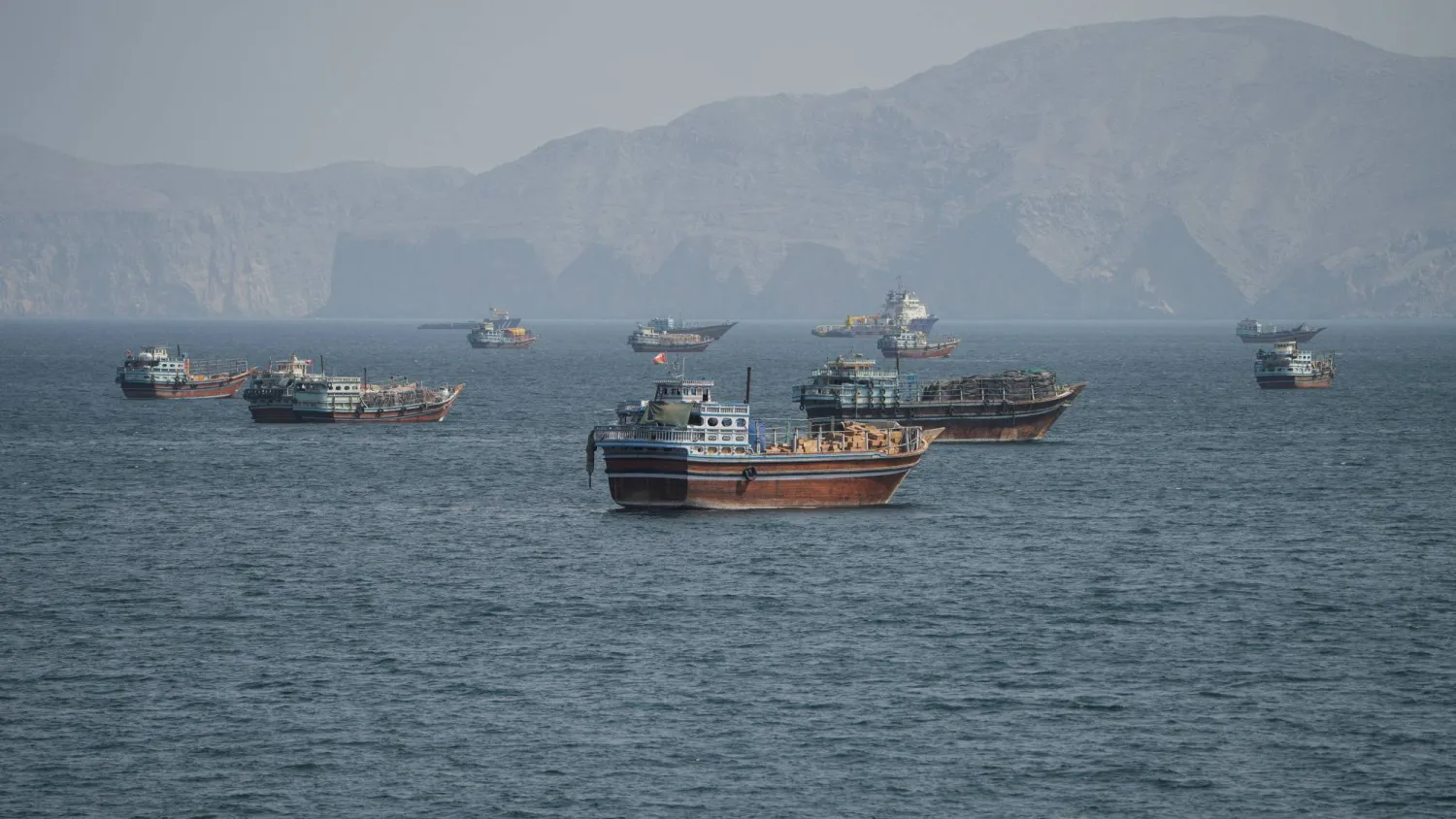
FILE PHOTO: Vessels at the Strait of Hormuz, as seen from Musandam, Oman, October 2, 2026. REUTERS/Stringer/File Photo
TT

Mideast Oil Exports Exceeded Pre-Iran War Levels despite Hormuz Disruptions

FILE PHOTO: Vessels at the Strait of Hormuz, as seen from Musandam, Oman, October 2, 2026. REUTERS/Stringer/File Photo

Middle East oil exports, excluding Iran, surpassed their pre-war levels last week, despite attacks on ships in the Strait of Hormuz, according to data from the maritime tracking firm Kpler.

For the first time since the US and Israel launched their offensive against Iran at the end of February, the weekly average of shipments rose for several days above the pre-conflict average of 18 million barrels per day, said AFP.

Crude oil exports reached pre-war levels in September, with at least 16.5 million barrels leaving the region excluding Iran, Kpler said on Wednesday.

"Forty percent now bypass Hormuz, and most crude crossing the strait changes tankers offshore," Kpler said, adding that most of the oil flowed through Saudi and United Arab Emirates pipelines.

These figures include flows via the Red Sea, a route increasingly used to bypass the blockade Iran is attempting to impose on Hormuz -- where around a fifth of the world's petroleum supplies crossed before the conflict.

Iran still claims control over the strait, and ships without its authorization risk coming under attack, but more and more are making it out, and alternative routes meant to bypass the waterway are operating at full capacity.

Despite the rebound, experts stressed that the situation was far from normal, and Iran remains deprived of a large share of its own exports by a US counterblockade of its ports.

Saudi Arabia is benefiting from the reactivation of its East-West pipeline, which links the kingdom's main oil fields in the east to its Yanbu terminal on the Red Sea, allowing it to bypass Hormuz.

Shut down on September 11 after being hit by strikes launched from Iraq, the pipeline resumed operations on September 22, Amena Bakr, an analyst at Kpler said last week.

The United Arab Emirates is also able to bypass Hormuz thanks to its pipeline linking Abu Dhabi's fields to Fujairah, a terminal just outside the strait on the Gulf of Oman.

Around 0310 GMT on Monday, Brent North Sea crude for December delivery fell 0.79 percent to $101.44 a barrel.

Its US counterpart, West Texas Intermediate for November delivery, dropped 1.20 percent to $90.02.


Regular Earnings Calls Reshape Relations Between Saudi Companies and Investors

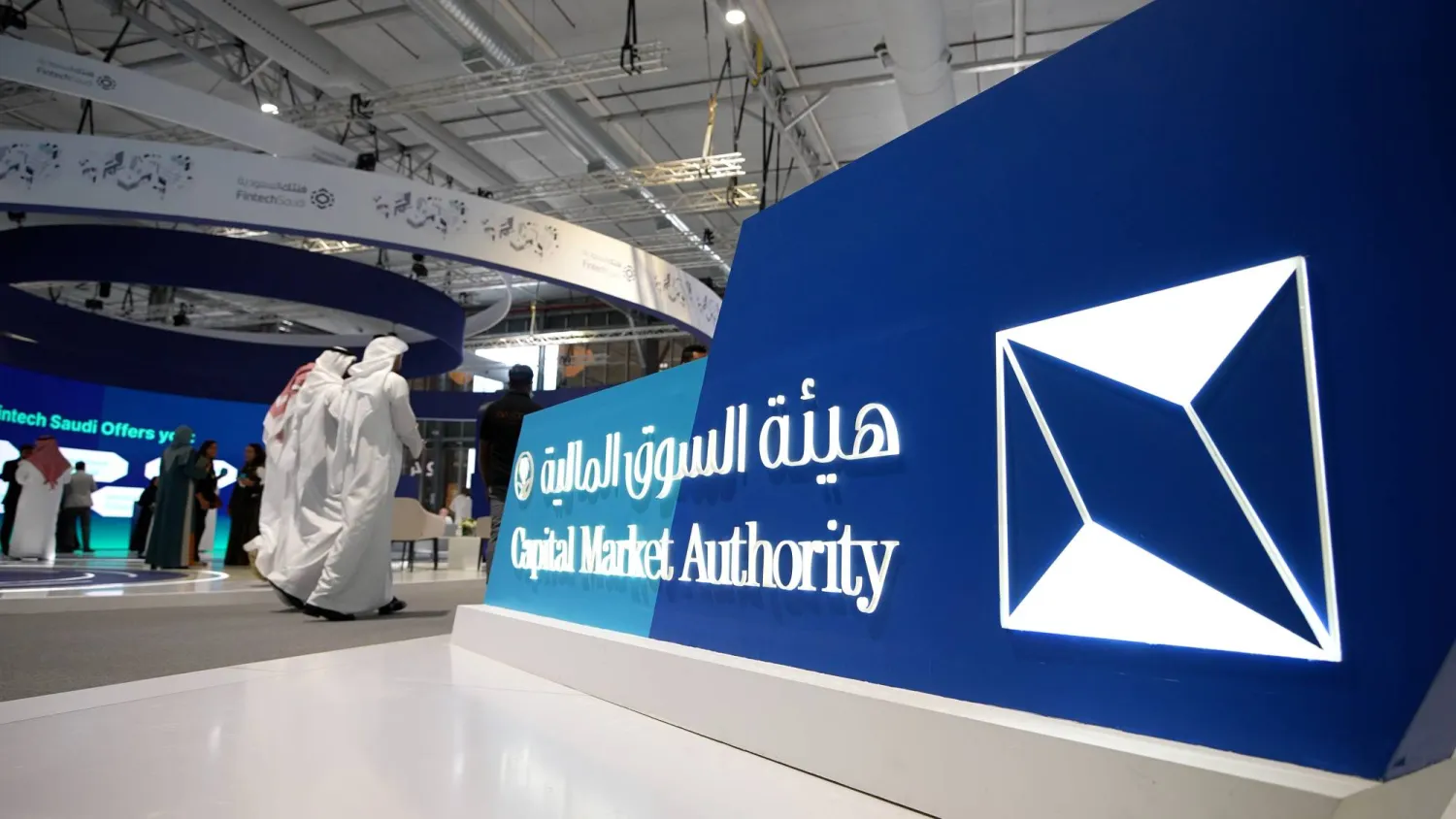
The Capital Market Authority approved the public offering of units in the Albilad CSOP MSCI Hong Kong China Equity ETF in Saudi Arabia (Turki Al-Aqili).
TT

Regular Earnings Calls Reshape Relations Between Saudi Companies and Investors

The Capital Market Authority approved the public offering of units in the Albilad CSOP MSCI Hong Kong China Equity ETF in Saudi Arabia (Turki Al-Aqili).

Saudi Arabia's Capital Market Authority (CMA) has required companies listed on the Main Market to hold at least two public earnings calls annually with investors and analysts, in a move aimed at strengthening transparency and disclosure and expanding investor access to information on corporate performance and future plans.

The new rules will take effect with the announcement of annual financial statements for 2026, according to a circular issued by the CMA on Thursday following a board decision.

The regulations aim to establish regular communication between listed companies, investors and financial analysts while improving the quality of information available to assess corporate performance.

The decision transforms earnings calls from a voluntary practice adopted by some companies into a regulatory requirement for all Main Market-listed firms. It also strengthens executive management's accountability for explaining financial results and discussing the factors affecting performance with shareholders and analysts.

Disclosure and Transparency

Financial analyst Abdullah Al-Hammad told Asharq Al-Awsat that the decision reflects the growing maturity and depth of the Saudi stock market and the evolution of its investor base, particularly the increasing participation of institutional investors.

He said these developments call for stronger disclosure and transparency practices to enable investors to make informed decisions based on reliable information and facts.

Al-Hammad added that giving individual investors opportunities to learn more about companies' operations, discuss financial results and ask questions would positively influence their investment behavior.

He said greater access to information would encourage investment decisions based on company fundamentals rather than speculation and expectations, helping promote a culture of saving and long-term investment while protecting retail investors' capital.

Financial Statements

Dr. Hussein Al-Attas described the decision as an important step toward developing Saudi Arabia's capital market and strengthening transparency, disclosure and corporate governance among listed companies.

Speaking to Asharq Al-Awsat, he said publishing financial statements, while essential, does not provide investors with a complete picture of a company's performance.

Investors also need to understand the factors driving profit growth or declines, the sustainability of financial results, the impact of operational and financing developments, and management's plans and expectations for the coming periods.

Al-Attas said the decision's significance lies in making communication between companies and investors a regular institutional practice rather than an optional initiative undertaken by individual firms.

He noted that requiring the participation of either the chief executive officer or chief financial officer, along with discussions of future expectations, challenges and opportunities, would make these meetings more valuable and strengthen executive management's accountability to shareholders.

He said the expected benefits include narrowing the information gap between companies and investors, improving market pricing efficiency and increasing confidence in published information and disclosures.

These improvements, he added, would make the Saudi capital market more attractive to domestic and foreign investors, support its continued development and bring its practices closer to advanced international capital market standards.

Retail Investors

According to Al-Attas, retail investors are among the main beneficiaries of the new regulations, as they will gain opportunities to communicate directly with company management and better understand the factors affecting financial performance.

They will also be able to ask questions about revenue, profits, costs, debt and cash flows, as well as earnings sustainability, dividend distributions and future growth plans.

He noted that requiring companies to publish presentations and full recordings of earnings calls within three hours of their conclusion would ensure that information is available to all investors and promote fair access.

Al-Attas stressed that the regulations' success would depend on the substance of the discussions, the transparency of management's responses, the clarity of future guidance and investors' ability to obtain meaningful information that helps them evaluate companies.

Such practices, he said, would encourage investment decisions based on analysis rather than rumors and unsupported expectations.

Earnings Call Requirements

Under the new regulations, listed companies must hold two earnings calls annually, the first following the announcement of annual financial results and the second after the publication of interim financial statements for the second quarter.

The meetings must take place within five business days of the relevant financial announcements and after the close of the trading session.

Companies must announce the meetings in advance and ensure the participation of at least the chief executive officer or chief financial officer.

Discussions must cover financial results, future expectations, challenges and opportunities, while providing investors and analysts with an opportunity to ask questions.

Companies must also publish presentations and complete recordings of the meetings on their websites within three hours of their conclusion to ensure equal access to information.

Regulatory Reforms Under Al-Sudairi

The decision forms part of a series of regulatory reforms introduced since Mazen Al-Sudairi was appointed Chairman of the Capital Market Authority in August.

The measures have included new rules governing trading and investment in overseas markets, alongside improvements to initial public offering (IPO) practices.

On October 29, the CMA approved a maximum ratio of algorithmic trading orders to executed orders for each trader in every security listed on the Main Market, seeking to regulate automated trading activity.

The authority also adopted new rules governing how capital market institutions deal with clients in foreign markets, including a requirement for an initial margin of at least 50% of the transaction value.

On November 2, the CMA approved provisions aimed at improving IPO practices, including requiring issuing companies to disclose forecasts of their financial performance, providing investors with additional information to assess companies before their shares are listed.

Three other regulatory proposals remain under review or public consultation.

These include enhancing disclosure requirements for investment funds, strengthening financial performance disclosures in the management discussion section of board reports, and amendments aimed at improving corporate governance and empowering shareholders.

The public consultation period for the final proposal will remain open until November 28.


Saudi Stocks End Week Lower

A silhouetted man in front of a trading screen in Saudi Arabia (Reuters)
TT

Saudi Stocks End Week Lower

A silhouetted man in front of a trading screen in Saudi Arabia (Reuters)

Saudi stocks closed lower on Thursday, extending losses for a second consecutive session as heavyweight shares, led by Maaden and Saudi National Bank, came under pressure alongside several other listed companies.

The benchmark Tadawul All Share Index (TASI) fell 0.4% to close at 10,159 points, shedding 41 points, with total trading turnover reaching approximately SAR 3 billion ($800 million).

Al Rajhi Bank shares declined 0.4%, while Maaden dropped 2.4%. Saudi National Bank fell 1.5%, and ACWA Power slipped 0.4%.

Among individual stocks, Tihama led the losers, falling 6% to SAR 14.77, followed by Raoom Trading, which declined 5.1%. Saudi Re also shed more than 5% to close at SAR 28.

Shares of Retal Urban Development, Amana Cooperative Insurance, Al-Babtain Power and Telecommunication, ADES Holding, Saudi Research and Media Group (SRMG), Luberef, Al Majdiah, East Pipes Integrated Company and Dallah Healthcare also ended the session lower, with losses ranging from 3% to 4%.

In contrast, Jarir Marketing gained 3%, while Advanced Petrochemical and Saudi Enaya Cooperative Insurance rose more than 2% each.


South Korean Exports Hit $1 Trillion for 1st Time on AI Demand

FILE PHOTO: A general view of the construction site of the Yongin semiconductor cluster in Yongin, South Korea, July 21, 2026.  REUTERS/Kim Hong-Ji/File Photo
FILE PHOTO: A general view of the construction site of the Yongin semiconductor cluster in Yongin, South Korea, July 21, 2026. REUTERS/Kim Hong-Ji/File Photo
TT

South Korean Exports Hit $1 Trillion for 1st Time on AI Demand

FILE PHOTO: A general view of the construction site of the Yongin semiconductor cluster in Yongin, South Korea, July 21, 2026.  REUTERS/Kim Hong-Ji/File Photo
FILE PHOTO: A general view of the construction site of the Yongin semiconductor cluster in Yongin, South Korea, July 21, 2026. REUTERS/Kim Hong-Ji/File Photo

South Korea's exports for the year have soared to $1 trillion for the first time, the trade ministry said on Thursday, thanks to surging demand for chips, computers and AI investment.

The country is a tech powerhouse and home to Samsung Electronics and SK hynix, two of the world's three biggest makers of memory chips that are key to driving the global AI boom.

An online statement said the figures proved Asia's fourth-largest economy was "a global export powerhouse" as it hit the milestone shortly after 2 pm (0500 GMT) on Thursday.

Only the United States, China and Germany have hit the milestone so far in 2026.

Total exports for all of 2025 came in at $700 billion, AFP quoted the trade ministry as saying.

"This year, semiconductors and computers drove overall export growth, bolstered by increased AI investment by global big tech companies," the ministry said.

Despite uncertain export conditions such as the Iran war, "key items" like petroleum products, ships and televisions performed well, while cosmetics and pharmaceuticals recorded "all-time highs".

"This achievement holds historical significance, as it marks a 10,000-fold increase in export volume over the 62 years since the $100 million export milestone was first reached in 1964," the ministry said.

President Lee Jae Myung said in his annual budget speech to parliament this month that 21.3 trillion won ($16 billion) would be allocated to chipmaking and artificial intelligence, spanning data centers to robotics.

The country will double spending on AI and semiconductors in 2027 to a record high, he added, pledging to use the technology to turn the military into a "smart, elite force".

Samsung and SK hynix announced plans in June to invest more than 4,755 trillion won in South Korea, marking a record level of corporate investment in the country.

South Korean chipmakers saw profits and their share prices skyrocket this year as frenzied demand for AI infrastructure squeezes the global supply of memory chips.

The boom has also spurred chip engineers and other workers to seek higher payouts in tense negotiations at companies including Samsung and SK hynix.

In September, Seoul announced plans for a 162.3 trillion won "Future Fund" next year, aimed at channeling record tax revenues from the country's chip boom into long-term growth.

Lee on Thursday thanked South Koreans for the milestone, stressing that it needs to turn into "sustainable growth".

"We will enhance the competitiveness of our core industries and foster future growth engines, such as AI and biotechnology," he said in a statement.

"We will also actively support the expansion of Korean consumer goods -- including K-beauty and K-food -- into the global market."