

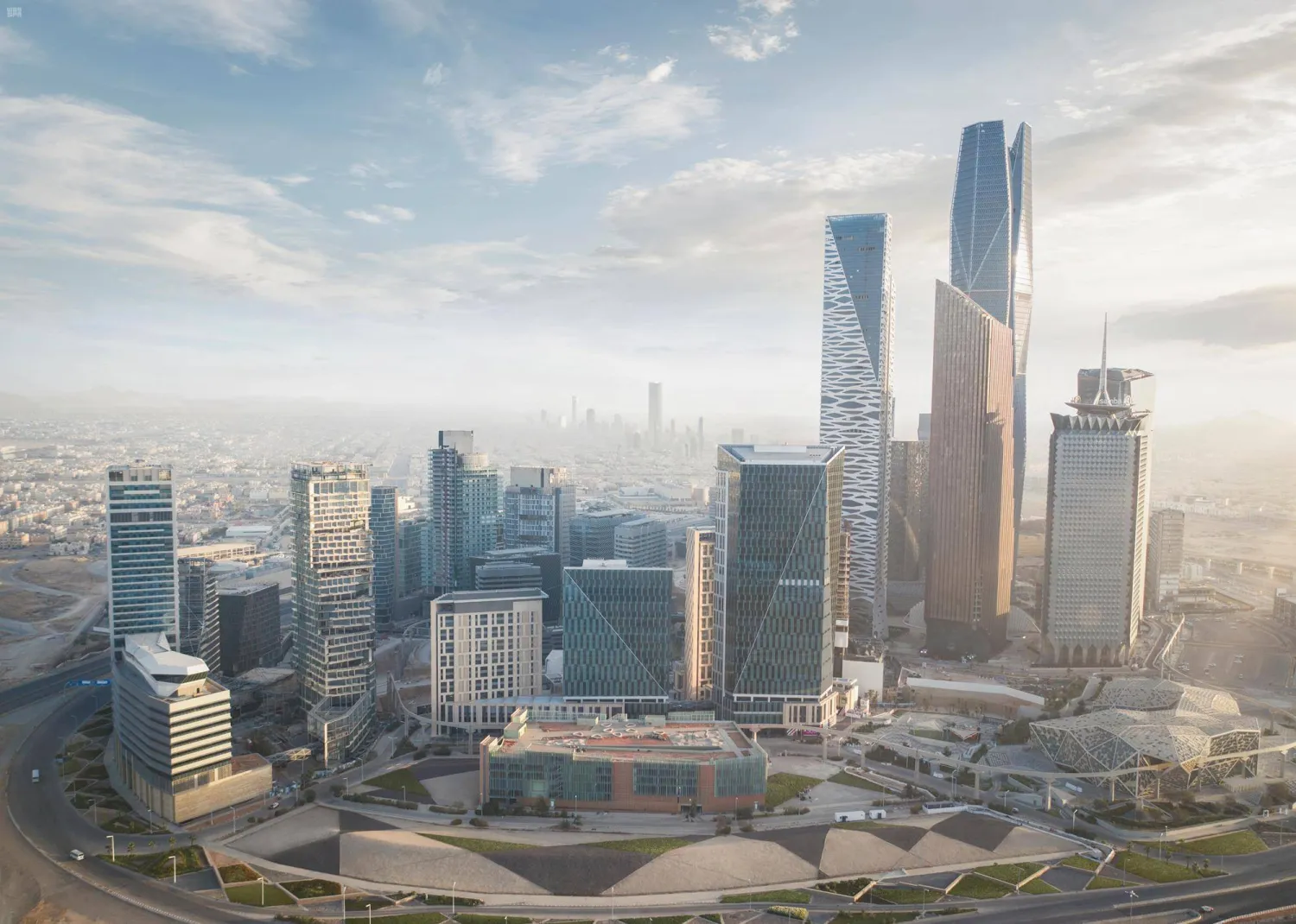

Saudi Non-Oil Sector Grows at Seven-Month High in September

The Saudi capital, Riyadh (SPA)
TT

Saudi Non-Oil Sector Grows at Seven-Month High in September

The Saudi capital, Riyadh (SPA)

Saudi Arabia's non-oil private sector recorded significant acceleration in September 2026, as the Riyad Bank Purchasing Managers’ Index (PMI), seasonally and economically adjusted and compiled by S&P Global, rose to 55.3 percent, up from 53.8 percent in August. This increase reflects the highest level for business conditions since February, surpassing the 50 percent neutral mark that separates growth from contraction.

Record Rise in New Orders

Report data showed that the sector's growth was primarily supported by a sharp rebound in new orders, which recorded their fastest rate of increase since last February, amid improving market conditions, increased domestic spending, and customer demand.

In response to this influx of orders, companies bolstered their operational and investment capacities, driving employment activity to accelerate to its highest level in seven months. Recruitment efforts specifically targeted supporting technical staff and expanding sales teams. Purchasing activity also saw robust growth, with purchases of production inputs recording their highest increase in seven months.

Decline in Foreign Sales

Despite the domestic rebound, the report indicated continued weakness in foreign demand, with new orders from international clients declining for the seventh consecutive month due to supply chain disruptions and regional geopolitical tensions.

Supply chain data also showed only a slight improvement in supplier delivery times, and at the slowest pace in five months. These delays and rising costs contributed to a slowdown in production growth to its lowest level in five months, coupled with an increase in backlogs for the first time since May.

Cost Pressures and Rising Selling Prices

Companies reported a continued sharp increase in input prices due to elevated material and transportation costs. To protect profit margins, establishments raised selling prices to customers at a high rate, marking the second fastest increase in over six years.

Regarding the outlook, the Future Output Index showed a decline in business optimism for the coming year to its lowest level since March, amid the prevailing uncertainty caused by regional disruptions and supply chains.

Commenting on these results, Dr. Naif Alghaith, Chief Economist at Riyad Bank, affirmed that September's results are consistent with the overall picture of the Saudi economy; where domestic consumption, investment activity, government projects, in addition to Public Investment Fund projects, and credit availability, continue to provide fundamental support for non-oil activity.

Alghaith added: “The increase in unfinished work, coinciding with the acceleration in employment and purchasing to a seven-month high, indicates that companies are building their operational capacities to meet sustained demand and expand their production capabilities, rather than merely offering temporary responses.”



Egypt Non-oil Downturn Deepens in September as Orders Slump

Part of the New Administrative Capital east of Cairo (New Capital Company)
TT

Egypt Non-oil Downturn Deepens in September as Orders Slump

Part of the New Administrative Capital east of Cairo (New Capital Company)

Egypt's non-oil ‌private sector contracted at a faster pace in September as output and new orders fell sharply amid inflation and geopolitical disruptions, a business survey showed on Monday, Reuters reported.

* The seasonally adjusted S&P Global Egypt Purchasing Managers' Index (PMI) fell to 47.2 in September from 49.6 in August, a survey by ‌S&P Global ‌showed. The 50-mark separates growth ‌from ⁠contraction.

* Output and ⁠new business both declined at faster rates in September. Firms cited weaker market conditions, ongoing geopolitical disruptions and strong inflationary pressures.

* Export sales also fell, though at a ⁠marginal pace that was the ‌joint-slowest in ‌the current seven-month decline.

* Employment rose for ‌a second straight month, the ‌first back-to-back increase in staffing in more than a year, although the pace slowed from August and remained slight.

* Output ‌price inflation eased slightly from August but remained steep and ⁠well ⁠above the historical trend, while input cost inflation rose to a three-month high.

* The survey said firms remained optimistic that output would rise over the coming 12 months.

* "All this suggests that Egyptian firms remain hopeful about the future in spite of the economic challenges they face," said David Owen, Principal Economist at S&P Global Market Intelligence.


Mideast Oil Exports Exceeded Pre-Iran War Levels despite Hormuz Disruptions

FILE PHOTO: Vessels at the Strait of Hormuz, as seen from Musandam, Oman, October 2, 2026. REUTERS/Stringer/File Photo
TT

Mideast Oil Exports Exceeded Pre-Iran War Levels despite Hormuz Disruptions

FILE PHOTO: Vessels at the Strait of Hormuz, as seen from Musandam, Oman, October 2, 2026. REUTERS/Stringer/File Photo

Middle East oil exports, excluding Iran, surpassed their pre-war levels last week, despite attacks on ships in the Strait of Hormuz, according to data from the maritime tracking firm Kpler.

For the first time since the US and Israel launched their offensive against Iran at the end of February, the weekly average of shipments rose for several days above the pre-conflict average of 18 million barrels per day, said AFP.

Crude oil exports reached pre-war levels in September, with at least 16.5 million barrels leaving the region excluding Iran, Kpler said on Wednesday.

"Forty percent now bypass Hormuz, and most crude crossing the strait changes tankers offshore," Kpler said, adding that most of the oil flowed through Saudi and United Arab Emirates pipelines.

These figures include flows via the Red Sea, a route increasingly used to bypass the blockade Iran is attempting to impose on Hormuz -- where around a fifth of the world's petroleum supplies crossed before the conflict.

Iran still claims control over the strait, and ships without its authorization risk coming under attack, but more and more are making it out, and alternative routes meant to bypass the waterway are operating at full capacity.

Despite the rebound, experts stressed that the situation was far from normal, and Iran remains deprived of a large share of its own exports by a US counterblockade of its ports.

Saudi Arabia is benefiting from the reactivation of its East-West pipeline, which links the kingdom's main oil fields in the east to its Yanbu terminal on the Red Sea, allowing it to bypass Hormuz.

Shut down on September 11 after being hit by strikes launched from Iraq, the pipeline resumed operations on September 22, Amena Bakr, an analyst at Kpler said last week.

The United Arab Emirates is also able to bypass Hormuz thanks to its pipeline linking Abu Dhabi's fields to Fujairah, a terminal just outside the strait on the Gulf of Oman.

Around 0310 GMT on Monday, Brent North Sea crude for December delivery fell 0.79 percent to $101.44 a barrel.

Its US counterpart, West Texas Intermediate for November delivery, dropped 1.20 percent to $90.02.


Al-Moammar Receives First Work Order Under HUMAIN Agreement, Worth More Than 148% of 2025 Revenue

A sign identifying Al-Moammar Information Systems Company in Riyadh (company website).
TT

Al-Moammar Receives First Work Order Under HUMAIN Agreement, Worth More Than 148% of 2025 Revenue

A sign identifying Al-Moammar Information Systems Company in Riyadh (company website).

Al-Moammar Information Systems Company (MIS) has received its first work order under its agreement with HUMAIN, with a total value exceeding 148 percent of the company's total revenue for 2025, including value-added tax.

In a statement on Saudi Exchange on Sunday, the company said Work Order No. 1, received on October 1, covers the scope of work related to a capacity of 50 megawatts. This was the scope previously announced as part of a project to design and build data centers dedicated to artificial intelligence technologies.

The company said the financial impact of the work order began in the second quarter of fiscal year 2026.

The work order was received under an agreement signed by Al-Moammar Information Systems with HUMAIN last September, with a value exceeding 689 percent of the company's total revenue for 2025, including value-added tax. The agreement includes an expansion of the project's scope from 50 megawatts to 250 megawatts.

When the agreement was announced, the company said the engineering, procurement, and construction works would be carried out through work orders issued by HUMAIN in accordance with the terms of the agreement. The company would announce each work order upon receipt, including its value, implementation period, and financial impact.

Al-Moammar Information Systems expects to receive additional work orders related to the further expansion of the project in the coming period and will announce any material developments in this regard when they occur.