


Oil Rises as Middle East Supply Concerns Persist amid Shipping Attacks

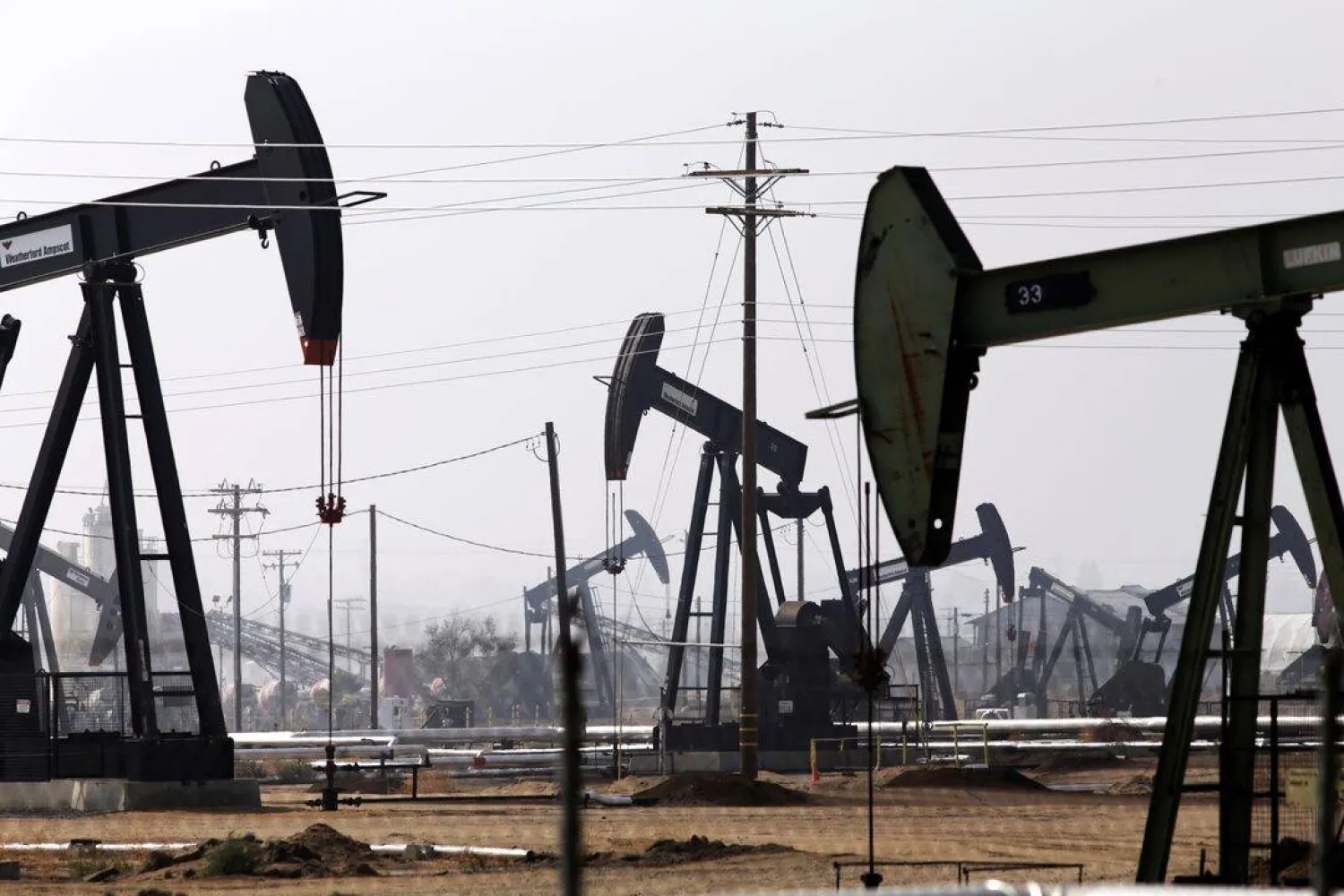
Oil rigs operating in the Kern River field in California, USA (Reuters)
TT

Oil Rises as Middle East Supply Concerns Persist amid Shipping Attacks

Oil rigs operating in the Kern River field in California, USA (Reuters)

Oil prices rose on Thursday on persistent worries about supply from the key Middle East producing region amid an increase in attacks on shipping in the Gulf and the Strait of Hormuz, while the US cut output as a hurricane menaced offshore production.

Brent crude futures rose $2.28, or 2.28%, to $102.28 a barrel by 0427 GMT. US West Texas Intermediate (WTI) crude futures gained $1.66, or 1.88%, to $89.94.

Prices settled lower on Wednesday after the International Energy Agency agreed to accelerate the release of oil stocks and to prioritize diesel supplies under a plan launched in March, as governments seek to tackle record ‌fuel prices ‌and supply disruptions caused by the Iran war.

However, threats to oil shipping ‌in ⁠the Gulf and ⁠the Strait of Hormuz, which carried shipments equal to about 20% of global oil and fuel before the war, have increased in October as the US-Israeli conflict with Iran enters its eighth month, said Reuters.

Attacks on tankers sailing through the Strait of Hormuz hit their highest last week of any week since the Iran war began as Gulf producers increased exports. The expansion of attacks is occurring as more crude is flowing out of the Gulf but at higher costs and risk to cargoes and crew.

In the latest attack, a ⁠tanker north of Qatar was struck by multiple projectiles, causing casualties, the ‌United Kingdom Maritime Trade Operations agency said on Wednesday.

"The frequency ‌of Iranian attacks on ships is now at the highest point since the war began, and likely to ‌intensify further," said Saul Kavonic, MST Marquee head of energy.

He noted that "constrained product flows, extreme ‌logistics costs and high likelihood of Iranian escalation are keeping prices elevated".

ANZ analyst Daniel Hynes said in a note on Thursday the IEA's oil release would likely consist of barrels that were already part of the group's original 400-million-barrel release plan at the start of the Middle East conflict, meaning it does not appear to represent an additional ‌draw on strategic inventories.

"Ultimately, strategic stock releases can augment supply flows temporarily but do not create new production capacity," Hynes said.

HURRICANE CONCERNS

Prices are also gaining ⁠on supply curtailments as ⁠a hurricane moves toward offshore production areas in the US, the world's biggest oil producer, causing companies to shut their platforms.

Shell and Chevron said on Wednesday they were curtailing offshore operations in the Gulf as Hurricane Isaias approached.

Overall, US Gulf of Mexico oil and gas producers had shut in about 25.08% of current oil production and 16.37% of current natural gas production as of Wednesday because of the storm, according to the Marine Minerals Administration.

Inventory data from the US, also the world's biggest oil consumer, were supportive for prices as crude stockpiles fell by a higher-than-expected amount, while diesel inventories declined slightly.

Crude inventories fell by 3.2 million barrels to 424.1 million barrels in the week ended October 2, the Energy Information Administration said on Wednesday, compared with analysts' expectations in a Reuters poll for a 1.7 million-barrel decline.

Distillate fuel inventories, including diesel fuel and jet fuel, dropped by 42,000 barrels to 105.14 million barrels, well below their levels reported for this time of year in the past five years.



China, US Discuss Tariffs, Farm Trade at First Trade Council Meeting

US and Chinese flags are seen in this illustration taken March 20, 2025. (Reuters)
TT

China, US Discuss Tariffs, Farm Trade at First Trade Council Meeting

US and Chinese flags are seen in this illustration taken March 20, 2025. (Reuters)

China and the United States held their first trade council meeting under a bilateral economic and trade consultation mechanism via ‌video link ‌on Friday, China's ‌commerce ⁠ministry said on ⁠Saturday.

The two sides held "candid, in-depth and constructive discussions" on implementing outcomes ⁠from previous trade consultations, ‌including ‌tariffs, a reciprocal ‌tariff-reduction arrangement involving $30 ‌billion on each side, agricultural trade and other issues of ‌note, the ministry said.

Both sides will ⁠continue ⁠to use the council to address trade concerns, expand cooperation and reduce outstanding issues, it added.


IMF Says More Work Needed on Lebanon Reforms

A man walks past Lebanon's Central Bank headquarters in Beirut on November 10, 2026. (AFP)
TT

IMF Says More Work Needed on Lebanon Reforms

A man walks past Lebanon's Central Bank headquarters in Beirut on November 10, 2026. (AFP)

The International Monetary Fund said on Friday that more work was needed to reach an agreement on restructuring Lebanon's banking sector, one of the steps towards unlocking billions of dollars in financial assistance.

An IMF staff-level agreement reached in April 2022 laid out conditions to unlock assistance, including a law on the distribution of losses in the banking sector, known as the financial gap law, which parliament has still not voted on.

In a statement at the end of meetings that began on Tuesday, the IMF said "there was progress in further clarifying the approaches under consideration by the Banque du Liban (BdL) and the Government regarding banking sector reform, the draft financial regulation law and the recovery of deposits, and aligning them with international standards".

It however noted that "further work is needed to reach an agreement on a strategy for an effective and durable restructuring of Lebanon's banking sector, leading to a sound and resilient system".

The cabinet submitted a draft of the law to parliament in 2025, but the text is contested by the banking sector and political parties, preventing a vote.

Differences over estimates of losses and their distribution have stalled negotiations with the IMF.

In 2022, the government estimated losses resulting from the 2019 financial crisis at around $70 billion, a figure believed to have increased over the last seven years during which the crisis has remained unresolved.

Lebanese Finance Minister Yassin Jaber said during a news conference that he hoped to "achieve progress that would allow us to reach an agreement on a program with the IMF and sign it during the first quarter of next year, and by its end at the latest".

Lebanon's economic crisis, which the World Bank has ranked among the worst since 1850, has deprived depositors of access to all of their funds, destroyed confidence in the banking sector and led to greater reliance on cash liquidity in various economic and commercial activities.


Silver Demand Seen Down 5% This Year Due to Weaker Jewellery Purchases

Silver bars are stacked in the safe deposit boxes room of the Pro Aurum gold house in Munich, Germany, January 10, 2025. (Reuters)
TT

Silver Demand Seen Down 5% This Year Due to Weaker Jewellery Purchases

Silver bars are stacked in the safe deposit boxes room of the Pro Aurum gold house in Munich, Germany, January 10, 2025. (Reuters)

Silver demand is expected to fall by 5% in 2026 due to weaker jewellery demand and lower consumption in solar cells, where high prices have accelerated substitution, research showed on Friday.

Research done by consultancy Metals Focus for the Silver Institute puts demand at 1.08 billion troy ounces this year.

Silver, used in jewellery, electronics, electric vehicles and solar panels as well as for investment, is ‌down 59% ‌to $50 an ounce since retail buying drove prices ‌to ⁠a record high ⁠of $121.6 in January.

The base for that rally was created in 2025, when silver surged 147%, as massive inflows of the metal to US inventories due to tariff uncertainty and into silver-backed exchange-traded products (ETPs) tightened liquidity in the London market.

This year, expectations for higher interest rates, a stronger dollar and higher bond yields have weighed on investment ⁠sentiment.

Silver released through ETP selling, outflows from stocks ‌in the US and a smaller ‌market deficit improved liquidity in the physical market, the Silver Institute and ‌consultancy Metals Focus said on Friday.

Metals Focus sees net ETP ‌outflows of 45 million ounces this year after 278 million ounces of inflows in 2025.

As of early November, ETP holdings stood at 1.25 billion ounces.

Industrial demand is expected to fall by 3% in 2026 as installations ‌in photovoltaics have fallen short of expectations, particularly in China, while January's record silver prices accelerated ⁠substitution.

Meanwhile, demand ⁠for jewellery and silverware is forecast to decline by 22% and 17%, respectively, as higher prices and weaker rural spending in India encouraged purchases of smaller, lighter products.

Demand in China and the US is also subdued. Strong retail investment in late 2025 and early 2026 gave way to far more subdued buying from March as silver prices fell, Metals Focus said.

It expects global bar and coin demand to fall 2% this year, with US retail investment hitting its lowest level since 2010.