

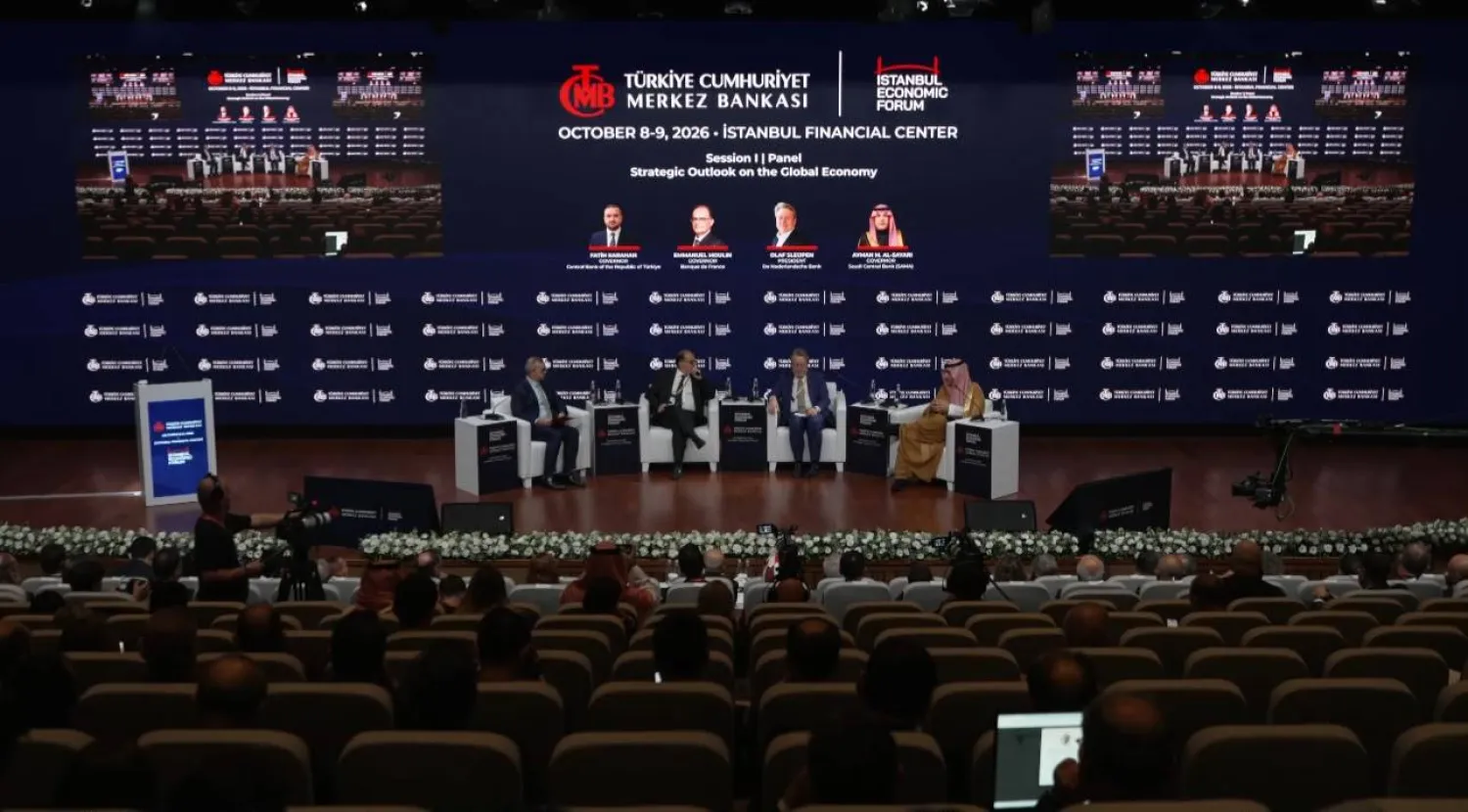

SAMA Governor: Saudi Arabia Maintains Considerable Economic Resilience Despite Regional Tensions

Ayman Alsayari during his participation in the Istanbul Economic Forum (Asharq Al-Awsat)
TT

SAMA Governor: Saudi Arabia Maintains Considerable Economic Resilience Despite Regional Tensions

Ayman Alsayari during his participation in the Istanbul Economic Forum (Asharq Al-Awsat)

Saudi Central Bank (SAMA) Governor Ayman Alsayari said the global economy has shown considerable resilience despite successive geopolitical shocks, but warned that continued conflict in the region was complicating the outlook for growth and inflation.

Speaking at the Istanbul Economic Forum on Thursday, Alsayari said global economic growth was projected at approximately 3% in 2026, following repeated downward revisions, with a recovery expected in 2027. Global inflation, meanwhile, was forecast at around 4.7%, raising concerns about renewed price pressures after a period of easing inflation since 2024.

Turning to Saudi Arabia, Alsayari said the Kingdom had maintained considerable economic resilience despite its proximity to regional tensions, supported by strong foreign reserves and assets, long-term infrastructure investments and economic diversification under Vision 2030.

He highlighted the importance of investments in energy infrastructure, particularly the East-West Pipeline, and in maintaining oil exports amid disruptions affecting the Strait of Hormuz and the Red Sea.

The pipeline has helped Saudi Arabia continue meeting customer demand, he said.
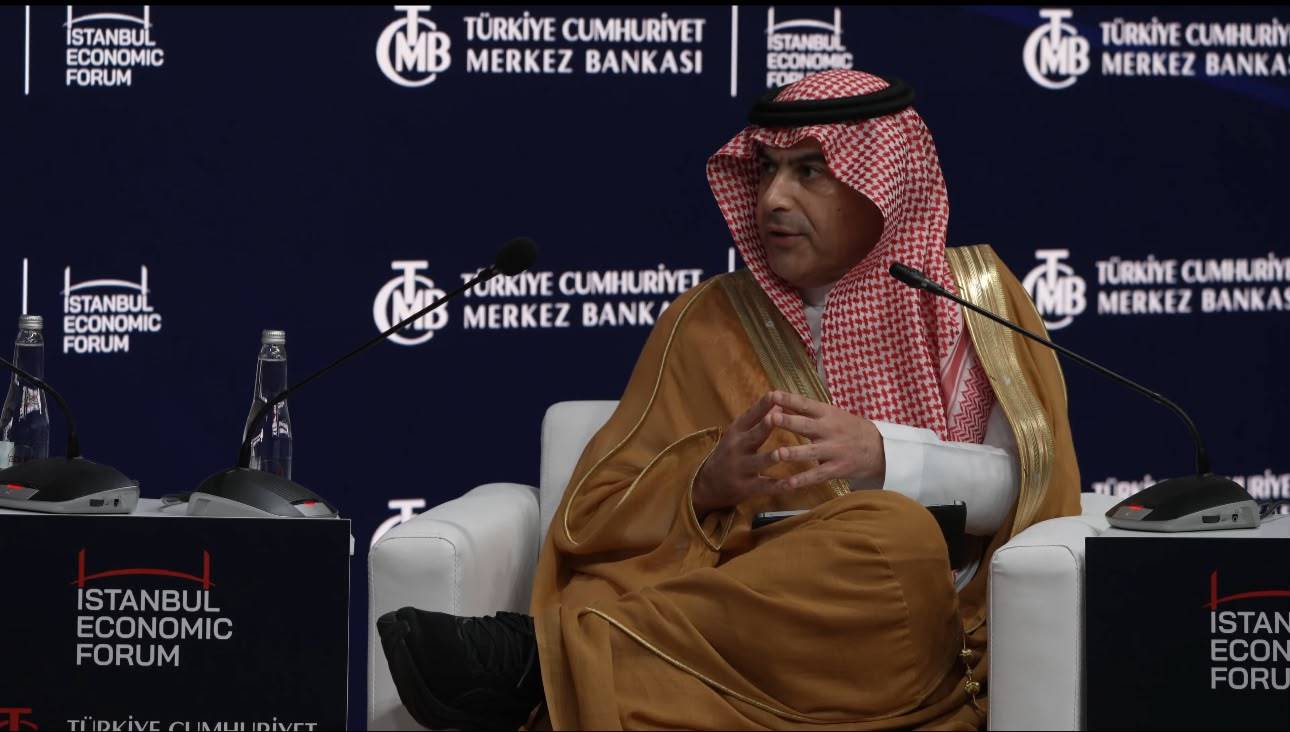
Ayman Alsayari speaking during a session at the Istanbul Economic Forum (Asharq Al-Awsat)

Alsayari said Saudi Aramco had prepared for potential disruptions by establishing oil reserves in different parts of the world, allowing it to continue supplying customers during the conflict.

The governor stressed that recent developments demonstrated the importance of investing in critical infrastructure during periods of stability to strengthen the economy's capacity to absorb unexpected shocks.

The SAMA governor said Saudi banks had maintained their financial resilience since the beginning of the regional conflict, supported by strong liquidity and capital positions.

According to June 2026 data, the banking sector's liquidity coverage ratio stood at 170%, its capital adequacy ratio at 20.9%, and its net stable funding ratio at 114.6%.

He said Saudi banks continued to benefit from the Kingdom's A+ sovereign credit rating, which supported their access to international financing markets despite rising risk premiums.

Domestic liabilities accounted for 87.1% of total liabilities at Saudi banks, significantly limiting their exposure to capital outflow risks.

Alsayari said the Saudi economy recorded negative growth for two consecutive quarters in 2026, largely reflecting weakness in the oil sector.

However, non-oil economic activity continued to expand, growing by approximately 2% in the first quarter and 1% in the second quarter.

He attributed the resilience of domestic demand partly to population growth and record-low unemployment among Saudi nationals, alongside the progress achieved through the Kingdom's economic diversification program.

Inflation in Saudi Arabia remained moderate at 1.8% as of mid-August 2026, supported by government measures, including domestic fuel price caps, and the Saudi riyal's peg to the US dollar.

Alsayari said the currency peg had helped limit imported inflation, given the structure of the Saudi economy.



Silver Demand Seen Down 5% This Year Due to Weaker Jewellery Purchases

Silver bars are stacked in the safe deposit boxes room of the Pro Aurum gold house in Munich, Germany, January 10, 2025. (Reuters)
TT

Silver Demand Seen Down 5% This Year Due to Weaker Jewellery Purchases

Silver bars are stacked in the safe deposit boxes room of the Pro Aurum gold house in Munich, Germany, January 10, 2025. (Reuters)

Silver demand is expected to fall by 5% in 2026 due to weaker jewellery demand and lower consumption in solar cells, where high prices have accelerated substitution, research showed on Friday.

Research done by consultancy Metals Focus for the Silver Institute puts demand at 1.08 billion troy ounces this year.

Silver, used in jewellery, electronics, electric vehicles and solar panels as well as for investment, is ‌down 59% ‌to $50 an ounce since retail buying drove prices ‌to ⁠a record high ⁠of $121.6 in January.

The base for that rally was created in 2025, when silver surged 147%, as massive inflows of the metal to US inventories due to tariff uncertainty and into silver-backed exchange-traded products (ETPs) tightened liquidity in the London market.

This year, expectations for higher interest rates, a stronger dollar and higher bond yields have weighed on investment ⁠sentiment.

Silver released through ETP selling, outflows from stocks ‌in the US and a smaller ‌market deficit improved liquidity in the physical market, the Silver Institute and ‌consultancy Metals Focus said on Friday.

Metals Focus sees net ETP ‌outflows of 45 million ounces this year after 278 million ounces of inflows in 2025.

As of early November, ETP holdings stood at 1.25 billion ounces.

Industrial demand is expected to fall by 3% in 2026 as installations ‌in photovoltaics have fallen short of expectations, particularly in China, while January's record silver prices accelerated ⁠substitution.

Meanwhile, demand ⁠for jewellery and silverware is forecast to decline by 22% and 17%, respectively, as higher prices and weaker rural spending in India encouraged purchases of smaller, lighter products.

Demand in China and the US is also subdued. Strong retail investment in late 2025 and early 2026 gave way to far more subdued buying from March as silver prices fell, Metals Focus said.

It expects global bar and coin demand to fall 2% this year, with US retail investment hitting its lowest level since 2010.


Gold Rises on Bargain Hunting but Heads for Weekly Decline

Gold necklaces are on display inside a jewellery showroom on the occasion of Akshaya Tritiya, a major gold buying festival, in Mumbai, India April 18, 2018. (Reuters)
TT

Gold Rises on Bargain Hunting but Heads for Weekly Decline

Gold necklaces are on display inside a jewellery showroom on the occasion of Akshaya Tritiya, a major gold buying festival, in Mumbai, India April 18, 2018. (Reuters)

Gold rose on Friday as bargain hunting emerged after prices hit a more than one-year low in the previous session, while market focus shifted to upcoming US inflation data.

Spot gold climbed 1% to $3,915.31 per ounce by 0322 GMT but was down 3.5% so far this week. US gold futures for December delivery gained 0.9% to $3,919.60.

"Today's move is ‌more of a ‌positioning adjustment, given that several intraday short-term ‌momentum ⁠indicators had kind ⁠of hit an extreme oversold level after yesterday's dramatic fall," said Kelvin Wong, a senior market analyst at OANDA.

"A short-term driver that could be bullish for gold will be a sudden turn of the US Treasury yield, that would potentially slow down the US dollar."

Spot gold prices hit their lowest level since ⁠October 2025 on Thursday as oil prices climbed ‌on fading hopes for peace ‌in the Middle East, spurring fears of higher inflation and elevated interest ‌rates.

Markets see an 89% chance of a 25-basis-point US ‌rate hike in December, while the probability of a larger 50-basis-point move is priced at 11%, according to CME's FedWatch tool.

Although gold is typically seen as an inflation hedge, higher interest rates increase the ‌opportunity cost of holding non-yielding bullion, reducing its appeal to investors.

Federal Reserve Bank of New York ⁠President John ⁠Williams said on Thursday more rate hikes are likely as the US central bank seeks to lower high levels of inflation in an otherwise healthy economy.

Data showed the number of Americans filing new claims for unemployment benefits increased more than expected last week, but remained at a level consistent with a stable labor market.

Market participants now await the US Producer Price Index data due at 1330 GMT.

Among other metals, spot silver rose 1% to $50.49 per ounce and palladium climbed 2.1% to $1,014.50, but both were headed for weekly declines.

Spot platinum gained 1.3% to $1,538.22 and was on track for a modest weekly gain.


Dollar Set for Best Week in Two Months, Yen Tests 160

US dollar banknotes are seen in this illustration taken March 24, 2026. (Reuters)
TT

Dollar Set for Best Week in Two Months, Yen Tests 160

US dollar banknotes are seen in this illustration taken March 24, 2026. (Reuters)

The dollar held near 19-month highs on Friday and was set for its biggest weekly rise in two months as bets on a larger rate hike pushed up US yields and the yen hovered below the 160 mark, prompting Tokyo to warn it would respond to excessive moves.

Treasury yields rose after President Donald Trump's comment that the US did not need a deal with Iran stoked worries about Middle Eastern oil supply, lifting crude prices and, with them, inflation expectations.

The move, together with hawkish comments from Federal Reserve officials and this week's stronger-than-expected ‌US inflation data, has ‌left traders weighing the prospect of a larger-than-usual Fed rate hike ‌next ⁠month.

Two-year Treasury yields ⁠have risen 33 basis points so far this week to around 4.85%, on course for their biggest weekly jump since 2024.

The biggest risk to dollar strength is a Middle East peace deal, said Nick Rees, head of macro research at Monex, as that would diminish the support it draws from high energy prices and its safe-haven status.

"Absent that happening, we think the dollar is likely to continue to at least remain around current levels if not strengthen slightly as we look ahead," Rees said.

The ⁠euro edged up 0.1% to $1.1065, after hitting its lowest level against the ‌dollar since April 2025. For the week, it is ‌down 0.7%, on track for its largest weekly loss since late September.

Fed officials this week warned that US ‌inflation remains stubbornly elevated, with some signalling openness to a 50-basis-point rate increase if price pressures ‌fail to ease. Traders are pricing in a 12.1% chance of such a hike next month, up from 0% last week, the CME FedWatch tool showed.

The dollar index, which measures the greenback against a basket of currencies, was at 103.17, near its highest since April 2025. For the week, the dollar is set ‌to gain 0.9%, the most since September.

YEN INTERVENTION IN FOCUS

The yen was steady at 159.90 per dollar, around its weakest since early September, ⁠fuelling concerns about possible intervention. ⁠The currency has weakened 0.9% this week, on track for its biggest weekly loss since September.

Japanese Finance Minister Satsuki Katayama said on Friday the government would respond appropriately to currency volatility.

Japan spent 15.4 trillion yen ($96.5 billion) to bolster the currency after it sank to a four-decade low of 163.99 per dollar in late July.

Markets will be cautious around this level, said Monex's Rees, adding that he expects the trigger for intervention somewhere a little higher than 160.

The Australian dollar has fallen about 3.4% so far this month, making it the worst-performing G10 currency against the greenback. Australia is the only G10 country for which markets are pricing a rate cut next year. The Aussie was last at $0.6794.

The dollar was little changed against the Swiss franc at 0.836, hovering near a one-month high.

Among cryptocurrencies, bitcoin fell 3.8% to $68,759, dropping below the key $70,000 level to its lowest since August. Ether also dropped 4% to $1,933.49.