Aramco Namaat: 5 Years of Industrial Localization and Economic Diversification in Saudi Arabia

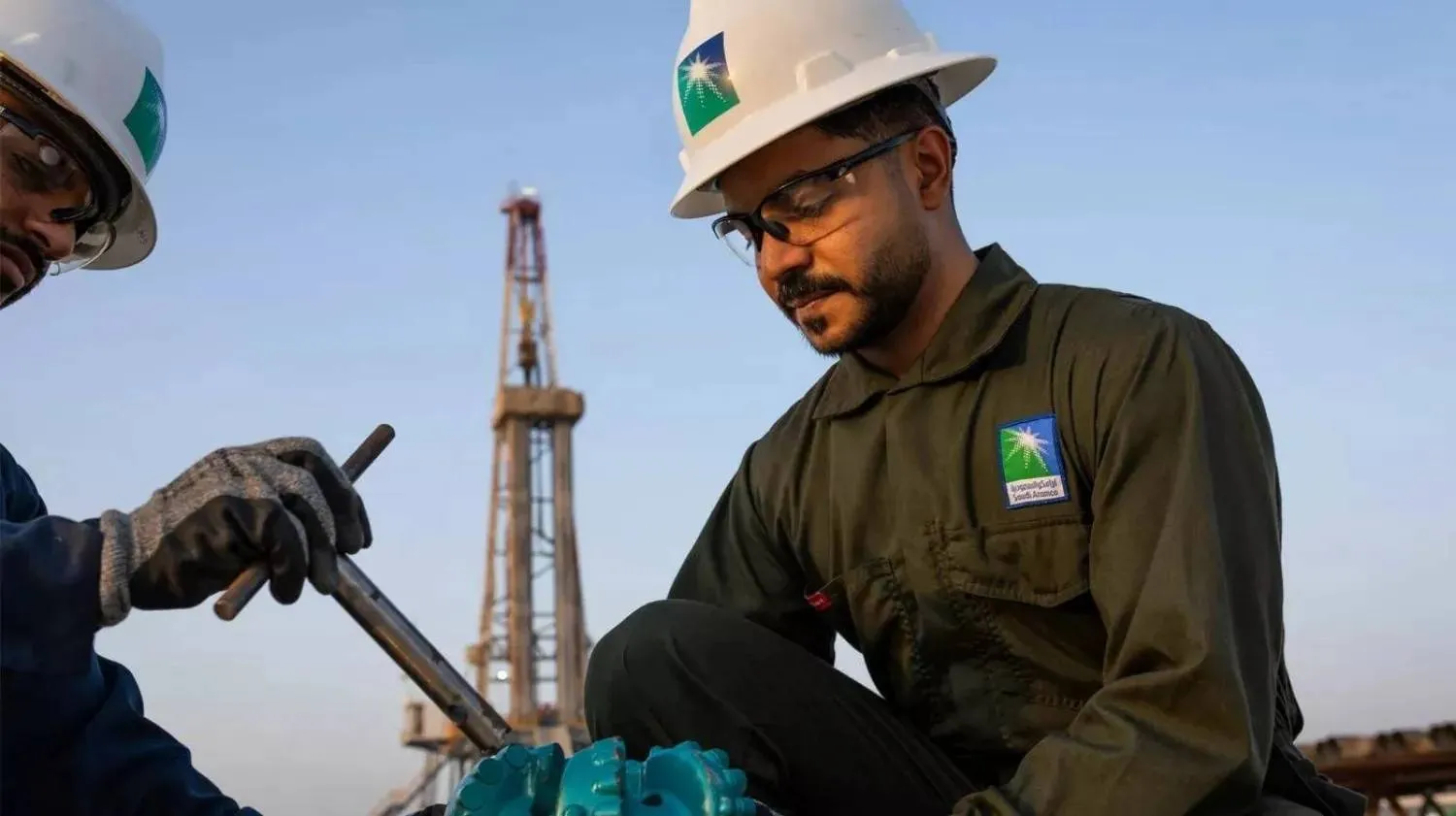
Two workers carry out tasks at one of Saudi Aramco's facilities. (Aramco)
TT

Aramco Namaat: 5 Years of Industrial Localization and Economic Diversification in Saudi Arabia

Two workers carry out tasks at one of Saudi Aramco's facilities. (Aramco)

Saudi Aramco is expanding its investments in industries and services linked to its core business through the Aramco Namaat program, which has attracted nearly SAR 216 billion ($58 billion) in investments and helped establish 58 new companies since its launch in 2021, according to information obtained by Asharq Al-Awsat.

The program reflects the company's strategy of building local and international industrial partnerships aimed at localizing manufacturing and advanced technologies, strengthening supply chains, and contributing approximately SAR 103 billion ($27.4 billion) to the Kingdom’s gross domestic product.

Aramco Namaat is an industrial investment and strategic partnership program launched by the Saudi energy giant to attract local and international companies to invest in the Kingdom, develop domestic industries, create jobs for Saudis, and support economic diversification in line with Saudi Vision 2030.

Over the past five years, the program has reinforced Aramco’s role in excellence, innovation, and strategic planning, moving from one success to another by leveraging the company’s unique technical, commercial, and execution capabilities.

These five years have marked a turning point by transforming promising business ideas into tangible investment opportunities, turning what was once a vision into successful industrial projects that support a prosperous and sustainable future.

By the Numbers

According to information obtained by Asharq Al-Awsat, Aramco Namaat has become the meeting point between ambition and execution. The program has contributed to the launch of 58 active companies and attracted nearly SAR 216 billion ($58 billion) in investments.

Its impact extends beyond investment figures, contributing around SAR 103 billion ($27.4 billion) to Saudi Arabia’s GDP. This highlights the program’s central role in strengthening the domestic economy, localizing key industrial capabilities, and creating employment opportunities for Saudi men and women.

An Integrated Ecosystem

Aramco Namaat serves as a key tool for Saudi Aramco in building industrial investment partnerships. The program’s strategy focuses on creating value through three main pillars:

• Operational resilience for Saudi Aramco
• Technological resilience
• Development of new diversified industries

At the same time, it actively contributes to achieving the ambitions of Vision 2030.
The program seeks to empower national companies and generate value throughout Aramco’s ecosystem across four main areas: manufacturing, industrial services, digitalization and sustainability.

The program has strengthened public-private partnerships and fostered close collaboration with global and local partners, creating large-scale investment opportunities, establishing leading companies, and attracting foreign direct investment, all of which have enhanced the resilience and sustainability of supply chains.

Many of these investments are also supported by Saudi incentive programs that encourage companies to increase local investment. These initiatives have opened new opportunities for industrial-investment partners to participate in and benefit from the company’s long-term growth prospects.
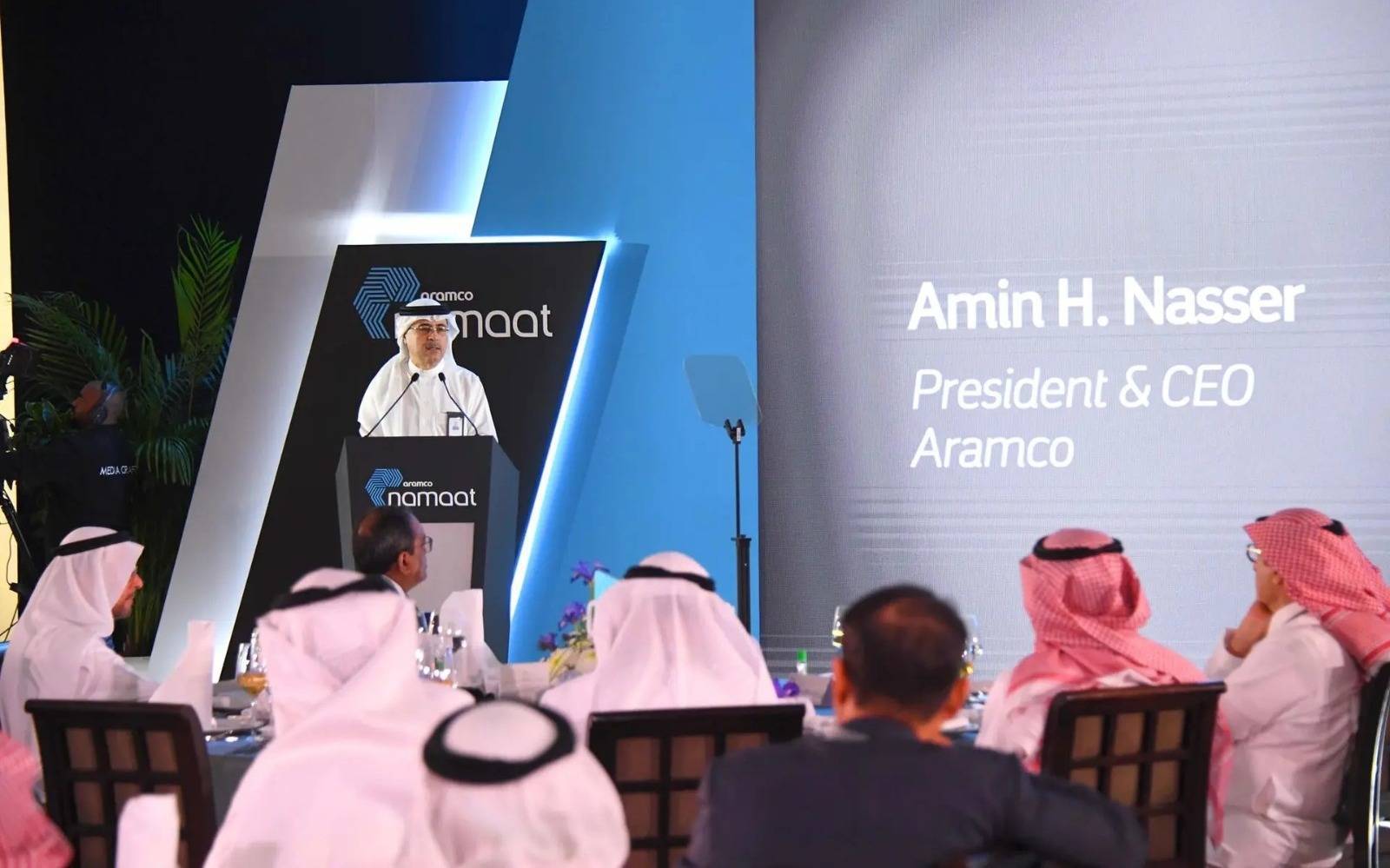
President and CEO of Saudi Aramco Amin Nasser speaks with partners in the Namaat program. (SPA)

Industrial Services

Since its launch, Aramco Namaat has achieved major milestones across its four focus areas and has helped shape the future of industrial localization and economic diversification in the Kingdom.

In manufacturing, the program has supported local production of high-voltage subsea power cables, thick-wall pressure vessels and corrosion-resistant steel pipes.

These initiatives have enabled the localization of strategic and critical manufacturing capabilities.

The program is also working to establish an advanced global hub in Saudi Arabia specializing in modern metal reclamation technologies and production of advanced refining catalysts.

This strategic initiative positions the Kingdom as a leading regional center for sustainable resource recovery, high-value industrial production, and clean-energy solutions, driving economic growth and supporting Saudi Arabia’s commitment to a more sustainable and environmentally responsible economy.

Within industrial services, Aramco Namaat has supported the localization of a metal casting and forming facility, helping strengthen domestic manufacturing of critical products and enhancing the resilience of industrial supply chains.

The program has also contributed to the development of Saudi engineering, procurement, and construction (EPC) companies, increasing their ability to deliver reliable and competitive projects both within and outside the Kingdom.

Digitalization and Sustainability

Aramco Namaat has continued its contribution to national development through key digitalization initiatives.

Among the most notable are the localization of advanced digital technologies, including the establishment of a national information technology services company that provides integrated solutions in software development, consulting, and technical support to meet the technological needs of various sectors.

The program has also supported Unified Telecom, and more than seven companies located in the Digital Hub at King Salman Energy Park (SPARK).

The program has also made significant contributions to sustainability, including a project to localize the production of specialized glass.

Through the GulfGuard joint venture, it supported Guardian Glass in expanding specialized glass manufacturing within the Kingdom.

The project focuses on high-performance architectural glass, helping meet growing regional demand for energy-efficient buildings. The collaboration included the addition of new float-glass production lines and glass-processing facilities in Jubail Industrial City, strengthening the local supply chain with advanced products and delivering significant gains in technology localization.

The Road Ahead

Building on these achievements, Aramco Namaat is moving into its next phase with a focus on developing strategic industrial opportunities that strengthen Saudi Aramco’s ecosystem while accelerating the Kingdom’s industrial transformation.

Its priorities include driving innovation, supporting local industry, diversifying the economy, encouraging ambitious ideas and entrepreneurship, building resilient supply chains and localizing critical and advanced technologies.

The program continues to attract global partners to help establish new industrial capabilities while expanding advanced digital and manufacturing capacities and accelerating the adoption of industrial and digital solutions across emerging sectors.

In this way, Aramco Namaat is becoming part of a broader success story that reflects the Kingdom’s achievements in energy, industry, and innovation, both regionally and globally.


Saudi Arabia Offers 100% Social Insurance Debt Waiver to Businesses That Have Exited Market

Officials from the General Organization for Social Insurance at an earlier meeting with businessmen and businesswomen at the Riyadh Chamber (SPA)
TT

Saudi Arabia Offers 100% Social Insurance Debt Waiver to Businesses That Have Exited Market

Officials from the General Organization for Social Insurance at an earlier meeting with businessmen and businesswomen at the Riyadh Chamber (SPA)

Saudi Arabia's General Organization for Social Insurance (GOSI) has made businesses that have ceased operations and exited the Saudi market eligible for a 100% waiver of outstanding social insurance debts, subject to approved conditions, Asharq Al-Awsat has learned.

The move aims to address accumulated financial obligations, help businesses settle their accounts and close outstanding cases, and support stability in the Kingdom's private sector while resolving financial difficulties faced by companies that have left the market.

The measure is part of a broader package of improvements GOSI is implementing to enhance services for employers and businesses, in response to feedback and suggestions gathered during direct meetings with officials and business owners, in cooperation with chambers of commerce.

Taking Economic Conditions into Account

The initiative has economic and regulatory implications beyond debt relief, seeking to address financial and administrative liabilities left behind by businesses that have exited the market and facilitate the formal closure of their records in accordance with regulations.

Its main significance lies in striking a balance between protecting the rights of the social insurance system and its contributors, on the one hand, and taking into account the economic circumstances of businesses that have ceased operations, on the other.

It also reinforces regulatory flexibility in the business environment, ensuring that accumulated obligations do not become a permanent obstacle to the settlement of financial and administrative affairs.

Enhancing Market Attractiveness

The initiative reflects a more flexible approach to dealing with business distress, focusing on resolving outstanding liabilities rather than allowing them to remain a continuing burden on business owners.

This approach is expected to strengthen confidence in regulatory procedures and enhance the attractiveness of Saudi Arabia's business environment.

The move is particularly significant given the changing nature of the business sector, with new companies entering the market each year while others cease operations because of competition, rising costs, or shifting market conditions.

Settling the social insurance accounts of businesses that have exited the market could ease the administrative and financial burden on their owners, help them reorganize their financial affairs and potentially pave the way for a return to commercial activity in the future, without old liabilities remaining an obstacle, subject to applicable regulations.

According to information obtained by Asharq Al-Awsat, GOSI has notified all companies and establishments of improvements introduced to its business services, including the debt waiver.

The measure is designed to enable businesses that have ceased operations to resolve their outstanding social insurance obligations and complete the regulatory procedures associated with closing their operations, easing the financial burden on owners whose businesses are no longer active.

Service Improvements

In a related development, GOSI's improvements include upgrades to services for registering businesses, terminating their activities and managing ownership records, alongside efforts to resolve recurring technical problems and improve the quality of digital services.

The changes are intended to improve the user experience and accelerate transaction processing.

GOSI has also expanded electronic payment options through its GOSI Business app, allowing employers to pay amounts exceeding 30,000 Saudi riyals ($8,000) in multiple installments.

The measure aims to make it easier for businesses to meet their financial obligations while providing greater payment flexibility.

The updates also include measures to increase transparency in transaction processing by clarifying the reasons for rejecting occupational injury claims and contributor-related transactions.

Notifications have also been introduced through the GOSI Business and Tawakkalna apps to inform users when applications are received, accepted, returned, or rejected.

Together, the improvements reflect GOSI's efforts to modernize its digital services, simplify procedures for employers and improve the management of social insurance obligations.

The measures are also intended to support the business environment and help resolve outstanding financial and administrative matters involving businesses.


From Aramco's Profits to State Budget Revenue: How Do Oil Proceeds Reach Government Coffers?

A general view shows Ras Tanura's oil production plant near Dammam in Saudi Arabia's Eastern Province (AFP)
TT

From Aramco's Profits to State Budget Revenue: How Do Oil Proceeds Reach Government Coffers?

A general view shows Ras Tanura's oil production plant near Dammam in Saudi Arabia's Eastern Province (AFP)

Saudi Aramco's financial results and Saudi Arabia's third-quarter budget performance report, released on the same day, revealed a divergence between the company's rising profits and declining government oil revenue recorded in the state budget.

While Aramco's net income rose 34.2% during the first nine months of 2026 to SAR 380.6 billion ($101.5 billion), government oil revenue fell 1.3% over the same period and declined approximately 23% in the third quarter alone.

Comparing the two indicators does not necessarily imply a direct relationship between the company's profits and the revenue flowing into government coffers. Corporate earnings are recognized under different accounting principles from those governing the calculation and collection of government revenue.

The financial relationship between Aramco and the government also involves multiple channels, including taxes, royalties, dividends and offsetting settlements, each with its own payment and collection schedule.

Aramco's Profits and Cash Flows

Aramco reported net income of SAR 380.6 billion ($101.5 billion) for the first nine months of 2026, compared with SAR 283.6 billion ($75.6 billion) in the corresponding period last year, an increase of 34.2%.

Adjusted net income reached SAR 368.9 billion ($98.4 billion), up from SAR 302.3 billion ($80.6 billion) a year earlier.

However, the increase in earnings was not accompanied by a comparable rise in cash generated by the company's operations, according to its financial report.

Cash flow from operating activities totaled SAR 355.8 billion ($94.9 billion), compared with SAR 357.6 billion ($95.4 billion) in the same period last year, remaining largely unchanged.

Aramco attributed this to changes in working capital, which refers to funds tied up in day-to-day operations, including outstanding sales receivables, inventories and amounts owed to or by the company.

These movements limited the extent to which higher earnings translated into operating cash flow.

Meanwhile, free cash flow increased to SAR 221.6 billion ($59.1 billion), compared with SAR 217.3 billion ($57.9 billion) a year earlier.

This metric measures the cash remaining after capital expenditures are deducted from operating cash flow. It benefited from a reduction in capital expenditures to SAR 134.2 billion ($35.8 billion), from SAR 140.3 billion ($37.4 billion) in the comparable period.

Oil Revenue in the State Budget

On the other side of the equation, Aramco's earnings growth was not mirrored by a corresponding increase in government oil revenue.

Ministry of Finance data showed that oil revenue fell 23% year on year in the third quarter to SAR 116.5 billion ($31.1 billion), compared with SAR 150.8 billion ($40.2 billion) in the same period last year.

Over the first nine months of 2026, oil revenue totaled SAR 446.3 billion ($119 billion), down from SAR 452.4 billion ($120.6 billion) in the corresponding period of 2025, representing a relatively modest decline of approximately 1.3%.

By contrast, non-oil revenue increased 8% during the nine-month period to SAR 412.5 billion ($110 billion), helping lift total budget revenue by 3% to SAR 858.9 billion ($229 billion).

In the third quarter alone, non-oil revenue rose 20% to SAR 142.6 billion ($38 billion).

The growth in non-oil revenue therefore helped cushion the impact of declining oil revenue on the government's overall income.

Third-quarter expenditure totaled SAR 343.4 billion ($91.6 billion), against revenue of SAR 259.1 billion ($69.1 billion), resulting in a quarterly budget deficit of approximately SAR 84.3 billion ($22.5 billion).

Why Don't the Figures Move in the Same Direction?

Part of the divergence between Aramco's financial results and government budget revenue stems from the different nature of the figures themselves.

The company's profits are recognized according to its accounting results, while budget figures reflect government revenue actually collected during the reporting period.

Moreover, the government's financial returns from Aramco's operations flow through several channels, including taxes, royalties and dividends, with differences in when these amounts become due and when they are paid.

Accounting profits do not necessarily translate into cash inflows during the same period. Liquidity is affected by the timing of receivables collection, inventory movements and operating payments.

This distinction is also evident in financial transactions between Aramco and the government, which are not limited to direct cash payments but include the settlement of certain mutual obligations through offsets.

For example, Aramco's cash income tax payments fell to SAR 2.8 billion (approximately $747 million) in the third quarter, compared with around SAR 51 billion ($13.6 billion) in the second quarter, as amounts due to the company from the government were settled by offsetting them against its tax obligations.

Under this mechanism, amounts owed to one party are deducted from what that party owes the other, rather than transferring the full amount in cash.

Such offsets affect both the volume of cash payments and the timing of financial transfers between Aramco and the government.

Consequently, government oil revenue does not necessarily move in the same direction as Aramco's financial results, since each is influenced by different factors and accounting mechanisms.

While the company's profits reflect its financial performance during a given period, government revenue recorded in the budget depends on the taxes, royalties and dividends due to the state, as well as the timing of their collection and settlement.

Aramco's profits may therefore increase during a period when government oil revenue is declining.

Overall, the results demonstrate Aramco's continued ability to generate strong profits and maintain substantial cash flows, supporting its capacity to sustain investment and distribute dividends to shareholders, foremost among them the Saudi government.

At the same time, growth in non-oil revenue underscores the importance of diversifying budget income sources to mitigate fluctuations in oil revenue, broaden the sources supporting public finances and advance the Kingdom's economic transformation.


Crypto Dips on Democrat Midterm Wins, Binance Hack Dents Optimism

Representation of cryptocurrencies are seen in this illustration taken September 10, 2025. (Reuters)
TT

Crypto Dips on Democrat Midterm Wins, Binance Hack Dents Optimism

Representation of cryptocurrencies are seen in this illustration taken September 10, 2025. (Reuters)

Cryptocurrencies briefly dipped on Wednesday as Democrats won majorities in both the Senate and House in the US midterm elections, a potential blow to an industry that has pushed for faster deregulation for digital assets.

The sector has spent more than $300 million backing crypto-friendly Democrats and Republicans in roughly equal measure during the current and previous election cycles, hoping to pass legislation US crypto companies say will ‌put them on ‌a solid legal footing and allow them to thrive.

Bitcoin ‌briefly ⁠touched a six-week ⁠low before recovering to trade roughly flat by 0715 GMT at $78,070. Ether traded at $2,292, up just 1%.

Bitcoin has fallen by around 41% since hitting record highs above $122,000 in October 2025, bringing the value of the broader crypto market to around $2.61 trillion, according to CoinMarketCap.

The market has lost some $300 billion in value in the last month alone, as deepening concern about future returns from AI and the ⁠strain of rising borrowing costs pushed investors into less risky ‌assets such as government bonds and ‌safe-haven currencies.

Sentiment has also been hurt by the $6 billion hack of the Binance platform last ‌week, the largest heist in history.

On Tuesday, Binance customers had withdrawn ‌a net $4.72 billion from the world's largest cryptocurrency exchange since it reopened following the hack at the weekend.

"The market may be re-evaluating the risk-reward profile of crypto assets. On one hand, the string of security incidents is forcing investors to re-examine the ‌industry's security infrastructure and custody risks," Tim Sun, senior researcher at HashKey, said.

"On the other hand, potential shifts in ⁠the US political landscape ⁠could stall the progress of structural crypto legislation and institutional framework development. All of these factors leave the crypto market facing strong headwinds," he said.

US President Donald Trump, who vowed to make the United States the "crypto capital of the world" during his 2024 presidential campaign, has made his own forays into digital assets, with the launch of his "Trump" meme coin, plus his family's World Liberty Financial crypto platform, among other ventures.

The sector has seen sweeping reforms in the almost two years since Trump returned to office, including lighter enforcement and the creation of a strategic bitcoin reserve.

Washington has also allowed for easier access to banking and exchange-traded products and passed a federal stablecoin law that could help these assets move into the mainstream payments and money transfer systems.