Miras: Energy Security, Sustainability, or Affordability Cannot Be Sacrificed

At the opening of the WPC he said that Saudi Arabia plays a pivotal role in the global energy system.

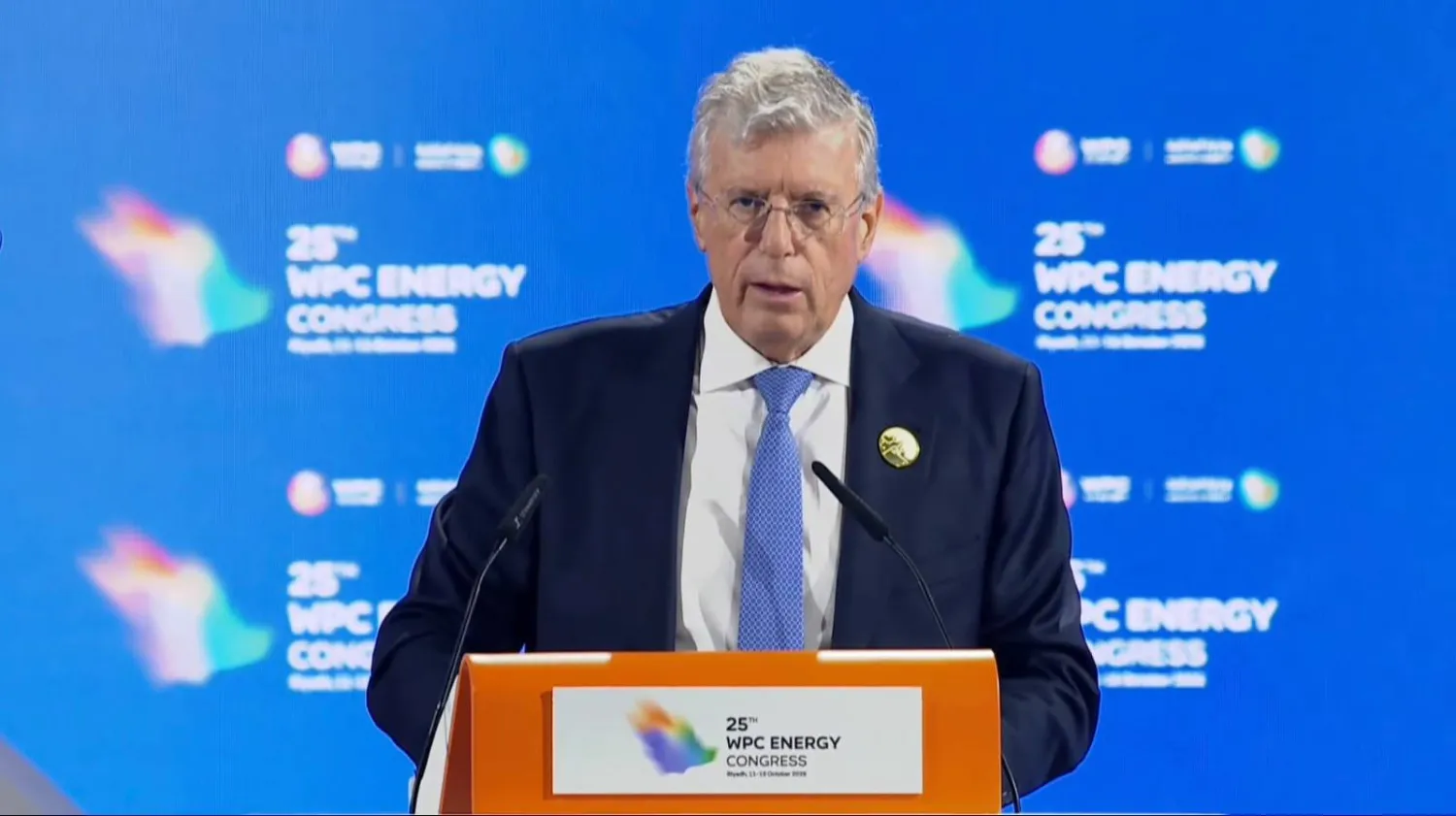
Pedro Miras addresses attendees as the 25th WPC kicks off in Riyadh (Asharq Al-Awsat)
TT

Miras: Energy Security, Sustainability, or Affordability Cannot Be Sacrificed

Pedro Miras addresses attendees as the 25th WPC kicks off in Riyadh (Asharq Al-Awsat)

Pedro Miras, President of WPC Energy, affirmed that the world needs more energy from multiple sources to keep pace with population and economic growth, emphasizing the necessity of balancing supply security, affordability, sustainability, and economic development, without sacrificing any of these priorities.

In his speech at the opening of the 25th WPC in Riyadh, Miras stated that Riyadh is the most suitable place to host the conference, noting the pivotal role Saudi Arabia plays in the global energy system, and its continued leadership in investments, innovation, and technological advancement in the sector.

He added that the conference, which gathers government and industry leaders, academics, technology experts, financiers, and international institutions over four days, serves as a platform to discuss ways to meet the world's increasing energy needs, while supporting prosperity, sustainability, and security for future generations.

He pointed out that the world is undergoing a period of profound transformations, significant challenges, and exceptional opportunities, with the global population expected to approach 10 billion by mid-century, accompanied by increased energy demand resulting from population growth, urbanization, and improved living standards.

He explained that energy consumption and human development have gone hand-in-hand throughout modern history, as the availability of energy has contributed to improving health, education, and living standards, emphasizing that continued human progress requires more energy.

He noted that oil and gas still provide a significant share of the world's energy needs, despite decades of innovation and growth in new technologies, considering this an affirmation of the scale of the upcoming challenge and the need to utilize multiple energy sources.

Four Pillars for the Future of Energy
Miras stressed that the challenge is no longer about choosing between energy security, affordability, and sustainability, but rather about achieving progress in these areas in parallel with economic development.

He stated that billions of people around the world aspire to improve their living conditions, access better health and education services, and broader economic opportunities, all of which require reliable energy availability and continued investment in its system.

He added that countries differ in their circumstances, resources, priorities, and developmental stages, which necessitates adopting diverse paths to achieve the future of energy and utilizing a wide range of technologies and solutions, noting that this diversity represents a source of strength.

He affirmed that technological neutrality remains one of the fundamental principles of the WPC, allowing various energy sources and technologies to contribute to building a secure, affordable, and sustainable system.

Innovation Alone Is Not Enough Without Investment and Partnerships
Regarding technological developments, Miras said that artificial intelligence, digitalization, advanced materials, new fuels, hydrogen, and carbon capture, utilization, and storage technologies, along with other technologies, are reshaping the global energy landscape.

However, he stressed that technology alone is not enough to achieve the desired transformation, as it requires effective policies, stable and predictable regulatory frameworks, long-term investments, and enhanced international cooperation.

He explained that energy security remains essential for economic growth, social stability, and human well-being, and that a successful energy sector transformation cannot be achieved without ensuring supply security. Furthermore, the long-term sustainability of this security requires sufficient investments across various components of the energy system.

He added that no single country, company, or technology can address global energy challenges alone, emphasizing the importance of partnerships among governments, industry, academia, and international institutions.

Riyadh: A Platform for Global Dialogue
Miras expressed his appreciation to the Kingdom, the Minister of Energy, and the Saudi Minister of Industry and Mineral Resources, Prince Abdulaziz bin Salman, for their efforts in organizing and hosting the conference in Riyadh.

He stated that for over 90 years, the WPC has provided a platform bringing together governments, industry, academia, and international institutions to exchange ideas, deepen understanding, and explore practical solutions for sector challenges.

He noted that the importance of dialogue and cooperation is increasing amid the uncertainty and fragmentation the world is experiencing, expressing his hope that the conference discussions will contribute to developing partnerships and exploring innovations that will shape the future of energy.

He concluded by affirming that the goal is to build an energy future that leaves no one behind, achieving progress in supply security, affordability, sustainability, and economic development, based on innovation, cooperation, and mutual respect.


German Auto Crisis Deepens as Supplier Announces Job Cuts, Site Closures

05 November 2024, Bavaria, Herzogenaurach: A view of the headquarters of automotive and industrial supplier Schaeffler in Franconia. (dpa)
TT

German Auto Crisis Deepens as Supplier Announces Job Cuts, Site Closures

05 November 2024, Bavaria, Herzogenaurach: A view of the headquarters of automotive and industrial supplier Schaeffler in Franconia. (dpa)

German auto parts supplier Schaeffler said Tuesday that it planned to cut almost 3,500 jobs and close five sites in Europe as the crisis gripping the region's car industry deepens.

Like other German carmakers and suppliers, the group has struggled with competition for its key products, which include ball bearings and electric vehicle parts, especially from Chinese manufacturers.

Three-fourths of the 3,460 job cuts and four of the five site closures will be in Germany, the company said in a statement, pointing to "above-average" costs for workers in Europe's top economy.

The cuts, to be completed by 2028, are around three percent of the group's global workforce of almost 110,000. They should result in annual savings of around 300 million euros ($336 million) from 2030, it said.

Schaeffler, in a statement, said it was "responding to the persistently challenging environment in the automotive industry."

There was "an overall downturn in the market and intensifying competition... characterized by weakened demand for internal combustion engine vehicles and a delayed ramp-up of electric mobility," it added.

The cuts would be mainly focused on production and research and development.

Sites would be closed in Berlin, Dortmund, and two other towns in western Germany. A small site in Belgium will also be shuttered.

There will also be job cuts at sites in France and Slovakia.

Schaeffler said some of the job losses would be offset by the creation of positions in "future-oriented fields", such as humanoid robotics and defense.

While not as well-known as the car titans they work with, such as Volkswagen, BMW and Mercedes, Germany's suppliers are a crucial part of the auto ecosystem, providing everything from braking systems to in-car electronics.

But as their customers have fallen into crisis, battling Chinese competition, high production costs at home and weakening demand, suppliers have been hit hard.

Volkswagen is planning to cut around 120,000 jobs across its brands by 2030.

German industrial titan Bosch, the world's biggest supplier of car equipment, announced last year 13,000 job cuts, mostly in its auto division.


Oil Rises as Peace Prospects Dim after US Hits Iran's Qeshm Island

Oil rigs operating in the Atyrau region's Irankol field in Kazakhstan (Reuters)
TT

Oil Rises as Peace Prospects Dim after US Hits Iran's Qeshm Island

Oil rigs operating in the Atyrau region's Irankol field in Kazakhstan (Reuters)

Oil prices rose more than $1 on Tuesday, as an Iranian official said a deal to the end the war was far off, while the United States struck Iran's Qeshm Island, fueling concerns over the escalation of hostilities and risks to energy supplies.

US West Texas Intermediate crude was up $1.6, or 1.66%, at $98.06 a barrel while Brent crude futures rose $1.84, or 1.76%, to $106.61 a barrel by 0744 GMT.

Both benchmarks had dropped more than 7% on ‌Monday as ‌talks between Iranian and Qatar officials lifted hopes for an ‌end ⁠to the US-Israeli war ⁠with Iran that were soon dashed.

A US official said on Monday the US had struck Iran's Qeshm Island. Some officials described the assaults as defensive and aimed at preventing Iran from attacking commercial ships in the Strait of Hormuz.

On Tuesday, a senior Iranian official told Reuters that both countries were far from reaching a deal to end the war, and Tehran would not accept Washington's "excessive demands".

Iran's ⁠parliament speaker Qalibaf said Tehran had given Washington a "strong and ‌rational response," adding, "The ball is in the US' ‌court," according to state media.

"The report added a degree of risk premium back ‌into the oil price," said Tim Waterer, chief market analyst at KCM ‌Trade.

"Just when markets were starting to price in a more diplomatic path, this reminder of ongoing military activity has flipped the tone."

The war started in late February has become a leading cause of high gasoline prices weighing on voters, and Trump is under pressure ‌to end the conflict, with mid-term elections set for Tuesday.

"For now, the risk of supply disruptions continues to provide a ⁠floor for prices, ⁠while uncertainty over Washington's next move, political developments and traders' reluctance to carry aggressive positions are capping the upside," said Priyanka Sachdeva, head of market insight at Phillip Nova.

Brent ended October at its highest in six months on concerns that the conflict could escalate again after the US midterm elections.

A Ukrainian drone attack damaged an oil refinery in the Russian city of Yaroslavl, governor Mikhail Evrayev said on Tuesday.

Russia launched a massive overnight strike on Ukrainian energy facilities in the Vinnytsia, Dnipropetrovsk and Kharkiv regions, Interfax news agency said, citing the defense ministry.

Additionally, the US will bring together delegations from Ukraine and Russia in Abu Dhabi on November 10 and 11 to discuss ending the war, post-war security pacts and de-escalation efforts.


Strength of Saudi Arabia's External Position Supports Economy Despite Challenges of War

A view of Riyadh, Saudi Arabia. (SPA)
TT

Strength of Saudi Arabia's External Position Supports Economy Despite Challenges of War

A view of Riyadh, Saudi Arabia. (SPA)

The Saudi economy continues to benefit from the strength of its external position, supported by significant reserves and revenues from its oil and non-oil exports, despite the challenges imposed by the regional war on trade and tourism.

Data from the second quarter of the current year showed a decline in the current account deficit by around 30 percent compared to the same period last year, at a time when personal remittances abroad recorded a record level.

The external position refers to the totality of the Kingdom's economic and financial transactions with the rest of the world, including trade in goods and services, investment flows, financial transfers, and foreign reserves. Its resilience reflects the economy's capability to generate foreign currency, meet its external obligations, and absorb shocks, thereby providing a cushion to confront disruptions in global trade and markets.

These indicators reflect the economy's capability to maintain a significant portion of its external flows under extraordinary regional circumstances, even though the components of the balance of payments were affected to varying degrees. Export revenues remained a primary source of funds entering the Kingdom, and investment returns contributed to supporting the current account, against service payments and outward remittances.

According to data from the Saudi Central Bank, the current account deficit reached around $9.5 billion in the second quarter of 2026, compared to around $13.4 billion in the same period last year. The account had recorded a surplus of $4.1 billion in the first quarter, as oil revenues rose due to higher prices, coinciding with a decline in imports at the beginning of the war.

The current account is one of the primary components of the balance of payments, measuring the revenues the Kingdom generates through exports of goods and services and investment income, against what it pays to purchase goods and services and transfer funds abroad. Therefore, reading its status does not depend on exports alone, but encompasses the totality of current financial flows between the Saudi economy and the world.

As for the financial account, it monitors the movement of investments and capital between the Kingdom and the world, including foreign investments within the Saudi economy, investments by Saudi residents abroad, alongside flows of loans, deposits, and other financial instruments.

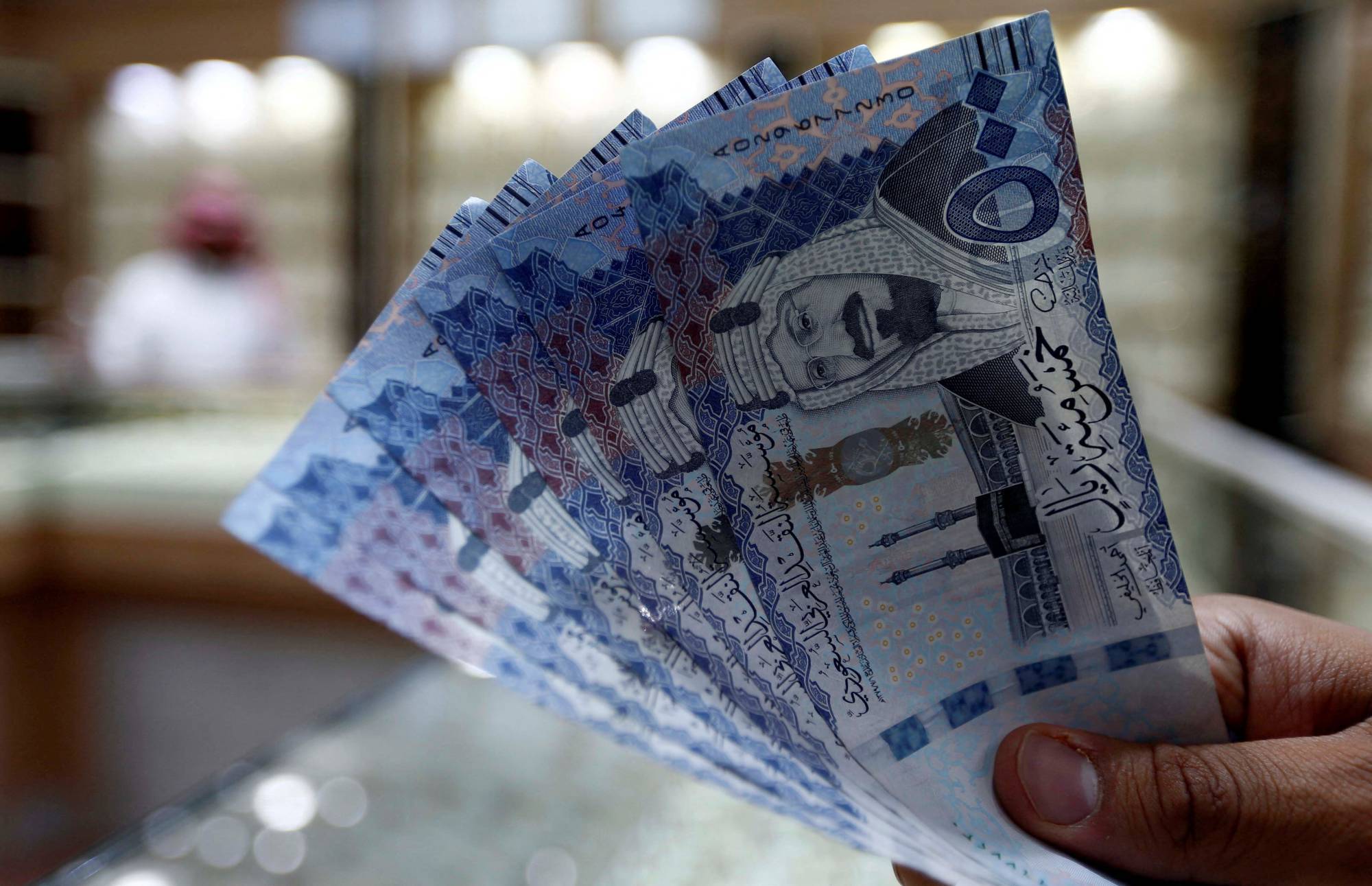
A Saudi money changer displays Saudi Riyal banknotes at a currency exchange shop in Riyadh, Saudi Arabia July 27, 2017. (Reuters)

Exports continue to support flows

Despite the challenges facing trade movements, oil and non-oil exports remained an important source of external revenues. The value of oil exports reached around $54.2 billion in the second quarter, compared to $49.6 billion in the same period last year, while non-oil exports recorded around $21 billion.

These figures demonstrate the export sector's continued ability to provide significant revenues, despite a decline in exports compared to the first quarter, in light of the circumstances surrounding trade and shipping movements because of the war.

The Kingdom achieved a surplus of $21.7 billion in goods trade; however, this surplus shrank to around $5.4 billion when service trade was factored in as well, which recorded a deficit of $16.4 billion due to outward service payments exceeding the revenues generated from them.

Remittances and investment returns

In contrast to payments related to services and outward remittances, the Saudi economy recorded supportive flows from investment returns. The primary income item achieved a surplus of around $4.4 billion in the second quarter, up from $3.5 billion in the same period last year, supported mainly by returns on portfolio investments.

Personal remittances abroad rose to a record level of around $18.2 billion, representing an increase of more than 30 percent year-on-year, to constitute one of the most prominent payment items in the current account.

These figures highlight the multi-faceted nature of the current account components; alongside export revenues, investment returns contribute to supporting external revenues, while being offset by payments for services and personal remittances abroad. Consequently, the account balance is determined by the collective outcome of these components combined, rather than by the trajectory of a single item in isolation from the rest.

Investment flows reflect capital movements

Moving beyond the current account, financial account data reveals another aspect of the Saudi economy's relationship with the world, represented by cross-border capital and investment movements. While the current account records revenues from exports, services, investment income, and remittances, the financial account monitors the purchase and sale of financial assets, direct investment, loans, deposits, and other investment and financing transactions.

Within this framework, Saudi Central Bank data showed shifts in investment flows between the first and second quarters. In the first quarter, Saudi investors sold foreign equities worth around $23 billion and increased their external deposits by around $13 billion, while Saudi entities borrowed about $27 billion from non-residents.

In the second quarter, residents turned to purchasing foreign equities worth around $9 billion, while Saudi entities issued debt instruments valued at around $5 billion.

In regard to direct investment, investment inflows from abroad into the Kingdom continued at levels exceeding $5 billion in the second quarter despite regional challenges, reaching around $5.2 billion compared to $6.2 billion in the first quarter. Direct investments by Saudi residents abroad declined to some $1.1 billion, down from $7.9 billion in the previous quarter, which contributed to a shift in net direct investment to an inflow of around $4 billion, after having recorded an outflow of about $1.7 billion in the first quarter.

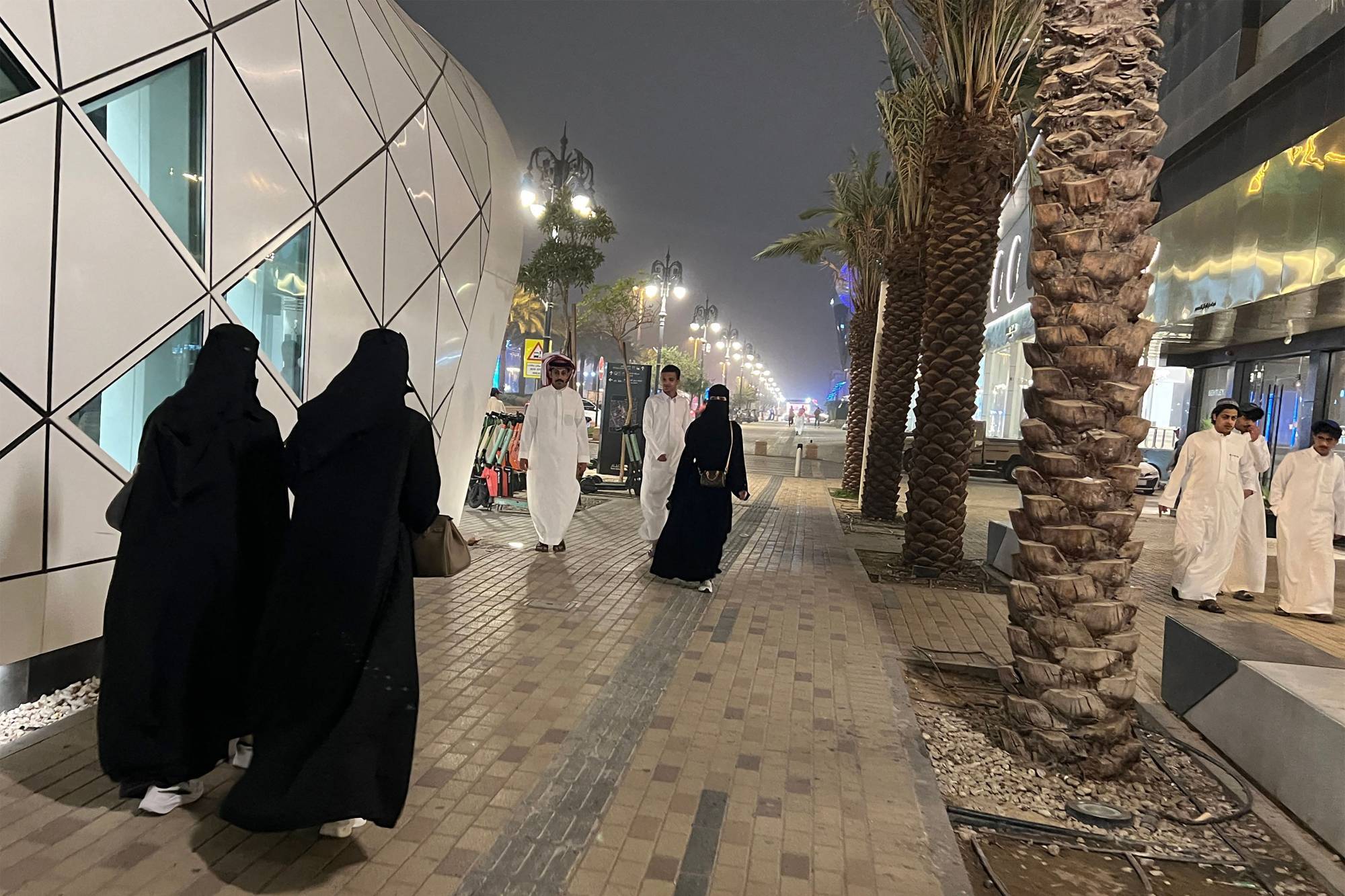
People walk along Riyadh's commercial Tahlia Street late at night on April 4, 2026. (AFP)

Reserves boost capability to confront fluctuations

The strength of the external position remains one of the elements supporting the Saudi economy in confronting regional and international turmoil. Foreign exchange reserves at the Saudi Central Bank reached around $440.7 billion at the end of September, representing a 3.7 percent increase year-on-year, in addition to the substantial foreign assets held by other public sector entities.

These reserves and assets provide an important cushion for dealing with periods of uncertainty, and boost the Kingdom's capability to confront fluctuations in external flows and maintain the stability of its financial position.

The International Monetary Fund's evaluation in the Article IV consultation report issued in July 2026 pointed to the strength of Saudi reserves and their ability to comfortably cover import needs. It also explained that rising domestic investment increases the demand for imports, particularly capital goods, reflecting an aspect of the requirements for economic transformation and project implementation.

While second-quarter data reveals the pressures imposed by regional developments on certain components of the balance of payments, the year-on-year decline in the current account deficit and the continued strength of external reserves underscore the economy's capacity to absorb some of these repercussions.

The sustainability of this position will remain linked to the recovery of trade and travel movements, oil revenue trends, and the continued expansion of non-oil sectors' contribution to exports and the provision of foreign exchange resources.