Diversified Oil Export Routes Pave the Way for Strong Saudi Economic Recovery in 2027

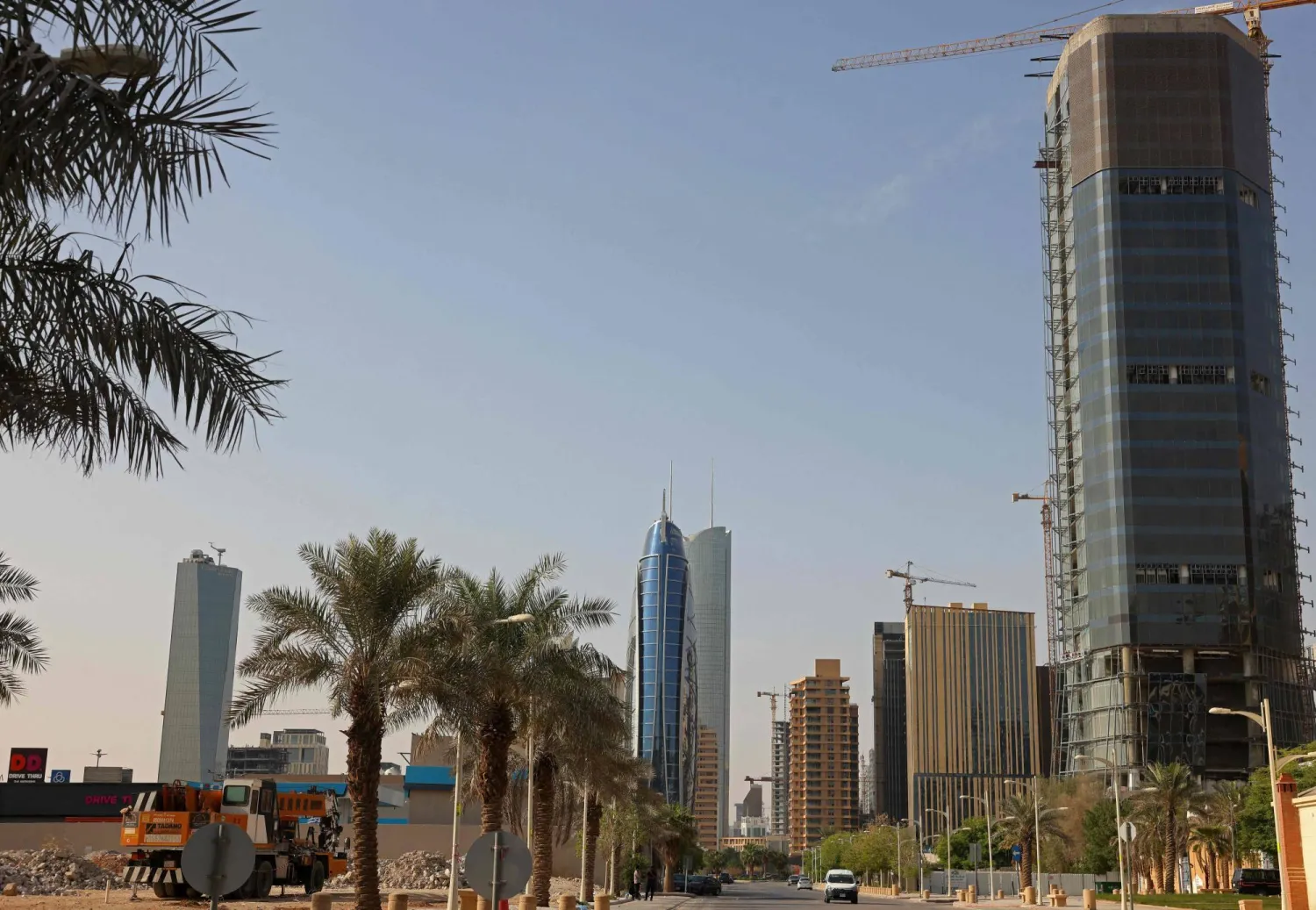
Cars drive past city skyscrapers in Riyadh on October 11, 2026. (Photo by Fayez Nureldine / AFP)
TT

Diversified Oil Export Routes Pave the Way for Strong Saudi Economic Recovery in 2027

Cars drive past city skyscrapers in Riyadh on October 11, 2026. (Photo by Fayez Nureldine / AFP)

As war reshapes energy flows across the region, the International Monetary Fund (IMF) is forecasting a strong recovery for Saudi Arabia's economy in 2027, with growth projected at 7.9 percent, driven by renewed momentum in production and exports as disruptions to shipping ease. Compared with Gulf economies more exposed to disruptions in transit through the Strait of Hormuz, this forecast rests on Saudi Arabia's diversified oil export routes, which help cushion the impact of the shock.

The IMF has also revised its outlook for the Saudi economy in 2026, projecting a smaller contraction than in its previous forecasts. The trajectory of the recovery will therefore depend on how long the disruptions persist and how quickly energy and trade flows return to normal.

The IMF's forecasts reflect both the scale of the shock facing regional economies and the recovery expected as its effects subside. In its World Economic Outlook report, titled Resilience Under Strain, Urgent Choices, the IMF projects that the economies of the Middle East and Central Asia will contract by 0.3 percent in 2026, followed by growth of 6.3 percent in 2027.

Compared with its April estimates, the IMF lowered its 2026 forecast by 2.2 percentage points while raising its 2027 projection by 1.7 percentage points. The revisions reflect an assumption that the Strait of Hormuz will remain closed longer than previously expected, intensifying pressure on regional economies this year but setting the stage for a stronger recovery once it reopens and production, exports and transportation resume.

Under this scenario, the IMF expects GDP to contract by 16.7 percent in Kuwait, 16 percent in Iraq, 15.6 percent in Qatar and 11.3 percent in Bahrain in 2026. In 2027, all four economies are projected to rebound sharply, with Iraq growing by 19 percent, Qatar by 18.8 percent, Kuwait by 17.1 percent and Bahrain by 13.9 percent, as production, exports and logistics return to normal operations.

Saudi Arabia's Economic Outlook

By contrast, the IMF expects the disruptions to have a relatively less severe impact on Saudi Arabia. It has revised its estimate for the Saudi economy's contraction in 2026 to 3.3 percent, compared with 5 percent in its July forecast and 6.4 percent in April. At the same time, it raised its forecast for Saudi economic growth in 2027 to 7.9 percent, up from 2.4 percent in its July update and 3.4 percent in April. The Ministry of Finance, meanwhile, expects stronger growth of 12.8 percent, according to its pre-budget statement. Although the estimates differ in magnitude, they reflect optimism about the recovery next year, amid hopes that production, exports and trade will regain momentum as shipping disruptions ease.

This outlook is consistent with World Bank projections. In its October report on the economic outlook for the Middle East, North Africa, Afghanistan and Pakistan, the bank anticipated a strong rebound in regional growth in 2027, forecasting expansion of 7.8 percent for the region's economies, excluding Iran, if the conflict subsides by the end of 2026. It attributed the recovery primarily to the resumption of hydrocarbon production and exports as trade routes reopen and energy flows gradually normalize. In Saudi Arabia, the bank noted that the East-West Pipeline had enabled exports to be rerouted to the Red Sea port of Yanbu, helping the Kingdom limit the impact of disrupted shipping through the Strait of Hormuz.

The IMF's projected contraction for the Saudi economy this year is smaller than the Ministry of Finance's estimate of a 3.6 percent decline in real GDP in 2026. The recovery outlook also aligns with the IMF's findings during its July Article IV consultations with Saudi Arabia, when it highlighted the economy's resilience to disruptions in oil and trade flows, supported by diversified energy and logistics infrastructure and the ability to reroute shipments.

Oil Export Routes

Against this backdrop, Saudi Arabia is benefiting from multiple oil export routes and working to strengthen its ability to deliver supplies to global markets through the Red Sea. Energy Minister and Minister of Industry and Mineral Resources Prince Abdulaziz bin Salman announced a target of increasing oil export capacity to approximately 10 million barrels per day within two to three years by upgrading the East-West Pipeline and expanding its associated infrastructure. He also pointed to the possibility of temporarily converting a gas pipeline to transport oil, adding approximately 1.2 million barrels per day of capacity within seven to eight weeks before returning it to its original use to meet summer demand.

These measures strengthen the Kingdom's ability to diversify its export outlets, while the IMF's 2027 forecasts assume that production, exports and trade will return to normal as shipping disruptions ease.

In this context, data from Kpler showed that Saudi crude oil exports rose to 6.67 million barrels per day in September, reaching their highest level in seven months and returning to prewar levels. This reflects renewed momentum in the Kingdom's oil flows, supported by increased exports through the Strait of Hormuz since September, alongside the benefits of diversified export outlets.

Alongside the anticipated recovery, credit rating agency Moody's had forecast that spending restraint and a reprioritization of government investments would support a fiscal recovery in 2027 and help the Kingdom preserve fiscal space to continue its economic diversification projects. The agency noted that prolonged trade disruptions and additional spending had limited the fiscal improvement it previously expected, while disruptions to strategic maritime shipping routes could persist until mid-2027, potentially affecting oil production.

As for economic indicators, the IMF expects inflation in Saudi Arabia to reach 1.9 percent in 2026 and rise to 2.2 percent in 2027. It also projects a current account deficit equivalent to 3.5 percent of GDP this year, narrowing to 1.3 percent next year.
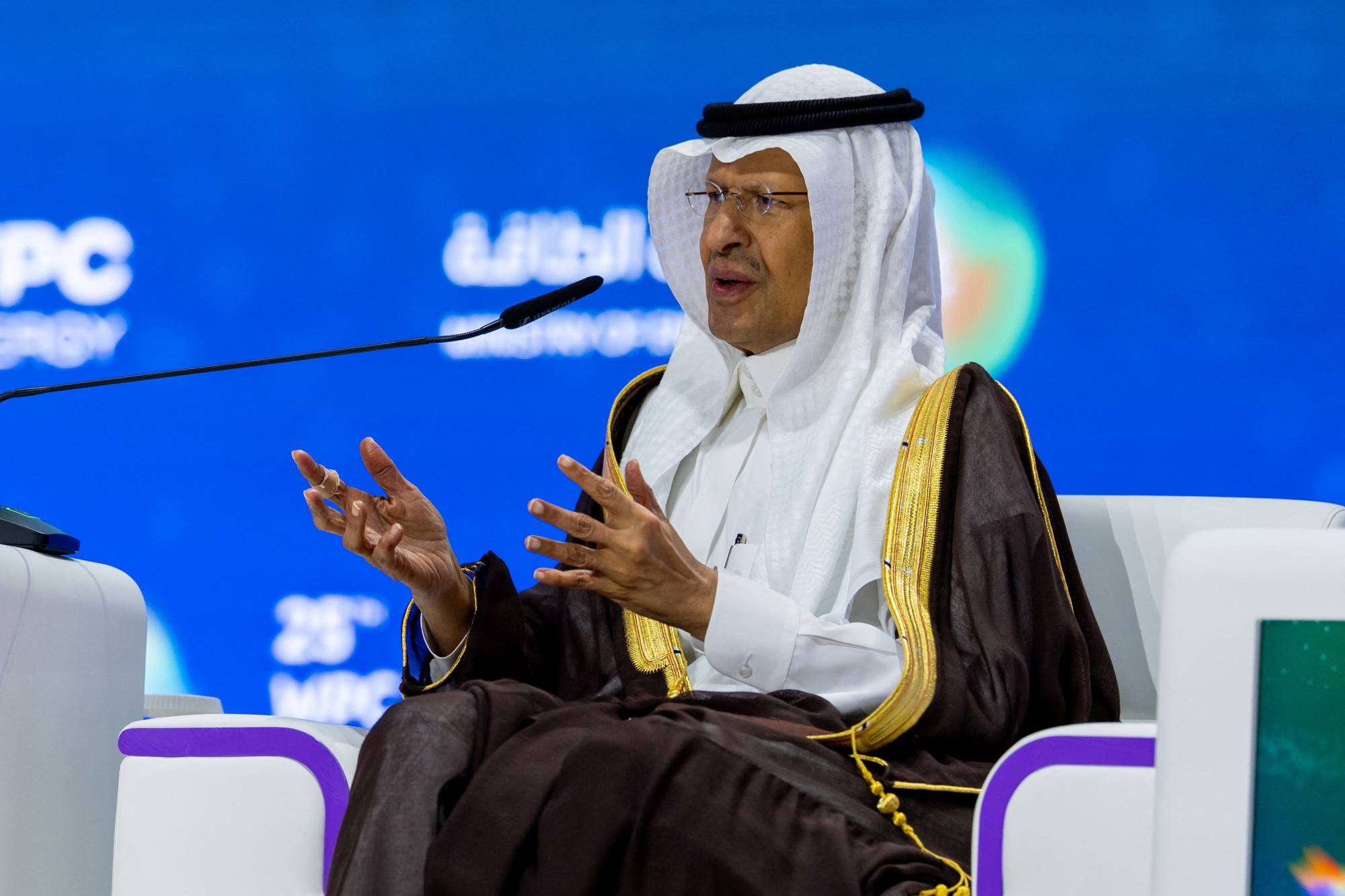
Saudi Minister of Energy Prince Abdulaziz bin Salman Al Saud speaks at the 25th WPC Energy Congress in Riyadh, Saudi Arabia, October 12, 2026. REUTERS

International Monetary and Financial Committee Meeting

These forecasts come as the repercussions of the war and its effects on growth, trade and energy flows dominate the agenda of the IMF and World Bank Group Annual Meetings, taking place in Bangkok from October 12 to 18.

Saudi Finance Minister Mohammed Al-Jadaan is leading the Kingdom's delegation to the meetings and chairing a meeting of the IMF's International Monetary and Financial Committee, which is discussing the global economic outlook, risks to growth, economic policy priorities and the Fund's role in helping member countries address current challenges. These discussions are particularly significant given the differing effects of the conflict on regional economies, from pressures caused by disruptions to production and trade to opportunities for recovery as energy flows and exports resume.
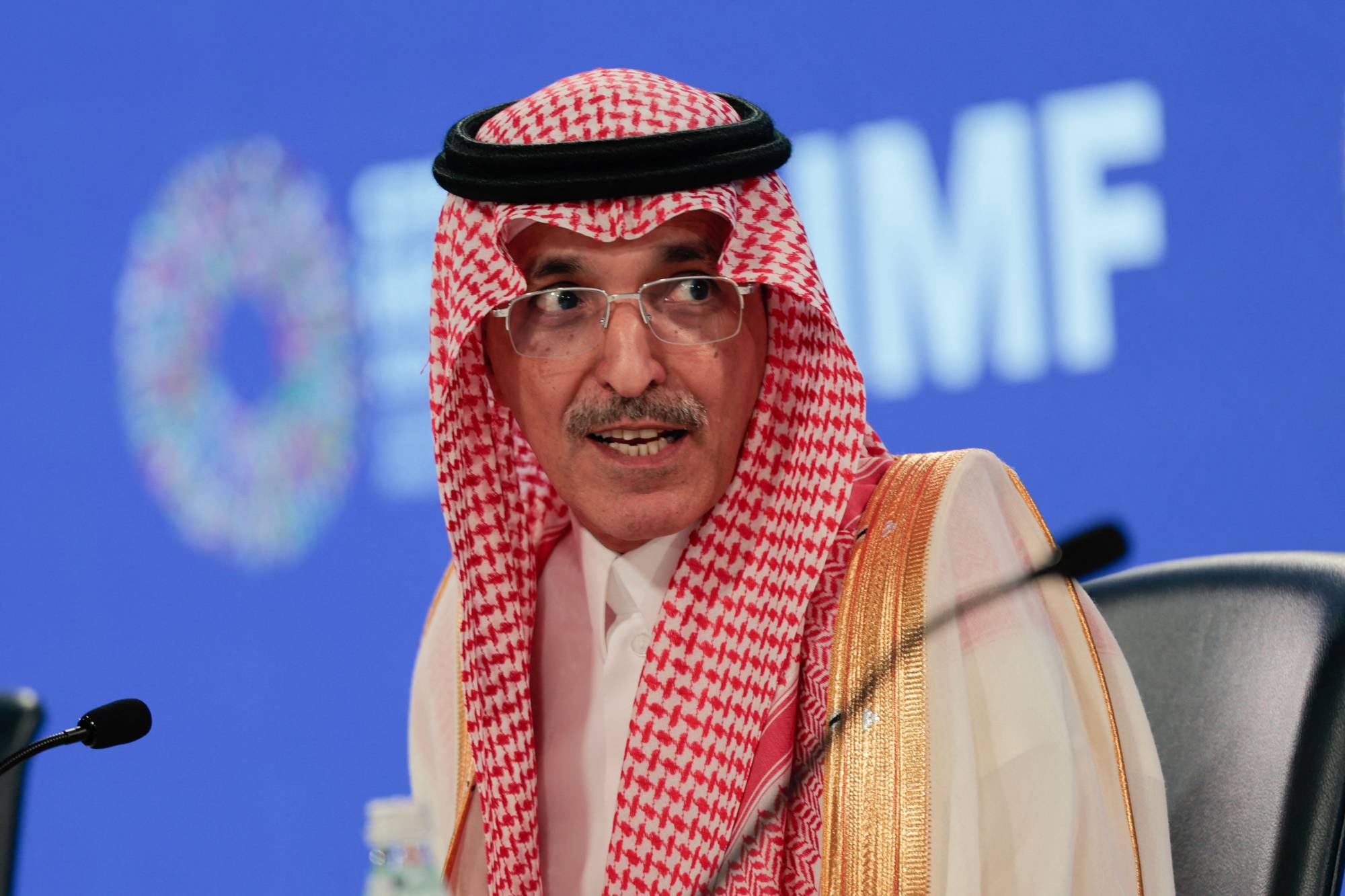
Saudi Arabia's Finance Minister Mohammed Al-Jadaan speaks during a press briefing following a meeting of the IMFC (International Monetary and Financial Committee) at the 2026 IMF and World Bank Group Spring Meetings in Washington, DC, on April 17, 2026. (Photo by Kent Nishimura / AFP)

Ultimately, the trajectory of Saudi Arabia's recovery in 2027 will remain tied to how quickly energy and trade flows are restored. Meanwhile, diversified export outlets and non-oil activities, together with the reprioritization of spending and investment, provide support for the economy's ability to overcome the repercussions of regional disruptions.


Saudi Arabia Steps Up Shipping Measures to Keep Supply Chains Moving

Air cargo being prepared aboard a Saudia aircraft (SPA). 
TT

Saudi Arabia Steps Up Shipping Measures to Keep Supply Chains Moving

Air cargo being prepared aboard a Saudia aircraft (SPA). 

Saudi Arabia has stepped up exceptional measures to keep goods moving amid regional shipping disruptions, establishing a technical team to ease cargo procedures and dedicated support centers for the aviation and ports sectors.

The measures aim to speed up responses to businesses, improve the operational readiness of logistics facilities, and ensure the continued flow of goods through airports and seaports.

The Ministry of Transport and Logistic Services has informed private sector companies that the team will include representatives of the transport and logistics sector and the Zakat, Tax and Customs Authority (ZATCA).

It will address technical and operational obstacles, facilitate procedures for all types of shipments from affected airports, particularly King Khalid International Airport in Riyadh, and assist public and private sector operators.

Logistics Support

The General Authority of Civil Aviation (GACA) has launched an air cargo support and knowledge center, while the Saudi Ports Authority (Mawani) has established a similar facility to receive logistics support requests and follow up with relevant authorities.

The ministry urged businesses to report shipping difficulties through designated communication channels so the technical team could examine possible solutions and provide assistance.

Since the outbreak of the US-Iran war earlier this year, Saudi Arabia has introduced operational and regulatory measures to strengthen supply chain resilience and limit the impact of disruptions to regional shipping and trade.

Alternative Shipping Routes

The measures include redirecting some cargo from eastern ports to western facilities, particularly Jeddah Islamic Port, and improving connections between seaports, land border crossings and railway networks.

Authorities have also expanded shipping services in cooperation with the private sector and strengthened road freight operations, drawing on the Kingdom’s fleet of more than 500,000 trucks.

Combined land, air and sea transport solutions are being used to help shipments reach their destinations efficiently.

The initiatives are intended to diversify transport routes, improve operational readiness and strengthen cooperation with businesses to maintain trade flows and the efficiency of Saudi Arabia’s logistics network amid regional disruptions.


Saudi Arabia Leads OPEC+ Production Recovery Toward Pre-War Levels

Aramco storage tanks and pipelines (Aramco) 
TT

Saudi Arabia Leads OPEC+ Production Recovery Toward Pre-War Levels

Aramco storage tanks and pipelines (Aramco) 

OPEC+ crude oil output rebounded in October to nearly its pre-Iran war level, driven by a sharp increase in Saudi production despite continued disruptions to oil shipments through the Strait of Hormuz.

Saudi Arabia reported its highest output since the war began, helping lift the alliance’s combined production to 41.23 million barrels per day (bpd), according to OPEC’s monthly report released Wednesday.

That represented an increase of approximately 2.04 million bpd from September and brought production to about 97% of the 42.72 million bpd recorded in February, according to Reuters calculations based on OPEC data.

The rebound highlights the ability of Saudi Arabia and other Gulf producers to restore supplies despite the war’s continuing impact and restrictions on tanker movements through the strategic waterway.

Some producers have worked around the disruptions through alternative shipping arrangements, including ship-to-ship oil transfers, and pipelines that allow crude exports to bypass the strait.

Saudi Arabia Drives Production Increase

Saudi Arabia informed OPEC that its crude output rose to 10.563 million bpd in October, up from approximately 8.372 million bpd in September, an increase of nearly 26%.

That marked its highest level since February, when production reached 10.882 million bpd.

The Kingdom had raised output in February, ahead of US and Israeli strikes on Iran, reflecting its readiness to bolster supplies amid expectations of escalating market disruptions.

The latest figures show that Riyadh substantially increased production in October despite persistent risks to regional oil exports.

Iraq also reported higher output, reaching approximately 4.9 million bpd, its highest level since the conflict began.

However, secondary sources cited by OPEC estimated Iraqi production at 4.491 million bpd, placing it close to its assigned production target.

Russian, Kazakh and Nigerian Output Rises

Russian oil production increased by approximately 41,000 bpd in October from September to 8.668 million bpd, according to secondary-source data in OPEC’s report.

The increase followed months of declining output amid Ukrainian attacks on Russian energy infrastructure, including oil refineries.

US President Donald Trump announced an energy-sector ceasefire between Russia and Ukraine last month, but the agreement failed to hold in any meaningful way.

Nevertheless, a temporary reduction in attacks on Russian refining facilities may have helped support production.

Kazakhstan’s output also increased, rising by approximately 34,000 bpd month on month to 1.887 million bpd.

In Nigeria, crude oil production averaged 1.69 million bpd in October, according to the country’s petroleum regulator, marking the sixth consecutive month in which Nigeria met its OPEC production quota.

Excluding condensates, output stood at approximately 1.51 million bpd, slightly above its quota of 1.5 million bpd.

The regulator attributed the improvement to greater operational efficiency, more consistent production and better transportation of crude from oilfields to export terminals.

OPEC Maintains Demand Forecasts

OPEC left its forecasts for global oil demand growth in 2026 and 2027 unchanged, after lowering its demand-growth estimates for six consecutive months.

The organization expects global demand to increase by approximately 180,000 bpd in 2026 and by 2.55 million bpd in 2027, bringing average worldwide consumption to 108.3 million bpd.

The projections come as October’s production figures point to a recovery in Gulf supplies after months of disruptions that forced several producers to reduce output or suspend some exports.

The rebound is particularly significant as OPEC+ prepares to complete a review of its members’ maximum production capacities in the coming days.

The findings will help determine production targets for 2027.

The alliance is scheduled to meet online on November 29 to discuss next year’s output targets, with members facing markedly different circumstances.

While some countries have restored much of their production capacity, others continue to contend with operational constraints and export-related challenges.


How Will Saudi Arabia’s Consumer Protection Law Reshape Relations Between Buyers and Sellers?

 Centria Mall in Riyadh (Saudi Tourism)
Centria Mall in Riyadh (Saudi Tourism)
TT

How Will Saudi Arabia’s Consumer Protection Law Reshape Relations Between Buyers and Sellers?

 Centria Mall in Riyadh (Saudi Tourism)
Centria Mall in Riyadh (Saudi Tourism)

Saudi Arabia’s new consumer protection law could reshape everyday transactions in the kingdom, promising greater transparency, safeguards against harmful business practices and easier access to redress.

But its real test will be whether effective enforcement and swift complaint resolution turn legal guarantees into tangible protection.

Lawyer and legal consultant Dr. Tael bin Fahm told Asharq Al-Awsat that the law could strengthen relations between consumers and businesses by making transactions more transparent and clarifying mutual rights and obligations, creating a more reliable and consistent shopping and service experience.

For consumers, the biggest change would be a shift from seeking redress after suffering harm to preventing it in the first place, he said. That would require clear information on products, services, prices, warranties, contract terms and complaint procedures.

Making Consumer Rights Easier to Enforce

Consumers have long faced hurdles in asserting their rights, from difficulties proving violations and navigating multiple authorities to lengthy disputes, particularly over warranties and defective products, Bin Fahm said.

For some, the cost of pursuing a complaint outweighs the damage itself, discouraging them from seeking compensation.

The solution, he said, lies in simpler complaint procedures, faster decisions, clearer escalation channels and digital tools to track cases.

Recognizing consumer rights is not enough; consumers must be able to exercise them.

Stronger legal protections could also push businesses to improve service quality, ensure credible advertising, strengthen after-sales support and resolve customer complaints more quickly, Bin Fahm said.

Beyond tackling violations, he said, the law could bolster consumer confidence and foster a more competitive market where respect for consumer rights becomes a core measure of business performance.

Enforcement Holds the Key

The law offers an opportunity to strengthen consumer protection as Saudi Arabia’s e-commerce sector expands and the range of goods and services grows. But Bin Fahm cautioned that its impact would depend on enforcement, not merely enactment.

Legislation lays the groundwork, he said, but effective oversight, enforcement procedures and public awareness are what turn legal protections into reality.

He identified clear implementing regulations, effective market oversight, swift complaint resolution, meaningful penalties and accessible compensation for valid claims as critical to success. Greater awareness of rights and responsibilities among consumers and businesses would also be essential.

To gauge whether the law is delivering, Bin Fahm called for measurable benchmarks, including average complaint resolution times, dispute settlement rates, consumer satisfaction and reductions in repeat violations.

Ultimately, he said, success would be measured not by the number of legal provisions or penalties, but by whether consumers feel safe and confident in everyday transactions and can secure their rights without complicated procedures or costs disproportionate to the harm suffered.

The goal is a market where consumer rights are respected as a matter of course and fair business practices are the rule, not the exception.