Lebanon’s Deepening Cost-of-Living Crisis Raises Fears of Unrest

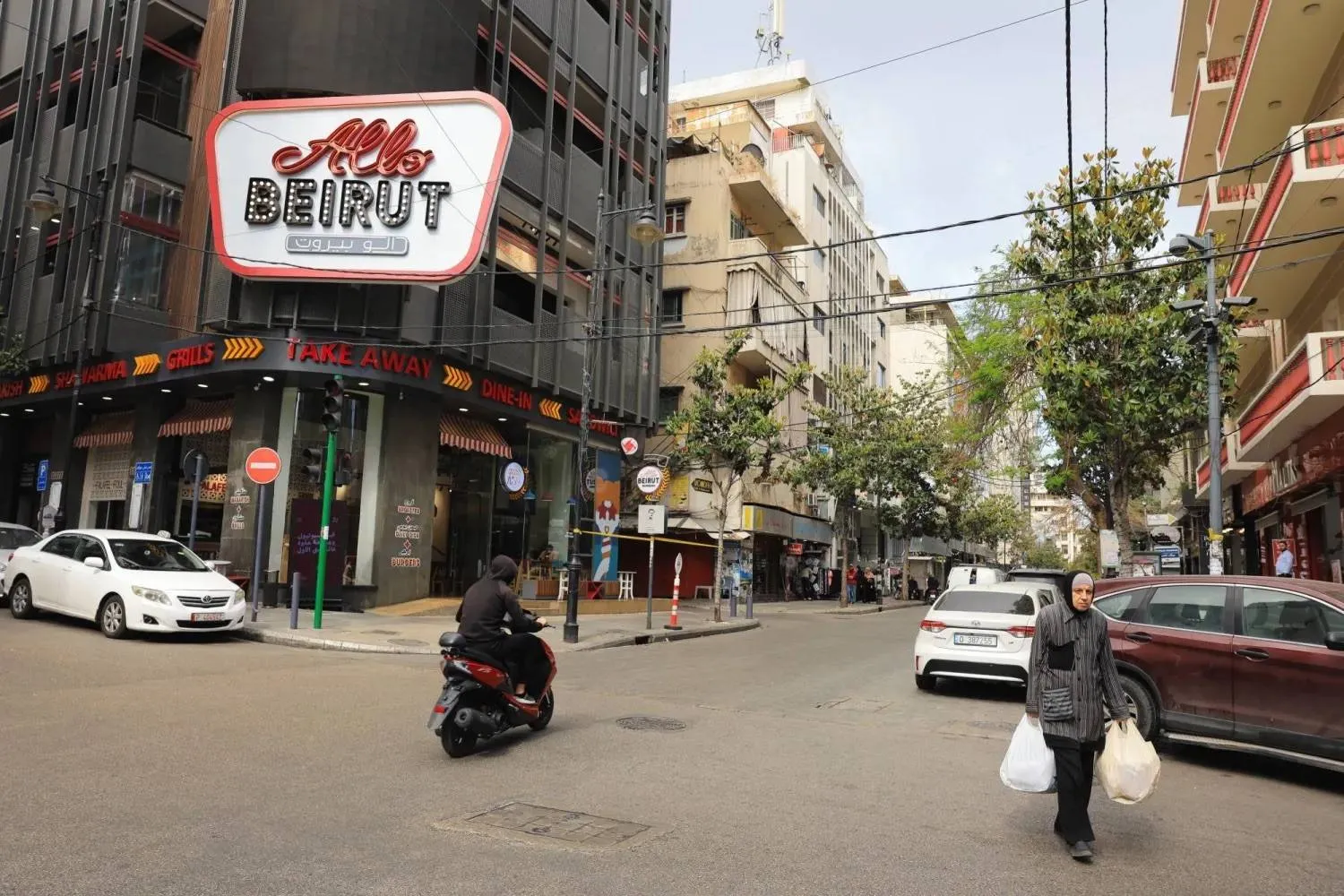
A woman carries grocery bags in Beirut amid continued price increases (Reuters)
TT

Lebanon’s Deepening Cost-of-Living Crisis Raises Fears of Unrest

A woman carries grocery bags in Beirut amid continued price increases (Reuters)

Lebanon’s worsening cost-of-living crisis and widening poverty are threatening to erase the country’s fragile economic recovery, raising fears of social unrest as inflation accelerates and the fallout from successive wars deepens.

Two major rounds of fighting over the past two years have wiped out much of the progress made in restoring economic growth, undermining efforts by the country’s political leadership and government to overcome the financial collapse and revive support from regional and international partners.

Food inflation has reached an average of 20% this year, with monthly increases of around 2%, while a recent World Bank report on Lebanon’s poverty outlook highlighted a sharp deterioration in food security.

The number of people facing crisis or emergency levels of food insecurity rose to approximately 1.24 million in 2026, up from 874,000 in 2025, with South Lebanon and Nabatieh among the hardest-hit regions.

Business and labor union sources warned that worsening living conditions could spark a wave of protests, confronting the government with challenges extending beyond its ongoing disputes with public sector employees and retirees.

Low incomes and soaring prices have already prompted intermittent strikes, partially disrupting ministries and public institutions and affecting Treasury revenues from vital services.

According to employer and labor representatives, more than a quarter of Lebanon’s residents now face severe poverty or acute economic hardship.

Based on the World Bank’s figures and an average household size of five, this represents roughly 250,000 families.

The sources estimated that broader financial hardship affects nearly 80% of residents, as cumulative price increases have pushed the inflation index close to 9,000 percentage points, largely reflecting successive surges since the financial and monetary crisis erupted in 2019.

The World Bank highlighted the deterioration in household living conditions following the escalation of hostilities in spring 2026.

Displaced families have become increasingly dependent on informal support networks and dwindling financial resources after losing income and productive assets.

Meanwhile, reduced electricity generation at Lebanon’s fuel-powered state plants has forced households to shoulder steep increases in private generator subscription fees, further eroding purchasing power. The crisis is compounded by the government’s strained finances and concerns over a further decline in Treasury revenues.

Lebanon’s financial collapse has left an estimated loss gap exceeding $70 billion, while successive rounds of fighting since autumn 2023 have caused more than $27 billion in direct and indirect economic and reconstruction-related losses, according to official estimates.

The World Bank forecasts a 6.4% contraction in gross domestic product in 2026, reversing the fragile 4.2% recovery recorded the previous year. Annual inflation rose to 17.3% in the first half of 2026, compared with 14.6% in 2025.

Despite conflict-related pressures, the World Bank reported that Lebanon’s public finances maintained a surplus of $1 billion, equivalent to 2.5% of GDP, through the end of May.

The surplus represented a 32% year-on-year increase, supported by a 26.6% rise in government revenues, particularly receipts from fuel excise taxes.

Public spending climbed 23.7%, driven by higher public sector salaries, capital expenditure, hospitalization costs and conflict-related Treasury advances.

Meanwhile, prices for water, electricity, gas and other fuels rose 25.3% year-on-year, while transportation costs increased 29.5% by midyear.

On the monetary front, the World Bank linked the Lebanese pound’s stable exchange rate against the US dollar to tight liquidity in local currency.

However, foreign currency reserves at Banque du Liban fell to $11.6 billion in mid-August, enough to cover approximately 6.6 months of imports, compared with $12.1 billion in mid-February.

The decline reflected the central bank’s need to draw on its reserves to meet foreign currency obligations amid reduced dollar availability in the market.

Lebanon’s trade deficit widened 8.8% year-on-year to $10.2 billion by the end of July, as exports fell 16.6% and imports rose 4.2%.

The report attributed the deterioration to conflict-related disruptions affecting exports, alongside higher oil prices and insurance premiums.

Energy imports rose 9% in value to approximately $3 billion during the first seven months of the year, despite a 31% decline in imported volumes.

The imbalance placed additional pressure on Lebanon’s current account, further straining foreign currency inflows and reserves.


Europe Entering Winter with Lowest Gas Reserves Since 2013, Says IEA

07 July 2025, Rehden: Technical facilities for the injection and withdrawal of natural gas, including several process water tanks, are located on the grounds of the Rehden natural gas storage facility operated by SEFE Storage GmbH. (dpa)
TT

Europe Entering Winter with Lowest Gas Reserves Since 2013, Says IEA

07 July 2025, Rehden: Technical facilities for the injection and withdrawal of natural gas, including several process water tanks, are located on the grounds of the Rehden natural gas storage facility operated by SEFE Storage GmbH. (dpa)

Europe is entering winter with its lowest level of natural gas reserves since 2013, which could extend pressure on the international market into 2027, the International Energy Agency warned Tuesday.

Europe's natural gas storage reservoirs were 75 percent full at the end of October, well below the minimum target of 80 percent fixed by the European Union and at its lowest level in more than a decade, the IEA said.

Several factors explain the situation.

Natural gas liquefaction facilities in the Gulf have been damaged in US-Iran war, while transit through the Strait of Hormuz has been reduced.

Moreover, European nations are filling their storage reservoirs from low levels at the end of the heating season in the spring.

Buyers had initially held off buying stocks in the hope prices would fall.

Deliveries stepped up in August, September and October, but not enough to make up for the delay, the IEA said.

The amount of gas injected into storage reservoirs this season was about four percent below the average of the past five years, it added.

That makes European nations more dependent upon securing deliveries of additional supplies of LNG to meet peak demand.

It could also make more vulnerable if the winter is colder than usual, there are technical problems in the gas network, or supply problems, said the IEA.

Germany insisted Monday that it would have enough gas for the winter despite missing a storage target.

German gas storage facilities are on average 61 percent full, according to the federal agency that oversees Germany's energy infrastructure and markets.

That is below a legally mandated target for 70 percent by November 1. It also lags behind the European Union average of nearly 75 percent, according to the storage tracking platform AGSI.


Turkish Inflation Rises to 2.58% in October, Driven by Clothing and Food Prices

People shop at Eminonu district in Istanbul, Türkiye, November 4, 2022. (Reuters)
TT

Turkish Inflation Rises to 2.58% in October, Driven by Clothing and Food Prices

People shop at Eminonu district in Istanbul, Türkiye, November 4, 2022. (Reuters)

Turkish consumer price inflation climbed to 2.58% month-on-month in October, above expectations and driven by clothing and food price rises, while the annual figure was 29.77%, data from the Turkish Statistical Institute showed on Tuesday.

Clothing and footwear prices surged 12.58% during the month, while food prices rose 3.5% and transport prices were ‌up 2.02%.

In ‌a Reuters poll, monthly ‌consumer ⁠price inflation was forecast to ⁠be 2.4%, driven by higher energy price pressures as well as seasonally higher clothing and food prices, and the annual rate was seen at 29.56%.

In September, consumer prices rose 1.84% month-on-month and 29.73% year-on-year, ⁠below forecasts.

The lira stood at ‌49.9975 against the ‌dollar after the data, compared with a close ‌of 49.9725 on Monday.

The poll's median ‌estimate sees annual inflation at 29.57% by the end of 2026.

Türkiye's central bank kept its year-end interim inflation target at 24% while raising its ‌year-end inflation forecast to 28% in its third inflation report published ⁠in ⁠August.

Last Friday, the central bank said higher energy and commodity prices driven by geopolitical tensions continued to pose upside risks to inflation, a week after it cut its policy rate by 100 basis points to 36% at its October 22 meeting, its first cut since January.

Tuesday's data also showed the domestic producer price index rose 1.65% month-on-month in October for an annual increase of 27.41%.


German Auto Crisis Deepens as Supplier Announces Job Cuts, Site Closures

05 November 2024, Bavaria, Herzogenaurach: A view of the headquarters of automotive and industrial supplier Schaeffler in Franconia. (dpa)
TT

German Auto Crisis Deepens as Supplier Announces Job Cuts, Site Closures

05 November 2024, Bavaria, Herzogenaurach: A view of the headquarters of automotive and industrial supplier Schaeffler in Franconia. (dpa)

German auto parts supplier Schaeffler said Tuesday that it planned to cut almost 3,500 jobs and close five sites in Europe as the crisis gripping the region's car industry deepens.

Like other German carmakers and suppliers, the group has struggled with competition for its key products, which include ball bearings and electric vehicle parts, especially from Chinese manufacturers.

Three-fourths of the 3,460 job cuts and four of the five site closures will be in Germany, the company said in a statement, pointing to "above-average" costs for workers in Europe's top economy.

The cuts, to be completed by 2028, are around three percent of the group's global workforce of almost 110,000. They should result in annual savings of around 300 million euros ($336 million) from 2030, it said.

Schaeffler, in a statement, said it was "responding to the persistently challenging environment in the automotive industry."

There was "an overall downturn in the market and intensifying competition... characterized by weakened demand for internal combustion engine vehicles and a delayed ramp-up of electric mobility," it added.

The cuts would be mainly focused on production and research and development.

Sites would be closed in Berlin, Dortmund, and two other towns in western Germany. A small site in Belgium will also be shuttered.

There will also be job cuts at sites in France and Slovakia.

Schaeffler said some of the job losses would be offset by the creation of positions in "future-oriented fields", such as humanoid robotics and defense.

While not as well-known as the car titans they work with, such as Volkswagen, BMW and Mercedes, Germany's suppliers are a crucial part of the auto ecosystem, providing everything from braking systems to in-car electronics.

But as their customers have fallen into crisis, battling Chinese competition, high production costs at home and weakening demand, suppliers have been hit hard.

Volkswagen is planning to cut around 120,000 jobs across its brands by 2030.

German industrial titan Bosch, the world's biggest supplier of car equipment, announced last year 13,000 job cuts, mostly in its auto division.