
IMF Expects Middle East Economies to Rebound to 6.6% Growth in 2027

Jihad Azour, Director of the Middle East and Central Asia Department at the International Monetary Fund (IMF) attends a press conference at the IMF/World Bank 2026 Spring Meetings in Washington, D.C., US, April 16, 2026. REUTERS/Elizabeth Frantz
TT

IMF Expects Middle East Economies to Rebound to 6.6% Growth in 2027

Jihad Azour, Director of the Middle East and Central Asia Department at the International Monetary Fund (IMF) attends a press conference at the IMF/World Bank 2026 Spring Meetings in Washington, D.C., US, April 16, 2026. REUTERS/Elizabeth Frantz

The International Monetary Fund expects the economies of the Middle East, North Africa and Pakistan to rebound to growth of 6.6 percent in 2027, following a projected contraction of 1.3 percent this year, amid the economic fallout from the regional war and disruptions to energy production and trade, which have affected countries across the region to varying degrees.

Jihad Azour, the IMF's director for the Middle East and Central Asia, said economies directly affected by the conflict are facing severe pressures, while other economies in the region, along with most countries in the Caucasus and Central Asia, have shown greater resilience.

He explained that the path of the recovery will depend largely on how quickly energy production and trade return to normal and on countries’ ability to maintain macroeconomic stability.

The forecasts come after the economies of the Middle East, North Africa and Pakistan grew by 3.3 percent in 2025, illustrating the scale of the shock expected this year before a strong rebound next year.

Azour stressed, however, that the overall projections mask significant disparities among the region’s economies and that the recovery will not be uniform across countries.

Oil Exporters and Importers

Azour said oil-exporting countries directly affected by disruptions to energy production and trade will experience a marked contraction in 2026, although higher oil prices will provide some support to their fiscal and external positions.

A gradual recovery in production and trade is expected to drive a strong rebound in GDP growth in 2027, although output levels will remain below the trajectory projected before the outbreak of the conflict.

By contrast, economic activity in the region’s oil-importing countries has remained relatively resilient during 2026 and is expected to continue doing so. Workers’ remittances, tourism revenues, favorable financial conditions and government support have helped cushion the immediate impact of the shock, although the policy space available to governments is narrowing.

The IMF expects inflation in these economies to rise moderately in 2026 before gradually easing thereafter.
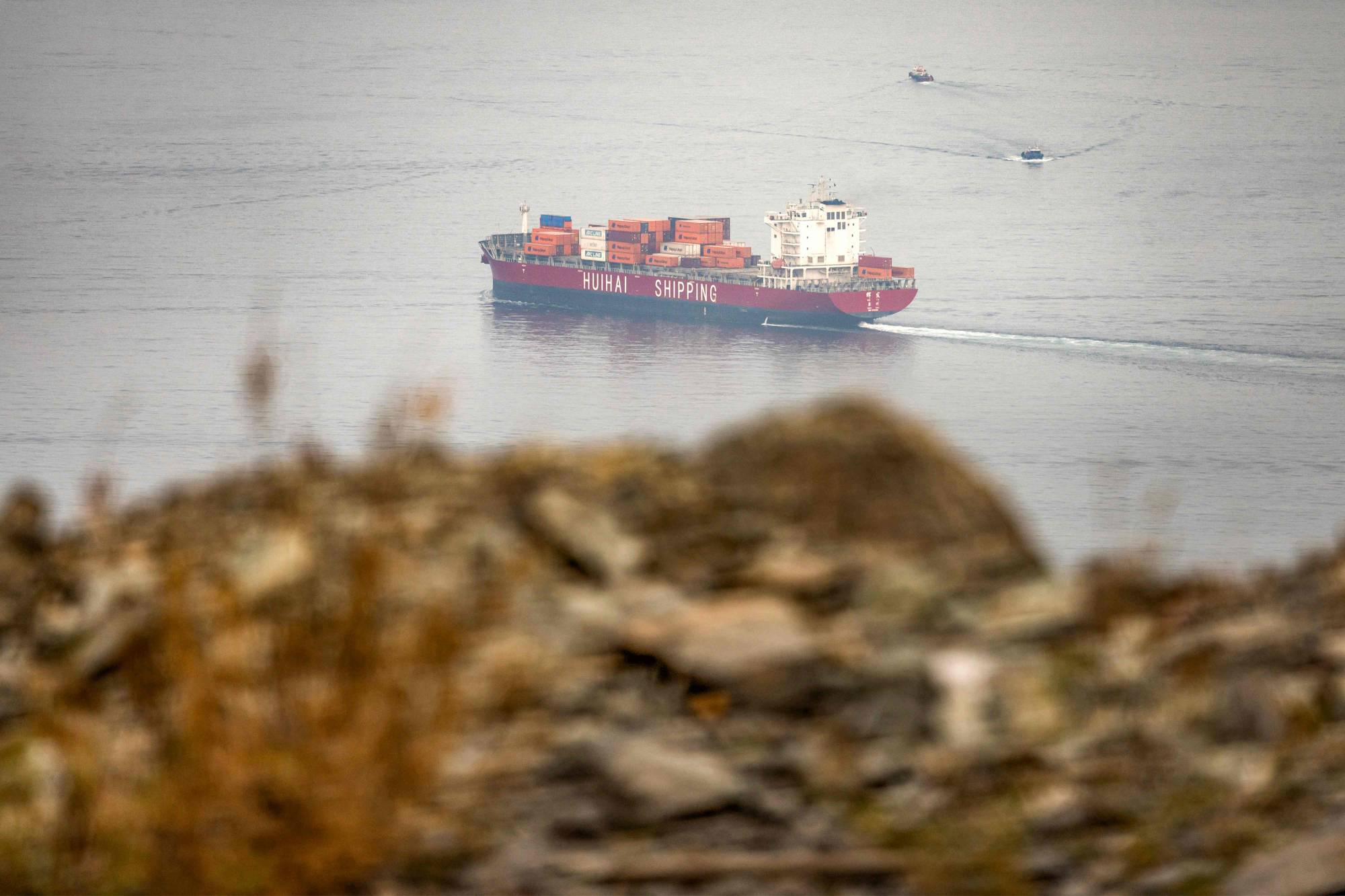
The Chinese-flagged container shipping vessel Hui Fa transits the Gulf of Oman on October 13, 2026. (Photo by AFP)

Lower Inventories, Greater Risks

Azour noted that the impact of the energy shock has been less severe than initial estimates suggested, thanks to surpluses accumulated before the war, production by non-Gulf countries, alternative transportation routes, adjustments in demand and drawdowns from inventories.

He cautioned, however, that these factors have provided time for adjustment but are not sustainable resources. Available inventories have declined and spare production capacity has narrowed, leaving markets more vulnerable to larger price increases should disruptions recur.

Azour identified a prolonged war as the most significant risk to the outlook, warning that further disruptions to energy production, shipping routes or critical infrastructure would weaken economic activity among Gulf oil exporters, increase inflationary pressures and exacerbate fiscal and external strains across the region.

He also warned that tighter global financial conditions could weaken demand, raise borrowing costs and increase pressure on currencies, particularly in economies with substantial sovereign debt-financing needs or a heavy reliance on external financing.

Low-income and fragile economies remain the most vulnerable to these risks because of their dependence on food imports and limited fiscal space, at a time when official development assistance is also declining.

Call for Targeted Support and Rebuilding Fiscal Buffers

Azour urged policymakers to prioritize price stability and fiscal sustainability, using monetary policy as the first line of defense when inflationary pressures emerge, complemented by prudent fiscal policy, particularly in countries with limited financial resources.

He stressed the importance of rebuilding fiscal buffers to withstand future shocks by strengthening domestic revenues, improving spending efficiency and developing stronger fiscal frameworks. He cautioned against broad-based subsidies, favoring instead temporary and targeted cash assistance for the groups most affected, helping keep the cost of intervention within budgetary limits.

Over the longer term, Azour emphasized the importance of strong institutions, credible monetary frameworks and central bank independence, alongside greater trade diversification, deeper regional integration and a stronger capacity to adopt new technologies, including artificial intelligence, to boost productivity and support growth.

Azour noted that the IMF has approved approximately $48 billion in financing for countries in the region since 2020. During fiscal year 2026, it also carried out around 437 technical assistance and capacity-building projects in 31 countries.

The IMF is scheduled to release its full regional report in Dubai on October 22, providing a more detailed assessment of economic developments and policy priorities.


From Aramco's Profits to State Budget Revenue: How Do Oil Proceeds Reach Government Coffers?

A general view shows Ras Tanura's oil production plant near Dammam in Saudi Arabia's Eastern Province (AFP)
TT

From Aramco's Profits to State Budget Revenue: How Do Oil Proceeds Reach Government Coffers?

A general view shows Ras Tanura's oil production plant near Dammam in Saudi Arabia's Eastern Province (AFP)

Saudi Aramco's financial results and Saudi Arabia's third-quarter budget performance report, released on the same day, revealed a divergence between the company's rising profits and declining government oil revenue recorded in the state budget.

While Aramco's net income rose 34.2% during the first nine months of 2026 to SAR 380.6 billion ($101.5 billion), government oil revenue fell 1.3% over the same period and declined approximately 23% in the third quarter alone.

Comparing the two indicators does not necessarily imply a direct relationship between the company's profits and the revenue flowing into government coffers. Corporate earnings are recognized under different accounting principles from those governing the calculation and collection of government revenue.

The financial relationship between Aramco and the government also involves multiple channels, including taxes, royalties, dividends and offsetting settlements, each with its own payment and collection schedule.

Aramco's Profits and Cash Flows

Aramco reported net income of SAR 380.6 billion ($101.5 billion) for the first nine months of 2026, compared with SAR 283.6 billion ($75.6 billion) in the corresponding period last year, an increase of 34.2%.

Adjusted net income reached SAR 368.9 billion ($98.4 billion), up from SAR 302.3 billion ($80.6 billion) a year earlier.

However, the increase in earnings was not accompanied by a comparable rise in cash generated by the company's operations, according to its financial report.

Cash flow from operating activities totaled SAR 355.8 billion ($94.9 billion), compared with SAR 357.6 billion ($95.4 billion) in the same period last year, remaining largely unchanged.

Aramco attributed this to changes in working capital, which refers to funds tied up in day-to-day operations, including outstanding sales receivables, inventories and amounts owed to or by the company.

These movements limited the extent to which higher earnings translated into operating cash flow.

Meanwhile, free cash flow increased to SAR 221.6 billion ($59.1 billion), compared with SAR 217.3 billion ($57.9 billion) a year earlier.

This metric measures the cash remaining after capital expenditures are deducted from operating cash flow. It benefited from a reduction in capital expenditures to SAR 134.2 billion ($35.8 billion), from SAR 140.3 billion ($37.4 billion) in the comparable period.

Oil Revenue in the State Budget

On the other side of the equation, Aramco's earnings growth was not mirrored by a corresponding increase in government oil revenue.

Ministry of Finance data showed that oil revenue fell 23% year on year in the third quarter to SAR 116.5 billion ($31.1 billion), compared with SAR 150.8 billion ($40.2 billion) in the same period last year.

Over the first nine months of 2026, oil revenue totaled SAR 446.3 billion ($119 billion), down from SAR 452.4 billion ($120.6 billion) in the corresponding period of 2025, representing a relatively modest decline of approximately 1.3%.

By contrast, non-oil revenue increased 8% during the nine-month period to SAR 412.5 billion ($110 billion), helping lift total budget revenue by 3% to SAR 858.9 billion ($229 billion).

In the third quarter alone, non-oil revenue rose 20% to SAR 142.6 billion ($38 billion).

The growth in non-oil revenue therefore helped cushion the impact of declining oil revenue on the government's overall income.

Third-quarter expenditure totaled SAR 343.4 billion ($91.6 billion), against revenue of SAR 259.1 billion ($69.1 billion), resulting in a quarterly budget deficit of approximately SAR 84.3 billion ($22.5 billion).

Why Don't the Figures Move in the Same Direction?

Part of the divergence between Aramco's financial results and government budget revenue stems from the different nature of the figures themselves.

The company's profits are recognized according to its accounting results, while budget figures reflect government revenue actually collected during the reporting period.

Moreover, the government's financial returns from Aramco's operations flow through several channels, including taxes, royalties and dividends, with differences in when these amounts become due and when they are paid.

Accounting profits do not necessarily translate into cash inflows during the same period. Liquidity is affected by the timing of receivables collection, inventory movements and operating payments.

This distinction is also evident in financial transactions between Aramco and the government, which are not limited to direct cash payments but include the settlement of certain mutual obligations through offsets.

For example, Aramco's cash income tax payments fell to SAR 2.8 billion (approximately $747 million) in the third quarter, compared with around SAR 51 billion ($13.6 billion) in the second quarter, as amounts due to the company from the government were settled by offsetting them against its tax obligations.

Under this mechanism, amounts owed to one party are deducted from what that party owes the other, rather than transferring the full amount in cash.

Such offsets affect both the volume of cash payments and the timing of financial transfers between Aramco and the government.

Consequently, government oil revenue does not necessarily move in the same direction as Aramco's financial results, since each is influenced by different factors and accounting mechanisms.

While the company's profits reflect its financial performance during a given period, government revenue recorded in the budget depends on the taxes, royalties and dividends due to the state, as well as the timing of their collection and settlement.

Aramco's profits may therefore increase during a period when government oil revenue is declining.

Overall, the results demonstrate Aramco's continued ability to generate strong profits and maintain substantial cash flows, supporting its capacity to sustain investment and distribute dividends to shareholders, foremost among them the Saudi government.

At the same time, growth in non-oil revenue underscores the importance of diversifying budget income sources to mitigate fluctuations in oil revenue, broaden the sources supporting public finances and advance the Kingdom's economic transformation.


Crypto Dips on Democrat Midterm Wins, Binance Hack Dents Optimism

Representation of cryptocurrencies are seen in this illustration taken September 10, 2025. (Reuters)
TT

Crypto Dips on Democrat Midterm Wins, Binance Hack Dents Optimism

Representation of cryptocurrencies are seen in this illustration taken September 10, 2025. (Reuters)

Cryptocurrencies briefly dipped on Wednesday as Democrats won majorities in both the Senate and House in the US midterm elections, a potential blow to an industry that has pushed for faster deregulation for digital assets.

The sector has spent more than $300 million backing crypto-friendly Democrats and Republicans in roughly equal measure during the current and previous election cycles, hoping to pass legislation US crypto companies say will ‌put them on ‌a solid legal footing and allow them to thrive.

Bitcoin ‌briefly ⁠touched a six-week ⁠low before recovering to trade roughly flat by 0715 GMT at $78,070. Ether traded at $2,292, up just 1%.

Bitcoin has fallen by around 41% since hitting record highs above $122,000 in October 2025, bringing the value of the broader crypto market to around $2.61 trillion, according to CoinMarketCap.

The market has lost some $300 billion in value in the last month alone, as deepening concern about future returns from AI and the ⁠strain of rising borrowing costs pushed investors into less risky ‌assets such as government bonds and ‌safe-haven currencies.

Sentiment has also been hurt by the $6 billion hack of the Binance platform last ‌week, the largest heist in history.

On Tuesday, Binance customers had withdrawn ‌a net $4.72 billion from the world's largest cryptocurrency exchange since it reopened following the hack at the weekend.

"The market may be re-evaluating the risk-reward profile of crypto assets. On one hand, the string of security incidents is forcing investors to re-examine the ‌industry's security infrastructure and custody risks," Tim Sun, senior researcher at HashKey, said.

"On the other hand, potential shifts in ⁠the US political landscape ⁠could stall the progress of structural crypto legislation and institutional framework development. All of these factors leave the crypto market facing strong headwinds," he said.

US President Donald Trump, who vowed to make the United States the "crypto capital of the world" during his 2024 presidential campaign, has made his own forays into digital assets, with the launch of his "Trump" meme coin, plus his family's World Liberty Financial crypto platform, among other ventures.

The sector has seen sweeping reforms in the almost two years since Trump returned to office, including lighter enforcement and the creation of a strategic bitcoin reserve.

Washington has also allowed for easier access to banking and exchange-traded products and passed a federal stablecoin law that could help these assets move into the mainstream payments and money transfer systems.


Saudi Non-Oil Sector Expands for Seventh Straight Month

A view of Riyadh, Saudi Arabia. (Getty Images file)
TT

Saudi Non-Oil Sector Expands for Seventh Straight Month

A view of Riyadh, Saudi Arabia. (Getty Images file)

Saudi Arabia’s non-oil private sector continued to expand in October, with business activity and output growth accelerating despite a decline in the Riyad Bank Purchasing Managers’ Index (PMI) to 54.0 from 55.3 in September, according to data compiled by S&P Global.

The seasonally adjusted index remained above the neutral 50-point threshold for the seventh consecutive month, signaling continued improvement in operating conditions. Although it eased from September’s seven-month high, October’s reading was the second-highest since February.

Output growth accelerated to a strong pace from the previous month, supported by improving underlying demand and increased sales and marketing efforts. New orders also continued to rise, although more slowly than in September and at a rate below the survey’s historical average.

Domestic demand remained the main driver of growth, while export orders declined for the eighth consecutive month, with the contraction accelerating.

Survey respondents cited shipping disruptions, higher transport and insurance costs, and competitive market conditions as factors weighing on overseas sales. About a quarter of firms reported a decline in export orders in October.

Employment increased for the fourth consecutive month, although hiring remained modest and slowed from September. Backlogs of work rose slightly for the second straight month, reflecting higher sales and some delays in supplier deliveries.

Supplier delivery times improved only marginally, marking the weakest improvement since April, as disruptions to maritime routes continued to affect shipments. Some businesses consequently increased their reliance on domestic suppliers to secure production inputs.

Cost pressures intensify

Cost pressures mounted at the start of the final quarter, with purchase prices rising at their fastest pace in six months, driven by higher shipping, insurance, raw material and energy costs. Staff cost inflation also reached its highest level since February.

Despite rising input costs, the rate of increase in selling prices slowed to a nine-month low as companies offered larger discounts amid intensifying competition. Nevertheless, selling prices continued to rise at a strong pace.

Commenting on the findings, Naif Al-Ghaith, chief economist at Riyad Bank, said the non-oil private sector demonstrated resilience in October, supported by sustained domestic demand, stronger business activity and continued employment growth.

He noted that the PMI’s position above the 50-point threshold indicated improving operating conditions despite its decline from the previous month.

Al-Ghaith explained that faster output growth reflected Saudi businesses’ ability to respond to domestic demand through operational efficiency, marketing initiatives and increased sales activity.

New orders maintained strong growth, although demand had become more selective, he added.

Continued hiring, inventory accumulation and purchasing activity reflected companies’ readiness to meet demand, while expectations for output over the coming year remained only mildly positive and below the survey’s historical average.