

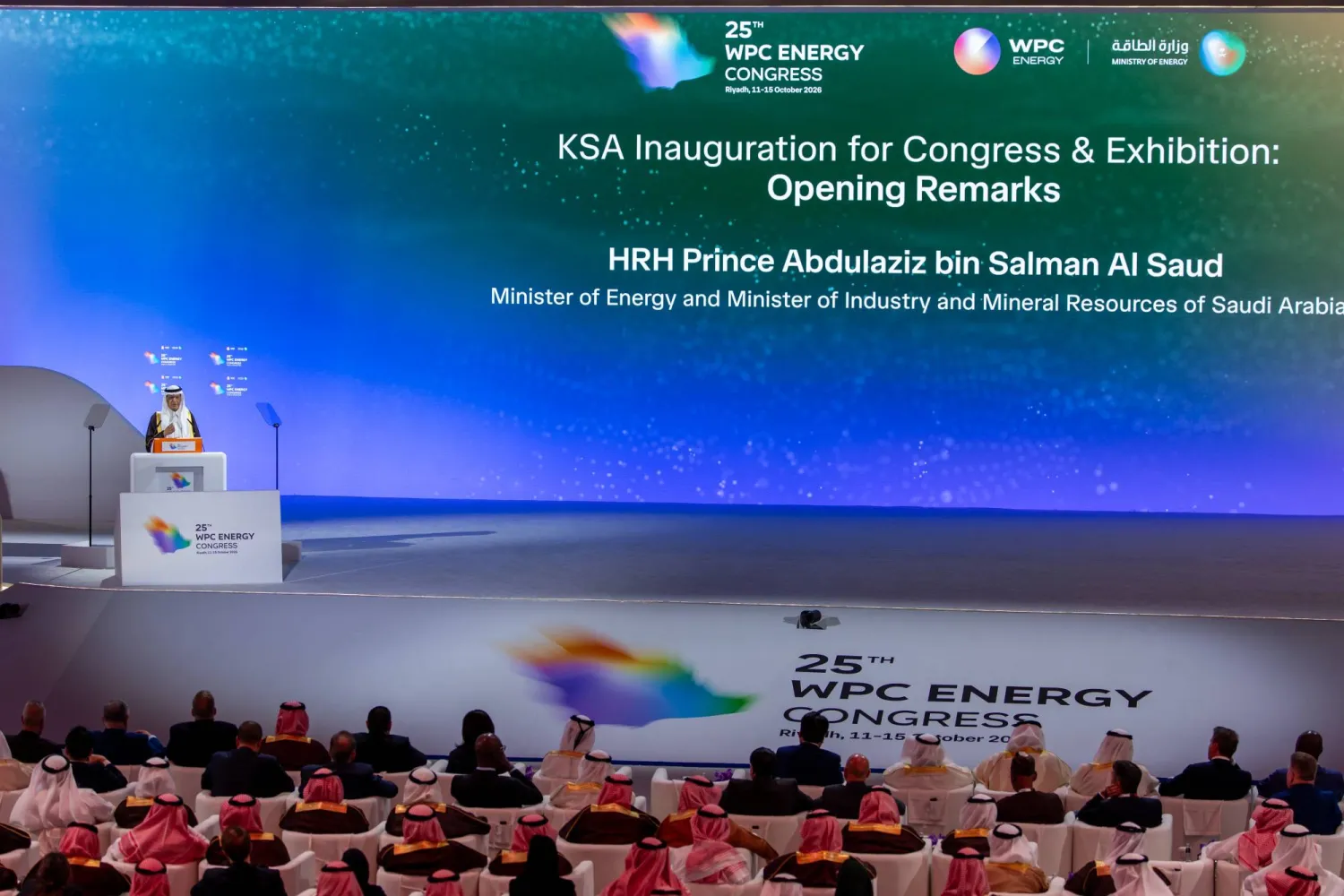

World Petroleum Congress in Riyadh Draws Record Attendance of More than 33,000 Visitors

Prince Abdulaziz bin Salman during the opening of the World Petroleum Congress in Riyadh (Asharq Al-Awsat)
TT

World Petroleum Congress in Riyadh Draws Record Attendance of More than 33,000 Visitors

Prince Abdulaziz bin Salman during the opening of the World Petroleum Congress in Riyadh (Asharq Al-Awsat)

The 25th World Petroleum Congress in Saudi Arabia, Riyadh, drew a record audience of more than 33,000 visitors, alongside participants from 135 countries and 489 media representatives, making it the most attended edition in the event’s more than 90-year history.

Saudi Arabia hosted the congress for the first time from October 11 to 15 as part of Riyadh Energy Week, under the theme “Pathways to an Energy Future for All.” The event brought together ministers, officials, company executives and energy experts to discuss supply security, investment, innovation and the future of oil and gas markets.

Prince Abdulaziz bin Salman bin Abdulaziz, Minister of Energy and Minister of Industry and Mineral Resources, officially opened the congress alongside Pedro Miras, president of the WPC.

The sessions explored key issues shaping the future of the energy sector, including artificial intelligence, digital transformation, energy efficiency, transport technologies, financing and resilient infrastructure. Discussions also examined the policies and investments needed to enhance energy security and foster international partnerships across the energy value chain.

Ministerial discussions also examined the future of global oil and gas markets, priorities for developing Saudi Arabia’s energy sector under Vision 2030, and ways to build more resilient systems capable of responding to crises and meeting the needs of different countries.

In recognition of achievements in the sector, the Dewhurst Award was presented to Vicki Hollub, a board member and former chief executive of Occidental Petroleum, making her the first woman to receive the award, according to the statement.

The congress also hosted the inaugural Energy Hackathon, launched by the Ministry of Energy as part of Riyadh Energy Week, attracting more than 6,700 participants from over 40 Saudi cities. Prince Abdulaziz bin Salman honored six winning teams across three categories: operational efficiency, innovative vision and smart control.

Alongside the congress, Riyadh hosted the 16th meeting of the Arab Ministerial Council for Electricity, which discussed updates to the two agreements governing the Arab Common Electricity Market and a pilot electricity exchange project involving Saudi Arabia, Egypt and Jordan. The meeting also addressed cooperation in renewable energy, energy efficiency, and clean hydrogen.

Riyadh Energy Week also featured the 17th Clean Energy Ministerial (CEM17) and the 11th Mission Innovation Ministerial (MI-11), as part of efforts to strengthen international cooperation in the energy sector.

At the close of the congress, Kazakhstan was named host of the 26th edition, which will take place in the capital, Astana, from June 11 to 15, 2028. It will mark the first time the congress has been held in Central Asia.
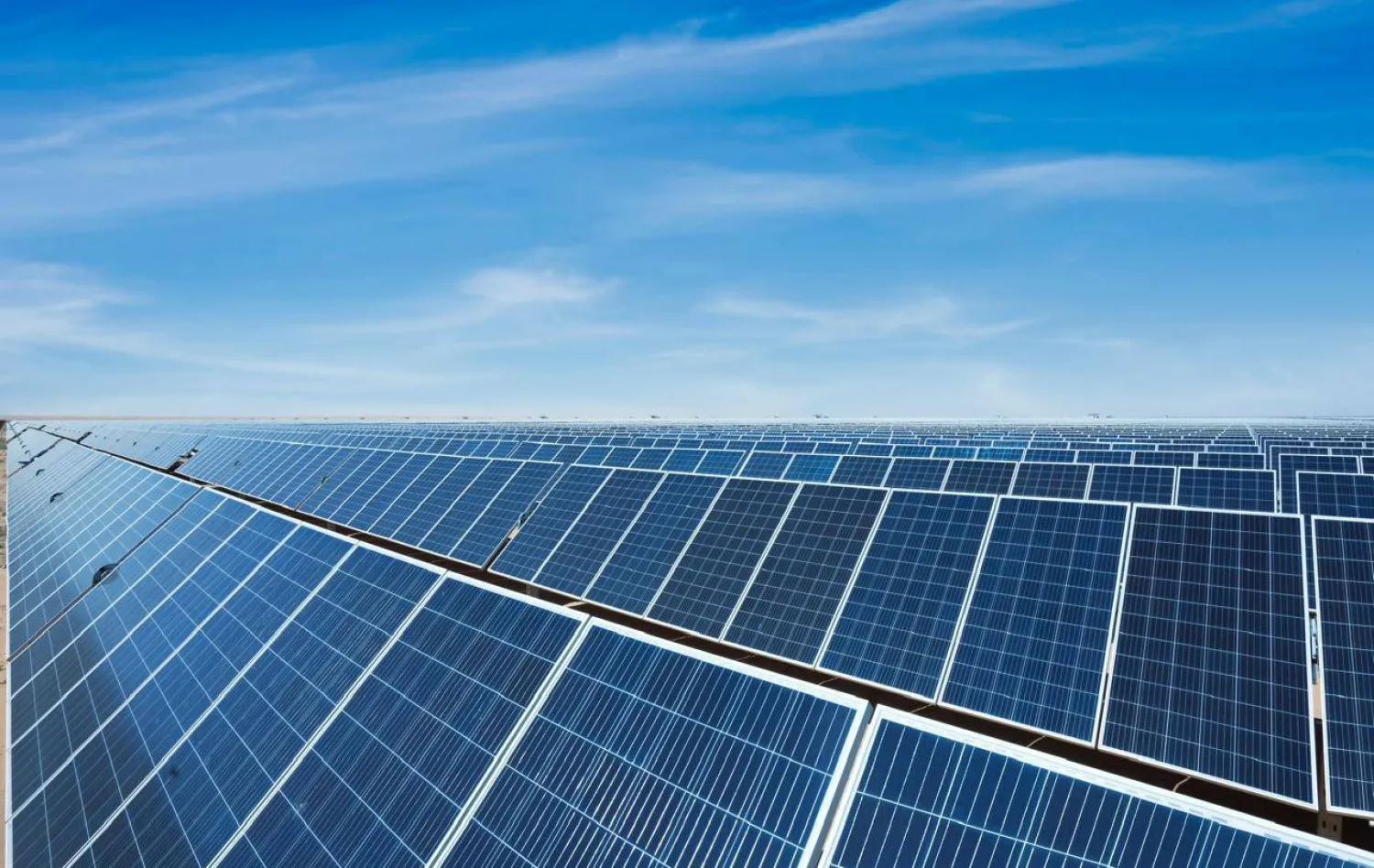



ACWA to Asharq Al-Awsat: Energy Storage Key to Saudi Renewable Expansion

Sakaka Solar Photovoltaic Power Plant (ACWA). 
TT

ACWA to Asharq Al-Awsat: Energy Storage Key to Saudi Renewable Expansion

Sakaka Solar Photovoltaic Power Plant (ACWA). 

Saudi Arabia’s ACWA is expanding its renewable energy, electricity storage and water desalination projects as the rapid growth of artificial intelligence and data centers drives up power demand and increases the need for reliable, efficient and competitively priced electricity.

Omar al-Hassan, ACWA CEO in Saudi Arabia, told Asharq Al-Awsat that the accelerating expansion of AI and data centers was reshaping the energy sector’s requirements.

The challenge is no longer limited to generating more electricity, he explained, but also involves ensuring a continuous supply, operational efficiency and competitive costs.

ACWA is developing projects that combine renewable energy and storage with solutions to strengthen supply reliability, drawing on its experience in large-scale power and water projects.

The company’s total power generation capacity stands at 98.2 gigawatts, while its desalination portfolio has a capacity of 9.7 million cubic meters per day.

Al-Hassan also highlighted ACWA’s efforts to harness digital technologies and AI to improve the performance of its assets, going beyond meeting rising electricity demand to developing more efficient and reliable solutions.

Storage supports renewable energy expansion

As Saudi Arabia expands its solar and wind projects, electricity storage is becoming increasingly important, allowing power generated during periods of abundant supply to be stored for use when demand rises.

Al-Hassan expects storage to play a growing role in the Kingdom’s energy system alongside generation facilities and transmission networks.

In August 2026, ACWA signed three agreements with the Saudi Power Procurement Company, acting as the principal buyer, to develop battery energy storage projects in Haden, Muwayh and Al-Kahfah.

The projects have a combined power capacity of 1,500 megawatts and an energy storage capacity of 6,000 megawatt-hours, under agreements spanning 15 years.

Al-Hassan described the projects as evidence of opportunities in the Saudi market and the importance of storage in supporting renewable energy expansion.

He expects storage to become an increasingly significant factor in planning new projects, depending on grid needs, individual project requirements and economic feasibility.

Red Sea project demonstrates off-grid potential

ACWA’s Red Sea project, which combines solar generation and battery storage, has demonstrated the feasibility of operating an integrated utilities system powered by renewable energy and storage without connecting to the national electricity grid.

The project began commercial operations in September 2026 and includes a 340-megawatt solar power plant and a battery storage system with a capacity of 1,227 megawatt-hours.

According to al-Hassan, the project underscores the importance of integrated planning from the outset, with generation and storage capacities designed to meet actual demand and ensure uninterrupted supplies.

He emphasized that the success of renewable energy projects depends not only on generation capacity but also on the integration of system components and operational efficiency, while accounting for differences in site requirements, costs and operating conditions.

Partnerships to advance desalination

In the water sector, ACWA sees opportunities to advance desalination through greater use of renewable energy and more efficient technologies, helping reduce energy consumption and production costs while meeting growing demand.

With a desalination portfolio capable of producing 9.7 million cubic meters of water per day, the company is focusing on improving plant efficiency, developing desalination technologies and reducing reliance on conventional energy sources wherever technically and economically feasible.

In August 2026, ACWA signed a memorandum of understanding with Veolia to cooperate on improving desalination plant designs, equipment and operational performance.

It also signed a joint development agreement with Indonesia’s PT Garam to establish a project combining seawater desalination with industrial salt production.

The project would use shared infrastructure to meet water needs and support industrial activities.

Al-Hassan identified further growth opportunities in increasing water production, improving the efficiency of existing plants, developing new technologies and expanding partnerships to provide reliable water supplies at competitive costs.


Oil Heads for Weekly Gain with Mideast Supply Risks

TOPSHOT - A flare stack burns off byproduct gasses at the Toa oil refinery in Kawasaki on October 14, 2026. (Photo by Andrew Caballero-Reynolds / AFP)
TT

Oil Heads for Weekly Gain with Mideast Supply Risks

TOPSHOT - A flare stack burns off byproduct gasses at the Toa oil refinery in Kawasaki on October 14, 2026. (Photo by Andrew Caballero-Reynolds / AFP)

Oil prices eased on Friday but were heading for weekly gains on the uncertainty over Middle East supplies and a larger-than-expected crude stocks draw in the United States.

Brent crude futures fell 71 cents, or 0.67%, to $105.21 a barrel by 0352 GMT, while US West Texas Intermediate crude futures were down 77 cents, or 0.79%, to $97.20, Reuters reported.

WTI settled up more than 3% on Thursday after a big US crude stock draw on hurricane production shut-ins.

For this week so far, Brent increased 0.44%, while WTI jumped 5.81%.

"Uncertainty in the Middle East ‌and concerns ‌over the sustainability of oil flows through the Strait of Hormuz ‌has ⁠the market pricing in ⁠a significant risk premium," ING analysts wrote in a note on Friday.

There needs to be some kind of agreement between the US and Iran to provide the market with more confidence that stronger oil flows from the region will continue, they added.

Supply jitters also rose as attacks around the Strait of Hormuz have surged over the past 10 days, with Iran saying it was stepping up strikes in response to the US blockade ⁠of its ports and tougher sanctions introduced last month.

Total Hormuz ‌clearance averaged 11.62 million barrels per day over seven ‌days to October 13, about 68% of the 17.15 million bpd baseline, according to ship ‌tracking firm Kpler.

"Intensified Iranian attacks drove Gulf crude flows sharply lower," Kpler analysts said ‌in a report on Thursday, adding that they expected a slower and more uneven Hormuz recovery, without a comprehensive political deal.

The Houthis fired missiles at the presidential palace complex in the southern city of Aden on Thursday, killing two guards.

The International Energy Agency agreed on Thursday to release over 20 million barrels ⁠of diesel to ⁠the market and any oil remaining from a record release of emergency reserves pledged in March to boost supply and cool soaring prices.

During the previous trading session, oil prices rose overnight in a sign that "investors were dissatisfied with these measures," Haitong Futures said in a note on Friday.

"What would really cool the oil market is an easing of tensions in the Middle East."

The Trump administration is considering lifting sanctions on some so-called shadow fleet vessels that have transported oil and petroleum products from countries including Russia, Iran and Venezuela, in an effort to reduce record-high global freight rates, a US official said on Wednesday.

The discussions come days after US President Donald Trump temporarily lifted sanctions on Russian diesel fuel, a move met with criticism from Ukrainian President Volodymyr Zelenskiy, European countries and some of Trump's fellow Republicans.


IEA to Speed up Oil Stocks Release Including Over 20 Million Barrels of Diesel

An aerial view shows the fuel depot of Aral at the Ruhr Oel petroleum refineries of BP Gelsenkirchen GmbH in Gelsenkirchen, western Germany on October 15, 2026. (AFP)
TT

IEA to Speed up Oil Stocks Release Including Over 20 Million Barrels of Diesel

An aerial view shows the fuel depot of Aral at the Ruhr Oel petroleum refineries of BP Gelsenkirchen GmbH in Gelsenkirchen, western Germany on October 15, 2026. (AFP)

The International Energy Agency agreed on Thursday to release over 20 million barrels of diesel to the market and any oil remaining from a record emergency reserves release pledged in March to boost supply and cool soaring prices.

US President Donald Trump has pressed European Union countries to draw down reserves or face a potential US diesel export ban as he seeks to lower prices ahead of November 3 midterm elections.

Diesel prices have surged to record highs in many markets due to disrupted supply ‌because of the ‌Iran war and the Russia-Ukraine conflict, posing inflation and cost-of-living threats ‌to ⁠governments and consumers.

The ⁠32-nation IEA's board met on Thursday to discuss the scale and timing of stock releases.

"The IEA governing board reaffirmed its commitment to continue delivering on the March 2026 Collective Action in response to the Strait of Hormuz crisis," it said in a statement after the meeting.

In March, countries had pledged to release more than 400 million barrels of crude and oil products as prices soared.

On Thursday, members "agreed to accelerate the release of the ⁠remaining volumes, with specific plans already in place, including over 20 ‌million barrels of diesel as soon as possible."

SOME ‌DISAPPOINTMENT OVER LACK OF EXTRA BARRELS

Reuters reported this month that EU governments were discussing a French ‌proposal for the release of 50 million barrels of diesel alongside 50 million ‌barrels of crude from IEA members.

"The IEA announcement is a step in the right direction, but falls short on the details the market was looking for," said Abhishek Kumar, an analyst at Sparta Commodities. "The 20+ million barrels of diesel appear to be an acceleration of existing commitments rather ‌than genuinely new volumes."

The IEA, which coordinates industrialized nations' releases of oil from emergency stocks, said some members had already released ⁠more than they ⁠pledged in March and that others planned to do so.

Members have released approximately 330 million barrels so far, the IEA said.

The US Energy Department said further IEA releases, with a focus on diesel, are under review and in progress, citing the IEA statement.

But the Trump administration "continues to hold European nations accountable for failing to fulfill their previous commitments to minimize supply disruptions in global energy markets and to help lower energy prices," the Energy Department spokesperson added.

The White House, when asked if it was unhappy with the IEA's commitment to draw down reserves, provided the IEA's statement from Thursday on the releases.

Spain said on Thursday it would release 4.4 million barrels from strategic reserves in October.

Spain has released 3.7 million of the 11.5 million barrels it pledged in March.