

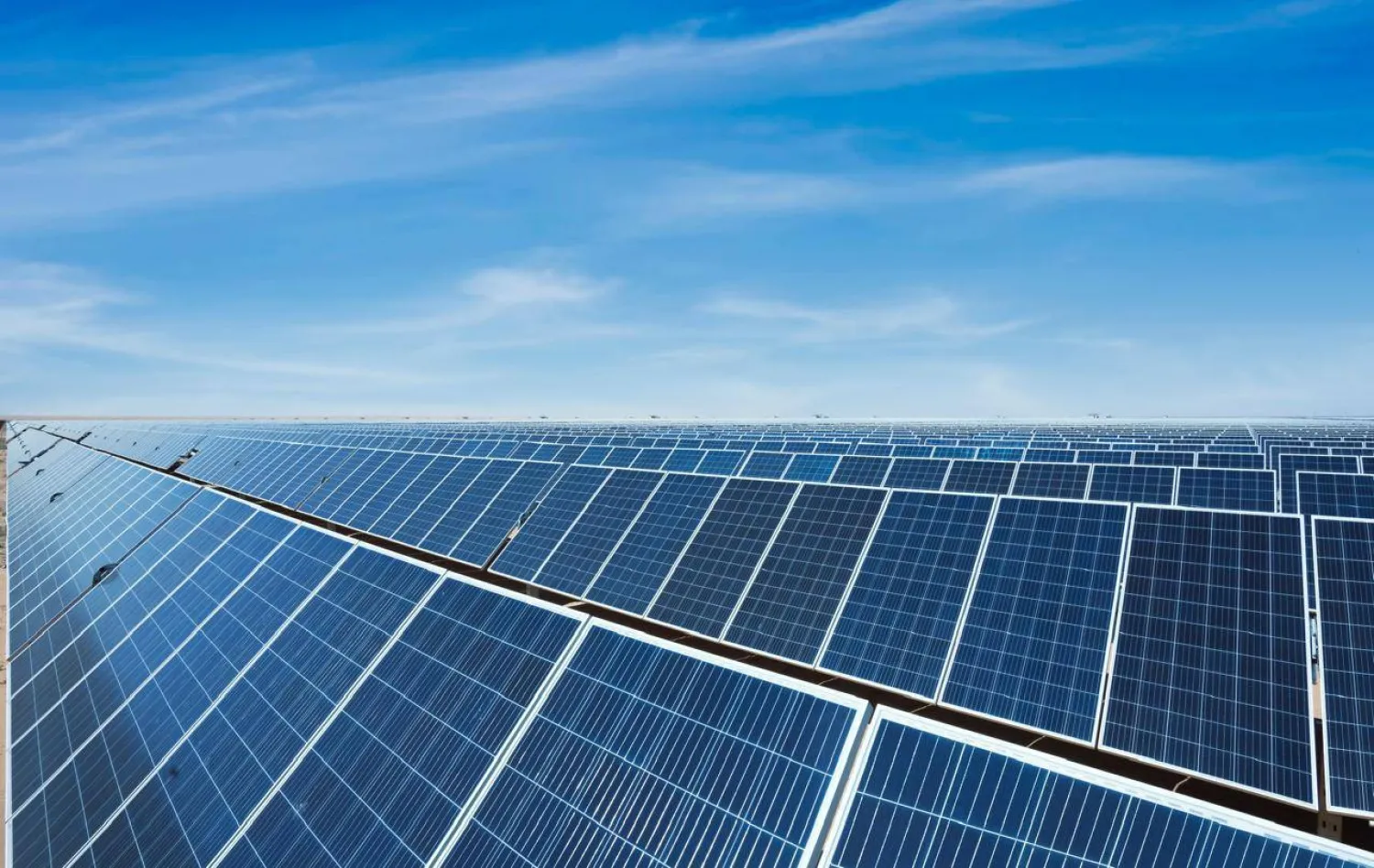

Acwa to Asharq Al-Awsat: Energy Storage Key to Saudi Renewable Expansion

Sakaka Solar Photovoltaic Power Plant (Acwa)
TT

Acwa to Asharq Al-Awsat: Energy Storage Key to Saudi Renewable Expansion

Sakaka Solar Photovoltaic Power Plant (Acwa)

Saudi Arabia’s Acwa is expanding its renewable energy, electricity storage and water desalination projects as the rapid growth of artificial intelligence and data centers drives up power demand and increases the need for reliable, efficient and competitively priced electricity.

Omar al-Hassan, Acwa CEO in Saudi Arabia, told Asharq Al-Awsat that the accelerating expansion of AI and data centers was reshaping the energy sector’s requirements.

The challenge is no longer limited to generating more electricity, he explained, but also involves ensuring a continuous supply, operational efficiency and competitive costs.

Acwa is developing projects that combine renewable energy and storage with solutions to strengthen supply reliability, drawing on its experience in large-scale power and water projects.

The company’s total power generation capacity stands at 98.2 gigawatts, while its desalination portfolio has a capacity of 9.7 million cubic meters per day.

Al-Hassan also highlighted Acwa’s efforts to harness digital technologies and AI to improve the performance of its assets, going beyond meeting rising electricity demand to developing more efficient and reliable solutions.

Storage supports renewable energy expansion

As Saudi Arabia expands its solar and wind projects, electricity storage is becoming increasingly important, allowing power generated during periods of abundant supply to be stored for use when demand rises.

Al-Hassan expects storage to play a growing role in the Kingdom’s energy system alongside generation facilities and transmission networks.

In August 2026, Acwa signed three agreements with the Saudi Power Procurement Company, acting as the principal buyer, to develop battery energy storage projects in Haden, Muwayh and Al-Kahfah.

The projects have a combined power capacity of 1,500 megawatts and an energy storage capacity of 6,000 megawatt-hours, under agreements spanning 15 years.

Al-Hassan described the projects as evidence of opportunities in the Saudi market and the importance of storage in supporting renewable energy expansion.

He expects storage to become an increasingly significant factor in planning new projects, depending on grid needs, individual project requirements and economic feasibility.

Red Sea project demonstrates off-grid potential

Acwa’s Red Sea project, which combines solar generation and battery storage, has demonstrated the feasibility of operating an integrated utilities system powered by renewable energy and storage without connecting to the national electricity grid.

The project began commercial operations in September 2026 and includes a 340-megawatt solar power plant and a battery storage system with a capacity of 1,227 megawatt-hours.

According to al-Hassan, the project underscores the importance of integrated planning from the outset, with generation and storage capacities designed to meet actual demand and ensure uninterrupted supplies.

He emphasized that the success of renewable energy projects depends not only on generation capacity but also on the integration of system components and operational efficiency, while accounting for differences in site requirements, costs and operating conditions.

Partnerships to advance desalination

In the water sector, Acwa sees opportunities to advance desalination through greater use of renewable energy and more efficient technologies, helping reduce energy consumption and production costs while meeting growing demand.

With a desalination portfolio capable of producing 9.7 million cubic meters of water per day, the company is focusing on improving plant efficiency, developing desalination technologies and reducing reliance on conventional energy sources wherever technically and economically feasible.

In August 2026, Acwa signed a memorandum of understanding with Veolia to cooperate on improving desalination plant designs, equipment and operational performance.

It also signed a joint development agreement with Indonesia’s PT Garam to establish a project combining seawater desalination with industrial salt production.

The project would use shared infrastructure to meet water needs and support industrial activities.

Al-Hassan identified further growth opportunities in increasing water production, improving the efficiency of existing plants, developing new technologies and expanding partnerships to provide reliable water supplies at competitive costs.


Hapag-Lloyd Raises Outlook for Third Time on Strong Freight Rates

Hapag-Lloyd containers at a loading terminal at the harbor in Hamburg, Germany, July 13, 2025. (Reuters)
TT

Hapag-Lloyd Raises Outlook for Third Time on Strong Freight Rates

Hapag-Lloyd containers at a loading terminal at the harbor in Hamburg, Germany, July 13, 2025. (Reuters)

German container shipping company Hapag-Lloyd on Wednesday raised its full-year earnings outlook for the third time this year, citing strength in freight rates and a stronger-than-expected performance ‌in the ‌fourth quarter.

The stock was ‌up ⁠2.4% at 0925 ⁠GMT.

The upgrade adds to a series of positive outlook revisions across the European logistics sector, where resilient global trade, elevated shipping ⁠rates and persistent ‌supply-chain disruptions have ‌supported earnings and boosted profitability.

Hapag-Lloyd ‌now expects full-year earnings ‌before interest and tax of $2.0 billion to $2.4 billion, up from previous expectations of $1.25 billion to $1.75 ‌billion.

The company also lifted its 2026 earnings before ⁠interest, tax, ⁠depreciation and amortization guidance to $4.6 billion to $5.0 billion, from $3.9 billion to $4.4 billion previously.

The latest increase follows earlier upgrades in July and September, reflecting sustained strength in container shipping markets and management's improved expectations for year-end trading.


Gold Gains After Steep Drop, but Hawkish Central Bank Signals Weigh

People buy gold jewellery on the occasion of 'Dhanteras' as part of Diwali celebrations, the Hindu festival of lights, in Kolkata on November 6, 2026. (AFP)
TT

Gold Gains After Steep Drop, but Hawkish Central Bank Signals Weigh

People buy gold jewellery on the occasion of 'Dhanteras' as part of Diwali celebrations, the Hindu festival of lights, in Kolkata on November 6, 2026. (AFP)

Gold prices climbed on Wednesday, but remained anchored near the $4,000 level after a sharp selloff in the previous session following a hot US inflation print and hawkish policymakers' comments that tilted market expectations towards further and larger ‌rate hikes.

Spot ‌gold rose 0.5% to $4,051.31 per ounce ‌by ⁠0916 GMT after dropping ⁠as much as 3% to $4,013.29 on Tuesday. US gold futures for December delivery gained 0.7% to $4,059 per ounce.

"Gold is seeing some slight relief after its post-CPI declines," said Han Tan, chief market analyst at Bybit.

"However, it's a tough ask for gold bulls to keep pushing prices higher, given ⁠the prospects of more Fed rate ‌hikes in the pipeline."

Data released on ‌Tuesday showed US consumer prices rose more than expected in ‌October, with the CPI increasing 0.4%. Economists polled by Reuters ‌had forecast a 0.3% rise.

Traders raised the odds of a December Federal Reserve rate hike to 100% from 84% before the data, as per CME's FedWatch tool. Expectations of a ‌larger, half-percentage-point hike also increased.

Ahead of the data, Fed Governor Christopher Waller said a core inflation ⁠reading ⁠of 0.3% in October would prompt him to consider a half-point hike at the December meeting.

Other policymakers also maintained a hawkish tone, with Fed Bank of Philadelphia President Anna Paulson signaling further US rate hikes and Fed Vice Chair for Supervision Michelle Bowman reaffirming the central bank's focus on curbing price pressures.

Although gold is typically seen as an inflation hedge, higher interest rates diminish its appeal, as gold bullion pays no interest.

Among other metals, spot silver climbed 2.7% to $52.87 per ounce, and palladium gained 4.1% to $1,066.66 per ounce.


Oman Posts Third-Quarter Budget Surplus as Revenue Rises 16%

Visitors and locals gather at the Mutrah Corniche in Muscat, Oman, April 11, 2025. (AP)
TT

Oman Posts Third-Quarter Budget Surplus as Revenue Rises 16%

Visitors and locals gather at the Mutrah Corniche in Muscat, Oman, April 11, 2025. (AP)

Oman's ‌public revenue rose 16% by the end of the third quarter to 9.828 billion Omani rials ($25.53 billion), the Oman News Agency said in a post ‌on X on ‌Wednesday.

Public spending ‌rose ⁠9% to about ⁠9.74 billion rials, and the state budget recorded a surplus of about 90 million rials ⁠at the end of ‌the ‌third quarter.

Public debt ‌fell by more ‌than 600 million rials from a year earlier, to about 14.1 ‌billion rials from 14.7 billion.

Dues paid ⁠to ⁠the private sector and received through the financial system totaled more than 1.43 billion rials by the end of the third quarter.
