


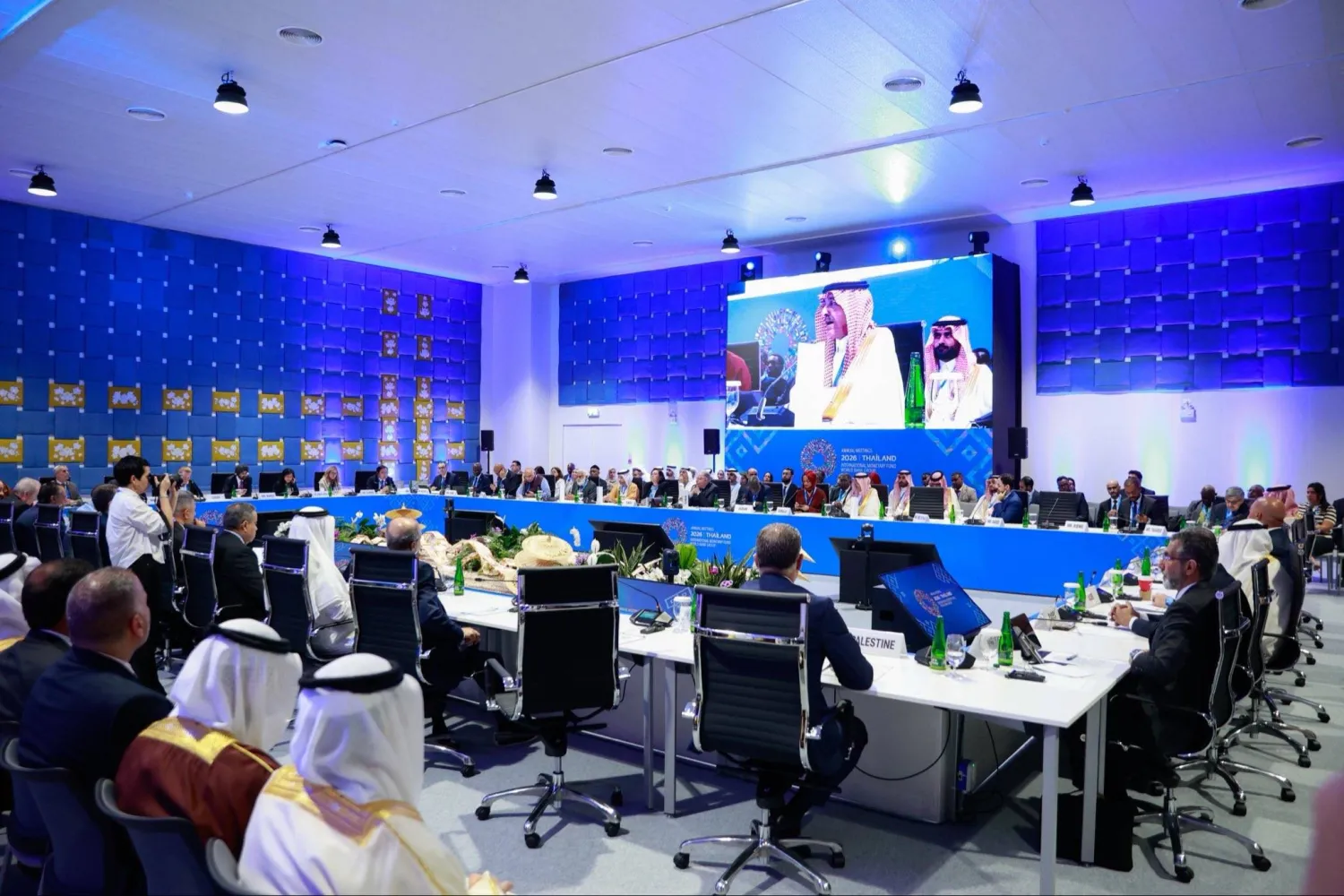

Saudi Arabia's Finance Minister Mohammed Al-Jadaan, Chair of the International Monetary and Financial Committee (IMFC), said that ongoing wars, conflicts and supply chain disruptions were imposing significant human and economic costs worldwide and adding to price pressures, particularly in the poorest and most vulnerable countries.
In remarks at the Committee's 54th meeting in Bangkok, Jadaan stressed the need to strengthen economic and financial stability, step up international cooperation and end conflicts to achieve sustainable growth and long-term stability.
A statement issued following the Committee’s meeting said the global economy had weathered a series of recent shocks better than expected, but warned that the buffers underpinning its resilience had eroded, making its continued resilience uncertain.
The statement cautioned that escalating conflicts, trade tensions, rising public debt and higher refinancing costs could exacerbate economic and financial vulnerabilities, as economies undergo rapid structural transformations driven by technological advances, demographic shifts and climate risks.
The Committee stressed the need to address fiscal vulnerabilities, strengthen debt sustainability, and protect the most vulnerable groups and investments that support productivity and growth. It also underscored the importance of central bank independence, secure energy flows, freedom of navigation and enhanced international cooperation to address economic and financial challenges.
The Committee commended Saudi Arabia’s leadership and welcomed the extension of Al-Jadaan’s term as chair for one year.
It said the global economy had weathered recent shocks better than expected but warned that the buffers underpinning its resilience had eroded, making its continued resilience uncertain.
Wars and conflicts continue to impose immense humanitarian burdens and significant economic costs, while supply chain disruptions and trade tensions heighten uncertainty and price pressures.
Conversely, rapid advancements in advanced artificial intelligence technologies have contributed to supporting investment and trade, with the potential to boost productivity. The Committee explained that these developments have so far coincided with generally stable global growth, but economic gains remain uneven, while low-income countries and fragile states face the risk of widening the gap between them and other economies.
The Committee warned that risks are skewed to the downside, noting that escalating conflicts and trade tensions could disrupt vital trade routes and increase pressure on commodity prices, including refined energy products, in addition to exacerbating risks to energy and food supply security.
It also cautioned that rising sovereign bond yields in systematically important economies could affect global financial conditions, especially given high levels of public debt and refinancing needs in many countries. These pressures, along with the uncertainty surrounding the impact of advanced artificial intelligence technologies on the economy and financial sector, could further increase economic and financial vulnerabilities.
It added that accelerating technological transformations, demographic changes, increasing extreme weather events and natural disasters, as well as geoeconomic fragmentation, further complicate the choices and tradeoffs facing policymakers.
Fiscal Consolidation
The Committee emphasized that strengthening economic and financial stability requires sound and consistent macroeconomic policies and multilateral cooperation, supporting strong and broad-based growth.
It called for urgently addressing fiscal vulnerabilities and advancing efforts to consolidate spending and revenue, supported by credible medium-term fiscal frameworks, to ensure fiscal and debt sustainability and rebuild precautionary buffers, in line with each country's circumstances. At the same time, it stressed the need to protect the most vulnerable groups and priority investments that foster productivity and growth.
Regarding monetary policy, the Committee reaffirmed central banks' commitment to ensuring price stability in line with their mandates, while continuing to adjust policies based on data and clear communication regarding decisions. It emphasized that central bank independence is a fundamental pillar for policy credibility and maintaining stable inflation expectations.
It also underscored the importance of adhering to international standards and closely monitoring and addressing vulnerabilities and risks threatening financial stability. It welcomed the "Bangkok Blueprint," which aims to strengthen safeguards related to digital finance, enhance resilience against cyberattacks, and advance international efforts to combat digital fraud.
Concerning growth and productivity, the Committee called for continuing reforms that enhance the role of the private sector and leveraging advanced artificial intelligence technologies and digital transformation to boost productivity, while addressing the risks associated with these technologies and expanding the scope of their benefits.
It further stressed the necessity of international cooperation to address global challenges and ensure the stability and effective functioning of the international monetary system, tackle excessive global imbalances and trade tensions, avoid distortionary policies, and enhance supply chain resilience through reforms that consider each country's circumstances and multilateral cooperation, thereby supporting a fair and open global economy.
Regarding energy, the Committee emphasized the importance of ensuring safe and reliable energy flows and upholding the principle of freedom of navigation, considering them essential elements for global economic stability. It also reaffirmed adherence to the exchange rate commitments outlined in the April 2021 understanding.
Supporting Heavily Indebted Countries
The Committee also stressed the importance of assisting countries in implementing reforms and addressing debt-related vulnerabilities through sound macroeconomic policies, domestic resource mobilization, and improved governance.
It paid particular attention to the challenges facing low-income countries and the most vulnerable middle-income countries, including fragile and conflict-affected states and small developing states.
Regarding sovereign debt, the Committee stressed the need to continue improving restructuring operations, including within the "Common Framework," building on progress made, and advancing work at the "Global Sovereign Debt Roundtable" to ensure the orderly, coordinated, timely, and predictable implementation of restructuring operations.
It also called on all stakeholders, including private sector creditors, to enhance debt transparency.
The Committee encouraged increased support for countries with sustainable debt, strong reform programs, and robust growth plans, but which face short-term financing challenges, by accelerating the implementation of the IMF and World Bank Group's three-pillar approach.
It expressed gratitude to members who provided necessary assurances to support the self-sustaining lending capacity of the Growth and Poverty Reduction Trust Fund, looking forward to other members promptly providing the required guarantees.
IMF Reforms
The Committee welcomed the Managing Director of the International Monetary Fund's Global Policy Agenda and the recent approval of a comprehensive set of policy reviews aimed at strengthening economic surveillance, debt analysis, lending, and capacity development.
It called for the swift and effective implementation of these reforms, ensuring their fair and consistent application among members, and supported strengthening the integration between capacity development, economic surveillance, and lending.
It clarified that these changes would help countries identify risks, manage uncertainty, and implement sound policies and reliable frameworks, thereby enhancing resilience and supporting growth.
It also welcomed the Fund's work on the macroeconomic and policy-related implications of advanced artificial intelligence technologies, looking forward to further analysis and advice in this area within the institution's mandate.
Increasing Fund Resources
The Committee reiterated the importance of a strong, quota-based, and adequately resourced International Monetary Fund to ensure its continued pivotal role in the global financial safety net.
It called for the completion of necessary domestic approvals for the quota increase under the Sixteenth General Review of Quotas without further delay.
It also noted that the Diriyah Guidelines will provide a basis for future discussions on quota and governance reforms, including within the framework of the Seventeenth General Review of Quotas.
Modernizing Fund Operations and Enhancing Representation of Women and Regions
The Committee supported the International Monetary Fund's efforts to modernize its operations, strengthen institutional risk management, and invest in its staff, thereby maintaining its flexibility, responsiveness, and readiness for future requirements, including through the thoughtful internal use of advanced artificial intelligence technologies.
It expressed its appreciation for the work and efforts undertaken by Fund staff, within a merit-based system, and called for further improving the representation of regions and women in positions within the institution.
It also emphasized the importance of enhancing the representation of women on the Fund's Executive Board and in leadership positions within the Board, and affirmed the necessity of taking the required measures to achieve the voluntary goals adopted in this area.
It further stressed that the selection of all candidates should be based on the merit criteria adopted by each member country.
Finally, the Committee noted that its next meeting is expected to be held in Washington D.C. in April 2027.


